

Premises Liability · Fulton County, Georgia
Hurt on Someone Else's Property in Fulton County? Start With a Free Review.
Ugwonali Law Group represents people seriously injured in falls and unsafe-property accidents across Fulton County and Georgia. We explain the legal and medical process in plain language, and our intake team serves you in English or Spanish.
By Adanna Ugwonali · Published October 26, 2026
Premises Liability Fulton County: Your Rights After a Serious Fall
Premises liability in Fulton County is a personal injury claim against the owner or occupier of a property whose unsafe condition caused an injury. Georgia law requires owners and occupiers to use ordinary care to keep their property safe. This page explains that duty, how fault is shown, and which deadlines apply.
If a fall on someone else's property left you with a fracture or head injury, you may have a claim worth reviewing, and our team can talk it through with you. Talk it through with our team — the first consultation is free, confidential, and carries no obligation.
What Is Premises Liability in Fulton County?
Premises liability is a claim that an owner or occupier failed to keep a property reasonably safe, and that failure caused the injury. Under O.C.G.A. § 51-3-1, an owner or occupier who invites people onto the property for a lawful purpose must use ordinary care in keeping the premises and approaches safe.
Georgia describes ordinary diligence as the care an ordinarily prudent person would use under similar circumstances. That standard is set out in O.C.G.A. § 51-1-2. A person who is failing that standard is acting with ordinary negligence.
An invitee is someone invited onto the property for a lawful purpose, such as a shopper, a tenant’s guest, or a delivery driver. Other visitors, such as trespassers, are treated differently under Georgia law. How that works depends on the facts.
Falls in Fulton County happen in many places. Grocery stores, apartment complexes, parking decks, sidewalks, and office buildings in Atlanta, Sandy Springs, Roswell, and College Park all see these incidents. Apartments raise a separate question about who controls the area that failed. Under O.C.G.A. § 44-7-14, a landlord that has fully parted with possession and the right of possession is not responsible to third persons for damages resulting from a tenant’s negligence or illegal use of the premises. The landlord remains responsible for defective construction and for failing to keep the premises in repair.
Common Premises Injuries from Falls and Property Hazards
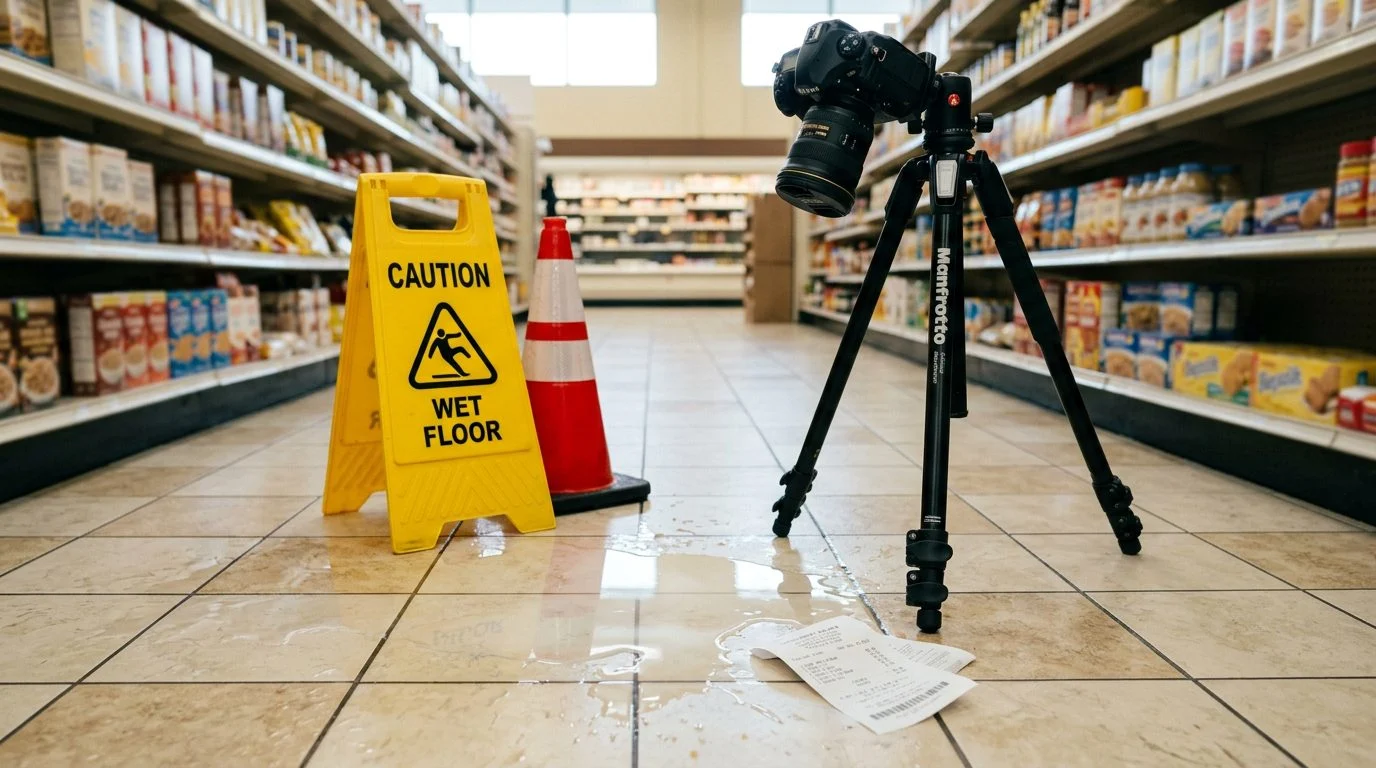
Serious premises injuries often start with a fall on a hazard that someone should have fixed, marked, or cleared. Wet or unmarked floors, torn carpet, broken stairs, loose handrails, uneven pavement, poor lighting, and icy walkways are common examples. The Occupational Safety and Health Administration publishes federal standards and guidance on slip, trip, and fall hazards.
Falls often lead to broken hips, wrists, and ankles. Traumatic brain injury is one of the serious injuries this firm handles. A hard landing can also injure the spine. Some head and spine symptoms appear hours or days after the fall. A prompt medical check matters, even when pain seems mild.
Tell the medical provider exactly how the fall happened. Follow through with treatment by a medical doctor, and keep discharge papers and bills. These records show what the injury was and how it was treated.
A fall or property hazard can also cause a death. When death results from negligence, the personal representative may recover funeral, medical, and other necessary expenses. O.C.G.A. § 51-4-5 sets out that rule, which applies when death results from a crime or from criminal or other negligence. Families should ask about their options early, while records are still fresh.
How Fault Is Proven in a Fulton County Premises Case
A premises liability claim in Fulton County often turns on whether the owner knew about the hazard or should have found it. Some hazards were reported to the owner, or the owner’s own work created them. Others were there long enough that a reasonable check would have caught them. Which applies depends on the facts of each incident.
Evidence does most of the work. Useful items include:
- photos of the spot, taken as soon as possible
- names and phone numbers of witnesses
- the incident report, if the business made one
- requests for surveillance video
- cleaning, inspection, and maintenance logs
- weather records for outdoor falls
Evidence can disappear. Video may be recorded over, and logs may be thrown away. Keep the shoes and clothing you wore, and do not wash or repair them. Early steps keep proof available.
A claim against a business usually involves its liability insurer. That is why the insurer’s records and the property’s own logs often matter.
Georgia Comparative Negligence and Your Share of Fault
Georgia uses comparative fault. Your own share of fault reduces what you can recover. Under O.C.G.A. § 51-12-33, the judge reduces an award in proportion to the injured person’s percentage of fault. If that person is 50 percent or more responsible, they are not entitled to receive any damages.
Here is a hypothetical example, using made-up numbers. Suppose total damages were 100 points, and a court found the injured person 20 percent at fault. The reduction would be 20 points, leaving 80.
When more than one party shares fault, the statute says each party’s share is its own liability. It is not joint liability, and it is not subject to contribution. The fault of other persons or entities who contributed to the injury can also be considered, even if they were never named in the lawsuit, if the plaintiff settled with them or if a defending party gives notice not later than 120 days prior to the date of trial that they were wholly or partially at fault.
Details shape these percentages. What were you doing? Was the hazard visible? Were warning signs posted, and where? Write these answers down soon after the fall, while memory is fresh. Those details are reviewed in full during a case review.
Deadlines, Medical Records, and the Claims Process
Georgia’s general rule is two years to file most injury claims. Under O.C.G.A. § 9-3-33, actions for injuries to the person must be brought within two years after the right of action accrues. Loss of consortium claims have four years under the same section.
Medical bills follow their own rules. Under O.C.G.A. § 51-12-1.1, medical expenses are limited to the reasonable value of medically necessary care. Some providers treat patients under a letter of protection, a promise to be paid from any settlement or judgment. The statute makes those letters, itemized charges, and referral details relevant and discoverable, along with the name of the buyer and the price paid when a provider sells the accounts receivable at less than the invoice price. Keep every bill, statement, and discharge paper.
The process usually follows a clear order. First comes a free case review. Next, medical records and bills are gathered. The property owner’s insurer is then notified, and the parties negotiate. If talks do not resolve the claim, a lawsuit can be filed in the proper Georgia court. Posts about the fall or your activities can be used in a claim, so think before sharing.
Fulton County claims follow the same Georgia rules that apply statewide. Ugwonali Law Group represents people across metro Atlanta and throughout Georgia.
Not sure what your next step is?
Talk it through with our team — the first consultation is free, confidential, and carries no obligation.
Frequently Asked Questions About Premises Liability in Fulton County
Is premises liability the same as personal liability?
Premises liability is one kind of personal injury claim. It focuses on the condition of a property, not on a person’s own conduct toward another.
Can someone sue me if they slip and fall on my property?
A visitor who came onto the property by express or implied invitation for a lawful purpose may bring a claim if the owner or occupier failed to use ordinary care in keeping the premises and approaches safe, and that failure caused the injury. Many claims are handled through the property’s liability insurance.
Are premises liability cases hard to win?
Under O.C.G.A. § 51-12-33 (Quynn v. Hulsey (2020)), a plaintiff’s damages are reduced in proportion to the plaintiff’s percentage of fault, and a plaintiff who is 50 percent or more responsible for the injury or damages claimed cannot recover damages. A general description cannot tell you how any single case will end.
What should I do first after a fall?
Get medical care, report the fall, and photograph the spot. Keep your shoes, clothing, and records, and write down what happened while it is fresh.

Talk With Ugwonali Law Group About Your Fulton County Fall
Adanna Ugwonali is the responsible lawyer for this page. Ugwonali Law Group is located at 3400 Peachtree Road NE, Atlanta, Georgia. Our team offers a free, confidential first consultation, without obligation to continue. Intake staff can help you in English or Spanish.
The firm handles matters across metro Atlanta and throughout Georgia, including Clayton, Cobb, and Rockdale counties.
If a fall left you with a broken bone or a head injury, or took someone you love, contact our team now while records and evidence are still available. Request your free case evaluation today.
How we work with injured people
Plain-language education
We explain premises liability, the medical treatment you may need, and each step of the legal process so you can make informed decisions.
English or Spanish
Our intake team speaks with you in English or Spanish, so you can describe what happened in the language you are most comfortable using.
Focus on serious injuries
Our practice focuses on serious harm, including fractures, hospital care, brain and spinal injuries, and wrongful death.
Free first consultation
Your first consultation is free, confidential, and carries no obligation to continue.
Protect your evidence early
If you were hurt on a property, write down where and how it happened while the details are fresh. Keep photos, witness names, incident reports, and every medical bill and record. Seek medical care promptly, and follow your doctor's treatment plan.
Common premises injury situations
Slip and fall
Injuries from slippery floors, spilled liquids, wet entryways, or poorly maintained surfaces can lead to fractures, head injuries, and long recovery periods.
Trip and fall
Uneven flooring, damaged walkways, loose mats, and other tripping hazards can cause serious injuries, especially for older adults.
Unsafe property conditions
Broken stairs, collapsing railings, damaged structures, and other hazards that were not repaired or properly marked can result in severe harm.
Medical documentation
Consistent treatment by a medical doctor and complete records help show how your injury happened and how it has affected your life.