

Premises Liability | Atlanta and Georgia
Hurt on Someone Else's Property? Understand What Property Owners Owe You.
Ugwonali Law Group represents people seriously injured in slip and falls, trip and falls, and other unsafe-property accidents across metro Atlanta and statewide. Attorney Adanna Ugwonali leads the firm, and our team walks you through the legal and medical process in plain language.
By Adanna Ugwonali · Published October 25, 2026
Premises liability is a personal injury claim for harm caused by an unsafe condition on someone else’s property. In Georgia, a property owner or occupier can be held responsible when it fails to use ordinary care and someone is hurt as a result (owner duty of care). This guide explains how premises liability Georgia cases work, from who owes a duty to what an injured person can document right away. It is written for people in metro Atlanta and across the state who have real injuries, such as fractures, hospital stays, or ongoing medical treatment.
What Premises Liability Means in Georgia
Premises liability means a property owner or occupier can be liable for injuries caused by a failure to keep the property safe. Georgia’s main rule is in O.C.G.A. § 51-3-1. It says an owner or occupier who invites or leads others onto its premises for a lawful purpose is liable for injuries caused by its failure to exercise ordinary care in keeping the premises and approaches safe.
Under O.C.G.A. § 51-1-2, ordinary diligence is the care that ordinarily prudent persons use under the same or similar circumstances. Failing to use that care is called ordinary negligence.
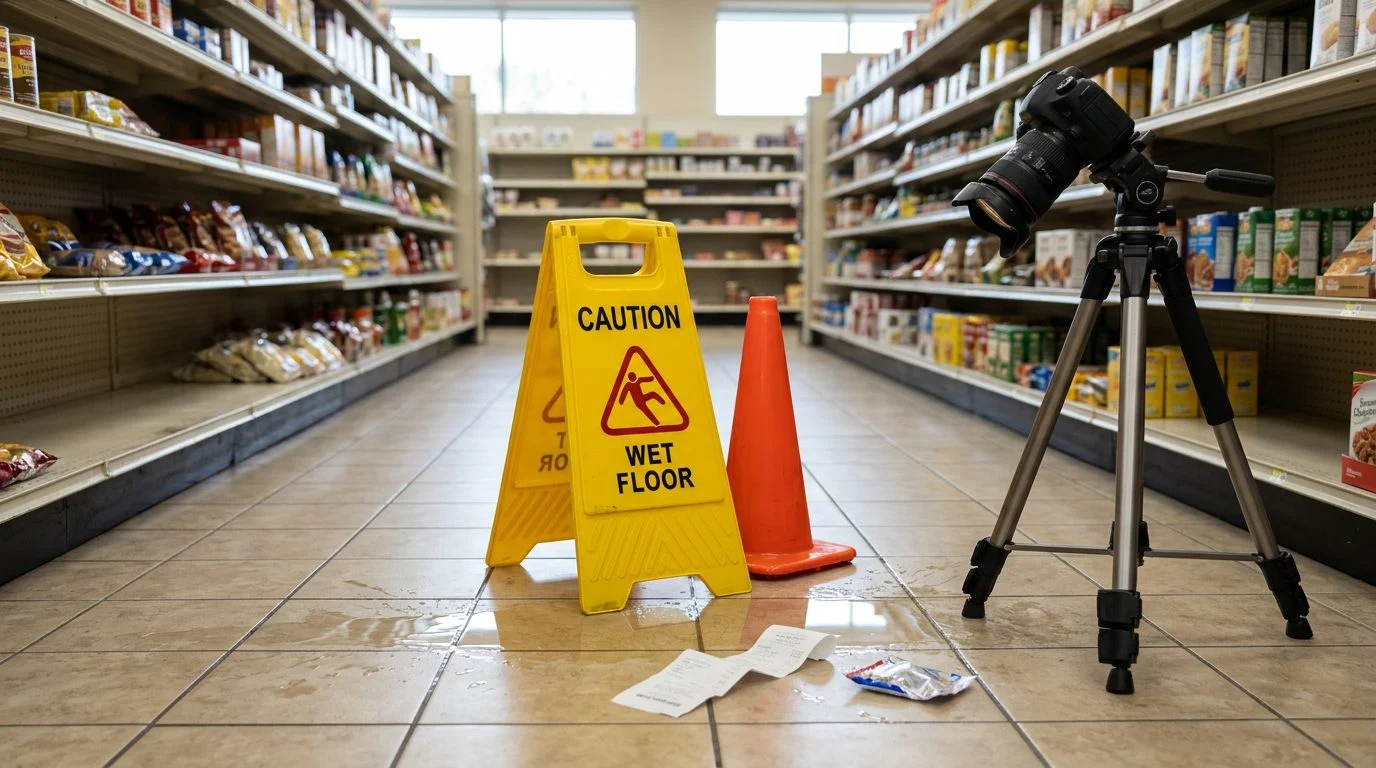
Premises cases cover more than one kind of fall. Typical claims involve slip and falls on wet floors, trip and falls over broken pavement, falling objects, and accidents on stairs or in parking lots. Some of these falls cause fractures, head injuries, or spinal injuries that need hospital care and a long recovery.
If a fall on someone else's property left you with a fracture or ongoing treatment, our team can talk through what happened and what your options may be. Talk it through with our team — the first consultation is free, confidential, and carries no obligation.

Visitor Status: Invitees, Licensees, and Trespassers
Georgia sorts people on property into categories, and the owner’s duty can depend on the category. An invitee is someone the owner invites or leads onto the property for a lawful purpose, such as a shopper in a store. The ordinary care duty in § 51-3-1 applies to invitees.
A licensee is different. Under O.C.G.A. § 51-3-2, a licensee is neither a customer, a servant, nor a trespasser. A licensee has no contract with the owner and goes onto the property merely for his own interests, convenience, or gratification. The owner is liable to a licensee only for willful or wanton injury.
A trespasser is a third category.
Owners, Occupiers, and Who Can Be Responsible
An owner may not be the occupier. A store renting a space or a company running a parking deck may each control part of the premises.
Contractors add another layer. Under O.C.G.A. § 51-2-5, an employer can be liable for a contractor’s negligence in listed situations. One example is when the employer keeps the right to direct or control the time and manner of the work. Who controlled the area and who was responsible for fixing the hazard can be important questions in a case, along with other factors.
Common Premises Liability Cases in Georgia
Common premises cases happen in stores, apartment buildings, parking lots, stairwells, and on walkways. Metro Atlanta has many of these settings, from busy retail corridors to apartment communities in Fulton, Cobb, Clayton, and Rockdale counties. Marietta, Jonesboro, and Conyers have similar mixes of shops, parking areas, and housing.
The hazards are often ordinary. Typical examples include wet floors without warning signs, broken stairs or handrails, cracked or uneven pavement, torn carpeting, poor lighting, and boxes or merchandise left in walkways.
How Georgia Premises Claims Are Proven
A premises claim usually turns on what the owner did about the hazard and whether ordinary care was used. Proof of how the fall happened matters as much as proof of the hazard itself.
Evidence often shows how long the hazard was there and what the owner’s inspections looked like. Those facts bear on whether ordinary care was used. Useful evidence commonly includes:
- Photographs and video of the spot, taken as soon as possible
- Incident reports and the names of witnesses
- Inspection, cleaning, and maintenance records
- Prompt medical records that tie the injury to the fall
A common mistake is waiting to report the fall or letting the hazard be fixed before anyone takes pictures. Writing down the time, weather, and lighting the same day also helps.
Are Premises Liability Cases Hard to Win?
Premises cases can be difficult because they turn heavily on proof. The outcome depends on the hazard, the owner’s care, and what caused the injury. No one can predict a result from general information.
Fault matters too. Georgia uses a modified comparative fault rule (O.C.G.A. § 51-12-33; Quynn v. Hulsey (2020)). Under O.C.G.A. § 51-12-33, if the injured person is to some degree responsible, the damages are reduced in proportion to that person’s percentage of fault.
The same statute bars recovery at a high level of fault (Quynn v. Hulsey). A plaintiff found 50 percent or more responsible for the injury or damages claimed is not entitled to recover any damages (O.C.G.A. § 51-12-33(g)). Under O.C.G.A. § 51-12-33, when the plaintiff is to some degree responsible for the injury or damages claimed, the judge reduces the damages otherwise awarded to the plaintiff in proportion to the plaintiff’s percentage of fault, and the plaintiff is not entitled to receive any damages if the plaintiff is 50 percent or more responsible. The other side may argue the person saw the hazard or was not paying attention. Early records help answer those points.
Not sure what your next step is?
Talk it through with our team — the first consultation is free, confidential, and carries no obligation.
Deadlines, Damages, and Medical Treatment
Georgia’s general deadline for injury claims is two years (Cameron v. JMP Pizza). Under O.C.G.A. § 9-3-33, actions for injuries to the person must be brought within two years after the right of action accrues, unless that article provides otherwise. Loss of consortium claims follow a four-year period under the same statute.
Under O.C.G.A. § 51-12-2, general damages are those the law presumes to flow from a tortious act, and they can be recovered without proof of any amount. Special damages actually flow from the act and must be proved. Medical bills and lost income usually need records to show them.
A fracture, head injury, or spinal injury needs prompt and ongoing care. Follow your medical provider’s advice, attend follow-up visits, and keep every bill, prescription receipt, and discharge paper. Those records document the injury and link it to the fall.
Premises Liability Help for Georgia Residents
Ugwonali Law Group is a personal injury firm led by attorney Adanna Ugwonali, with its office at 3400 Peachtree Road NE, Atlanta, Georgia. The firm represents people hurt in truck and car crashes, unsafe-property injuries, slip and falls, trip and falls, traumatic brain and spinal injuries, and wrongful death cases across metro Atlanta and statewide in Georgia.
The firm focuses on injury cases in Fulton, Clayton, Cobb, and Rockdale counties, as well as Marietta, Jonesboro, and Conyers, and across Georgia. Our team’s intake staff works with clients in English or Spanish. Our team also supports the firm’s lawyers in handling these matters.

Talk With Ugwonali Law Group About Your Fall
If a fall on someone else’s property left you with a fracture or ongoing treatment, you can ask for a free case review. Reach out to Ugwonali Law Group, and our team will listen to what happened and explain the next steps.
The first consultation is free, confidential, and comes with no obligation to continue. Our initial consultation is free, confidential, and without obligation.
Adanna Ugwonali is the responsible lawyer for this page. Ugwonali Law Group is at 3400 Peachtree Road NE, Atlanta, Georgia. You can request a free case evaluation through the firm’s contact page.
Frequently Asked Questions
How long do I have to file a premises liability claim in Georgia?
Most personal injury claims in Georgia must be brought within two years under O.C.G.A. § 9-3-33. Some claims follow different timing.
Does partial fault stop a premises liability recovery in Georgia?
Not always. Under O.C.G.A. § 51-12-33, the judge reduces the damages otherwise awarded to a plaintiff who is to some degree responsible for the injury or damages claimed in proportion to that plaintiff’s percentage of fault, but a plaintiff who is 50 percent or more responsible is not entitled to receive any damages (O.C.G.A. § 51-12-33; Quynn v. Hulsey (2020)).
Should I see a doctor after a fall if I feel fine?
Prompt medical care protects your health and creates records that link any injury to the fall.
How We Work With Injured Visitors
Free First Consultation
Your first consultation is free, confidential, and carries no obligation to continue.
English or Spanish
Our intake team can sign you on the first call and speak with you in English or Spanish.
Support for Families
When a fall or crash causes a death, our team helps surviving family members understand their options and the process ahead.
Clear Explanations
We explain medical records, insurance communications, and each step of the case so you can make informed decisions.
Before You Talk to the Property Owner's Insurer
Insurance adjusters work for the other side. Before you give a recorded statement or sign any release, talk with a lawyer. Keep getting medical care and keep your discharge papers, bills, and photos of the location.
Common Unsafe-Property Hazards
Wet or Uneven Floors
Spills left uncleaned, torn carpeting, cracked tile, and raised thresholds can cause serious falls, including fractures and head injuries.
Stairs and Walkways
Broken handrails, missing steps, poor lighting, and damaged sidewalks in parking lots or store entrances are frequent causes of trip and fall injuries.
Retail, Apartment, and Commercial Spaces
Injuries can happen in stores, restaurants, apartment complexes, offices, and other places the public visits, often involving businesses with commercial insurance.
Evidence That Often Matters
Photos of the hazard, incident reports, witness names, surveillance footage requests, and prompt medical records can all help document what happened.
Talk With Adanna Ugwonali's Team About Your Injury
Related practice areas
- Spinal Cord Injury Rockdale County: Your Georgia Options