

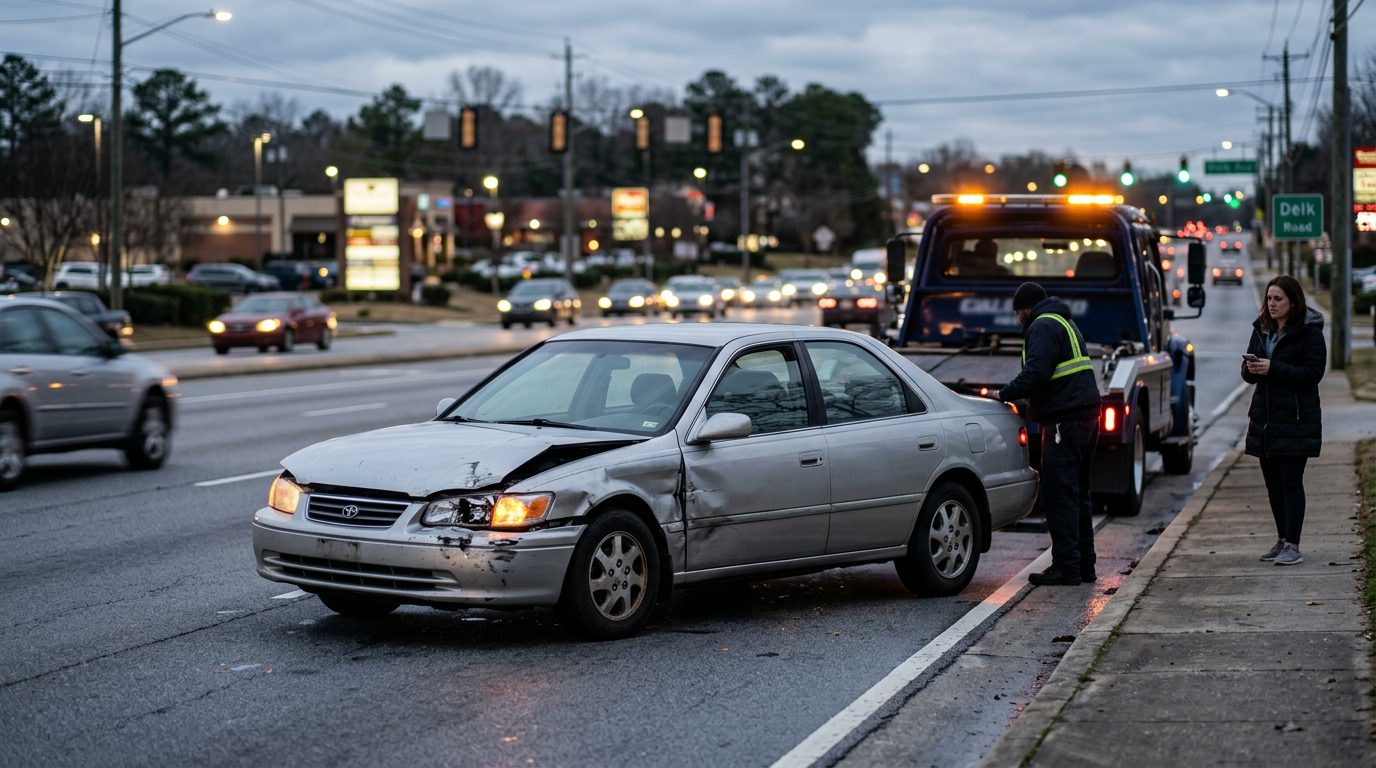
Car Accidents in Cobb County
Hurt in a Car Crash in Cobb County? Learn What Comes Next
Ugwonali Law Group helps people with serious injuries from car and truck crashes across Cobb County, metro Atlanta, and Georgia. Get clear, plain-language answers about your injuries, medical care, and legal options, with support in English or Spanish.
By Adanna Ugwonali · Published October 14, 2026
Car accidents Cobb County residents face can cause broken bones, hospital stays, and lasting brain or spinal injuries. A claim may be possible when another person’s negligence causes serious harm, but Georgia sets firm time limits and fault rules. This guide explains how these crashes happen on local roads, what to do after one, how to get the crash report, and how Georgia law treats fault and deadlines. It is general education, not a promise of any result.
How Serious Car Accidents Happen on Cobb County Roads
Serious car accidents in Cobb County usually happen where traffic is fast, heavy, and constantly changing lanes. Interstate corridors like I-75, I-285, and I-575 carry large volumes of commuter and freight traffic. Merges, sudden slowdowns, and lane changes at interchanges can turn a normal drive into a crash with real injuries.
US-41 and Cobb Parkway add busy signals, turn lanes, and many driveways. Surface streets through Marietta, Smyrna, and Kennesaw see collisions at intersections, where drivers run red lights or turn in front of oncoming cars. Drivers and families in Acworth, Austell, and Mableton travel these same routes every day.
This page covers crashes that involve real injuries and medical treatment. It does not cover minor bumps where nobody was hurt. For statewide context, read our Georgia car accident overview.
If a serious crash on a Cobb County road left you hurt and facing medical bills, our team can talk through your options in a free, confidential first consultation. Talk it through with our team — the first consultation is free, confidential, and carries no obligation.

What to Do in the First Hours After a Cobb County Crash
Get medical care first, then protect your record of what happened. Call 911 if anyone is hurt, and ask for medical evaluation even if you feel only sore or shaken. Tell every doctor about every symptom, including ones that seem minor or show up later.
Make sure a report is started at the scene. Write down the responding agency and any report or incident number the officer gives you. If it is safe, photograph vehicle positions, skid marks, road conditions, and visible injuries before cars are moved.
Exchange names, insurance details, and phone numbers with the other drivers and any witnesses. Do not argue about who caused the crash. Keep your statements short and factual. Save every bill, discharge paper, and prescription receipt. A simple daily journal of pain, sleep, and work limits can help your doctor and any later claim.
How to Request a Crash Report for a Cobb County Accident
You request a crash report from the agency that investigated the crash, not from a third-party website. The responding agency depends on the location. Cobb County Police, Marietta Police, Smyrna Police, Kennesaw Police, or Georgia State Patrol may have handled your crash.
Have the date, exact location, and report number ready. The officer’s card often includes the number. Ask the records unit about its current request process, fees, and pickup or mail options. These details change, so confirm them directly with the agency.
A crash report records the parties, vehicles, witnesses, road conditions, and the officer’s notes. It is not the final word on fault. Read it closely. Check names, plate numbers, times, lane positions, and injury descriptions. If something is wrong, ask the agency how to request a correction. Ugwonali Law Group can review the report with you during a free case review.
Serious and Fatal Crashes: What Families Should Know
When a crash causes a death, Georgia law lets certain family members bring a wrongful death claim. This page does not post live or same-day crash updates. For facts about a specific incident, local news and official agency releases are the right sources.
Under Georgia’s wrongful death statute, a surviving spouse, or a child or children if there is no surviving spouse, are among those who may bring a claim, and may recover the full value of the life of the person who died, as shown by the evidence. O.C.G.A. § 51-4-2: If a spouse survives, the spouse receives no less than one-third of the recovery.
Georgia also allows the personal representative to recover funeral, medical, and other necessary expenses when death results from criminal or other negligence (O.C.G.A. § 51-4-5). O.C.G.A. § 51-4-5 provides that when there is no person entitled to bring an action for the wrongful death of a decedent under Code Section 51-4-2 or 51-4-4, the administrator or executor of the decedent may bring an action for, and may recover and hold the amount recovered for, the benefit of the next of kin; in any such case, the amount of the recovery shall be the full value of the life of the decedent. That Code section also provides that when the death of a human being results from a crime or from criminal or other negligence, the personal representative of the deceased person shall be entitled to recover for the funeral, medical, and other necessary expenses resulting from the injury and death of the deceased person.
Families can protect the claim by keeping medical records, hospital bills, funeral invoices, and the crash report. Write down the names of officers and staff you speak with. Speak with an insurer carefully, and only after you understand the process.
Injuries That Need Medical Records: Fractures, Brain, and Spinal Injuries
Serious crash injuries are documented through medical records, so keeping every appointment matters. Common serious injuries include broken bones, internal injuries, traumatic brain injuries, and spinal cord injuries. A spinal cord injury can change daily life for years, and families often need long-term planning. The Model Systems Knowledge Translation Center publishes spinal cord injury factsheets on life after this kind of injury.
Follow up with a medical doctor and follow the treatment plan you’re given. Gaps in care make it harder to connect an injury to the crash, and insurers look for them. Imaging, hospital bills, prescriptions, therapy notes, and work-absence records all help show what happened.
Medical bills are also reviewed under Georgia law. Under O.C.G.A. § 51-12-1.1, medical expenses are limited to the reasonable value of medically necessary care. If you have health insurance, the evidence can include both the amount charged and the amount actually needed to satisfy the charge. Itemized bills matter for this reason.
How Fault, Insurance, and Deadlines Work in Georgia
Georgia uses a modified comparative fault rule, so you can recover only if you are less than 50 percent at fault (O.C.G.A. § 51-12-33). Under O.C.G.A. § 51-12-33, the judge reduces damages in proportion to the injured person’s share of fault. If that share is 50 percent or more, the injured person recovers nothing (O.C.G.A. § 51-12-33).
The same statute says each liable person pays only its own apportioned share, not a joint amount. Fault can also be assigned to people who were not named in the lawsuit.
Filing deadlines matter. Georgia generally requires a personal injury lawsuit to be brought within two years from the date of injury (O.C.G.A. § 9-3-33). O.C.G.A. § 9-3-33. Exceptions and other timing rules may apply under other Georgia law, so the deadline in your case needs review.
Insurance affects who pays. Auto liability, uninsured motorist coverage, and commercial policies for trucks and company vehicles can each play a role.
The at-fault driver’s insurer is not on your side. Review any early offer carefully before you accept it.
Not sure what your next step is?
Talk it through with our team — the first consultation is free, confidential, and carries no obligation.
Common Mistakes That Can Hurt a Cobb County Car Accident Claim
Several habits can weaken an injury claim after a crash, and most are within your control. Knowing them early helps you avoid them.
Do not give a recorded statement to the other driver’s insurer before you understand your injuries. Your words can be used later to dispute the claim. It is fine to say you are still getting medical care.
Do not skip appointments or stop therapy early. Gaps in treatment give the other side something to point to, even when your pain is real.
Be careful with social media. Posts about trips, lifting, sports, or a good day can be taken out of context. Privacy settings do not erase what you have already posted, so consider pausing posts about the crash and your recovery.
Read every medical authorization or release before you sign it. Ask what records it covers and how long it lasts. Do not guess at fault or admit blame at the scene. Stick to facts you know.
Frequently Asked Questions About Cobb County Car Accidents
Are car accident reports public record in Georgia?
You request a crash report from the investigating agency. Ask the agency what it releases and what personal information it restricts.
How do I look up accident details?
Start with the date, location, and report number. Then contact the investigating agency’s records unit. Local news can cover some incidents, but it is not an official record.
How long do I have to file a claim after a crash?
Georgia generally requires a personal injury lawsuit to be brought within two years from the date of injury (O.C.G.A. § 9-3-33). Other timing rules may apply under Georgia law, so review your deadline early.
Should I talk to an insurer before I see a doctor?
Get medical care first. You do not have to give a recorded statement to the other driver’s insurer before you understand your injuries.

Talk With Ugwonali Law Group After a Serious Cobb County Crash
If you were hurt in a serious crash and are deciding what to do next, Ugwonali Law Group offers a free, confidential first consultation. Many people are still in treatment, missing work, and opening bills they did not expect. You don’t have to decide everything today.
A first conversation can help you understand where your situation stands, which records to gather, and how deadlines may apply. Intake staff can speak with you in English or Spanish. You can start with a free case review, request a free case evaluation through our contact page, or chat with our intake team.
The first consultation is free, confidential, and without obligation to continue. Our team cannot promise any result, because every case depends on its own facts.
Disclaimer: This page is general education and is not legal advice. The responsible lawyer is Adanna Ugwonali, Ugwonali Law Group, 3400 Peachtree Road NE, Atlanta, Georgia. Contact: https://www.attorneyadanna.com/contact.
How Ugwonali Law Group Can Help
Free First Consultation
Your first consultation is free, confidential, and comes with no obligation to continue. Our intake team can start on your first call.
English or Spanish
Our team speaks with you in English or Spanish, so you can explain what happened in the language you're most comfortable using.
Clear Explanations
We walk you through the legal and medical process step by step, so you know what to expect before you make any decisions.
Support for Families
When a crash causes a death, our team helps families understand their options during a very hard time.
Be Careful With the Insurance Company
An adjuster may call soon after a crash and ask for a recorded statement or for you to sign forms. Talk with Ugwonali Law Group before you give statements or sign anything, especially if you are still getting medical treatment.
Next Steps After a Serious Cobb County Crash
Get Medical Care
Seek treatment from a medical doctor, even if you feel you can wait. Some serious injuries, including brain and spinal injuries, may not show symptoms right away.
Keep Your Records
Save hospital bills, prescriptions, appointment notes, and records of missed work. Keeping them organized makes your case easier to understand.
Document the Scene
If you are able, note the location, road conditions, vehicles involved, and names of witnesses. Ask the investigating agency how to request the crash report.
Talk With Ugwonali Law Group
A free case review can help you understand what happened, what your injuries may involve, and what questions to ask next.