

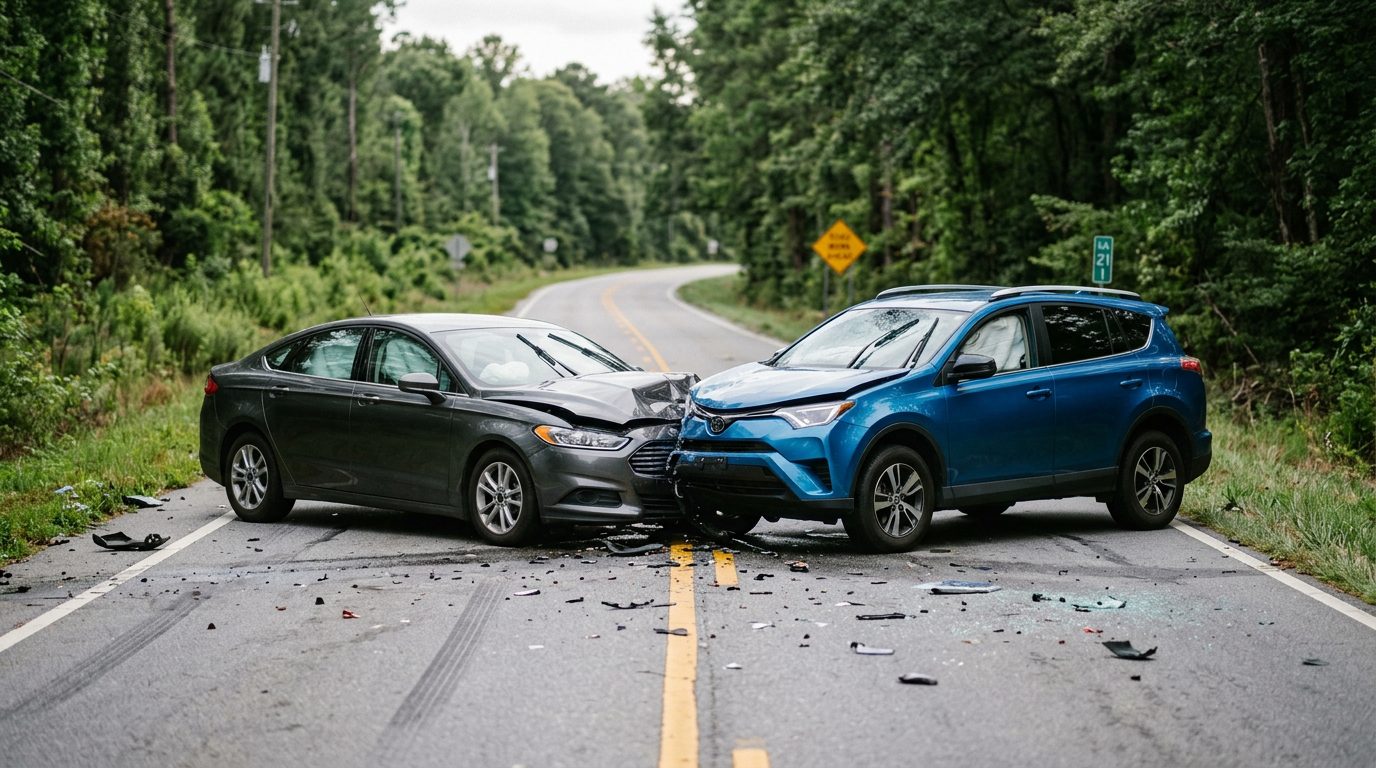
Head-On Collision Injury Claims | Atlanta and Georgia
Hurt in a Head-On Collision? You Don't Have to Sort Out the Next Steps Alone.
Head-on crashes can cause fractures, brain and spinal injuries, and long hospital stays. Ugwonali Law Group offers a free, confidential first consultation with no obligation to continue, in English or Spanish.
Getting Started With Our Firm
Free
Confidential first consultation with no obligation to continue
EN / ES
Intake team available in English and Spanish
Atlanta
3400 Peachtree Road NE, Atlanta, Georgia
By Adanna Ugwonali · Published October 20, 2026
A head-on collision injury claim is a request for compensation from the driver or party whose fault caused a crash between two vehicles traveling in opposite directions. Except as otherwise provided in this article, O.C.G.A. § 9-3-33 requires actions for injuries to the person to be brought within two years after the right of action accrues, so early attention matters.
If you were hurt, you may be dealing with medical bills, missed work, and insurance calls you didn’t expect. This guide explains the head-on collision injury claim Georgia residents may bring, how fault works, and what a free case review involves. Ugwonali Law Group represents people hurt in serious crashes across metro Atlanta and statewide in Georgia.
What a Head-On Collision Injury Claim Is and Who It’s For
A head-on collision happens when the front ends of two vehicles strike each other. Often, one driver has left his or her lane. A claim asks the responsible party to pay for the harm the crash caused.
Head-on claims are for serious injuries with real medical treatment. Examples include broken bones, hospital stays, traumatic brain injuries, spinal cord injuries, and death. Car and truck crashes both fall within this work.
The firm also handles wrongful death, catastrophic injury, premises liability, and slip and fall cases. It works with people across Fulton, Clayton, Cobb, and Rockdale counties, and statewide in Georgia.
Families have a path, too. When a head-on crash causes a death, a surviving spouse may bring a wrongful death claim. If there is no surviving spouse, the children may bring it.
If a head-on crash hurt you or someone you love, you may have a claim, and our team can talk it through with you on a free, confidential call. Talk it through with our team — the first consultation is free, confidential, and carries no obligation.

Injuries Common in Head-On Crashes and Why Records Matter
Head-on impacts can be severe because the forces of two vehicles meet in one collision. Common injuries include broken bones, internal injuries, traumatic brain injuries, spinal cord injuries, and crush or burn injuries.
Medical care often follows a path. It usually starts with emergency care, then imaging tests, then treatment and follow-up with a medical doctor. Some symptoms, especially after a brain injury, can appear hours or days later.
Spinal injuries can change daily life for a long time. The Model Systems Knowledge Translation Center publishes factsheets on spinal cord injury.
Every record matters. Keep bills, prescription receipts, and appointment notes. Under O.C.G.A. § 51-12-1.1, medical damages are limited to the reasonable value of medically necessary care. Records that show what care was needed help explain the claim.
Proving the Other Driver Was at Fault
Most head-on claims turn on whether the other driver failed to use ordinary care. Under O.C.G.A. § 51-1-2, ordinary diligence is the care that prudent people use in similar circumstances. Failing to use it is ordinary negligence.
Georgia also allows recovery when someone breaks a legal duty and that breach causes damage, as described in O.C.G.A. § 51-1-6. Traffic rules, such as staying in your lane, are common evidence of how a careful driver should act.
Useful evidence often includes:
- The police report and its report number
- Photos of both vehicles and the damage pattern
- Witness statements
- Traffic camera or dashcam video
- Medical records that connect the injuries to the crash
Insurers may argue that the injured driver shared the blame. That is why the facts of the crash matter.
Georgia’s Modified Comparative Negligence Rule
Under Georgia law, if an injured person is partly responsible for their own injury, the damages awarded are reduced in proportion to that person’s percentage of fault, and no damages may be recovered if the injured person is 50 percent or more responsible (O.C.G.A. § 51-12-33-pdf.pdf)). Under O.C.G.A. § 51-12-33, the judge reduces damages in proportion to the injured person’s share of fault.
The same statute provides that a plaintiff who is 50 percent or more responsible for the injury or damages claimed is not entitled to receive any damages (O.C.G.A. § 51-12-33). Each at-fault party pays only its own share, not a joint share with others.
General damages are those the law presumes flow from a wrongful act, and they can be recovered without proof of an amount. Special damages, such as medical bills and lost wages, must be proved, as stated in O.C.G.A. § 51-12-2.
For a fatal crash, O.C.G.A. § 51-4-2 allows a surviving spouse, or children if there is no spouse, to recover the full value of the decedent’s life, as shown by the evidence. Under O.C.G.A. § 51-4-5, when death of a human being results from a crime or from criminal or other negligence, the personal representative is entitled to recover funeral, medical, and other necessary expenses resulting from the injury and death.
The value of any claim depends on the facts of the crash and the injuries.
Georgia Deadlines for a Head-On Collision Claim
Georgia generally requires a personal injury lawsuit to be brought within two years after the right of action accrues, under O.C.G.A. § 9-3-33. That is the main deadline most injured drivers and passengers face.
Claims involving loss of consortium have a four-year period under the same statute. Read the statute’s exact wording, because the start of each period follows the law’s terms.
Waiting also carries practical risks. Records get harder to collect, witnesses forget details, and video may be overwritten. An early review gives time to gather evidence while it is still available.
How the Free Case Review Works
A free case review is a confidential first conversation about your crash, injuries, and treatment. The first consultation is free, confidential, and without obligation to continue.
- Reach out. Call, send an online form, or chat with the intake team in English or Spanish.
- Share the basics. A short call covers the crash date, your injuries, and whether you’ve seen a medical doctor.
- Review the facts. A lawyer reviews the crash facts and medical records. Adanna Ugwonali is the responsible lawyer for this page. Our team, including the firm’s lawyers and support staff, works on each matter.
- Talk through options. You receive an explanation of possible next steps.
Before the call, gather the police report number, insurance information for everyone involved, medical provider names, treatment dates, and photos of the scene and vehicles.
How long a review takes depends on the crash and the medical records. The office is at 3400 Peachtree Road NE, Atlanta.
Not sure what your next step is?
Talk it through with our team — the first consultation is free, confidential, and carries no obligation.

Common Questions About Head-On Collision Claims
Short answers to common questions are below.
What should I avoid telling the insurance company?
Speak with our team before giving a recorded statement or accepting an early offer. Insurers may ask questions that affect fault.
What happens to a person in a head-on collision?
Injuries can range from broken bones and internal injuries to brain and spinal cord injuries. Some symptoms can appear hours or days later.
How long do car accident claims take?
Timing varies with the injuries, the treatment, and how the insurer responds. Each matter moves on its own schedule.
Can I get a free case review in Spanish?
Yes. Intake is available in English or Spanish.
Can a family bring a claim after a fatal crash?
Under Georgia law, a surviving spouse, or children if there is no surviving spouse, may bring a wrongful death claim.
If a head-on crash hurt you or someone you love, you may be juggling bills, paperwork, and calls from adjusters. You don’t have to sort out the legal side alone. Request a free case evaluation with our team at 3400 Peachtree Road NE, Atlanta.
This page is educational and does not promise or predict any result. Responsible lawyer: Adanna Ugwonali, Ugwonali Law Group, 3400 Peachtree Road NE, Atlanta, Georgia. Contact: attorneyadanna.com contact page.
How We Support Injured Drivers and Families
Medical care comes first
Your health matters more than any claim. We help you understand the treatment you need and how it fits into your case.
Plain-language explanations
We walk you through the legal and medical process step by step, so you know what to expect at each stage.
Careful handling of insurers
We can communicate with insurance companies on your behalf so you are not left to manage those calls alone.
Support for families
When a head-on crash causes a death, our team works with surviving family members with patience and respect.
Think Before You Speak to the Insurer
Insurance adjusters may ask for a recorded statement or offer a quick settlement early on. Speak with our team before giving a recorded statement or accepting any offer, because early questions and answers can affect how fault is viewed.
After a Head-On Collision: Steps to Consider
Get medical evaluation
Some injuries, including brain and spinal injuries, may not show symptoms for hours or days. Seek medical care promptly and follow your doctor's advice.
Keep records
Save medical bills, discharge papers, photos, and the police report number. Good records help explain what happened and what it has cost you.
Limit early statements
Be cautious about what you say to insurance companies before you have legal guidance about your situation.
Contact our team
Call for a free case review. We will listen to your story, answer your questions, and explain your options in plain language.