


Atlanta and Georgia Car Accident Guide
Lane Change Crashes in Georgia: How Fault Is Looked At After a Serious Injury
A plain-language guide from Ugwonali Law Group on how lane change collisions are reviewed, what evidence matters, and what to do after a crash that leaves you hurt.
By Adanna Ugwonali · Published November 3, 2026
A lane change car accident fault Georgia question usually comes down to one thing: who made an unsafe move, and who had a chance to avoid it. Georgia looks at the facts of the crash together, not just who changed lanes. The state also reduces an injured person’s recovery by their own share of fault, and it bars recovery at 50 percent or more (O.C.G.A. § 51-12-33; Quynn v. Hulsey (2020)). Here is how that works, in plain terms.
What Georgia Law Requires Before a Driver Changes Lanes
These two duties sit at the center of most lane change fault questions.
In practice, “safely” means checking the mirrors, looking into the blind spot, and watching the position and speed of nearby cars. A driver who skips those checks may be found at fault for the crash.
A lane change violation is one piece of evidence. It is not automatically the whole answer. The other driver’s conduct, road conditions, and the position of each vehicle all matter. For the wider picture, read our guide to car accidents in Georgia.
If a lane change left you hurt and unsure who is responsible, our team can talk through your side of the crash in a free, confidential case review. Talk it through with our team — the first consultation is free, confidential, and carries no obligation.
Common Ways Lane Change Crashes Happen
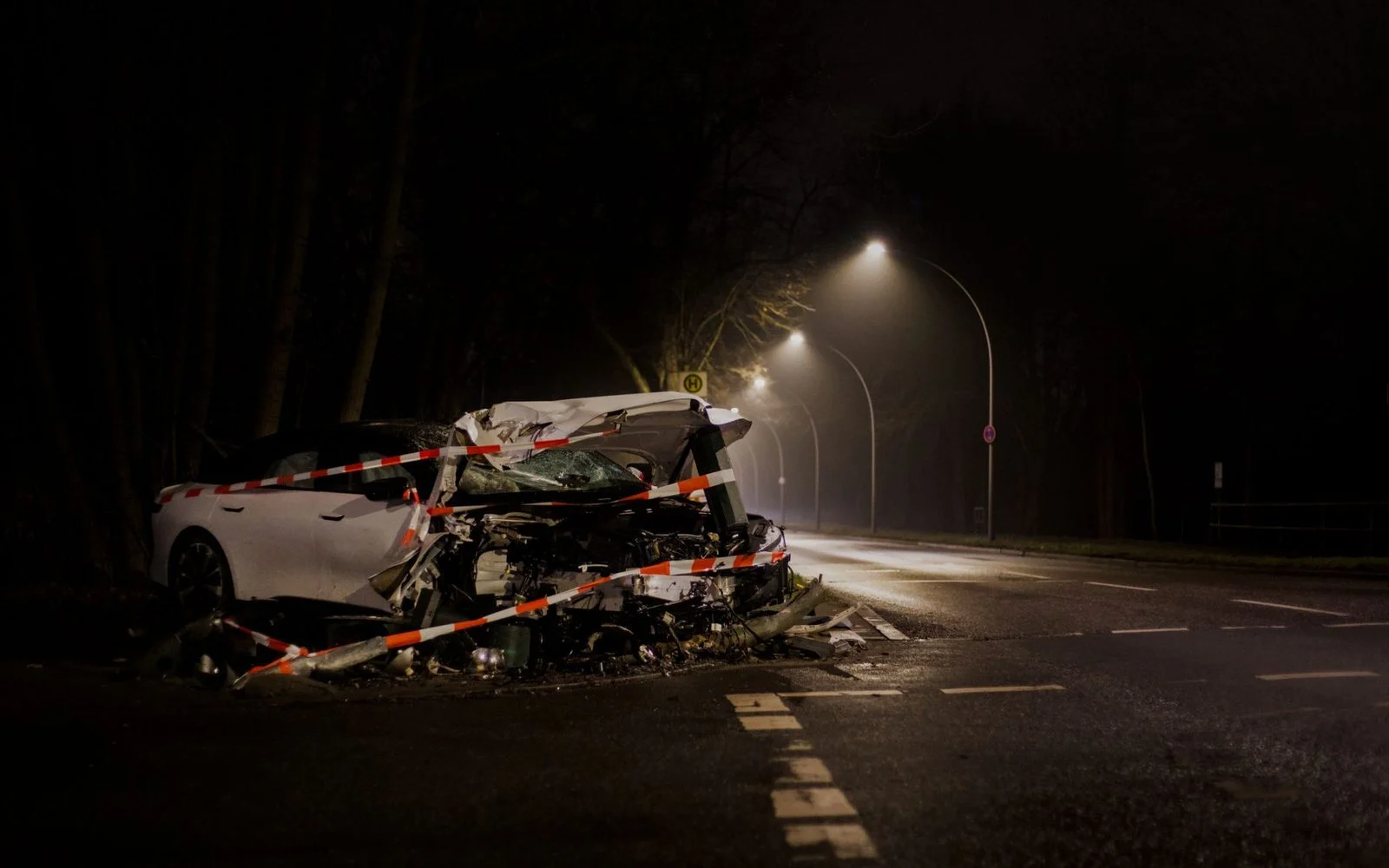
Most lane change crashes happen when one vehicle moves into a lane that another vehicle already occupies. The impact is often a sideswipe, where the sides of two vehicles strike or scrape each other.
Merging at highway speed is one common pattern. A driver who speeds up or slows down to fit into a gap can leave the other car no room. Another pattern is the driver who cuts across several lanes at the last moment to make an exit.
Blind spots play a role too. A truck driver may not see a car sitting beside the trailer or just behind it. Following too closely also matters, because a sudden move leaves the other driver little time to react. Each crash has its own details, and those details shape the fault question.
How Fault Is Determined After a Lane Change Crash
Fault is decided by weighing several kinds of evidence together. One item rarely tells the whole story.
The police crash report is a starting point. It records what the responding officer documented at the scene. Other evidence often includes:
- where each vehicle was damaged, and the pattern of that damage
- photographs of the vehicles, lane markings, and the roadway
- skid marks and the final rest positions of the vehicles
- witness statements
- dashboard camera or nearby traffic camera footage
- cell phone or vehicle data, where it can be lawfully obtained
Investigators and insurers also look at signal use, speed, and lane position. The answer depends on the facts of each crash.
How Georgia’s Comparative Fault Rule Affects Recovery
Georgia reduces an injured person’s damages by their share of fault. Under O.C.G.A. § 51-12-33, the judge reduces the damages in proportion to the injured person’s percentage of fault.
The same statute sets a bar. A plaintiff who is 50 percent or more responsible for the injury or damages claimed is not entitled to receive any damages (O.C.G.A. § 51-12-33; Quynn v. Hulsey (2020)).
Here is a simple example. Suppose total damages come to $100,000, and the injured driver is found 20 percent at fault. The reduction would be $20,000, leaving $80,000. This is arithmetic only, not a prediction for any real case.
The statute also counts the fault of every person or entity that contributed to the injury. Adjusters may argue that the injured driver shared the blame, so the details of the crash matter.
Injuries Commonly Seen in Lane Change Crashes
Side impacts and sideswipes can cause serious injuries. Fractures, traumatic brain injury, spinal injuries, and internal injuries can all follow a lane change crash.
Some injuries are not obvious right after a crash. Prompt medical evaluation protects your health and creates a record of what happened. If an airbag deployed, our page on airbag injuries in Georgia car crashes explains common concerns.
A spinal cord injury can bring long-term care needs. The Model Systems spinal cord injury factsheets describe life after this kind of injury, including those needs.
Steps to Take After a Lane Change Crash
The first steps after a lane change crash are medical care and careful records. Get medical attention promptly, and keep every record, bill, and referral.
Call the police so a crash report is made. Exchange names, phone numbers, and insurance details with the other driver. Photograph the vehicles, the roadway, the lane markings, and any visible injuries. Note where the vehicles came to rest.
Write down what happened while your memory is fresh, and collect the names of any witnesses. Insurance adjusters may ask you for a recorded statement. You can ask what the statement will be used for before you agree to give one.
Not sure what your next step is?
Talk it through with our team — the first consultation is free, confidential, and carries no obligation.
Lane Change Crashes Involving Commercial Trucks or Fatalities
When a commercial truck is involved, federal rules can add records and insurance layers to the claim. Federal rules require a driver to record duty status for each 24-hour period, under 49 CFR § 395.8. Those logs can show when the driver was on duty and where.
For example, 49 CFR § 387.9 sets $750,000 for for-hire carriage of nonhazardous property in interstate commerce, for vehicles rated at 10,001 pounds or more. That is a federal minimum, not the size of any particular policy.
49 CFR § 387.9 sets minimum levels of financial responsibility for motor carriers; it does not state the Georgia rule that a person is liable for torts a servant commits within the scope of that person’s business. See O.C.G.A. § 51-2-2.
If a lane change crash causes a death, a surviving spouse may recover the full value of the decedent’s life, as shown by the evidence. See O.C.G.A. § 51-4-2. Our page on fatal car crash records in Georgia covers records families often need.
Talking With a Lawyer About Fault in Your Lane Change Crash
A lawyer can review the crash report, the physical evidence, and insurer communications. That review can help explain how comparative fault may apply to your case. A lawyer cannot predict how a fault question will be decided or what any settlement would be.
Ugwonali Law Group serves clients across metro Atlanta and statewide in Georgia. The firm is located at 3400 Peachtree Road NE, Atlanta, and intake is available in English or Spanish.
The initial consultation is free, confidential, and comes without obligation to continue. If the firm takes a case, you may still be responsible for court costs and case expenses.
Does a lane change violation always mean the other driver is at fault?
A lane change violation is one piece of evidence. Fault is weighed together with the rest of the crash facts.
Can I recover damages if I was partly at fault?
Georgia reduces damages by your percentage of fault (O.C.G.A. § 51-12-33; Quynn v. Hulsey (2020)). A share of 50 percent or more bars recovery under O.C.G.A. § 51-12-33.
How long do I have to file an injury claim in Georgia?
Georgia’s general filing period for injuries to the person is two years after the right of action accrues, under O.C.G.A. § 9-3-33.
If You Are Trying to Understand Your Own Lane Change Crash
You may be the driver who was hurt, a passenger, or a family member trying to make sense of a crash you did not choose. The question in front of you is whether the other driver’s lane change caused the crash. You also want to know how Georgia’s fault rules could apply to your facts.
Our team can talk through those facts with you in a free, confidential case review. You can reach us by phone or chat, in English or Spanish, through our contact page.
Responsible lawyer for this page: Adanna Ugwonali, Ugwonali Law Group, 3400 Peachtree Road NE, Atlanta, Georgia. This page is general information, not legal advice for any specific situation.
How our intake team can help
Free first consultation
Your first call is confidential and comes with no obligation to continue. Our intake staff can speak with you in English or Spanish.
Review of your crash facts
We look at the police report, photos, medical records, and witness information to help you understand how your crash may be viewed.
Focus on your recovery
We explain the medical and legal steps in plain language so you can make informed decisions while you focus on treatment.
Based in Atlanta
Ugwonali Law Group serves Atlanta, Fulton, Clayton, Cobb, and Rockdale counties and clients across Georgia from 3400 Peachtree Road NE, Atlanta.
Important: be careful with recorded statements
Insurance adjusters may ask for a recorded statement soon after a crash. Before you give one, consider speaking with a lawyer, especially if you have been hospitalized or are still receiving treatment.
Steps to consider after a lane change crash
Get medical care right away
Some serious injuries, including brain and spinal injuries, may not show symptoms until hours or days later. A medical evaluation creates a record of what you experienced.
Document the scene
Photos of vehicle positions, lane markings, traffic signals, and visible damage can help preserve details that fade over time.
Gather the facts
Note the other driver's information, witness names, and the time and location. Keep copies of the police report and every medical bill.
Ask for a free case review
A short conversation with our team can help you understand your options and the questions to bring to your medical providers.