

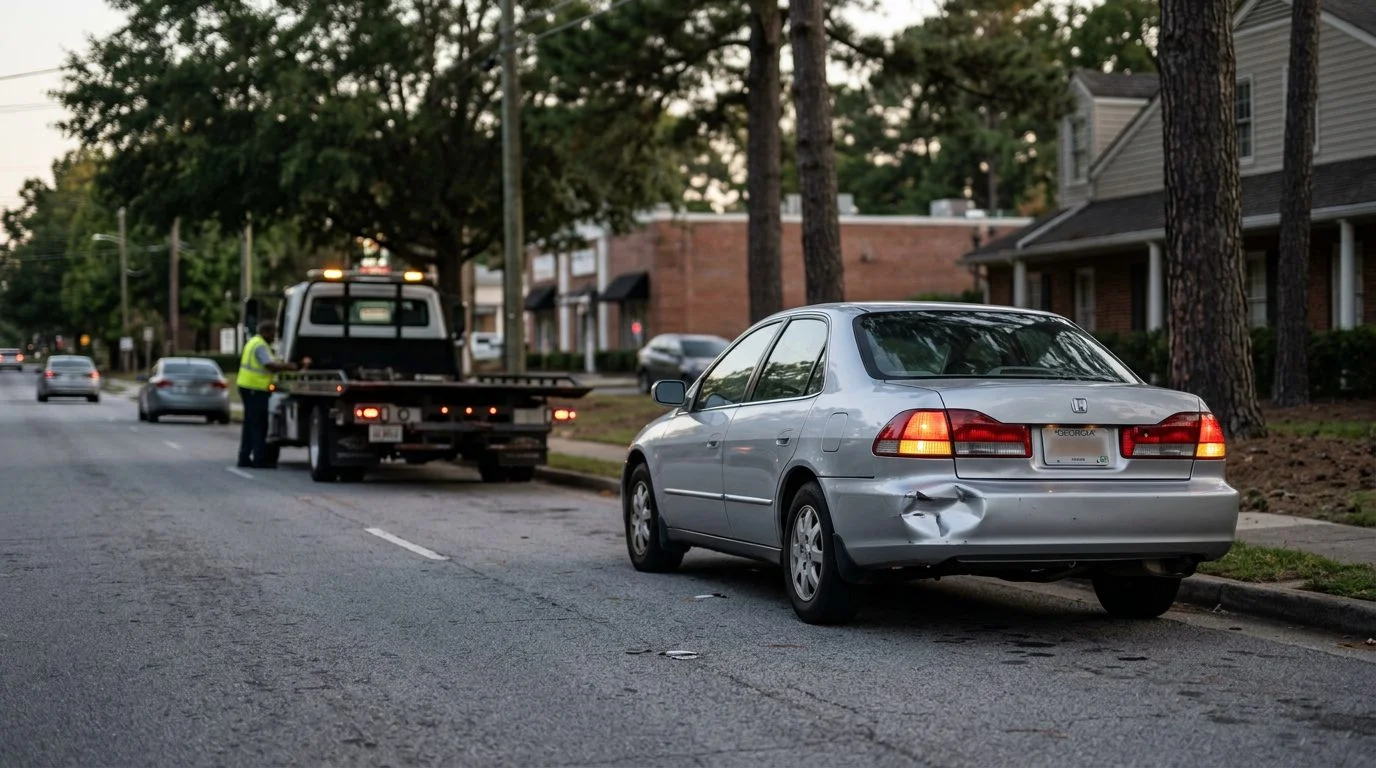
Car accidents | Atlanta and across Georgia
Hurt in a Rear-End Crash? Get Clear Answers Before You Talk to an Insurer
Ugwonali Law Group helps people with serious injuries understand each step, from medical treatment to dealing with the other driver's insurance company.
By Adanna Ugwonali · Published November 19, 2026
If another car hit yours from behind and you were hurt, you probably want to know who pays for your care. A rear-end car accident injury claim asks the at-fault driver’s liability insurer to pay for your injuries. In some cases, your own uninsured motorist coverage may also apply.
This guide covers serious injuries that need real medical treatment, such as fractures, hospital care, concussion, and spinal injury. It does not cover minor bumper damage with no injury.
What a Rear-End Car Accident Injury Claim Is and Who It Is For
A rear-end claim seeks compensation from the driver who struck you from behind. If someone hit your car, the claim goes to their insurer. A lawyer can handle conversations with that insurer for you, so you can focus on treatment.
This guide is written for drivers, passengers, and family members of people hurt or killed in rear-end crashes across metro Atlanta and statewide Georgia.
Some crashes fall outside what Ugwonali Law Group takes on. These include crashes where the client appears to be at fault, and cases where liability is seriously contested against the client. If that describes your crash, a free case review can help you sort out where it stands.
If a rear-end crash left you hurt and insurance calls are piling up, you don't have to face it alone. Our team can talk with you about your options. Talk it through with our team — the first consultation is free, confidential, and carries no obligation.
What to Do Right After a Rear-End Crash in Georgia
Get medical care as soon as possible, and report the crash to police. Some injuries, such as concussions and neck injuries, can show symptoms hours or days later.
Georgia law requires a driver in a crash that causes injury or death to notify police immediately. The same duty applies to property damage of $500.00 or more. Outside a city, notice goes to the county sheriff or the nearest state patrol office. O.C.G.A. § 40-6-273
Start a written record right away:
- Photos of both vehicles, the scene, and road and weather conditions
- Names, phone numbers, and insurance details for everyone involved
- Witness contact information
- A log of symptoms, appointments, prescriptions, missed work, and out-of-pocket costs
Georgia DOT’s crash reporting page explains how to get a police crash report through BuyCrash or GDOT. Insurers often ask for a recorded statement early. It’s reasonable to talk with a lawyer before you give one. Our team can walk you through what to gather, in English or Spanish.
How Fault, Insurance, and Compensation Work in Georgia
A car accident claim usually depends on showing the other driver failed to use reasonable care and that this caused your injuries. Common examples include following too closely, distracted driving, and stopping abruptly. O.C.G.A. § 51-1-6
Under O.C.G.A. § 51-12-33, your award shrinks in proportion to your fault. You recover nothing if you are 50 percent or more responsible. Under Georgia law, a jury assigns a percentage of fault to each person whose conduct contributed to an injury, and the injured person’s damages are reduced by their own share of fault. Under O.C.G.A. § 51-12-33, a plaintiff who is 50 percent or more responsible for the injury or damages claimed is not entitled to receive any damages.
Damages come in two types. Special damages must be proved. O.C.G.A. § 51-12-2 Special damages are those which actually flow from a tortious act; they must be proved in order to be recovered. O.C.G.A. § 51-12-1.1
Your own policy may matter too. Georgia’s uninsured motorist statute sets rules for coverage that pays you when an uninsured driver causes injury, within policy limits. What a claim may be worth depends on your injuries, treatment, lost income, available coverage, and the facts of the crash.
Injuries Common in Rear-End Impacts and Why Medical Records Matter
Rear-end impacts often injure the neck, back, and head. Serious harm can include fractures, herniated discs, concussion, traumatic brain injury, and spinal cord injury.
- Neck and back strains, including whiplash-type soft tissue injuries
- Herniated discs
- Rib and collarbone fractures
- Concussion and traumatic brain injury
- Spinal cord injury
Medical records carry real weight. Georgia’s medical expense rules look at what medically necessary care is reasonably worth. If the plaintiff has any form of public or private health insurance, including benefits under a governmental workers’ compensation program, evidence shall include both the amounts charged and the amounts actually necessary to satisfy those charges. O.C.G.A. § 51-12-1.1
That makes following your medical doctor’s plan important. Insurers often look for gaps in treatment and prior injuries. Many people have earlier neck or back problems. A clear medical history helps show what the crash changed.
How the Rear-End Injury Claim Process Works, Step by Step
A typical claim moves from a first conversation through treatment, insurance demands, and, if needed, a lawsuit.
- Free first consultation. We review the crash, your injuries, treatment, and insurance details. Intake is available in English or Spanish.
- Evidence gathering. This includes the police report, photos, vehicle data, witness information, and medical records.
- Treatment and documentation. Medical care comes first, and records build over time.
- Insurance claim. We communicate with the insurer and present a demand supported by records.
- Negotiation. Many claims resolve without a lawsuit. Some do not.
- Lawsuit, if needed. Georgia’s general limit for injury suits is two years after the right of action accrues. The statute starts with “except as otherwise provided,” so exceptions exist. O.C.G.A. § 9-3-33
Timelines vary with the injuries, the length of treatment, and whether a case reaches court. No particular timeline or result can be predicted.
Common Challenges in Rear-End Claims and How They Are Handled
Insurers often dispute how serious an injury is, who caused the crash, or what a claim is worth. Each challenge is answered with records.
- Injury disputes. Medical records and consistent treatment answer questions about severity and necessity.
- Fault disputes. Photos, vehicle data, and witness statements help show what happened.
- Early offers. Written offers to settle a tort claim for personal injury, bodily injury, or death arising from a motor vehicle collision, prepared by or with an attorney’s help and made before the named defendant files an answer (or, where there are multiple named defendants, before all of them have filed their initial answers or been found in default), must include a payment date at least 40 days after receipt. O.C.G.A. § 9-11-67.1
Your own share of fault can reduce what you recover, so the facts of each crash get reviewed closely.
Not sure what your next step is?
Talk it through with our team — the first consultation is free, confidential, and carries no obligation.
Why Clients Work With Ugwonali Law Group
Ugwonali Law Group is a personal injury firm in Atlanta, Georgia, led by attorney Adanna Ugwonali. Our office is at 3400 Peachtree Road NE, Atlanta.
The firm represents people seriously hurt in truck and car crashes, unsafe-property injuries, slip and falls, traumatic brain and spinal injuries, and families in wrongful death cases. The service area includes metro Atlanta, Fulton, Clayton, Cobb, and Rockdale counties, and statewide Georgia.
Our team includes support and intake staff who speak with clients in English or Spanish. The first consultation is free, confidential, and carries no obligation to continue. En español: La consulta inicial es gratuita, confidencial y sin compromiso de continuar.
Frequently Asked Questions About Rear-End Car Accident Claims
How do I make a claim if someone hit my car?
You make the claim against the other driver’s insurer. A lawyer can handle communications with that insurer for you.
What is classed as a minor accident?
A low-speed crash with no real injury and no medical treatment is a minor accident. It falls outside this guide’s scope.
How much does a road accident pay?
The value varies with injuries, treatment, lost income, coverage, and the facts of the crash. A free case review can look at those details.
How much are most car accident settlements?
Settlements vary widely from case to case. Each one is reviewed on its own facts.
How long do I have to file a Georgia injury lawsuit?
Georgia’s general limit is two years after the right of action accrues, with exceptions. Timing matters, so ask early.
If you’re in pain, facing bills, and hearing from an insurer you didn’t expect, you don’t have to sort it out alone. When you’re ready, reach our team for a free case review through the contact page, by phone or through our intake chat.
What to Do After a Serious Rear-End Crash
Get medical care right away
Some injuries, such as concussions, neck and back injuries, and fractures, may not show their full effects for hours or days. A medical evaluation creates a record of what happened to your body.
Document the scene
Photos of vehicle damage, the road, traffic signals, and visible injuries can help preserve details that fade quickly. Write down what you remember while it is fresh.
Keep every record
Save medical bills, prescriptions, appointment notes, time missed from work, and any letters from insurers. Organized records make your situation easier to explain.
Talk with a lawyer early
A lawyer can explain the process, handle communications with insurers, and help you understand your options while you focus on recovering.
Why Clients Come to Ugwonali Law Group
Free case review
Call or request an evaluation at no cost to learn whether your situation fits our practice.
English or Spanish
Our intake team can speak with you in English or Spanish from the first call.
Plain-language guidance
We explain the medical and legal process in terms you can follow, so you can make informed decisions.
Based in Atlanta
Our office is at 3400 Peachtree Road NE, Atlanta, and we serve clients across metro Atlanta and throughout Georgia.
Focused on serious injuries
We focus on crashes that involve real medical treatment, hospital care, fractures, brain and spinal injuries, and wrongful death.
Be Careful With Insurance Calls
The other driver's insurance adjuster works for the insurance company, not for you. Before giving a recorded statement, accepting a settlement offer, or signing any release, talk with a lawyer about what you would be agreeing to.