

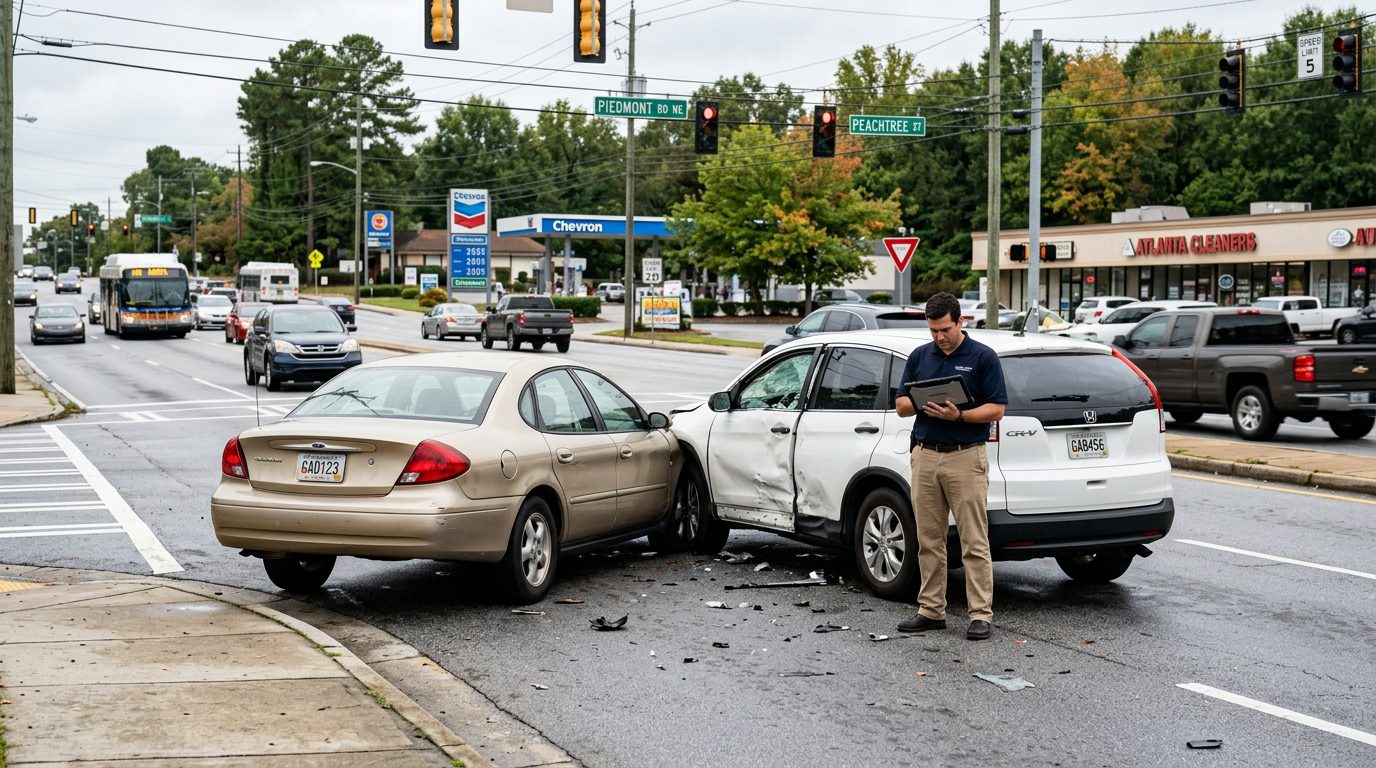
Atlanta Truck & Car Crash Claims
T-Bone Crash Injury Claims in Atlanta, Explained Step by Step
Side-impact collisions can cause serious harm. Here is what the process usually looks like, from the first call to the medical and insurance steps that follow.
Getting Started With Our Firm
Free
Confidential first consultation with no obligation to continue
English & Spanish
Intake team available in either language
Atlanta & Georgia
Serving metro Atlanta and clients across Georgia
By Adanna Ugwonali · Published November 18, 2026
A car or truck that hits the side of your vehicle at an intersection can cause broken bones, brain injuries, and long medical treatment. If that happened to you, the core question is whether the person who caused the crash can be held responsible for your injuries.
In Georgia, the answer turns on who had the duty to yield, how fault is shared, and how well your injuries are documented. This guide walks through each part in plain language. You can start with a free case review at any time.
What a T-Bone Crash Injury Claim Is and Who It Fits
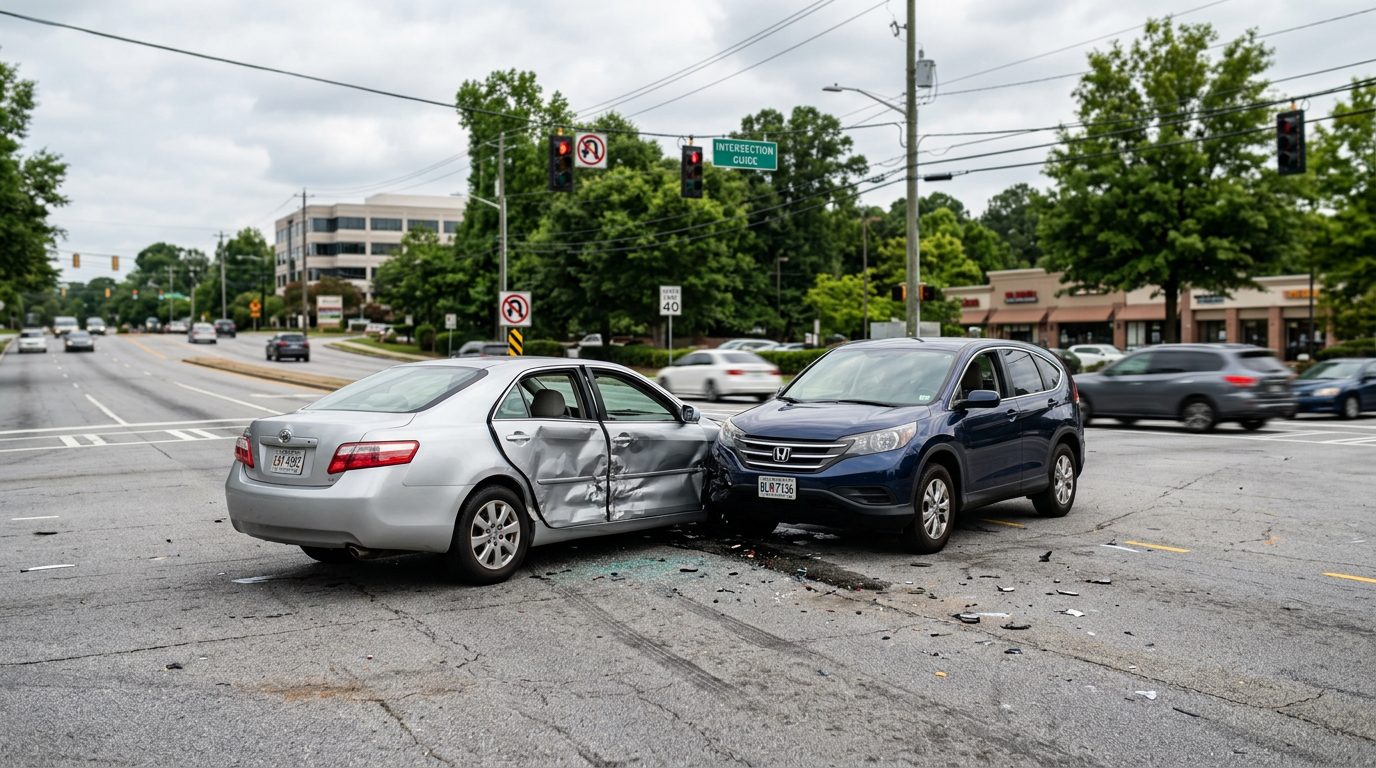
A T-bone crash, also called a side-impact crash, happens when the front of one vehicle hits the side of another. Intersections are the usual setting. A driver runs a red light or stop sign, or turns across oncoming traffic, and the other car has little room to avoid the hit.
An injury claim asks the at-fault party to pay for the harm the crash caused. Georgia law separates general damages, which the law presumes flow from a wrongful act, from special damages, which you must prove with records and bills.
Side-impact crashes often hurt people badly. Less of the vehicle stands between the force and the people sitting inside, so the impact lands close to the driver or passenger.
This guide fits crashes that involve real medical treatment. That includes fractures, hospital care, traumatic brain or spinal injuries, total-loss crashes, and wrongful death. A minor bump with no real injury falls outside what this guide covers. If your crash matches this description, a free case review can show how the facts apply to you.
If another driver hit your side at an intersection and you're still in treatment, our team can talk through your crash with you and explain what your options may look like. Talk it through with our team — the first consultation is free, confidential, and carries no obligation.
Injuries Common in Side-Impact Crashes and Why Medical Records Matter
Side-impact crashes can cause fractures, internal injuries, and head or spinal trauma. Each one needs a clear medical record. Injuries often seen in these crashes include:
- Rib and pelvic fractures
- Broken arms and legs
- Internal injuries that need hospital care
- Head, neck, and back trauma
A traumatic brain injury can cause temporary or permanent disability. Mild and repeated brain injuries can be hard to diagnose, so early evaluation and follow-up visits matter. Tell your doctor about every symptom you notice, even if it seems small.
A spinal cord injury can change daily life and often needs long-term care and planning. The Model Systems Knowledge Translation Center publishes research-based factsheets on life after spinal cord injury.
Treatment records, imaging, and physician notes show how your injury was diagnosed and treated. Under O.C.G.A. § 51-12-1.1, medical expenses are limited to the reasonable value of medically necessary care.
How Fault Is Decided at an Intersection
Fault at an intersection usually turns on who had the duty to yield. Traffic signals, stop signs, yield signs, and turning rules all shape that duty.
Evidence that often shows what happened includes:
- The crash report
- Traffic camera or nearby business video
- Vehicle damage patterns
- Witness statements
- Signal timing records
Video can be overwritten after a period of time, so early requests matter. Speed, distraction, and impairment by the other driver are common questions in these cases. Each one is examined through the evidence.
Georgia uses a shared-fault rule. Under O.C.G.A. § 51-12-33, the jury determines the injured person’s percentage of fault, and the judge reduces the award in proportion to that percentage.
When more than one person is at fault, damages are divided by each person’s percentage. Those damages are not a joint liability among them. The same statute says a plaintiff who is 50 percent or more responsible cannot receive any damages (O.C.G.A. § 51-12-33; Quynn v. Hulsey (2020)).
When a Truck, Company Vehicle, or Commercial Policy Is Involved
A T-bone crash with a truck or company vehicle can involve more than one party who may be responsible. The driver is one party. The business that employs the driver may be another.
Under O.C.G.A. § 51-2-2, a person is liable for torts committed by a servant in the prosecution and within the scope of the person’s business.
Federal rules also set insurance minimums for many commercial trucks.
Federal rules also require drivers to record their duty status. Under 49 CFR 395.8, carriers must keep those records for at least six months from the date of receipt.
Claims against a county or other government entity follow different rules and fall outside this guide.
What to Expect: Steps and Timeline for an Intersection Injury Claim
A claim usually moves through several stages, from the first call to a resolution. The length of each stage varies with your injuries, the insurers involved, and whether the case settles without a lawsuit.
- Free case review. You share the basic facts of your crash. The first consultation is confidential.
- Evidence preservation. Crash reports, photos, and video requests start early, before records are lost.
- Medical treatment and documentation. Your own doctors guide your care. Your records, bills, and imaging become part of the claim.
- Claim presentation. A demand to the insurer is supported by medical records and bills.
- Negotiation or filing suit. Under O.C.G.A. § 9-3-33, most personal injury actions must be brought within two years after the right of action accrues.
Why Work With Ugwonali Law Group
Adanna Ugwonali is the responsible lawyer for this page. Ugwonali Law Group represents people seriously hurt in truck and car crashes, unsafe-property injuries, slip and falls, and wrongful death cases.
The firm’s office is at 3400 Peachtree Road NE, Atlanta. It represents clients across metro Atlanta and statewide in Georgia.
Intake staff can speak with you in English or Spanish. Our team explains each step in plain language, so you know what comes next.
The firm’s support staff handle scheduling, records requests, and client updates. You do not have to manage the paperwork alone.
The firm focuses on serious injuries. Consultations are built to educate you about the legal and medical process, not to push a decision.
Not sure what your next step is?
Talk it through with our team — the first consultation is free, confidential, and carries no obligation.
Common Questions About T-Bone Crash Claims in Atlanta
Do I need a police report for a T-bone claim?
A crash report is one of the key records in a claim. It is often requested early, along with photos and medical records.
What if I was partly at fault?
Georgia reduces damages by your share of fault. If you are 50 percent or more responsible, you cannot receive damages under the statute (O.C.G.A. § 51-12-33; Quynn v. Hulsey (2020)).
What if my symptoms showed up days later?
Some injuries, especially brain and spinal injuries, can be hard to diagnose early. Prompt medical evaluation and follow-up care matter for both your health and your record.
How much does the first consultation cost?
La consulta inicial es gratuita, confidencial y sin compromiso de continuar. The first consultation is free, confidential, and carries no obligation to continue.
How long do I have to file?
For most personal injury claims in Georgia, the deadline is two years after the right of action accrues (O.C.G.A. § 9-3-33; Kenneth B. Cameron v. Jmp Pizza, Inc (2026)). Other timing rules can apply, so early review helps.
Talk With Our Team About Your Intersection Crash
If another driver hit your side at an intersection and you’re still in treatment, a free case evaluation can help you see your options. You may have a claim worth reviewing, and you don’t have to sort out the insurance and medical questions alone.
Request a free case evaluation, or chat with our intake team in English or Spanish. Our team will ask about your crash, your injuries, and your treatment so the review fits your situation.
This page is general information, not legal advice. Responsible lawyer: Adanna Ugwonali, Ugwonali Law Group, 3400 Peachtree Road NE, Atlanta, Georgia.
What Helps a T-Bone Claim Move Forward
Crash report
Note the report number and request a copy. It is one of the key records in a claim and is often requested early.
Photos and scene details
Photos of both vehicles, the intersection, traffic signals, and any visible damage help show how the collision happened.
Medical records
Keep every visit, scan, prescription, and bill. Fractures, head injuries, and spinal injuries often need ongoing treatment, and records document that care.
Witness information
Names and phone numbers of anyone who saw the crash can be valuable, and they are easier to collect while memories are fresh.
How Our Team Supports Clients
Call on day one
Our intake staff can speak with you by phone in English or Spanish and answer your first questions.
Confidential first consultation
Your first review is free, private, and comes with no obligation to continue.
Plain-language explanations
We take time to explain the legal and medical steps so you know what is happening and why.
Support for families
When a crash causes a death, our team helps loved ones understand the wrongful death process.
Talk With a Lawyer Before Giving a Recorded Statement
Insurance adjusters may ask for a recorded statement soon after a crash. Speaking with a lawyer first can help you understand what to say and what to hold back while you are still recovering.