

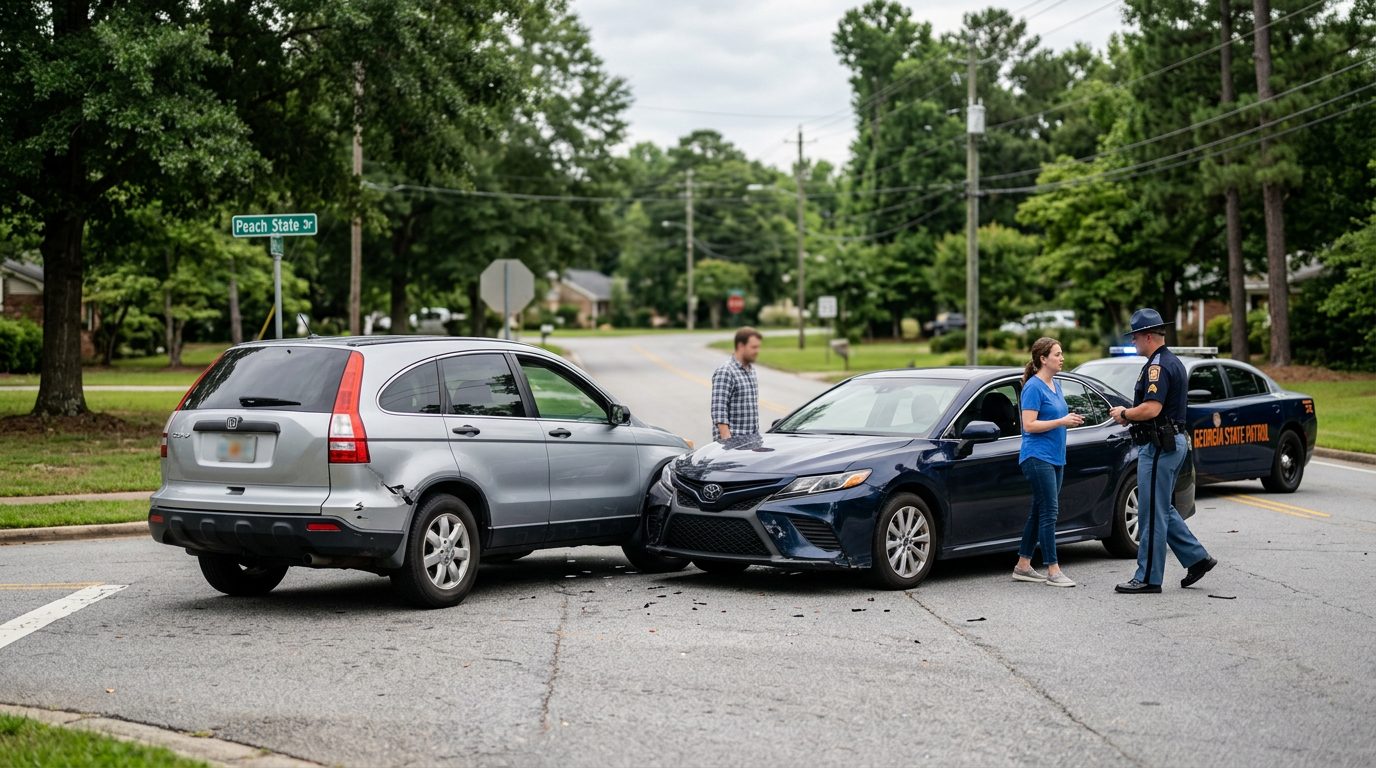
Car & Truck Accidents | Atlanta, Georgia
Not Every Crash Is a Serious Injury Claim. Here Is How to Tell the Difference.
A plain-language guide to the crashes, injuries, and medical facts that matter in Georgia, from Ugwonali Law Group in Atlanta. Your first consultation is free and confidential, with no obligation to continue.
Getting Started
Free
First consultation, confidential and without obligation
English & Spanish
Intake staff available in both languages
Atlanta
3400 Peachtree Road NE, serving metro Atlanta and Georgia
By Adanna Ugwonali · Published October 20, 2026
What qualifies as an auto accident? In Georgia, a crash that involves a motor vehicle and causes real harm, usually injuries that need medical treatment, can qualify. The facts decide the question: who was involved, how the crash happened, and what injuries followed.
If you’re reading this after a crash, you may be dealing with hospital visits, lost work, or the loss of someone you love. This guide explains the key terms in plain language so you can see where your situation fits.
What qualifies as an auto accident in Georgia?
An auto accident is a crash that involves at least one motor vehicle and leads to real harm. That harm most often means injuries that a medical doctor evaluates and treats, or significant damage to property.
The word “accident” describes what happened on the road. The legal question turns on the facts, not the label. Insurers and courts look at the collision itself, the injuries, and whether another person’s negligence (failure to use reasonable care) played a part.
This page focuses on crashes that cause injuries needing medical care. A minor bump with no injury is a different situation and is not the focus here.
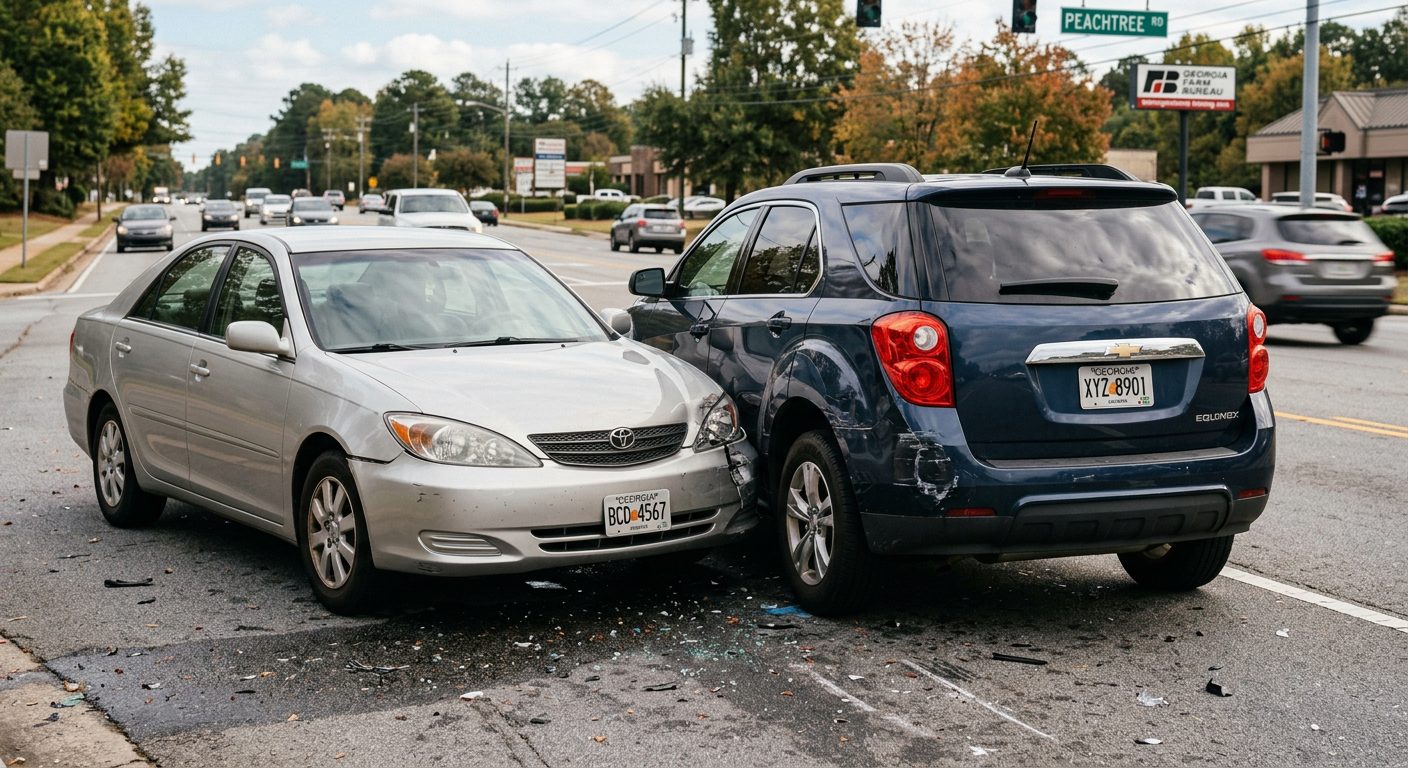
Crash, accident, or car wreck: what do the words mean?
A car wreck and a crash both describe a collision between vehicles, or between a vehicle and another object or road user. In everyday speech, people use these words in the same way.
“Accident” is the word on most insurance forms, and it sounds as though nobody caused the event. The label doesn’t settle the legal question, though. A crash can be called an accident in everyday language and still lead to a claim if another driver’s negligence caused the harm.
“Road traffic accident” is a phrase some public-health writers use for crashes on public roads that involve vehicles. It matches the everyday meaning used here.
What are the core elements of a motor vehicle accident?
A motor vehicle accident usually has four parts: a motor vehicle, a collision or sudden impact, a person who is hurt or property that is badly damaged, and another party’s fault. Vehicles include cars, SUVs, pickups, motorcycles, buses, and commercial trucks on public roads or parking areas.
Fault is often the central question. Georgia law requires every driver to use care around people on foot. The pedestrian rule says every driver “shall exercise due care to avoid colliding with any pedestrian upon any roadway” (O.C.G.A. § 40-6-93-2018-pdf.pdf)).
Fault also changes how much an injured person may recover. Under O.C.G.A. § 51-12-33-pdf.pdf), a judge reduces damages in proportion to the injured person’s share of fault. A person who is 50 percent or more responsible recovers no damages. Each at-fault person is liable only for its own share, not a joint share.
Which crash types can qualify?
Most common crash types can qualify when they cause real injury. The crash pattern often shows how the forces hit the body. The main types include:
- Rear-end collisions. One vehicle strikes the back of another, often when a following driver can’t stop in time.
- Head-on collisions. Two vehicles meet front to front, often at high impact. These crashes can cause serious injuries, including fractures and brain injuries.
- Side-impact (T-bone) collisions. One vehicle strikes the side of another, which can expose occupants to serious force.
- Left-turn crashes. A driver turning across oncoming traffic collides with a vehicle moving straight through.
- Crashes caused by another party’s conduct. A car leaves the road or hits a tree or fixed object because of another driver’s or a commercial party’s negligence. These can still qualify when another party’s conduct may have played a part.
- Sideswipes. Vehicles brush or strike along their sides during a lane change or merge, which can cause serious harm at highway speed.
Which injuries mark a serious auto accident?
A serious auto accident usually involves injuries that need hospital care, surgery, or ongoing treatment by a medical doctor. Common examples include:
- Fractures and broken bones that need hospital care, surgery, or immobilization.
- Traumatic brain injuries, including concussions with symptoms that last.
- Spinal injuries, including herniated discs, nerve damage, and spinal cord injuries.
- Internal injuries, serious cuts, burns, and crush injuries that need emergency care.
Records matter. Emergency room notes, imaging, referrals, and follow-up care by a medical doctor connect the crash to the injuries. Georgia law limits medical expense claims to the reasonable value of care. Under O.C.G.A. § 51-12-1.1-pdf.pdf), these expenses “shall be limited to the reasonable value of medically necessary care, treatment, or services.”
When does a fatal crash become a wrongful death matter?
A fatal crash becomes a wrongful death matter when another party’s negligence caused the death. Georgia statutes set out who may bring the claim and what it can cover.
Under O.C.G.A. § 51-4-2-pdf.pdf), a surviving spouse may recover for the death of a spouse, or, if there is no surviving spouse, a child or children may recover for the death of a parent. If there is no surviving spouse, a child or children may recover. The measure is “the full value of the life of the decedent, as shown by the evidence.”
Georgia’s wrongful death chapter defines “homicide” broadly. It includes a death resulting “from criminal or other negligence” (O.C.G.A. § 51-4-1-2017-pdf.pdf)-2017-pdf.pdf)). The personal representative may also recover funeral, medical, and other necessary expenses in those cases (O.C.G.A. § 51-4-5-2017-pdf.pdf)-2017-pdf.pdf)).
Families often need help gathering medical records and police reports while they grieve. Keeping those records in one place can make the next steps easier to follow.

What insurance questions and deadlines should you know?
Georgia’s general deadline for injury lawsuits is two years after the right of action accrues. O.C.G.A. § 9-3-33-2023-pdf.pdf)-2023-pdf.pdf) sets this period for actions for injuries to the person. The same statute sets a four-year period for loss of consortium claims. Timing rules can vary with the facts, so don’t assume the general rule fits your case.
Insurance questions often come up right away. It is usually wise not to say anything that admits responsibility or fault for the crash.
If the other driver has no insurance, your own uninsured motorist coverage may matter. Depending on the terms and limits of your own policy, uninsured motorist coverage may pay damages you are legally entitled to recover from a driver who had no insurance or not enough insurance, and some policies extend it to hit-and-run crashes under conditions the policy sets out.
Keep your medical records, photos of the scene, the police report number, and witness contact details.
Quick answers to common questions
Is every car crash an auto accident?
Not every crash qualifies. The focus is on crashes that cause real injury needing medical care.
How long do I have to file a car accident lawsuit in Georgia?
Georgia’s general deadline for lawsuits over injuries to the person is two years after the right of action accrues, under O.C.G.A. § 9-3-33-2023-pdf.pdf), but loss of consortium claims have four years.
Can family members file after a fatal crash?
Georgia law generally gives the right to file a wrongful death claim first to the deceased person’s spouse, and to the children when there is no spouse.
Our team can talk through your situation with you in a free, confidential first consultation, with no obligation to continue. You can reach us in English or Spanish through our contact page. For more on crashes like yours, see our car accident overview.
Ugwonali Law Group, 3400 Peachtree Road NE, Atlanta, Georgia. Responsible lawyer: Adanna Ugwonali. This article is general information, not legal advice.
What Typically Shapes a Serious Auto Accident Case
Real medical treatment
Cases often involve fractures, hospital care, or ongoing treatment from a medical doctor after a crash.
Clear medical records
Records of diagnosis, treatment, and follow-up care help show how an injury happened and how it has affected a person's life.
Serious, lasting injuries
Traumatic brain injuries and spinal cord injuries can change daily life and often need long-term care and planning.
Impact on families
When a crash causes a death, surviving family members may face wrongful death questions that need careful attention.
Get Medical Care First
Some serious injuries, including head and spinal injuries, may not show symptoms right away. Seeing a medical doctor promptly protects your health and creates a record of your condition and treatment.
Crash Types We Review
Truck accidents
Collisions involving commercial trucks, which can cause severe injuries and often involve more than one party.
Car accidents
Crashes that result in fractures, hospital stays, brain or spinal injuries, or a total loss of the vehicle.
Premises and slip-and-fall
Injuries caused by unsafe conditions on someone else's property, such as a hazard that was not addressed.
Wrongful death
Claims brought by families after a fatal crash or injury, handled with care and attention to each family's needs.