

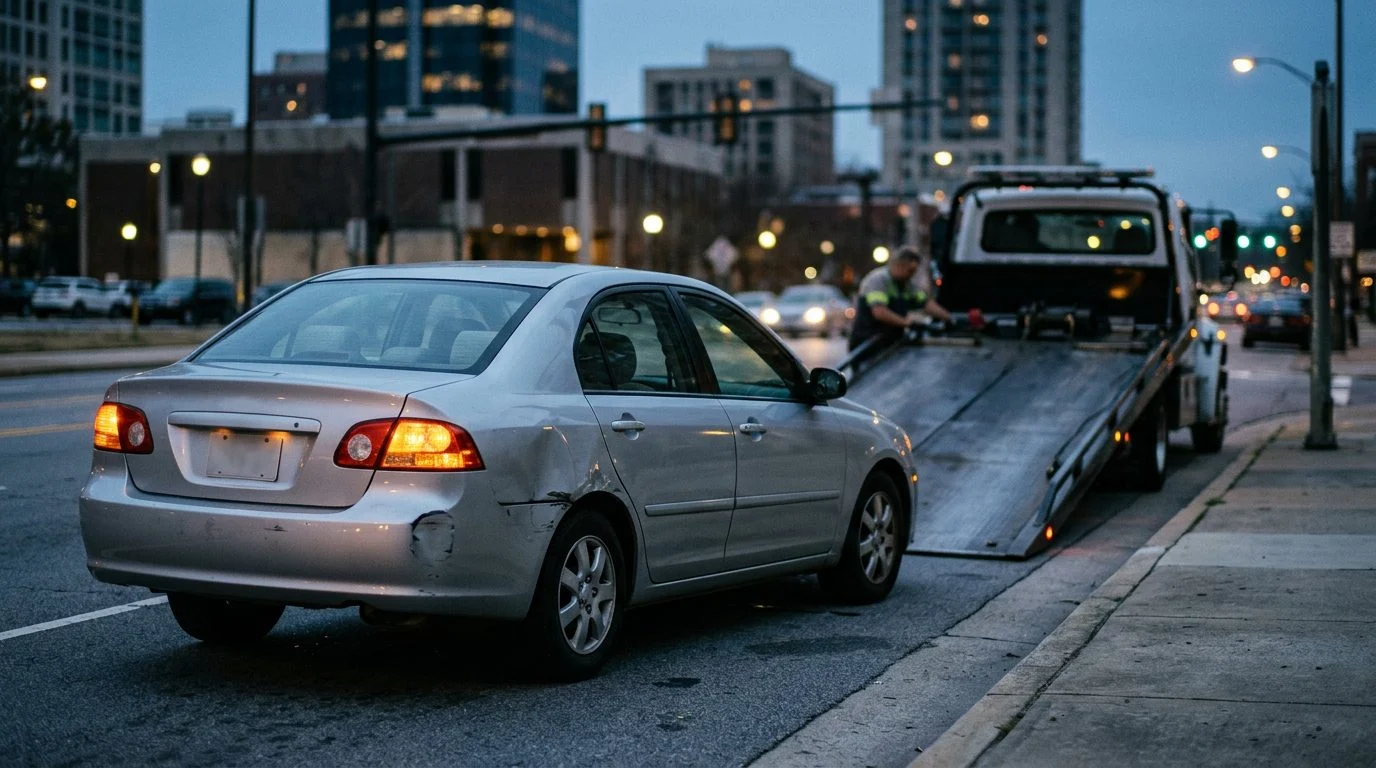
Car Accidents | Atlanta and Georgia
Why a Witness Statement Can Matter After a Serious Car Accident
An independent account of what happened can help clarify a crash that left someone badly hurt. Here is how to write one, what to include, and how our team can help you take the next step.
Ugwonali Law Group at a glance
Free
First consultation, confidential and with no obligation to continue
English & Spanish
Intake staff sign clients on the first call in either language
Atlanta
Office at 3400 Peachtree Road NE, serving metro Atlanta and Georgia
By Adanna Ugwonali · Published November 3, 2026
A witness statement car accident Georgia drivers can use is a signed, dated account from someone who saw or heard the crash. Write down what the witness saw, in their own words, and get their contact details before they leave.
If you were seriously hurt in a crash, or you’re helping someone who was, this guide explains what to collect and how to write it down. It is general information, not legal advice. Every case turns on its own facts.
Why Witness Statements Carry Weight After a Serious Georgia Car Crash
A witness statement helps because it gives an outside account of what happened. This matters most when drivers tell different stories about the light, the lane, or the speed.
A witness is anyone who saw, heard, or was present for the crash. Their account can support the other evidence in the file: the police report, photos, vehicle damage, and medical records.
A witness statement does not replace medical documentation. Doctors’ notes, imaging, and treatment records show injuries and care. A witness can describe the crash, but only your medical providers can document what your body went through.
For the bigger picture, read our guide to car accident claims in Georgia.
If you're gathering witness names and statements while a family member recovers, our team can talk through your situation with you in English or Spanish. Talk it through with our team — the first consultation is free, confidential, and carries no obligation.

Getting Witness Details at the Scene and Before People Leave
The best time to get a witness’s details is at the scene, before they drive away. Waiting makes it harder to find them.
People leave, phone numbers change, and memories fade over time. A witness who was happy to help on the roadside may be hard to reach a month later.
Record these details for each witness:
- Full name
- Phone number and email address
- Home or mailing address
- Where they were standing or sitting when the crash happened
Ask whether they will agree to be contacted later. Also note the time of day, the weather, and the lighting as the witness experienced it.
A witness may be willing to give a short account before leaving. Asking early gives you the best chance to capture it while it’s fresh.
What a Witness Statement Should Include
A strong witness statement records what the witness saw and heard, not what they guessed. Facts carry more weight than opinions.
The core facts are the date, the time, the location, and the witness’s position at the moment of impact. Each detail helps place the witness and the vehicles on the road.
The witness should also separate what they saw directly from what someone told them. “I saw the gray sedan drift into the turn lane” is a direct observation. “The other driver said he was on his phone” is something the witness only heard.
Vehicle details can help, if the witness noticed them. These include make, color, direction of travel, and any signal or light changes.
Avoid guesses about fault. A line like “The driver was clearly at fault” is an opinion. A line like “The gray sedan’s brake lights came on about one second before the impact” describes what the witness observed.
How to Write a Witness Statement for a Car Accident, Step by Step
To write a witness statement, start with the date and time. Then add the witness’s contact details and describe the crash in order.
Follow these steps:
- Write the date and time the statement is made.
- Add the witness’s full name and contact information.
- Describe where the witness was and what they saw, in the order it happened.
- Use plain language and the first person, such as “I was waiting at the light.”
- Have the witness sign and date the statement. If it runs more than one page, number each page.
The statement should be complete but short. Include what matters and skip the rest.
If details come back later, add them as a separate dated note. It is better to add a correction than to rewrite a statement that has already been signed.
Passengers and Other Occupants as Witnesses
A passenger can be a witness in a car accident case. Passengers in either vehicle can describe what they saw, heard, and felt before, during, and after the crash.
A passenger may have a close view of the driver’s actions. Their account can be written and signed just like any other witness statement.
Record each passenger’s account separately from the driver’s. Do not combine several people’s memories into one narrative. Separate accounts show what each person actually observed.
A passenger who was also hurt should keep their own medical records. Those records are separate from what they observed about the crash. Keep both, and label them clearly.
Keeping Witness Statements Safe and Organized
Keep the signed original in a safe place. Save a dated scan or clear photo of it as well.
Keep one list of all witnesses with their contact details. Note the date each statement was signed, so details are easy to find later.
Store related items together. These include photos of the scene and vehicles, the police report number, any dashcam or phone video, and notes about injuries and treatment.
Once a statement is signed, leave it unaltered. Any new information should go into a separate dated note.
To get the official crash report, the Georgia Department of Transportation crash reporting page explains that reports can be obtained through BuyCrash or GDOT.
Not sure what your next step is?
Talk it through with our team — the first consultation is free, confidential, and carries no obligation.
Where Witness Statements Fit in a Georgia Car Accident Claim
A witness statement is one part of the evidence file. It sits alongside medical records, the police report, insurance documents, and repair or total-loss records.
Timing matters. Georgia law generally gives two years to bring a lawsuit for injuries to the person, under O.C.G.A. § 9-3-33. Read our car accident claim timeline in Georgia to see how the steps fit together.
Medical bills are measured by what is reasonable. Under O.C.G.A. § 51-12-1.1, medical expense damages are limited to the reasonable value of medically necessary care. Documented injuries and treatment shape how a claim is described, as our page on pain and suffering after a car accident in Georgia explains.
Fault is also part of the picture. Under O.C.G.A. § 51-12-33, damages are reduced in proportion to the injured person’s share of fault. A person who is 50 percent or more responsible for the injury or damages claimed is not entitled to receive any damages. This is one reason accurate, first-hand accounts matter.
If the crash happened in a private lot, witnesses can be harder to find. Our page on parking lot car accident injuries in Georgia covers that situation.
Does having a witness help with a car accident?
Yes. An independent account can help show what happened when drivers disagree. It works alongside the police report and medical records.
What should a witness statement include?
The date, time, location, the witness’s position, and what they saw, in order. Direct observations are stronger than guesses.
Can a passenger be a witness?
Yes. A passenger can give a separate signed account of what they observed.
Timing depends on the facts of each case.
Talking With Ugwonali Law Group About Your Situation
If you’re collecting witness details while someone you love is in the hospital or recovering, this can be a hard time to keep paperwork in order. You don’t have to sort it out alone.
Ugwonali Law Group offers a free case review. You can contact our team here, and we offer support in English and Spanish. Our office is at 3400 Peachtree Road NE, Atlanta, Georgia.
The first consultation is free and confidential, and it does not commit you to continue. Spanish: consulta inicial gratuita, confidencial y sin compromiso.
Responsible lawyer: Adanna Ugwonali, Ugwonali Law Group, 3400 Peachtree Road NE, Atlanta, Georgia. This page is general educational information, not legal advice. Reading it does not create an attorney-client relationship.
How an independent account supports a serious injury claim
Adds a neutral perspective
A witness who was not involved can describe the crash without a stake in the outcome, which can be useful when the drivers' accounts differ.
Works alongside other records
A witness statement sits next to the police report, photographs, and medical records. Together they give a fuller picture of the crash.
Captures details while memory is fresh
Describing the scene, the weather, and the traffic while they are still clear helps preserve facts that are easy to lose over time.
Reflects what a person actually saw
Plain, direct observations are the foundation of a useful statement. Our team can help you organize your recollection without adding anything you did not witness.
Stick to what you saw
Guesses about speed, distance, or who was at fault can weaken a statement. Describe only what you directly observed, say when you are unsure, and do not sign anything you have not read carefully.
Steps for writing a clear witness statement
1. Record the basics
Write down the date, the time, and the exact location, including nearby streets, landmarks, and the direction each vehicle was traveling.
2. Describe your position
Explain where you were standing or driving and what you could see from that spot, such as lanes, signals, or obstructions.
3. Narrate in order
Put events in the sequence you saw them, from before the impact through the moments after. Keep each statement tied to what you observed.
4. Review, sign, and keep a copy
Read the statement carefully, correct anything inaccurate, then sign and date it. Keep your own copy and share it with our intake team for review.