

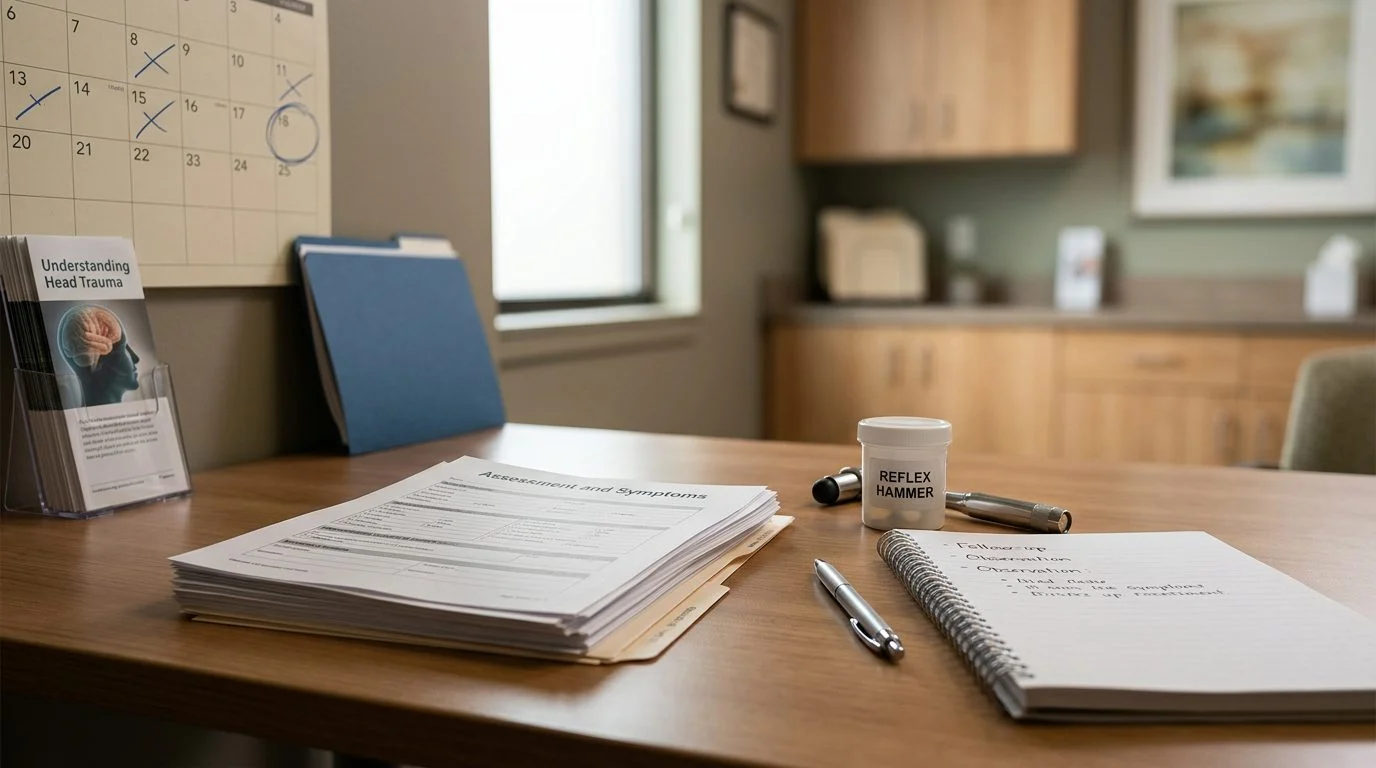
Head Injuries | Atlanta, Georgia
How Is a Head Injury Assessed? Tests and Warning Signs
A plain-language guide to the exams, scans, and symptom checks doctors use after a head injury, and the warning signs that need emergency care. Ugwonali Law Group is based in Atlanta and offers free case reviews.
By Adanna Ugwonali · Published November 7, 2026
How is a head injury assessed? A doctor looks at how the injury happened, how the person is functioning, and whether there is bleeding, a fracture, or a concussion. The work happens in stages, and it often continues over several days.
If you or someone you love hit a head in a crash or a fall, the process can feel fast and confusing. This guide walks through each step in plain language, from the first check to follow-up care. It also explains the warning signs that need emergency care right away.
Why a Head Injury Is Assessed in Stages
A head injury is assessed in stages because some problems are obvious at once and others show up later.
The first check usually happens at the scene or in the emergency department. Staff look for immediate danger, such as trouble breathing, heavy bleeding, or a person who is hard to wake.
Other problems take longer to appear. Some symptoms show up hours or days after the impact, so one early exam may not catch everything. The FloridaHealthFinder concussion guidance covers when to contact a healthcare provider after a head injury. That is why follow-up matters.
Doctors combine three things: the injury history, the physical and neurological exam, and any tests they order. The sections below cover each one.
If you are caring for someone after a head injury from a crash, you do not have to sort out the medical and legal steps alone. Our team is ready to talk it through with you. Talk it through with our team — the first consultation is free, confidential, and carries no obligation.

The First Check: Injury History and the Glasgow Coma Scale
The first check starts with how the injury happened and how alert the person is right now.
The doctor asks what struck the head. They ask how fast the vehicle was moving or how far the person fell. They also ask whether the person was a driver, passenger, pedestrian, or was thrown from a seat.
In a crash, the sudden stop or push of the body matters. These forces are called acceleration and deceleration. An NCBI case report on crash headaches states that these injuries in a motor vehicle collision can cause post-traumatic headaches.
Doctors also ask whether the person lost consciousness, for how long, and whether memory was lost before or after the impact. Accurate answers from the injured person or a witness help the doctor make decisions.
The Glasgow Coma Scale is a common bedside tool. It scores eye opening, speech, and movement. The total helps track level of consciousness over time. The clinician also checks pupil size, asks about vomiting or confusion, and notes unusual sleepiness.
The Neurological Exam and Symptom Questions
The neurological exam checks how the brain, nerves, and muscles work through simple tasks.
The clinician tests strength and feeling in the arms and legs. They check reflexes, coordination, speech, eye movements, and walking. Cognitive screening follows. It checks attention, whether the person knows the time and place, short-term recall, and simple problem solving.
Symptoms matter too. Headache, dizziness, nausea, trouble concentrating, and feeling foggy are commonly reported. So are sensitivity to light or noise, sleep changes, and irritability. Symptom checklists record how many symptoms there are and how strong they feel. That lets later visits show change.
Balance testing can reveal problems a quick walk misses. The person may stand with eyes closed on different surfaces while the clinician watches for swaying.
Imaging: When a CT Scan or MRI Is Used
A CT scan is a common early imaging test, and an MRI is used when the doctor needs more detail.
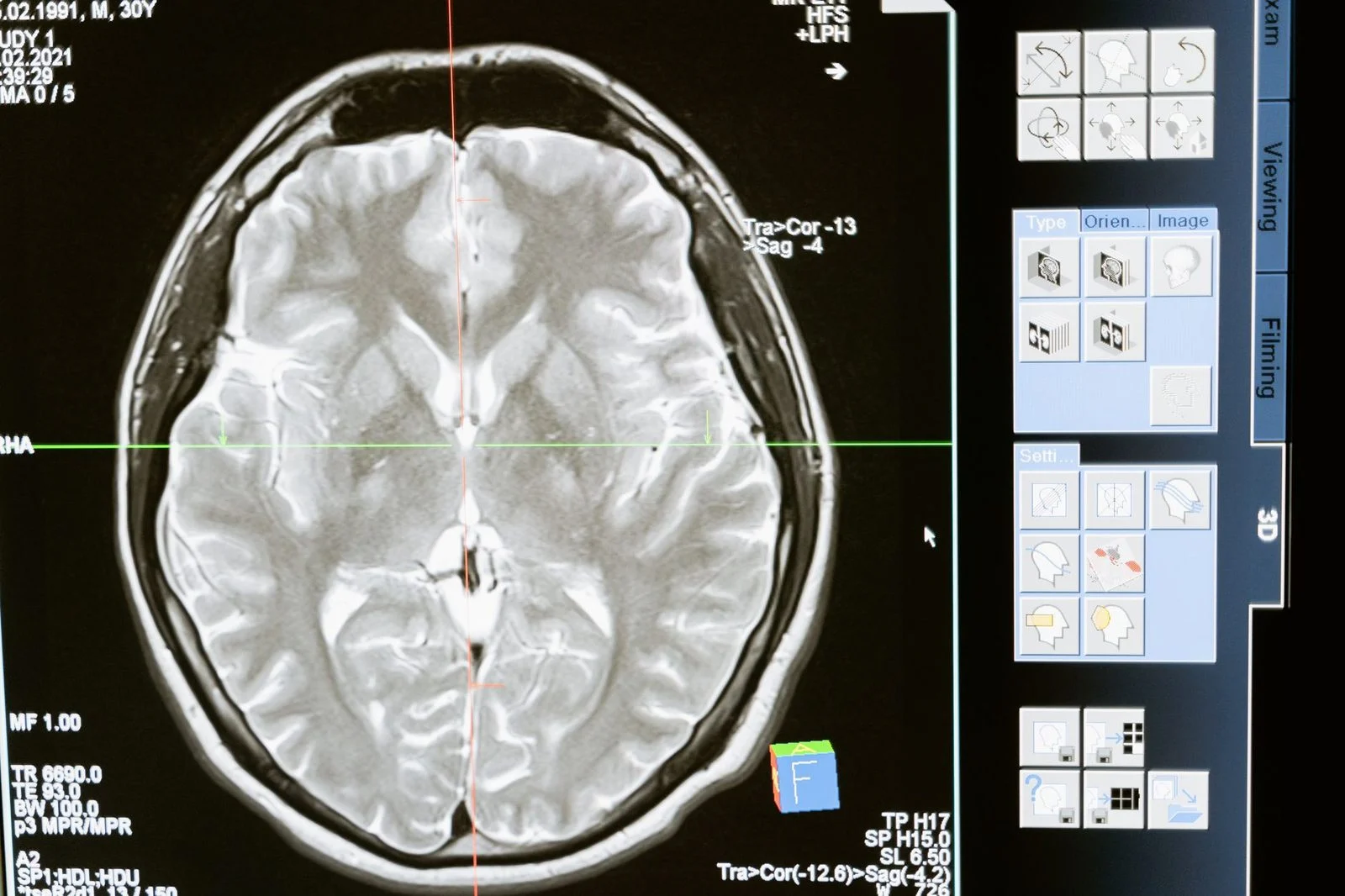
A CT scan can show skull fractures and bleeding inside or around the brain. Emergency teams often use it early because results can come quickly. An MRI shows more detail about brain tissue. Doctors may order one when symptoms continue or questions remain.
A normal scan does not rule out a concussion. Many concussions do not appear on standard CT or MRI images. That is why the exam and the symptom record still carry real weight.
Imaging is one piece of the assessment, not the whole picture. The doctor weighs scan results with the history, the exam findings, and how the person is doing.
Concussion Testing and Baseline Comparison
Concussion testing uses standard questions and tasks to measure symptoms, thinking, and balance.
Standardized tools such as the SCAT5 combine symptom reporting, cognitive questions, balance testing, and a neurological exam. Clinics may use other tools as well.
A baseline test is a snapshot of a person’s usual thinking, balance, and symptoms, taken before an injury. Later results can be compared with that snapshot. Some athletes take baseline tests before a season, which is why sports clinics use the term.
Post-concussion testing repeats the same measures over time to track recovery. If thinking or memory problems continue, a clinician may refer the person for neuropsychological testing. Results are compared with the person’s own normal performance, not only an average for the population.
Ruling Out Other Causes of Ongoing Symptoms
Doctors look for other causes when headache, dizziness, or fatigue keep going after a head injury.
These symptoms can also come from neck or spine injuries, medication effects, sleep problems, vision or inner ear issues, or stress. The doctor may examine the neck and spine, review medications, and order lab work or referrals.
The NCBI case report on crash headaches also states that persistent or worsening headaches after an accident may indicate a more serious condition that requires evaluation.
Mood changes, such as anxiety or depression, can follow a head injury too. They deserve evaluation and support from the treating medical team. Follow-up visits show whether symptoms are improving, staying the same, or changing.
Not sure what your next step is?
Talk it through with our team — the first consultation is free, confidential, and carries no obligation.
Warning Signs That Need Emergency Care Right Away
Get emergency care right away if the injured person is hard to wake, vomits repeatedly, has a seizure, or shows new weakness or confusion.
Other urgent signs include one pupil larger than the other, numbness, slurred speech, or agitation that keeps getting worse. A headache that grows steadily stronger is also a reason to return to the emergency department.
Clear fluid from the nose or ears, or bruising behind the ears or around the eyes, can signal a skull fracture. That needs prompt medical evaluation.
Blood thinners, alcohol, and some medications can change the risk after a head injury. The injured person should ask a doctor before taking them. The FloridaHealthFinder concussion guidance also explains which symptoms need earlier medical attention.
Frequently Asked Questions
How is a head injury assessed?
A doctor reviews the injury history, checks alertness and nerve function, and may order imaging. Follow-up checks track symptoms over time.
Can a normal CT scan rule out a concussion?
A normal CT scan does not rule out a concussion. The clinical exam and symptom record still matter.
Can symptoms appear days after a crash?
Yes, some symptoms can appear hours or days after the impact. Follow-up visits help catch them.
What is a baseline concussion test?
It is a snapshot of a person’s usual thinking, balance, and symptoms, taken before an injury. Later results can be compared with it.
Keeping the Medical Record of the Assessment After a Crash
The medical record of a head injury assessment is the written history of every visit, test, and symptom report.
Each visit, test result, scan report, and symptom checklist becomes part of that record. The record shows when symptoms were first reported and how they changed.
A simple daily log helps too. Note symptoms, sleep, work or school limits, and missed activities each day. The log gives the doctor and family a pattern to review at the next visit.
Attending recommended follow-up visits and following the treatment plan helps the record show the full picture. Ask the care team for a plain-language summary of what was done and what comes next.
If you are sorting through a head injury after a crash in Atlanta or Fulton County, you do not have to face the medical and legal questions alone. Ugwonali Law Group, at 3400 Peachtree Road NE, Atlanta, offers a free, confidential first consultation with no obligation to continue (Spanish: consulta inicial gratuita, confidencial y sin compromiso). Intake staff can talk with you in English or Spanish through our contact page.
This page is general information, not medical or legal advice. The responsible lawyer is Adanna Ugwonali, Ugwonali Law Group, 3400 Peachtree Road NE, Atlanta, Georgia. Contact us through our contact page.
Common Parts of a Head Injury Assessment
Medical history and injury details
The doctor asks how the injury happened, whether you lost consciousness, and what symptoms you have noticed since. These details guide the rest of the evaluation.
Neurological exam
Checks of alertness, pupil response, speech, memory, coordination, balance, strength, and reflexes help show how the brain and nerves are working.
Imaging scans
A CT scan is often used early to look for bleeding, swelling, or skull fractures. An MRI may be ordered later to look for more subtle injury. A normal scan does not rule out a concussion.
Follow-up symptom tracking
Headaches, dizziness, sleep changes, mood changes, and trouble concentrating are often recorded over days and weeks. Repeated checks show whether symptoms are improving, staying the same, or getting worse.
Warning Signs That Need Emergency Care
Worsening headache
A headache that keeps getting stronger or does not respond to treatment should be checked right away.
Repeated vomiting or nausea
Vomiting more than once after a head injury is a reason to seek emergency care.
Confusion or unusual behavior
Trouble recognizing people or places, agitation, or unusual drowsiness can signal bleeding or swelling inside the skull.
Seizures, weakness, or numbness
A seizure, weakness on one side of the body, or numbness in the face, arm, or leg needs immediate medical attention.
Slurred speech or unequal pupils
Changes in speech or pupils that are different sizes can be signs of serious brain injury.
Clear fluid or blood from the nose or ears
Fluid leaking from the ears or nose after a head injury should be evaluated by a doctor the same day.
Do Not Wait to Get Checked
Call 911 or go to the nearest emergency room if you have any warning sign after a head injury, even if you feel fine otherwise. Symptoms can appear hours or days later. Tell the medical team exactly how the injury happened and describe every symptom you notice, since those details become part of your medical record.