

Truck Accident vs Premises Liability in Georgia
By Adanna Ugwonali · Published November 2, 2026
How do personal injury firms that focus on serious truck and car crash cases differ from firms that handle unsafe-property injury claims in Georgia?
The main difference is the type of case, not the quality of any firm. Truck and serious car crash claims center on a driver, a motor carrier, and insurance. Unsafe-property claims center on who owned or controlled the property and whether they knew about the hazard.
Some firms focus most of their work on one kind of case. Others take several kinds. Understanding what type of case you have, and what that type of case requires, can help you know what to expect. Our team is glad to talk through how your claim would be handled.
This page does not compare any firm with another. It explains what each case type involves, so you can see which facts matter for your situation. Serious injuries from either kind of event often involve hospital care, fractures, and a long recovery. Many readers are trying to figure out which kind of claim fits a crash or fall they did not choose. The sections below cover both claim types, the rules that apply, and the evidence each one tends to need.

What is premises liability in Georgia?
Premises liability is a claim that a property owner or occupier failed to keep the property reasonably safe, and that failure caused an injury. Georgia law sets this duty out in O.C.G.A. § 51-3-1. Under that section, an owner or occupier who invites people onto the land for a lawful purpose must use ordinary care to keep the premises and approaches safe.
The invitation matters. So the facts about how someone came to be on the property are part of every premises claim.
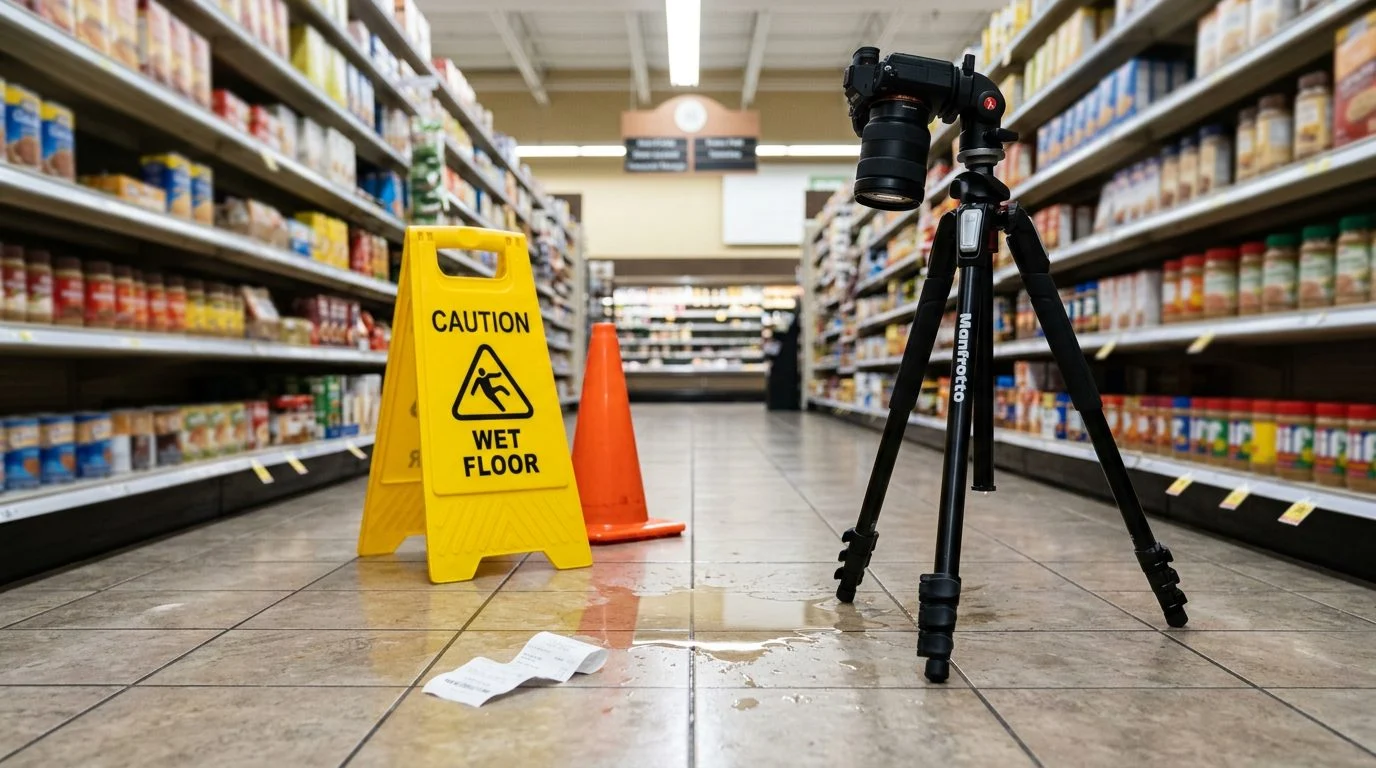
Common examples include a slip on a wet floor without a warning sign, a trip on an uneven walkway, a fall on broken stairs, and injuries from an unsafe structure. OSHA guidance on slip and trip hazards covers these hazards on walking-working surfaces. That guidance helps show what safe surfaces look like.
What is a truck accident claim in Georgia?
A truck accident claim arises from a serious crash involving a commercial truck, such as a tractor-trailer. These crashes can cause fractures, traumatic brain injuries, and spinal injuries. Spinal cord injuries can have potentially permanent effects, and emergency handling is recommended after a crash that may have caused one. For more on brain injuries, read traumatic brain injury after a crash in Georgia.
More than one party may be responsible. Depending on the facts, that can include the driver, the motor carrier that operates the truck, a cargo loader, a maintenance contractor, or a leasing company.
Federal trucking rules often become evidence. Except as otherwise provided in § 395.1, a driver of a property-carrying commercial motor vehicle may not drive without first taking 10 consecutive hours off duty, under 49 CFR 395.3. Carriers must systematically inspect, repair, and maintain their vehicles, under 49 CFR 396.3. Drivers may not operate a commercial motor vehicle while their ability or alertness is so impaired, or so likely to become impaired, through fatigue, illness, or any other cause, as to make it unsafe, under 49 CFR 392.3. In a grave emergency where the hazard to occupants of the commercial motor vehicle or other users of the highway would be increased by compliance with this section, the driver may continue to the nearest place at which that hazard is removed. Federal law also requires minimum financial responsibility levels for motor carriers, under 49 U.S.C. § 31139. These rules are evidence to review, not proof by themselves.
How do the two claims differ in who may be responsible and what must be proven?
In a truck claim, the core question is how the driver and the trucking company operated. In a premises claim, the core question is the property’s condition and what the owner knew.
| Point | Truck accident claim | Premises liability claim |
|---|---|---|
| Who may be responsible | Driver, motor carrier, and others tied to the crash | Owner, occupier, or manager of the property |
| Core question | Driving conduct and trucking rules | Property condition and notice |
A premises claim often turns on notice. Notice means whether the owner knew about the hazard. Key questions include how long the hazard existed, whether the owner created it, and whether inspection procedures were followed.
A truck claim often turns on negligent driving, violations of trucking rules, improper loading, fatigue, or maintenance failures. Both claim types must show that the conduct or condition caused the injury. Medical care must document that injury.
What evidence matters most in each type of case?
Truck cases rely heavily on records kept by the trucking company. Helpful items include the police report, photos, electronic logging device data, driver logs, maintenance records, camera footage, cargo papers, and the truck’s condition after the crash.
Records do not last forever. Under 49 CFR 396.3(c), records required by this section must be retained where the vehicle is housed or maintained for 1 year, and for 6 months after the vehicle leaves the carrier’s control.
Premises cases turn on proof of the hazard and how long it was there. Helpful items include photos of the hazard, incident reports, inspection and cleaning logs, surveillance footage, warning signs, and witness statements. Footage and logs can be overwritten or thrown out over time, so timing matters in both claim types.
Medical records are central to both. They document the diagnosis, hospital care, and treatment by a medical doctor, and they connect the injury to the event.
How do Georgia comparative fault and filing deadlines apply to both claims?
Georgia reduces a damages award by the injured person’s share of fault, and an injured person who is 50 percent or more responsible for the injury or damages claimed is not entitled to receive any damages. Under O.C.G.A. § 51-12-33, the jury decides the injured person’s percentage of fault, and the judge reduces the award in proportion. This is often called modified comparative fault, or shared fault.
The 50 percent line matters. A plaintiff who is 50 percent or more responsible for the injury is not entitled to receive any damages (O.C.G.A. § 51-12-33 (Quynn v. Hulsey (2020))(g)). A person below that line may still recover a reduced amount.
Defendants in both claim types may argue that the injured person’s own conduct contributed. An example is looking at a phone while walking. The same statute says fault of all contributors is considered, even those not named in the suit.
The general deadline for injury claims is in O.C.G.A. § 9-3-33. It requires actions for injuries to the person to be brought within two years after the right of action accrues. Loss of consortium claims have a four-year period. Waiting can shorten the time available to act.
When could a single incident involve both a truck and a premises issue?
One incident can involve both areas. A truck may crash in a loading dock, parking lot, or construction site. In that case, the driver’s conduct and the site’s condition could both matter.
When this happens, the review looks at each possible responsible party separately. Under the apportionment rules in O.C.G.A. § 51-12-33, damages are divided among the liable persons by their percentage of fault. Those shares are not joint liability.
Useful questions include who owned the site, who controlled the loading area, who maintained the surface, and who drove the truck. The answers shape which parties may be responsible. Claims against a county or other government entity are outside the scope of this page.

Talk with Ugwonali Law Group about your situation
If a truck crash or a serious fall has changed your family’s daily life, you may be sorting out which kind of claim applies. You may be doing that while a loved one is still in treatment. That is a heavy load to carry alone.
Ugwonali Law Group offers a free case review for people in this position. The first consultation is free and confidential, with no obligation to continue. Intake staff can speak with you in English or Spanish.
Common questions
Is a slip and fall claim a premises liability claim?
A slip and fall is one common type of premises liability claim. It depends on whether the owner or occupier failed to keep the property reasonably safe.
Can I still recover if I share some of the fault?
Under O.C.G.A. § 51-12-33, where an action is brought for injury to person or property and the plaintiff is to some degree responsible for the injury or damages claimed, the trier of fact determines the plaintiff’s percentage of fault, and the judge reduces the damages otherwise awarded to the plaintiff in proportion to that percentage of fault. The plaintiff shall not be entitled to receive any damages if the plaintiff is 50 percent or more responsible for the injury or damages claimed.
How long do I have to file a truck accident or premises claim in Georgia?
The general rule for injury claims is two years after the right of action accrues, under O.C.G.A. § 9-3-33.
This page is general information, not legal advice. Outcomes depend on the facts of each case and cannot be predicted. The responsible lawyer is Adanna Ugwonali of Ugwonali Law Group, 3400 Peachtree Road NE, Atlanta, Georgia.