

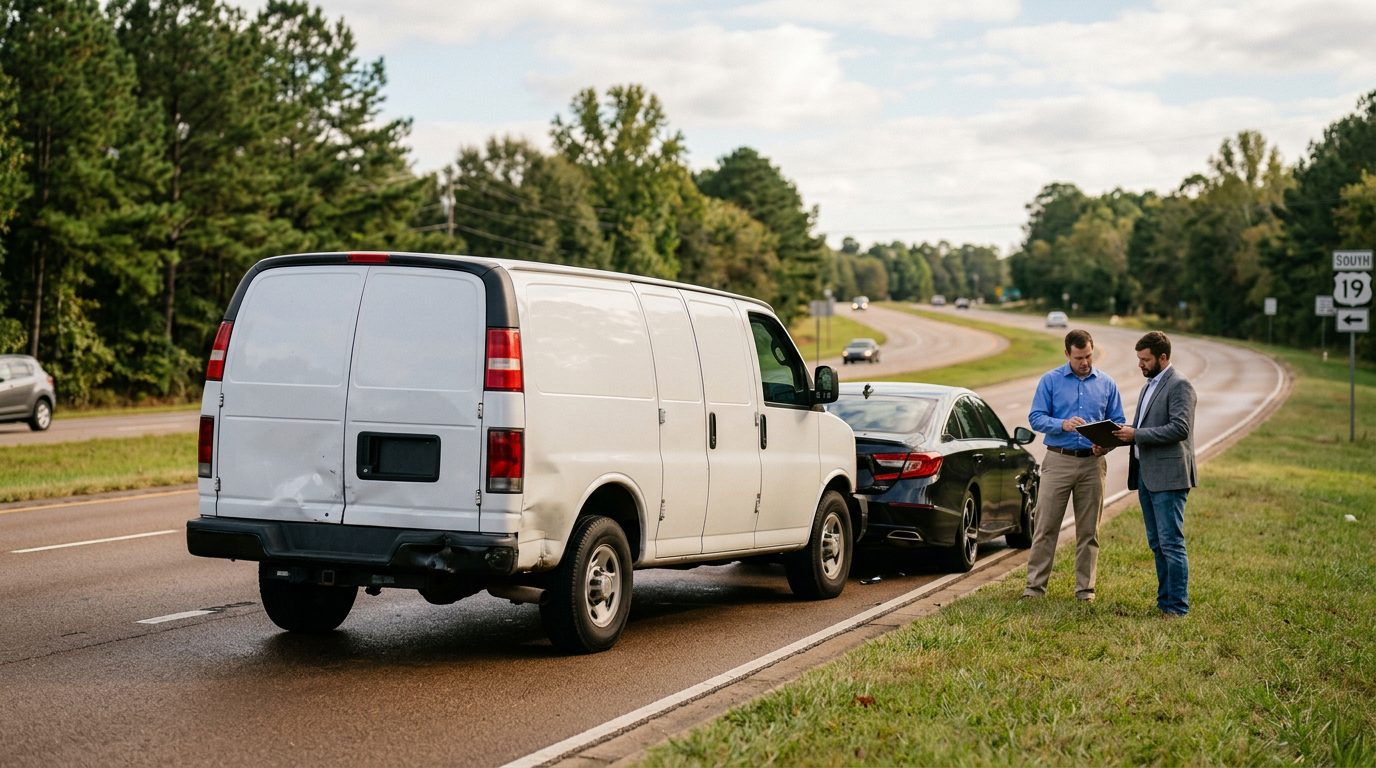
Delivery Van & Box Truck Accidents | Atlanta and Georgia
Hurt in a Delivery Van Crash? Start With a Conversation.
Ugwonali Law Group helps people seriously injured in delivery van, box truck, and other commercial vehicle crashes across metro Atlanta and statewide. Your free, confidential consultation comes with no obligation to continue. Speak with our team in English or Spanish.
How We Can Help
Free
Confidential first consultation
EN / ES
English and Spanish intake
Statewide
Metro Atlanta and throughout Georgia
By Adanna Ugwonali · Published October 20, 2026
Searching for a delivery van accident lawyer Georgia residents can talk with? This guide explains how these claims work first. A crash with a delivery van or box truck can involve several responsible parties and far more records than an ordinary car crash.
What a Delivery Van or Box Truck Accident Claim Involves
A delivery van or box truck claim seeks compensation for serious injuries, or a wrongful death, caused by one of these vehicles. Last-mile delivery vans are the smaller vans that bring packages to homes and businesses. Box trucks are larger trucks with an enclosed cargo box.
These claims usually involve real medical treatment. That can mean fractures, emergency transport, hospital stays, surgery, or ongoing care from a medical doctor. This page is written for people hurt in a crash caused by another driver, and for families of someone who died.
Whether federal rules apply depends on the vehicle. Federal financial responsibility rules set minimum levels for property carriers that move goods across state lines. Subsection (h) of the same section, titled “Nonapplication,” sets out a limited exclusion for certain vehicles with a gross vehicle weight rating under 10,000 pounds. It applies only under specific conditions about how the vehicle is used, so whether it affects a particular crash depends on the facts of that vehicle’s use. That provision continues with further conditions set out in the full text of the subsection.
If a delivery van or box truck crash has left you or a loved one facing medical care and missed work, our team is ready to talk through your options. Talk it through with our team — the first consultation is free, confidential, and carries no obligation.
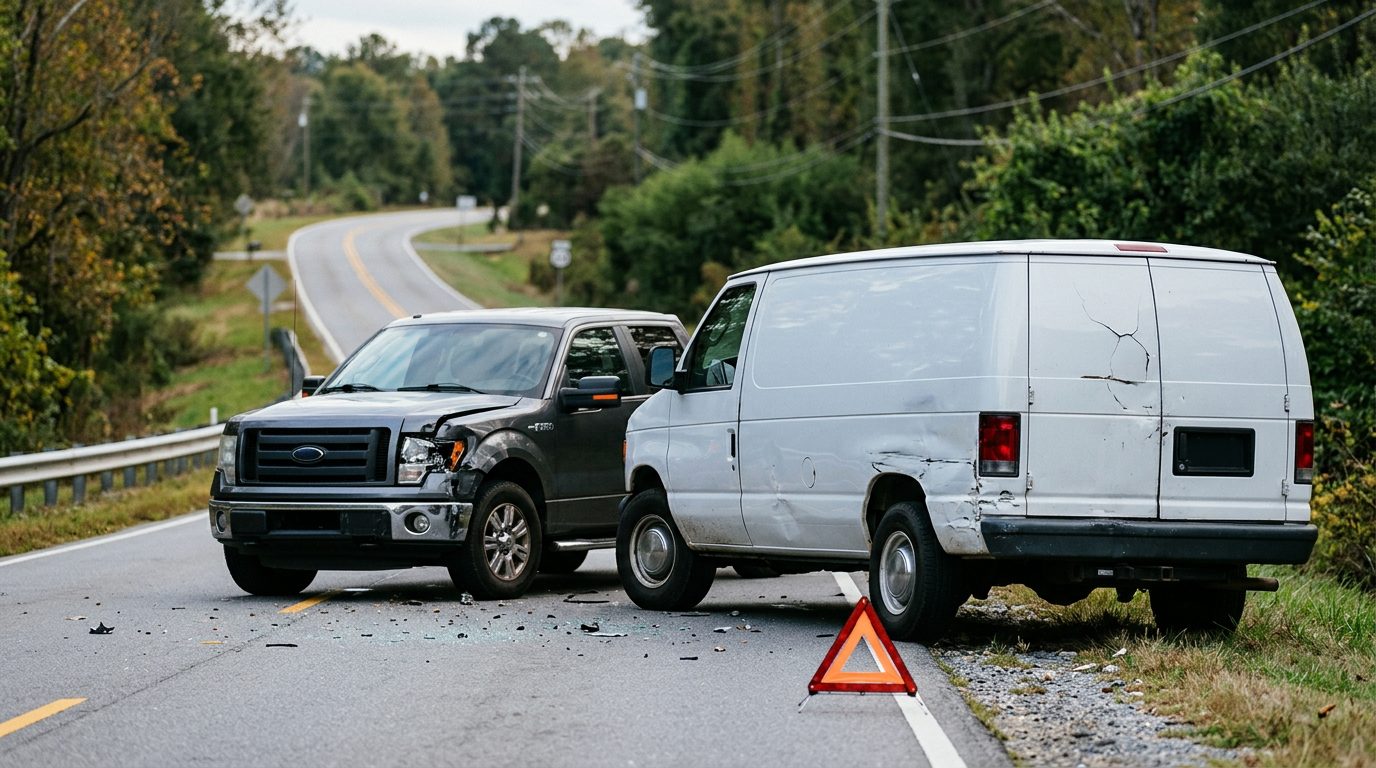
Why Delivery Vehicle Crashes Differ From Ordinary Car Accidents
Delivery vehicle crashes differ because the vehicles are larger, the schedules are tight, and the records are more detailed. Each of these factors shapes how a claim is built.
- Size and visibility. Larger vehicles have bigger blind spots and need more distance to stop. That matters on residential streets, in loading zones, and in parking lots.
- Delivery pressure. Frequent stops and tight routes can push drivers to rush. Route data and telematics (vehicle sensor data) can show speed, stops, and timing.
- Cargo. Poorly secured loads can shift or fall. The loading process can be part of the story.
- Records. Carriers keep driver logs, maintenance files, GPS data, and sometimes dashcam video. Federal rules require driver records of duty status to be kept at least 6 months from receipt, under 49 C.F.R. § 395.8.
Because some records have limited retention periods, asking for them early matters.
Who May Be Responsible When a Delivery Vehicle Hits You
The driver, the company that ran the route, and the vehicle’s owner may each be responsible. The facts of the crash decide who is at fault.
- The driver. Distracted driving, speeding, fatigue, unsafe lane changes, or backing collisions may cause a crash.
- The delivery company or carrier. It may answer for how routes were run and how drivers were hired and supervised.
- The owner or maintenance provider. A maintenance failure may have contributed to the crash.
Georgia splits damages by each party’s share of fault, and each liable party pays only its own share, under O.C.G.A. § 51-12-33-pdf.pdf)-pdf.pdf)-pdf.pdf)-pdf.pdf). Your own fault counts too. At 50 percent or more, you recover nothing. Under O.C.G.A. § 51-12-33-pdf.pdf)-pdf.pdf), if the plaintiff is to some degree responsible for the injury or damages claimed, the judge reduces the damages otherwise awarded to the plaintiff in proportion to the plaintiff’s percentage of fault.
Under O.C.G.A. § 40-1-112-2024-pdf.pdf)-2024-pdf.pdf)-2024-pdf.pdf)-2024-pdf.pdf), a motor carrier’s insurer can be joined in a suit only when one or more motor carriers related to the claim are insolvent or bankrupt, or when personal service cannot, after reasonable diligence, be made on the driver or the motor carrier.
Common Serious Injuries and the Medical Records That Support a Claim
Crashes like these often cause fractures, brain injuries, spinal injuries, and internal injuries that need hospital care. Records made soon after the crash show what happened and how it affects you.
- Fractures that need surgery, casting, or long rehabilitation.
- Traumatic brain injury, including concussions with lasting symptoms.
- Spinal cord injury and back or neck injuries that affect work over time.
- Internal injuries, emergency transport, admission, and ongoing treatment.
Keep ER and hospital notes, imaging, referrals to other doctors, bills, prescriptions, and records of time missed from work.
Georgia limits medical expense claims to the reasonable value of medically necessary care, under O.C.G.A. § 51-12-1.1-pdf.pdf)-pdf.pdf)-pdf.pdf)-pdf.pdf). If a provider treated you under a letter of protection (a promise to be paid from a settlement), that letter and the itemized charges can become part of the case.
Under O.C.G.A. § 51-12-1.1, special damages for medical and healthcare expenses are recoverable only as provided in that section; the rule that a surviving spouse, or children if there is no spouse, may recover the full value of the decedent’s life, as shown by the evidence, is in O.C.G.A. § 51-4-2. See O.C.G.A. § 51-4-2-pdf.pdf)-pdf.pdf)-pdf.pdf)-pdf.pdf). Where death results from a crime or from criminal or other negligence, the deceased’s personal representative may recover funeral, medical, and other necessary expenses resulting from the injury and death, under O.C.G.A. § 51-4-5-2017-pdf.pdf)-2017-pdf.pdf)-2017-pdf.pdf)-2017-pdf.pdf).
How the Process Works, Step by Step
The process moves from a first conversation to evidence, negotiation, and, if needed, a lawsuit.
- Consult. Talk through the crash, your injuries, and your timeline. Intake is available in English or Spanish.
- Get the crash report. Georgia crash reports can be requested through BuyCrash or the Georgia Department of Transportation.
- Investigate. Identify the driver, carrier, owner, and every insurer. Federal rules require employers to test drivers after certain commercial crashes, and set time limits. Under 49 C.F.R. § 382.303, if an alcohol test is not done within two hours, the employer must record why.
- Gather records. Collect medical records and bills. Document how the injury affects work, family, and daily life.
- Negotiate. Present the claim to the insurers. Some claims settle this way.
- File suit if needed. If a fair settlement is not reached, a lawsuit may follow, with discovery, mediation, and possibly trial.
Georgia Deadlines and Why Timing Matters
Georgia generally requires lawsuits for injuries to the person to be brought within two years after the right of action accrues, with one year for injuries to the reputation and four years for actions involving loss of consortium. O.C.G.A. § 9-3-33-2023-pdf.pdf)-2023-pdf.pdf)-2023-pdf.pdf)-2023-pdf.pdf) sets that general rule. The exact timing depends on the facts of your case, so an early conversation helps.
Waiting can also cost evidence. Video, telematics, and driver logs can be overwritten or purged. Waiting can also make it harder to link later treatment to the crash.
Not sure what your next step is?
Talk it through with our team — the first consultation is free, confidential, and carries no obligation.
About Ugwonali Law Group and How It Serves Georgia
Ugwonali Law Group is a personal injury practice led by attorney Adanna Ugwonali. The practice’s support staff handle intake, scheduling, and client communication.
The practice handles truck accidents, car accidents, wrongful death, traumatic brain injury, spinal cord injury, catastrophic injury, premises liability, and slip and fall claims.
The office is at 3400 Peachtree Road NE, Atlanta, Georgia. The practice serves Atlanta, Fulton, Clayton, Cobb, and Rockdale counties, Marietta, Jonesboro, Conyers, and clients across Georgia.
Common Questions About Delivery Van and Box Truck Accident Claims
Can I sue the driver of a delivery van or box truck?
A claim can name the driver and other responsible parties. Who is named depends on the facts.
Can the company the driver works for be responsible?
It may be, depending on the facts, such as how the route was run or how the driver was hired and supervised.
What if I was partly at fault?
Georgia reduces damages by your share of fault. At 50 percent or more, you recover nothing, under O.C.G.A. § 51-12-33-pdf.pdf)-pdf.pdf)-pdf.pdf)-pdf.pdf).
What should I do right now?
Get medical care, keep every bill and record, and write down what happened while it is fresh. Be careful with recorded statements to insurers.
If a Delivery Vehicle Has Hurt You or Someone You Love
If a delivery van or box truck has hurt you or a family member, you don’t have to sort through the claim alone. Our first consultation is free, confidential, and carries no obligation to continue. Intake is available in English or Spanish (consulta inicial gratuita, confidencial y sin compromiso).
If you’re looking for a delivery van accident lawyer Georgia families can contact, attorney Adanna Ugwonali leads this practice. You can request a free case evaluation or chat with our intake team at 3400 Peachtree Road NE, Atlanta.
What Often Happens After a Delivery Van Crash
Serious Injuries Can Follow
Delivery vans and box trucks are heavy. Impacts can cause fractures, internal injuries, head trauma, and spinal injuries that need hospital care and ongoing treatment from a medical doctor.
Several Parties May Be Involved
A delivery van crash can involve the driver, the vehicle owner, and a company that dispatched or supervised the driver. Who may be responsible depends on the facts of your case.
Insurance Is Often Complex
Commercial vehicles are usually covered by business policies, and insurers may move quickly to limit what they pay. Understanding who holds coverage can make a real difference.
Your Records Matter
Keep medical records, bills, photos, and notes about how the crash affects your daily life. Our team can explain which records are most useful for your case.
What to Expect When You Call
A Simple First Call
Our intake team listens to what happened and answers your questions in English or Spanish.
A Free, Confidential Review
We look at the basic facts of your crash and injuries, with no obligation to continue.
Plain-Language Guidance
We explain the legal and medical process step by step, so you can make informed decisions.
Support While You Heal
Your focus is recovery. We work to keep the legal process clear and manageable for you and your family.
Before You Speak With an Insurance Company
Insurance adjusters for the at-fault party may contact you soon after a crash. Speaking with a lawyer before giving a recorded statement or signing any document can help protect your claim.