

Tractor-Trailer Accidents | Atlanta & Georgia
Hurt in a Tractor-Trailer Crash? Talk With Our Atlanta Team.
Ugwonali Law Group represents people seriously injured in truck and car crashes across metro Atlanta and statewide in Georgia. Our free first consultation is confidential and comes with no obligation to continue, and our intake team serves clients in English or Spanish.
Getting Started With Our Firm
Free
First consultation, confidential, no obligation
English & Spanish
Intake team available in both languages
Atlanta
3400 Peachtree Road NE, Atlanta, GA
By Adanna Ugwonali · Published October 28, 2026
A tractor-trailer injury claim in Georgia is a legal claim for harm caused by a large truck crash. It can be brought by an injured person or, after a death, by family members. If you’re searching for a tractor-trailer accident lawyer Georgia, this guide explains how these claims work and who may be responsible. Ugwonali Law Group is the firm behind this page, and attorney Adanna Ugwonali is the responsible lawyer.
What a Tractor-Trailer Injury Claim Covers and Who It Is For
A tractor-trailer injury claim covers serious harm such as fractures, hospital stays, traumatic brain injuries, and spinal cord injuries. Families may also bring a wrongful death claim after a fatal crash.
These cases are usually more involved than a minor fender-bender. Injuries often need ongoing treatment, and the insurance is often commercial rather than a single personal policy. The Insurance Institute for Highway Safety publishes national fatality statistics for large trucks.
A claim may seek money for:
- Medical bills for medically necessary care. Georgia limits these to the reasonable value of that care, under § 51-12-1.1(b).
- Lost wages and a lower ability to earn in the future.
- Other losses tied to the injury.
In a wrongful death case, a surviving spouse may recover the full value of the decedent’s life, as shown by the evidence, under § 51-4-2(a). If there’s no surviving spouse, children may recover that value. When a death results from a crime or from criminal or other negligence, the personal representative is entitled to recover funeral, medical, and other necessary expenses under § 51-4-5(b).
This page is for injured people, for family members acting for someone who died or cannot communicate, and for anyone still deciding whether to talk with a lawyer.
If a truck crash has you facing surgery, medical bills, or time away from work, our team can talk through your options with you. Talk it through with our team — the first consultation is free, confidential, and carries no obligation.

Who Can Be Responsible After a Tractor-Trailer Crash
More than one party can be responsible after a truck crash, so a claim may look at several companies and people. Possible parties include:
- The truck driver.
- The motor carrier, the trucking company that operates the truck.
- An owner-operator who leases a truck to a carrier.
- A maintenance company, or a company that loaded the cargo.
Georgia law makes a business liable for torts its servants commit while doing the business’s work, under § 51-2-2. In plain words, a trucking company can answer for wrongs its driver commits on the job.
If the truck is run by an owner-operator, the leasing arrangement and insurance can differ, so ask about that early.
Georgia uses comparative fault (shared fault). Under § 51-12-33(a), when the plaintiff is to some degree responsible for the injury or damages claimed, the plaintiff’s damages are reduced in proportion to the plaintiff’s percentage of fault. Under § 51-12-33(g), a plaintiff who is 50 percent or more responsible cannot receive damages. Under § 51-12-33(b), each liable person pays only its own share, not a joint share. Fault is decided on the facts of each crash.
Evidence That Tends to Matter Early
Early evidence matters because some records are kept only for a set time. Federal rules set minimum retention periods for records of companies subject to that part, and after those periods the records may be destroyed at the discretion of each company’s management, but this does not excuse compliance with any other governmental body’s longer retention requirements. Useful evidence often includes:
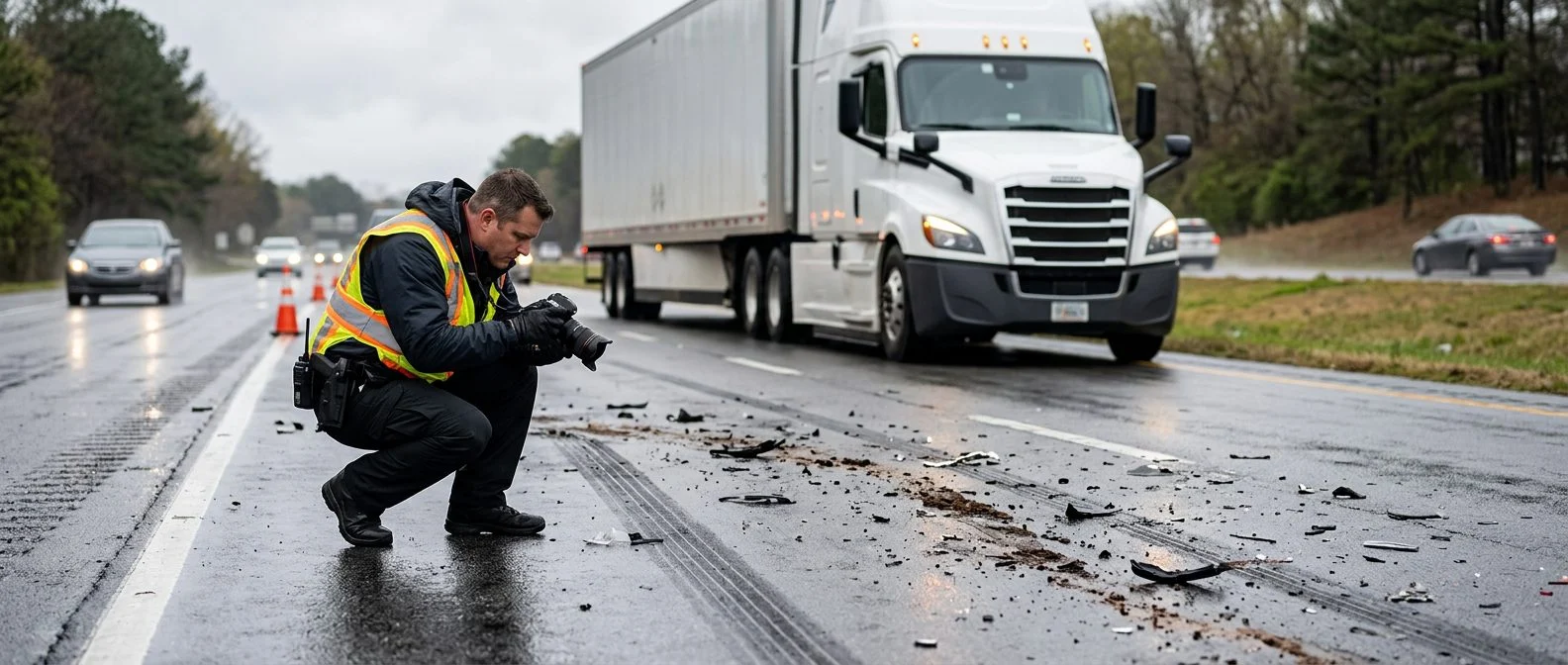
- The police crash report, photos, video, and witness names.
- Event data recorder information. The National Highway Traffic Safety Administration explains that these recorders can preserve vehicle dynamics, driver inputs, crash signatures, and restraint status.
- Driver logs and hours-of-service records. Under 49 C.F.R. § 395.3, unless § 395.1 provides otherwise, a driver of a property-carrying commercial motor vehicle may not drive after a period of 14 consecutive hours after coming on-duty following 10 consecutive hours off-duty, and may drive 11 hours in that period.
- Drug and alcohol testing records.
- Maintenance and inspection records for the truck.
- Medical records: emergency care, imaging, surgery, rehabilitation, and notes from treating doctors that tie injuries to the crash.
Medical bills need a close look. If your care was billed under a letter of protection (a promise to pay from any settlement or judgment), Georgia law makes that letter and the itemized charges relevant and discoverable under § 51-12-1.1(d). Discoverable means they can be requested in a lawsuit.
Keep your own copies of bills, pay stubs, and work notes. Bring them to your consultation.
How a Tractor-Trailer Claim Moves Forward, Step by Step
A claim usually moves from a first consultation to investigation, insurance negotiation, and, if needed, a lawsuit. Here is the typical path:
- Consultation. You share what happened, your injuries, and the treatment you’ve had so far.
- Intake. Intake staff review the basics with you in English or Spanish.
- Investigation. Requests go to the trucking company and insurers for records and evidence.
- Documentation. Medical treatment, bills, and lost income are organized into one file.
- Negotiation. The claim goes to the insurers, who may make an offer or dispute it.
- Lawsuit, if needed. Georgia generally requires personal injury suits within two years after the right of action accrues, which is when the legal clock starts. Exceptions exist, so check timing early under O.C.G.A. § 9-3-33.
Timelines vary with the injuries, how insurers respond, and whether a case goes to court. Our team explains the expected steps during the consultation.
Why Ugwonali Law Group Handles These Cases
Ugwonali Law Group, led by attorney Adanna Ugwonali, represents people hurt in serious crashes and families in wrongful death cases. The firm is located at 3400 Peachtree Road NE, Atlanta, Georgia.
The firm’s work includes:
- Truck accidents and car accidents
- Wrongful death
- Traumatic brain injury and spinal cord injury
- Catastrophic injury
- Premises liability and slip and fall
The firm works with people across metro Atlanta, including Fulton, Clayton, Cobb, and Rockdale counties and the Marietta, Jonesboro, and Conyers areas, and statewide in Georgia.
The firm has support staff, and intake is available in English and Spanish. Our lawyers explain the medical and legal process in plain language, step by step. The firm makes no promises about results, because each case turns on its own facts.
Responsible lawyer for this page: Adanna Ugwonali, Ugwonali Law Group, 3400 Peachtree Road NE, Atlanta, Georgia. This page is general information, not legal advice.
Questions People Ask Before Calling a Lawyer
Most people have the same first questions, and a first conversation can help answer them.
Do I need a tractor-trailer accident lawyer in Georgia?
You don’t have to hire one. Trucking companies and insurers often have their own lawyers and adjusters, so a first conversation can help you understand your options.
Should I give the trucking company’s insurer a recorded statement?
You can talk with a lawyer before giving any statement. Insurers may contact injured people early.
Whether that applies depends on the facts.
What if I’m still in treatment?
Claims often depend on how long treatment lasts and what future care is needed. The firm reviews medical records during the case review.
Does it cost anything to talk with the firm?
The first consultation is free, confidential, and carries no obligation to continue.
Not sure what your next step is?
Talk it through with our team — the first consultation is free, confidential, and carries no obligation.

Talk With Our Team About Your Truck Crash
Many people reading about truck crash claims are still in the hospital, recovering at home, or handling a loss. Your focus may be on appointments, bills, and time away from work. Our team can review the crash facts, your treatment, and who may be responsible. You can request a case evaluation, call the firm, or chat with our intake team at 3400 Peachtree Road NE, Atlanta, Georgia.
How Our Firm Can Help
Free Case Review
Call or send a request and we will talk through what happened, your injuries, and the questions on your mind.
Plain-Language Guidance
We explain the legal and medical steps in clear terms so you can make informed decisions at each stage.
Families Included
For wrongful death cases, we work with surviving family members to answer their questions with care and respect.
Focus on Recovery
We keep your medical treatment and your daily life at the center of every conversation.
Before You Speak With an Insurer
Trucking companies and their insurers often contact injured people quickly. Before you give a recorded statement or sign any document, consider speaking with a lawyer first.
Common Questions About Truck Crash Cases
Do I need a lawyer?
You are not required to hire one. Trucking companies and insurers often have their own lawyers and adjusters, so a first conversation can help you understand your options.
Why do truck cases differ?
Commercial trucks are subject to federal and state safety rules, and crashes may involve several parties, such as a carrier, a driver, or a cargo company. Each case has its own facts.
What evidence matters?
Medical records, the crash report, photos, and witness information can all be important. Trucks may also carry electronic logs and maintenance records that help explain what happened.
What if someone died?
Families facing a wrongful death can feel overwhelmed. Our firm can explain the process and answer questions about how a claim is handled while you focus on your loved ones.