

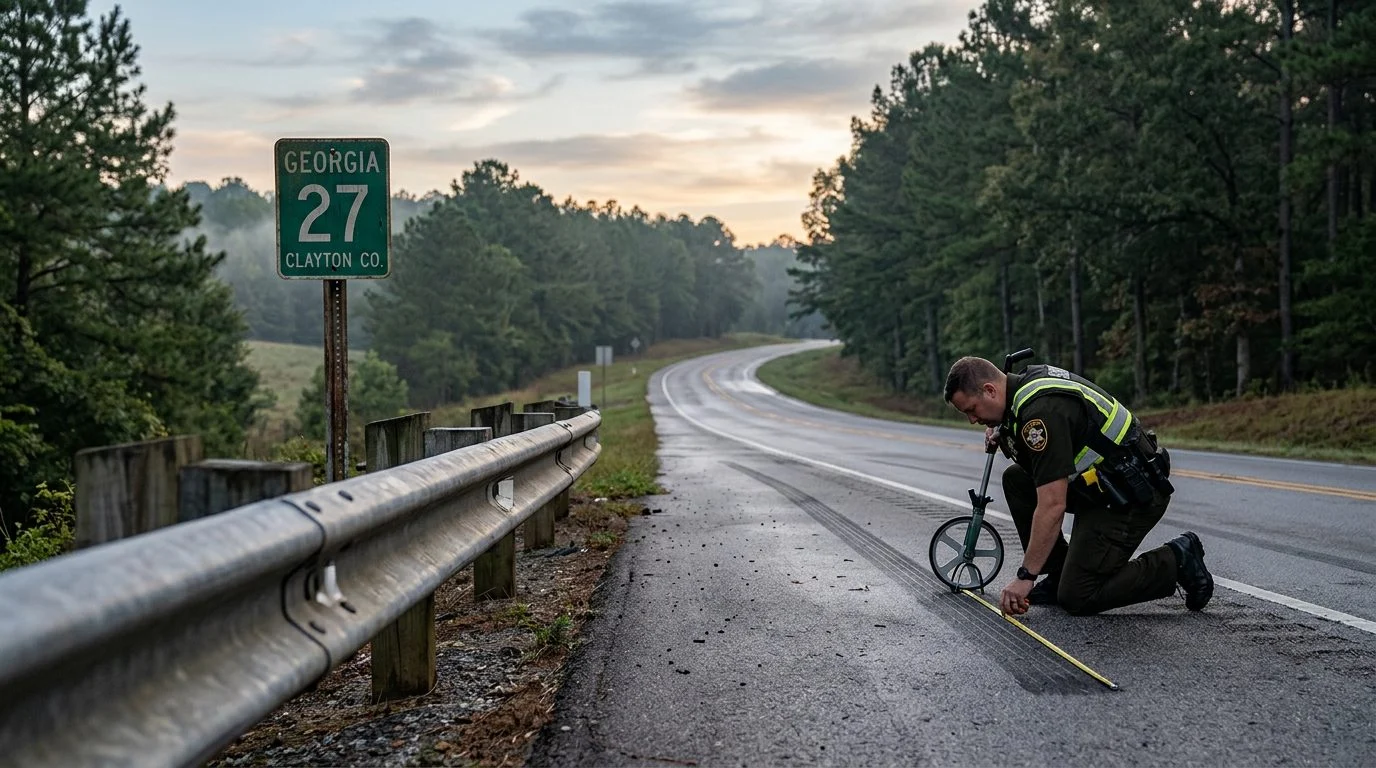
Truck Accidents | Clayton County and Georgia
Hurt in an 18-Wheeler Crash? You Don't Have to Face the Trucking Company Alone
Ugwonali Law Group helps people with serious injuries after collisions with commercial trucks across Clayton County and statewide in Georgia. We explain the legal and medical process in plain language, at your pace.
Getting Started With Our Firm
Free
Case review, with no obligation to continue
EN / ES
Intake in English or Spanish
Atlanta
Office at 3400 Peachtree Road NE
By Adanna Ugwonali · Published October 31, 2026
18-Wheeler Accident Lawyer Clayton County, Georgia
If you were hurt in an 18-wheeler crash in Clayton County, here’s what makes these crashes different from an ordinary car wreck. A tractor-trailer is far heavier than a passenger car. Several companies and insurance policies can also be involved, which makes the claim more complex. Ugwonali Law Group handles serious injury cases across Georgia from its office at 3400 Peachtree Road NE in Atlanta. Adanna Ugwonali is the responsible lawyer for this page.
If a tractor-trailer crash in Clayton County left you or someone you love hurt, you may have a claim worth reviewing, and our team can talk it through with you. Talk it through with our team — the first consultation is free, confidential, and carries no obligation.
What an 18-Wheeler Accident Case Involves
An 18-wheeler accident is a crash involving a large commercial truck, also called a tractor-trailer, that hauls freight on public roads. A loaded truck can weigh many times more than a passenger car. When the two collide, the people in the smaller vehicle often face the most serious harm.
This page is for people hurt in truck crashes in Clayton County, Jonesboro, and nearby areas. It is also for drivers, passengers, and pedestrians who were struck, and for families who lost a loved one. Truck cases raise different questions than car crashes, including who was driving, who employed the driver, and what records exist about the trip.
The firm takes serious injury cases that need real medical treatment. Examples include broken bones, hospital care, traumatic brain injury, spinal cord injury, catastrophic injury, and wrongful death.
Injuries and Losses Commonly Involved in Truck Crashes
Truck crashes often cause broken bones, internal injuries, crush injuries, and head and spine injuries. Some of these need surgery, long hospital stays, rehabilitation, or care that lasts for years. The losses from those injuries usually fall into two groups.
Economic losses are costs you can document, such as emergency care, hospital bills, surgery, lost wages, and future medical needs. Under O.C.G.A. § 51-12-2, special damages are losses that actually flow from the wrong and must be proved. Necessary expenses from an injury are a legitimate part of damages under O.C.G.A. § 51-12-7.
Non-economic losses are general damages, which under O.C.G.A. § 51-12-2(a) are those the law presumes to flow from a tortious act. General damages are those the law presumes to flow from a wrong, and they may be recovered without proof of any amount, under the same statute.
A surviving spouse, or a child or children if there is no surviving spouse, may recover the full value of the life of the decedent, as shown by the evidence, under O.C.G.A. § 51-4-2. When a death results from a crime or from criminal or other negligence, the personal representative may recover funeral, medical, and other necessary expenses under O.C.G.A. § 51-4-5.
Who Can Be Held Responsible in a Truck Crash
More than one party can share responsibility after a truck crash. The driver may be at fault, and so may the company that employs or contracts with the driver. Depending on the facts, leasing companies, maintenance contractors, and cargo loaders may also be part of the claim.
Federal rules limit how long a driver may work. A driver may not drive after 14 consecutive hours on duty that follows 10 consecutive hours off duty, and may drive 11 hours within that period, under 49 C.F.R. § 395.3. Carriers must keep records of duty status for at least six months under 49 C.F.R. § 395.8.
Under 49 C.F.R. § 387.9, the minimum for for-hire carriers hauling nonhazardous property in interstate or foreign commerce, with a gross vehicle weight rating of 10,001 or more pounds, is $750,000, and higher figures apply to certain hazardous-material categories in the same table. A commercial policy may be part of a truck claim.
Georgia uses modified comparative fault. Under O.C.G.A. § 51-12-33, a judge reduces damages by your share of fault. If you are 50 percent or more responsible, you cannot receive damages. Each liable party pays its own share rather than sharing joint liability.
How a Clayton County Truck Crash Case Works
A truck crash case usually moves through five steps, from the first call to a settlement demand or lawsuit. The timing varies from case to case.
- First consultation. You share the crash details, your injuries, and any insurance information you have. The first consultation is free, confidential, and carries no obligation to continue. Clients may still be responsible for court costs and case expenses under any agreement.
- Evidence requests. Ask early for driver logs, electronic logging device data, inspection and maintenance records, and dispatch messages. Federal rules require carriers to keep these records for at least six months, but early requests are safer.
- Medical documentation. Treatment records from a medical doctor tie your injuries to the crash and show the course of your care.
- Investigation. Evaluating a truck claim can involve looking at the scene, the crash report, and the insurance coverage.
- Negotiation or lawsuit. We present your claim to the insurers. If a fair resolution is not reached, a lawsuit may be filed.
Georgia’s general rule for injury claims is two years after the right of action accrues, under O.C.G.A. § 9-3-33. Legal deadlines apply to these claims, so timing matters.
How Ugwonali Law Group Works With Truck Crash Clients
Ugwonali Law Group handles serious injury and wrongful death matters, including truck, car, and premises cases, and it takes clients from across Georgia.
- Responsible lawyer. Adanna Ugwonali is the responsible lawyer for this page.
- Our team. Our lawyers and our team explain each step, the medical process, and what to expect.
- Office. Our office is at 3400 Peachtree Road NE in Atlanta. We take matters from Clayton County, Jonesboro, Fulton, Cobb, Rockdale, and statewide Georgia.
- Two languages. Our intake team works in English and Spanish, so you can speak in the language that is easiest for you.
- Plain language. We explain legal terms in everyday words, without promising any result.
Not sure what your next step is?
Talk it through with our team — the first consultation is free, confidential, and carries no obligation.
Common Questions About 18-Wheeler Accident Claims
Do I need to talk to a lawyer if the trucking company’s insurer calls me?
Insurers may call quickly and ask for recorded statements. Speaking with our team before you give a statement can help you understand your options.
How long do I have to file?
Under O.C.G.A. § 9-3-33, actions for injuries to the person generally must be brought within two years after the right of action accrues, except as otherwise provided in that article; actions for injuries to the reputation must be brought within one year, and actions for injuries to the person involving loss of consortium within four years. Claims for injury to reputation must be brought within one year after the right of action accrues, and actions for injury to the person involving loss of consortium must be brought within four years after the right of action accrues. Timing can turn on the specific facts, so ask us early.
What if I was partly at fault?
Georgia reduces damages by your share of fault. Under O.C.G.A. § 51-12-33 (Quynn v. Hulsey (2020))(g), a plaintiff who is 50 percent or more responsible for the injury or damages claimed is not entitled to receive any damages.
Will my case go to trial?
Some cases settle, and some go to trial. We can explain both paths as your case develops.
Can I speak with someone in Spanish?
Yes. Our intake team works in English and Spanish.

Talk to a Clayton County Truck Crash Lawyer Today
If a tractor-trailer hit you or someone in your family on a Clayton County road, bills, missed work, and questions about the crash may already be piling up. The next few days can matter for evidence and deadlines. Request a free case evaluation at Ugwonali Law Group, and we’ll talk through the crash, the injuries, and the insurance involved.
Contact: Adanna Ugwonali, responsible lawyer, Ugwonali Law Group, 3400 Peachtree Road NE, Atlanta, Georgia.
This page is general information, not legal advice, and it does not create a lawyer-client relationship. No outcome is promised.
How We Support Injured Clients After a Truck Crash
Speak With Someone Who Answers
Our intake staff can talk with you on the first call, in English or Spanish, about what happened and what comes next.
Clear Explanations
We walk you through the crash report, medical records, and insurance communications so you understand each step before you decide anything.
Focus on Your Recovery
Serious injuries from a truck crash can affect your health, your work, and your family. We keep your medical care at the center of our planning.
Families Included
When a crash causes a death, our team also supports the family through the questions and paperwork that follow.
Serving Clayton County and Georgia
Our practice is based in Atlanta and represents injured people in Clayton County and across the state.
Think Before You Give a Recorded Statement
A trucking company's insurer may call soon after a crash and ask for a recorded statement. Before you agree, consider speaking with our team so you understand what you are being asked and how your words could be used.
Practical Steps After an 18-Wheeler Crash
Get Medical Care
Seek evaluation from a medical doctor even if your injuries seem minor at first. Some serious injuries, including head and spinal injuries, can take time to show symptoms.
Record What You Can
Write down what you remember, take photos of the scene and your injuries if you are able, and keep names and contact details of witnesses.
Keep Your Paperwork
Save hospital bills, prescriptions, time missed from work, and any letters from insurers so the full picture is available when you speak with us.
Talk With Us Early
A free case review gives you a chance to ask questions, learn about the process, and decide what makes sense for your situation, with no obligation to continue.