

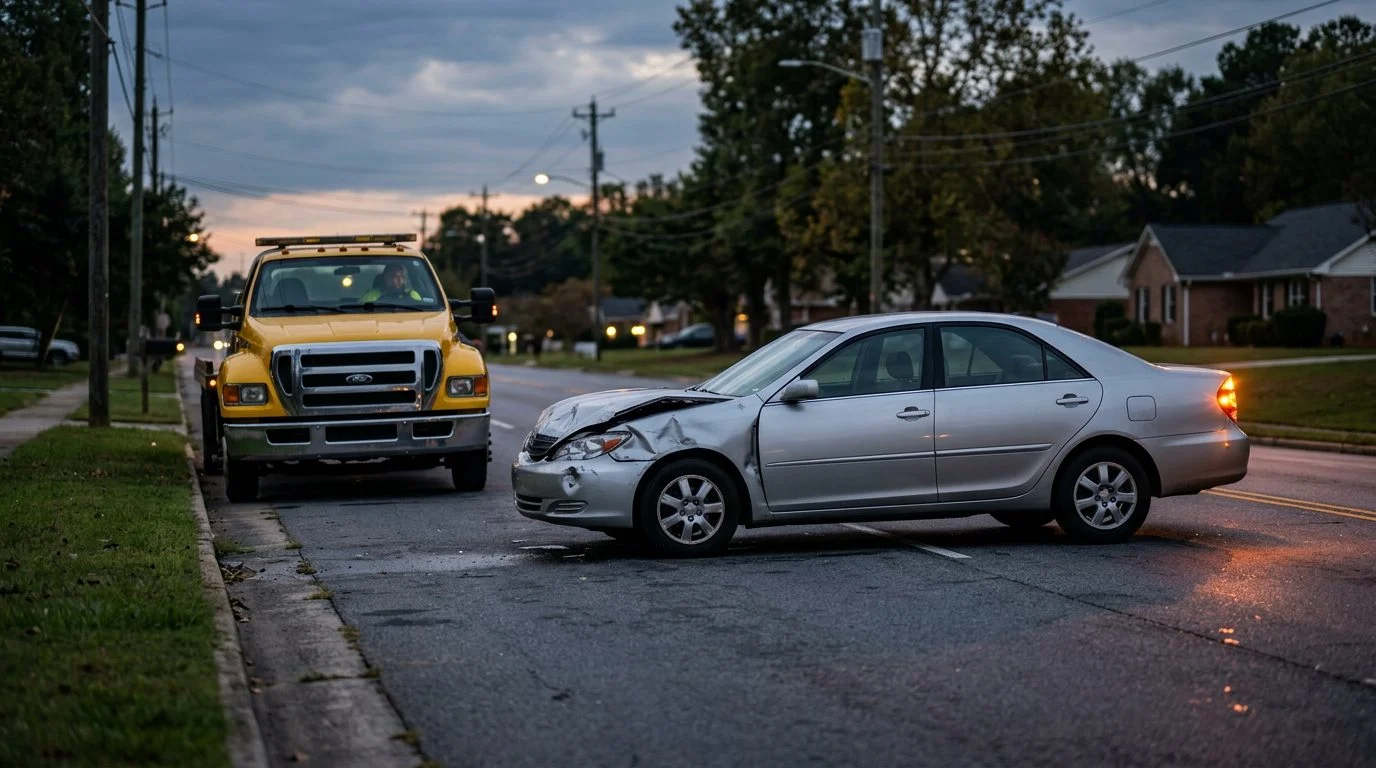
Car Accidents | Clayton County, Georgia
Hurt in a Clayton County Car Crash? Start With a Free Case Review
Broken bones and hospital stays raise hard questions about medical bills, paperwork, and time away from work. Our team takes those questions one step at a time, in English or Spanish.
By Adanna Ugwonali · Published November 10, 2026
A car crash can leave you with a broken bone, a head injury, or a hospital stay that changes your daily life. If that happened to you or someone you love, you likely have questions about treatment, fault, and time limits.
If you were hurt in a car accident, you may be wondering which injuries are serious. A fracture, a hospital admission, surgery, or a brain or spinal injury are examples of injuries that call for real medical care. Your medical records and Georgia’s filing and fault rules shape what happens next.
Who This Guide Is For and What Counts as Serious
This guide is for people hurt in serious car and truck crashes, and for family members helping them.
For purposes of this Code section, “bodily harm” means an injury to another person that takes away a body part, makes a body part useless, seriously disfigures the body, or causes organic brain damage which renders the body or any member thereof useless. O.C.G.A. § 40-6-394 O.C.G.A. § 40-6-394 That definition comes from a criminal statute, but it shows how Georgia describes serious harm.
The focus is on crashes that led to real medical treatment, such as emergency care, imaging, hospital stays, or surgery. Minor fender-benders without treatment are not the focus.
If you’re researching for a relative, the injured person’s medical condition sets the pace. A crash can look minor at the scene and still cause injuries that appear hours or days later.
If a crash left you or a family member with a fracture, a head injury, or hospital bills, our team can talk through what may come next in a free, confidential first consultation. Talk it through with our team — the first consultation is free, confidential, and carries no obligation.
Which Injuries Are Common in Serious Crashes?
Serious crashes often cause fractures, head injuries, and spinal injuries, sometimes at the same time. Busy routes like I-75, I-675, and Jonesboro Road carry heavy, fast traffic. High-speed impacts there can injure several parts of the body at once.
- Fractures. Broken arms, legs, ribs, collarbones, pelvis, and skull bones often need emergency imaging to find.
- Traumatic brain injury. Headache, confusion, memory trouble, and changes in mood or sleep can show up after the first exam.
- Spinal injuries. Herniated discs, vertebra fractures, and spinal cord damage can cause numbness or weakness. Any new numbness or weakness needs prompt medical evaluation.
Some symptoms appear later. Follow up with a medical doctor even if you feel fine at first.
Why Medical Treatment and Records Matter
Your medical records are the main way to show how a crash affected your body. A typical path runs from emergency transport to emergency department evaluation, imaging, admission or surgery if needed, and follow-up with a medical doctor. Each step creates records that describe the injury.
In civil actions to recover damages for injury or death to a person, Georgia limits special damages for medical and healthcare expenses to the reasonable value of medically necessary care, treatment, or services. O.C.G.A. § 51-12-1.1 If you have health insurance, including governmental workers’ compensation benefits, evidence shall include both the amounts charged and the amounts actually necessary to satisfy them under your plan, whether or not the insurance has been or will be used.
Treatment under a letter of protection, where a provider waits for payment from a future settlement or judgment, can also be examined. The letter and itemized charges are relevant under the same statute.
Keep these items together:
- Photos of the scene and both vehicles
- The crash report number
- Names of witnesses
- A daily symptom journal
- Every bill, discharge summary, and prescription record
Follow your medical doctor’s advice first. Legal questions can be handled alongside your treatment.
Who May Be Responsible and What Insurance May Apply
More than one party can be responsible after a serious crash. That includes the at-fault driver and, in some cases, a company.
When a driver is on the job, the employer can answer for that driver’s negligence within the scope of the business. O.C.G.A. § 51-2-2
An employer that admits it answers for its driver can still face claims for its own negligent entrustment, hiring, training and supervision. Quynn v. Hulsey
Commercial trucks are subject to federal rules on driver qualification, hours of service, inspection, maintenance, and minimum insurance. eCFR, 49 CFR Chapter III
The direct-joinder limit in O.C.G.A. § 40-2-140(d)(4) governs a cause of action under that Code section, such as a claim involving a for-hire intrastate motor carrier and its insurance carrier. You may join the carrier and its insurer only when a related carrier is insolvent or bankrupt, or when personal service, as provided in subsection (e) of Code Section 9-11-4, cannot after reasonable diligence be effected against the driver of the motor carrier’s vehicle or against the motor carrier. O.C.G.A. § 40-2-140
Check your own auto policy limits, including any uninsured motorist coverage, rather than assuming them.

Georgia Deadlines and Fault Rules That Shape a Claim
Georgia generally allows two years to file a lawsuit for injuries to a person. O.C.G.A. § 9-3-33 Certain claims involving loss of consortium have four years under the same statute.
Under Georgia law, a wrongful death action is generally brought by the persons entitled under O.C.G.A. § 51-4-2, such as a surviving spouse or children; the personal representative may bring it under O.C.G.A. § 51-4-5(a) only when nobody is entitled to bring it under O.C.G.A. § 51-4-2 or § 51-4-4. Recovery can include the full value of the decedent’s life. When death results from a crime or from criminal or other negligence, the personal representative of the deceased person is entitled to recover funeral, medical, and other necessary expenses. O.C.G.A. § 51-4-5 Family members should review timing promptly.
Georgia uses modified comparative fault. The judge reduces damages in proportion to the injured person’s share of fault. A plaintiff who is 50 percent or more responsible for the injury or damages claimed is not entitled to receive any damages. O.C.G.A. § 51-12-33
Each liable person owes only its own apportioned share, not a joint amount, under the same statute.
How these rules apply depends on the facts of each crash.
What to Expect When You Reach Out
The process starts with a conversation, and the facts you share guide what comes next.
- Intake call. Our intake team talks with you in English or Spanish about the crash, your injuries, and your treatment.
- Records. We help gather the crash report, medical bills, and discharge summaries.
- Coverage review. We look at which insurance policies may apply.
- Insurer contact. Communication with insurers is handled once you decide to move forward.
- Decision. You decide whether to file a claim, with the facts in front of you.
Timing varies. Claims can take months, and some move into litigation. The medical picture and the facts drive the timeline. Support staff can also answer scheduling questions.
Ugwonali Law Group is located at 3400 Peachtree Road NE, Atlanta, Georgia. We represent people hurt in crashes in Clayton County, Jonesboro, Fulton, Cobb, Rockdale, and across Georgia. Adanna Ugwonali is the responsible lawyer for this page.
Not sure what your next step is?
Talk it through with our team — the first consultation is free, confidential, and carries no obligation.
Frequently Asked Questions
Do I need to be hospitalized for my injury to matter?
Hospital stays are not the only proof. Documented treatment, including emergency care and follow-up with a medical doctor, is central to a serious injury claim.
What if I feel fine right after the crash?
Some fractures and brain injuries show symptoms later. An early medical check helps connect later symptoms to the crash.
Does my health insurance affect my claim?
In a civil action to recover damages for injury or death to a person, if the plaintiff has any form of public or private health insurance, including benefits under a governmental workers’ compensation program, evidence relevant to the determination of the reasonable value of medically necessary care shall include both the amounts charged and the amounts actually necessary to satisfy them under the insurance contract or program, whether or not the insurance has been used or will be used. Keep your insurance statements with your other records.
Can I still pursue a claim if I was partly at fault?
Georgia reduces damages by your share of fault. A share of 50 percent or more bars recovery (O.C.G.A. § 51-12-33; Quynn v. Hulsey (2020)).
What if the other driver was in a company truck?
A company can answer for its driver within the scope of work. Commercial insurance and the company’s own conduct may also be part of the claim.
How long do I have to act?
Georgia generally allows two years for a personal injury lawsuit. Wrongful death and other claims can have different timing, so review them promptly.
What does a first consultation cost?
The first consultation is free, confidential, and comes with no obligation to continue.
If a crash has left you or a family member in treatment, facing bills, and wondering who may be responsible, our team can help you sort out the next steps. Request a free case evaluation
How Ugwonali Law Group Helps Injured Drivers and Passengers
Focus on Your Recovery
We explain the medical side of your case in plain language, so you can focus on healing while we handle the legal details.
Organized Records
We help gather emergency room notes, imaging, treatment records, and bills so your medical history is clear and complete.
Serving Clayton County and Metro Atlanta
We represent people hurt in crashes across Jonesboro, Clayton County, metro Atlanta, and throughout Georgia.
English and Spanish Support
Our intake staff can speak with you in English or Spanish, from your first call through every step that follows.
Before You Talk to an Insurance Adjuster
Adjusters may call quickly and ask for a recorded statement. Keep your answers brief, and consider speaking with a lawyer before you give one. Also keep following your doctor's treatment plan, since missed appointments can be used against you in a claim.
What to Expect After a Serious Crash
1. Get Medical Care
Seek emergency care and follow up with a medical doctor. Fractures and other injuries can show symptoms days or weeks after a crash.
2. Contact Us
Call for a free case review. We will listen to what happened, review your injuries, and explain the options available to you.
3. Document Everything
Save photos, police reports, pay stubs, and receipts. We help organize them so nothing important is lost.
4. Let Us Handle the Process
We communicate with insurers and other parties so you can focus on your health and your family.