

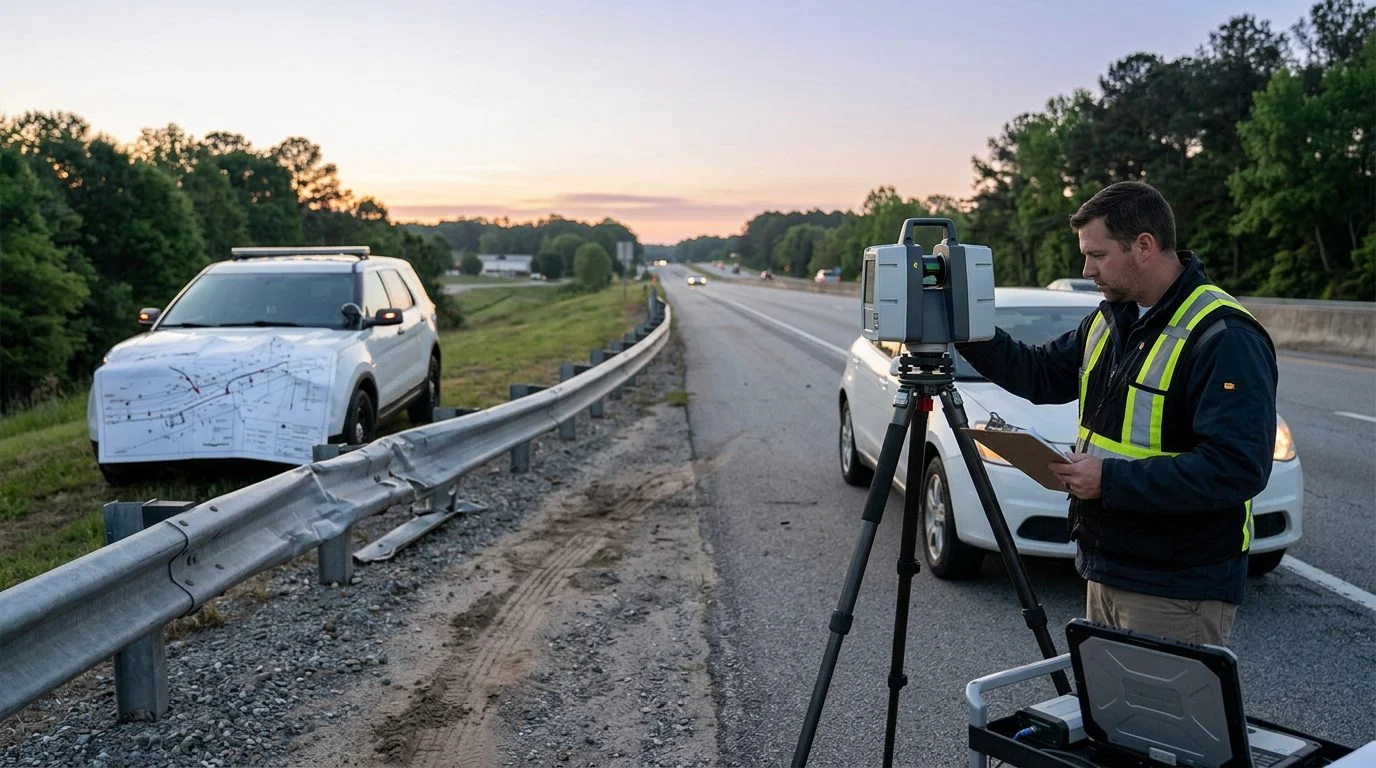
Truck Accidents | Atlanta and Georgia
Paralysis After a Truck Crash: Understanding Your Claim in Georgia
A spinal injury can change your body, your work and your family in one moment. Here is how these cases are built, and what to do first.
By Adanna Ugwonali · Published November 8, 2026
If paralysis followed a truck crash in Georgia, you may be facing hard questions about medical care, money, and time. This guide answers them in plain language.
A paralysis claim can seek compensation from the people responsible for the crash. Georgia law sets the rules for fault, damages, and deadlines, and each one shapes what happens next.
What a Paralysis Claim After a Truck Crash Is and Who It Is For
A paralysis claim is a personal injury claim for losses caused by a spinal cord injury. It asks the at-fault party to pay for the harm that follows, such as medical bills and lost income.
Paralysis means losing movement, feeling, or both in part of the body. When a truck crash damages the spinal cord, that loss can be long-lasting. These cases often involve hospital care, surgery, and ongoing treatment by a medical doctor. Those medical records become the backbone of the claim.
The injured person usually brings the claim. If a loved one has died, certain family members may bring a wrongful death claim instead. Many people in this situation are still in the hospital or rehabilitation, and they need clear answers before they decide what to do.
Paralysis claims fall under the firm’s catastrophic injury practice, alongside truck accidents, traumatic brain injury, and wrongful death.
If someone you love is living with paralysis after a truck crash, you don't have to sort out the claim on your own, and our team can talk it through with you. Talk it through with our team — the first consultation is free, confidential, and carries no obligation.

Types of Paralysis and Spinal Cord Injuries Seen in Truck Crashes
Paralysis is described by which body parts are affected and how much function remains. Both points matter for treatment and for the claim.
- Paraplegia means paralysis of the lower body. It often follows injury in the thoracic or lumbar spine, the middle and lower back.
- Tetraplegia, also called quadriplegia, affects the arms and legs. It often follows injury in the cervical spine, the neck.
- Complete injury means no movement or feeling below the injury. Incomplete injury means some function remains.
Medical teams often classify severity over time, as swelling goes down and function returns or does not. Georgia’s spinal cord injury facts explain the causes and complications of these injuries.
Spinal cord damage can come from broken or dislocated vertebrae, pressure on the cord, bleeding, and swelling. Some people have cord damage without a clear broken bone, so imaging and a full medical exam matter. Some people with paralysis also have a traumatic brain injury, which needs its own medical and legal review.
How Truck Crashes Cause Spinal Cord Injuries in Georgia
Truck crashes cause spinal injuries through the force of impact. A loaded commercial truck is far heavier than a passenger car, and that difference sends more force into the occupants of the smaller vehicle.
Common crash patterns include:
- Rear-end impacts at highway speed
- Jackknifing, when the trailer swings out of line with the cab
- Underride collisions, when a car slides beneath a trailer
- Rollovers and lane-change crashes
Some crashes also involve federal safety rules. 49 C.F.R. § 395.3 limits driving time. Under 49 C.F.R. § 395.3, a driver may drive a total of 11 hours during the 14-hour period that follows 10 consecutive hours off duty.
Other rules cover cargo and maintenance. 49 C.F.R. § 393.100 requires each commercial motor vehicle, when transporting cargo on public roads, to secure cargo so it does not leak, spill, blow, or fall, and so it does not shift to such an extent that the vehicle’s stability or maneuverability is adversely affected. 49 C.F.R. § 396.3 requires motor carriers to inspect, repair, and maintain their vehicles and to keep maintenance records for set periods.
The firm serves Atlanta, Fulton, Clayton, Cobb, and Rockdale counties, including Clayton County and Jonesboro. It also takes cases across Georgia.
Who Can Be Responsible and How Fault Works in Georgia
More than one party can share responsibility for a truck crash. That can include the driver, the motor carrier, and sometimes a company that maintained the truck or loaded its cargo.
Georgia uses a shared-fault rule. Under O.C.G.A. § 51-12-33, the judge reduces damages by the injured person’s percentage of fault. If that person is 50 percent or more responsible, they cannot receive any damages.
Under O.C.G.A. § 51-12-33, if the trier of fact finds that the plaintiff is responsible to some degree for the injury or damages claimed, the judge reduces the damages otherwise awarded to the plaintiff in proportion to his or her percentage of fault. The same statute says each liable person owes only its own share, and those shares are not joint.
Insurance is central in truck cases. The at-fault party’s liability coverage is often a key source of recovery, and policy limits can matter in serious cases.
Fault is decided with evidence. Crash reports, driver logs, and maintenance records can all matter. Early requests help, because carriers keep records only for set periods.
What a Paralysis Claim Can Include: Economic and Non-Economic Damages
A paralysis claim can seek money for losses you can document and for losses that are harder to measure.
O.C.G.A. § 51-12-2 says special damages actually flow from an injury and must be proved. O.C.G.A. § 51-12-7 says necessary expenses from an injury are a legitimate part of the damages estimate.
Documented losses often include:
- Emergency, hospital, and surgical care
- Rehabilitation and medications
- Equipment such as wheelchairs and home modifications
- Future medical care
- Lost wages
O.C.G.A. § 51-12-13 lets the decision-maker reduce future medical expenses, lost wages, and other future economic damages to present value, using a 5 percent discount rate or another rate it finds appropriate.
Some losses, such as pain and reduced quality of life, are harder to put into numbers. No one can say in advance what a claim is worth.
If a spouse or parent has died, O.C.G.A. § 51-4-2 allows a surviving spouse to recover the full value of the decedent’s life, as shown by the evidence. If there is no spouse, children may recover. The spouse receives no less than one-third of the recovery.
How a Spinal Cord Injury Claim Works: Steps and Timeline
A spinal cord injury claim usually moves in five stages, from a first call to a lawsuit if one is needed.
- First consultation. You speak with our intake team by phone, in English or Spanish, about the crash, the injury, and treatment so far.
- Evidence requests. Letters ask for truck logs, maintenance files, and crash reports before those records are lost.
- Medical records review. Records from treatment by a medical doctor and any rehabilitation plan are gathered and reviewed.
- Demand and negotiation. A demand goes to the insurer. Some claims resolve at this stage, but timing and outcomes vary.
- Lawsuit if needed. If the claim does not settle, a lawsuit may be filed. Discovery (the exchange of evidence) and mediation or trial preparation follow.
For most injury claims, O.C.G.A. § 9-3-33 requires the action to be brought within two years after the right of action accrues. Paralysis cases often take longer than other claims, because the medical picture may need time to develop.
Not sure what your next step is?
Talk it through with our team — the first consultation is free, confidential, and carries no obligation.
Common Questions About Paralysis Car and Truck Accident Claims in Georgia
Direct answers to common questions follow.
Can a car crash cause paralysis?
Yes. A car crash can damage the spinal cord, and the same Georgia fault and damages rules apply.
Can I still recover if I was partly at fault?
Georgia reduces your damages by your share of fault. Under O.C.G.A. § 51-12-33, you cannot recover if you are 50 percent or more responsible.
Will insurance cover all my costs?
Not always. Policy limits and coverage disputes can affect recovery, and our team reviews coverage questions during the first consultation.
Do I need to pay anything to start?
The first consultation is free, confidential, and carries no obligation to continue.
Do you handle cases statewide and in Spanish?
Intake is available in English or Spanish. The firm serves metro Atlanta and takes cases across Georgia.
Talk With Our Team About Your Paralysis Claim
If paralysis followed a truck crash, a first conversation can help you understand your options before you decide anything.
Maybe you are a spouse watching a partner adjust to paralysis. Perhaps you are a parent who just learned the spinal injury may be permanent. Or you are an adult still in rehab, weighing whether to act. Each situation raises urgent questions, and the time limits are real.
Adanna Ugwonali is the responsible lawyer for this page, and the firm’s lawyers and support staff are available to help.
If you want to talk through your situation, contact our team here or chat with intake in English or Spanish.
Responsible lawyer: Adanna Ugwonali. Ugwonali Law Group, 3400 Peachtree Road NE, Atlanta, Georgia.
How Ugwonali Law Group Approaches These Cases
Organized records
We help you gather medical records, imaging, crash reports and bills so the full picture of your injury is documented from the start.
Your recovery comes first
We keep the focus on your treatment and your daily life, and we explain each step of the process in plain language.
English or Spanish
Our intake team can speak with you in English or Spanish on your first call.
Families included
When a truck crash leads to a death, we also work with surviving family members through the wrongful death process.
Based in Atlanta
Our office is at 3400 Peachtree Road NE, Atlanta. We represent people across metro Atlanta and throughout Georgia.
Protect Your Medical Trail
Keep every appointment, follow your doctors' treatment plan, and save prescription receipts and therapy notes. Gaps in treatment can make it harder to show how an injury has affected your life.
Steps to Take After a Serious Truck Crash
Get medical care right away
Some spinal injuries worsen without prompt evaluation. Ask for a full medical exam, even if symptoms seem to be developing slowly.
Preserve the evidence
Photos, witness names, the crash report number and the truck's details all help show what happened on the road.
Be careful with recorded statements
Talk with a lawyer before giving a recorded statement to an insurance adjuster, especially while you are still in treatment.
Talk with our team
Request a free case review to discuss your injuries, your medical care and the questions you have about your claim.