

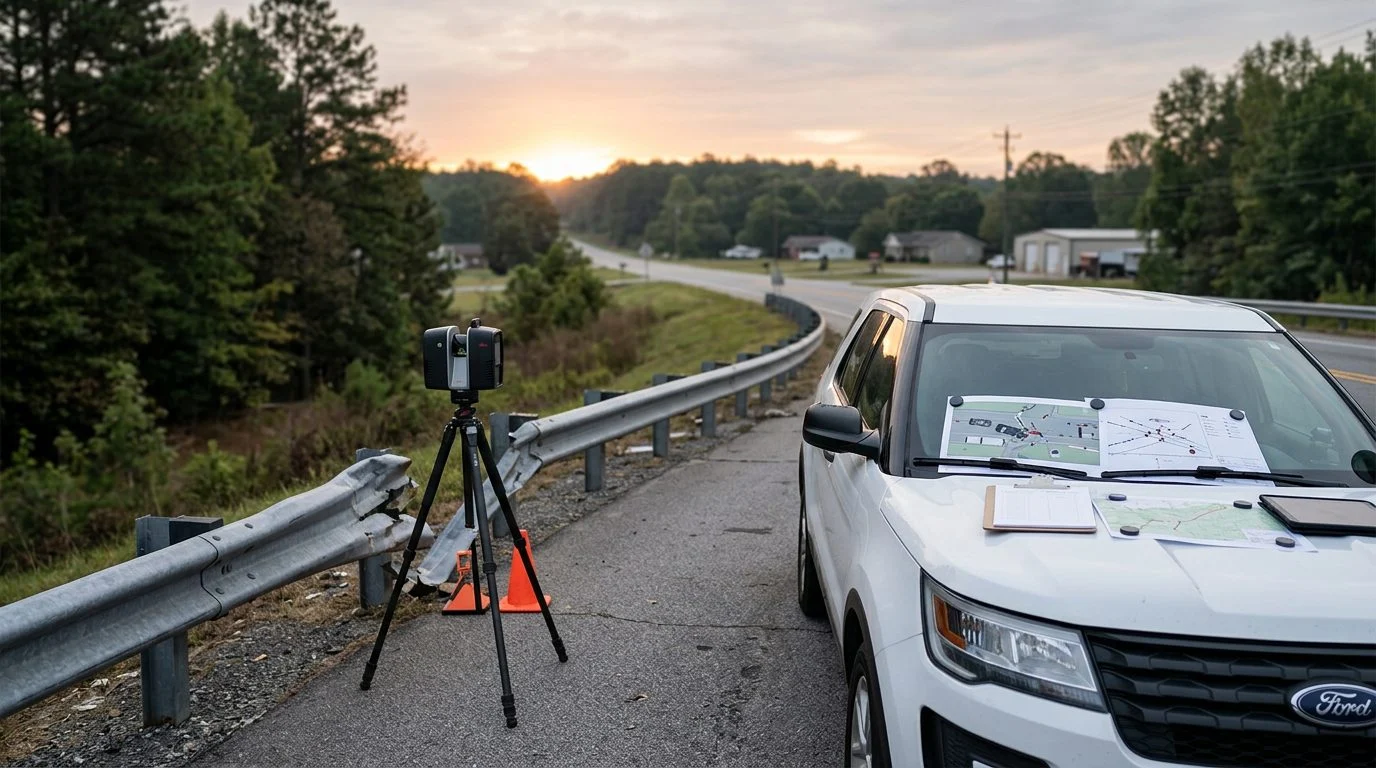
Clayton County Truck Accidents
Serious Spinal Injuries From a Truck Crash: Clear Answers for Clayton County Families
A spinal cord injury changes daily life in ways that are hard to predict. Here is how these cases are typically approached, what records matter, and how our Atlanta team can help you understand your options.
By Adanna Ugwonali · Published November 12, 2026
A truck crash can change a life in seconds, and the questions often arrive before the hospital stay ends. A spinal cord injury from a truck crash can support a claim for medical care, lost income, and other losses tied to the injury. Georgia law sets the rules for who may be responsible and how fault is divided.
Who This Page Is For, and What a Spinal Cord Injury Involves
A spinal cord injury damages the bundle of nerves that carries signals between the brain and the body.
This page is for people hurt in a truck crash in Clayton County, and for family members learning the facts on someone else’s behalf. If doctors have raised the possibility of a spinal cord injury, the medical words can feel overwhelming. You don’t need to understand every term to start asking good questions.
When the spinal cord is hurt, movement, feeling, and some bodily functions can change. Doctors describe an injury by its level on the spine and by how much function remains. A complete injury means no movement or feeling below the injury. An incomplete injury means some function remains. The Model Systems Knowledge Translation Center publishes research-based factsheets on life after spinal cord injury.
Full effects are often unclear at first. Swelling and changing symptoms can take weeks or months to settle, so regular medical follow-up matters.
How Truck Crashes Cause Spinal Cord Injuries
Truck crashes cause spinal injuries when the force of impact, a rollover, or a sudden stop twists or compresses the spine.
Large trucks weigh far more than passenger vehicles. Common crash patterns include rollovers, jackknifing, underride collisions where a car slides beneath a trailer, and high-speed impacts with a heavy truck. Occupants of smaller vehicles often absorb much of that force through the seat, the steering wheel, and the seat belt.
Spinal injuries don’t always leave visible wounds. A person may have only a bruise or a stiff neck at the scene, then develop weakness or numbness hours or days later. That is why any crash with a commercial truck deserves prompt medical evaluation, even when the injury looks minor.
Commercial trucks also operate under federal safety rules. Those rules matter later, when the records are reviewed.
What a Spinal Cord Injury Claim Can Cover
A claim can seek payment for losses that flow from the injury, and Georgia law treats different losses differently.
Under O.C.G.A. § 51-12-2, general damages are those the law presumes to flow from a wrongful act. Special damages are those that actually flow from it, and they must be proved.
Medical costs have a limit. Under O.C.G.A. § 51-12-1.1, medical expenses are limited to the reasonable value of medically necessary care, treatment, or services. Future losses can also be reduced to present value. O.C.G.A. § 51-12-13 allows a 5 percent discount rate or another rate the trier of fact deems appropriate. This is why careful records of future care matter.
Spinal cord injuries often involve rehabilitation, equipment, home changes, and lost work. The effect on daily life and family relationships is also part of a claim. Each claim turns on its own medical and financial facts, so no general page can estimate its value.
If a crash causes a death, Georgia provides a separate route. Under O.C.G.A. § 51-4-5, when death results from a crime or from criminal or other negligence, the personal representative may recover funeral, medical, and other necessary expenses resulting from the injury and death.
How the Claim Process Works, Step by Step
A typical claim moves from a free case review to records, investigation, settlement talks, and, when needed, a lawsuit.
- Free case review. You speak with the firm by phone or in person, in English or Spanish.
- Medical records. Gather records from the emergency room, treating physicians, imaging, and rehabilitation providers.
- Investigation. Request the police crash report, witness information, and details about the truck, driver, and carrier.
- Identify responsible parties. In truck cases, this can include the driver, the motor carrier, and others whose conduct contributed.
- Demand and negotiation. Insurers are asked to resolve the claim. If a fair resolution isn’t reached, a lawsuit may be filed in court.
Timing matters. Under O.C.G.A. § 9-3-33, actions for injuries to the person generally must be brought within two years after the right of action accrues. Loss of consortium claims have a four-year period under the same statute. Early contact gives time to gather evidence before it is lost.
Evidence That Often Matters in a Truck Crash Case
The records that often matter most are the police report, driver logs, post-crash testing records, and maintenance files.
- Police crash report. It records the scene, the vehicles involved, and any citations issued.
- Driver duty-status logs. Motor carriers must have each driver record duty status for each 24-hour period, and no one may make a false report about it.
- Post-accident testing records. After certain truck crashes, employers must test drivers for alcohol as soon as practicable. If a test is not given within two hours, the employer must keep a record of why.
- Maintenance and inspection records. Carriers must keep inspection, repair, and maintenance records, and retain them for 1 year and for 6 months after a vehicle leaves their control.
- Medical records. These connect the crash to the spinal injury and show the treatment plan.
Early action matters because retention periods are limited. Our team can ask for these records early, so they aren’t lost to time limits.
When the Injured Person Shares Some Fault
Under Georgia law, an injured person’s share of fault reduces the damages recovered. A plaintiff who is 50 percent or more responsible for the injury or damages claimed is not entitled to receive any damages (O.C.G.A. § 51-12-33; Quynn v. Hulsey (2020)).
Under O.C.G.A. § 51-12-33, a judge reduces damages in proportion to the injured person’s percentage of fault. The statute also says the plaintiff “shall not be entitled to receive any damages if the plaintiff is 50 percent or more responsible for the injury or damages claimed.”
Damages apportioned among liable people are each person’s own liability, not joint liability. A truck crash case may look at more than one party.
Employers can answer for their workers. Under O.C.G.A. § 51-2-2, every person is liable for torts committed by his servant within the scope of his business. In Quynn v. Hulsey, the Georgia Supreme Court addressed how fault is apportioned under O.C.G.A. § 51-12-33 in a case involving an employer’s liability for an employee’s conduct, and held that an earlier rule on that point has been abrogated by § 51-12-33.
How Ugwonali Law Group Handles These Cases
Ugwonali Law Group is a personal injury firm at 3400 Peachtree Road NE, Atlanta, Georgia.
The firm represents people hurt in truck and car crashes, catastrophic injuries, premises liability cases, slip and fall injuries, and wrongful death matters. It serves clients across metro Atlanta, including Clayton County and Jonesboro, and statewide in Georgia.
Adanna Ugwonali is the responsible lawyer for this page. Our lawyers and support staff work with each client on the matter. Intake staff can speak with you in English or Spanish.
Frequently Asked Questions
Can a spinal cord injury show up days after a crash?
Yes. Some symptoms can appear or change over time, so ongoing medical follow-up matters.
Do I need a police report for a truck crash claim?
A police report is one useful record. Medical, carrier, and other records can also support a claim.
What if the truck driver worked for a company?
Georgia law can make an employer liable for torts of a worker within the scope of business. Who is responsible is decided case by case.
How long do I have to file?
Georgia generally allows two years for injury claims under § 9-3-33. Exceptions can apply, so early review helps.
Can my family bring a claim if my loved one died?
Georgia law sets out who may bring a wrongful death action. A free case review can explain how those rules fit your family’s situation.
Will I have to go to court?
Some claims settle without trial. Others require a lawsuit and court proceedings.
What should I bring to a case review?
Bring crash, medical, and insurance papers you have, such as discharge notes, bills, and the police report number.

Talk With Our Team About Your Situation
A truck crash that may involve a spinal cord injury can bring hospital bills, missed work, and decisions no one expected to make.
If that is where you are, you don’t have to sort out the medical and legal questions alone. You can call for a free case review, request a free case evaluation, or chat with our intake team in English or Spanish. Our first consultation is free, confidential, and carries no obligation to continue. Adanna Ugwonali is the responsible lawyer for this page, located at 3400 Peachtree Road NE, Atlanta, Georgia.
How Ugwonali Law Group Can Help
Free case review
Your first consultation is free, confidential, and comes with no obligation to continue.
English or Spanish
Our intake staff can speak with you in English or Spanish from your first call.
Plain-language guidance
We explain the legal and medical steps in terms you can follow, so you know what to expect at each stage.
Atlanta office
Our team serves Clayton County and the wider metro area from 3400 Peachtree Road NE, Atlanta.
Do not skip medical follow-up
Some spinal symptoms, such as numbness, weakness, or changes in bladder or bowel function, can appear or worsen days after a crash. Keep every appointment, describe every symptom to your doctor, and keep copies of your records.
Useful Records to Gather
Medical records
Emergency room notes, imaging such as MRI or CT scans, surgical reports, and therapy notes all document your injury and treatment.
Crash documentation
A police report, photos of the scene and vehicles, and witness names and contact details can help create a clear picture of what happened.
Work and income records
Pay stubs, time off requests, and letters from your employer show how the injury has affected your job and earnings.
Notes on daily life
A simple journal of pain, limitations, and tasks you can no longer do gives your care team and your attorneys a fuller view of your recovery.