

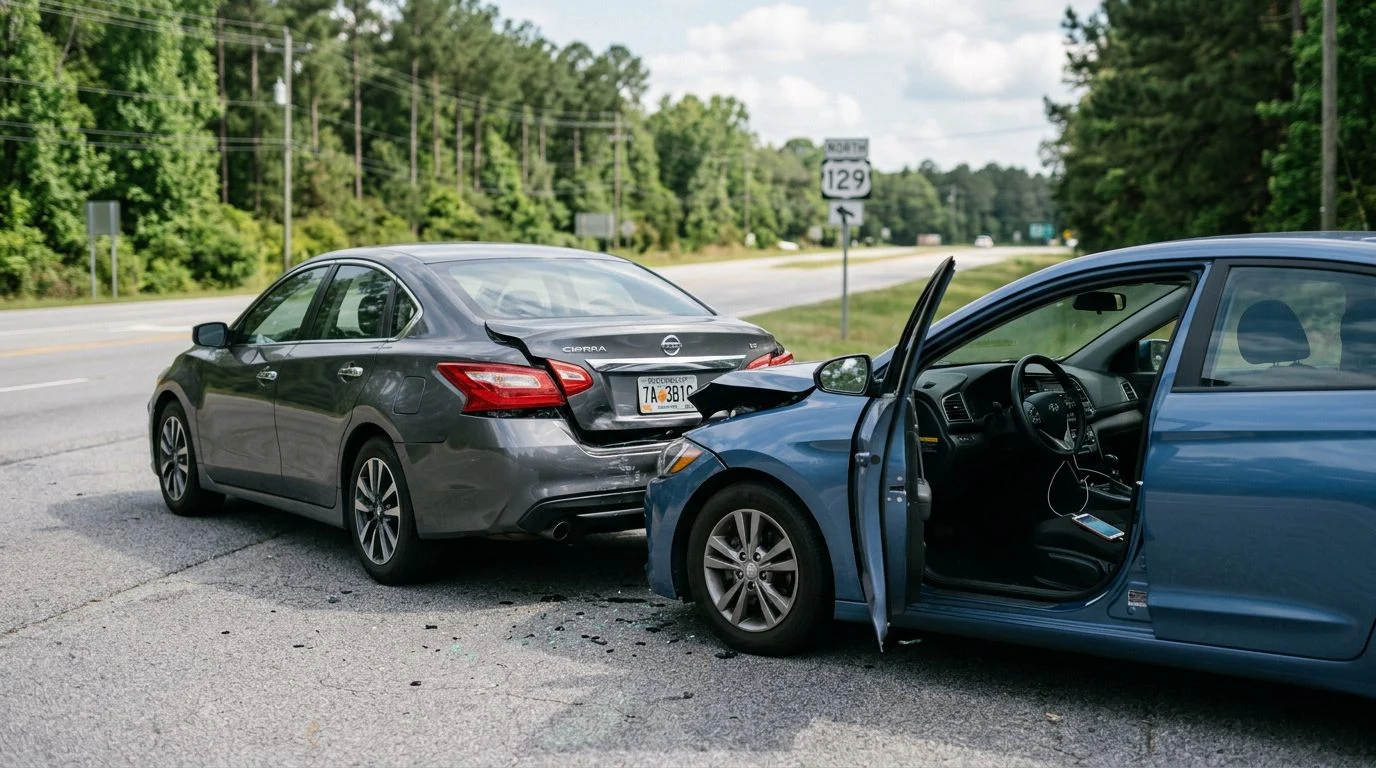
Distracted Driver Crashes | Atlanta and Georgia
Hurt by a Distracted Driver? Talk With Our Team About Your Options
Phone use, texting, and other distractions can turn an ordinary drive into a serious crash. Ugwonali Law Group offers a free, confidential first consultation to help you understand the legal and medical steps ahead, in English or Spanish.
Getting Started With Our Firm
Free
First consultation, with no obligation to continue
2
Languages: English and Spanish
Atlanta
Office at 3400 Peachtree Road NE
By Adanna Ugwonali · Published October 27, 2026
If a distracted driver hurt you or someone you love, you may have a claim for the losses that followed. In Georgia, a distracted driver accident injury claim often depends on phone records, vehicle data, and timing. This guide explains the process in plain language. It is written for crashes that led to real medical treatment, including fractures, hospital stays, brain or spinal injuries, and deaths.
What a Distracted Driver Accident Injury Claim Covers in Georgia
A distracted driver accident injury claim asks the at-fault driver to pay for losses that careless driving caused. Distraction is more than a phone in someone’s hand. It includes holding or supporting a phone, texting, reading or sending messages, and other tasks that pull attention off the road.
Drivers, passengers, and pedestrians who are hit can all be injured in these crashes. When a crash causes a death, the family may bring a wrongful death claim. Georgia law says the surviving spouse or, if there is none, the children may recover “the full value of the life of the decedent, as shown by the evidence” (O.C.G.A. § 51-4-2).
This page covers serious injuries with real medical care, including crashes involving commercial trucks. It is not written for minor bumps where no one was hurt.
If a driver's phone use left you or someone you love hurt, our team can talk through your facts with you in a free, confidential case review. Talk it through with our team — the first consultation is free, confidential, and carries no obligation.
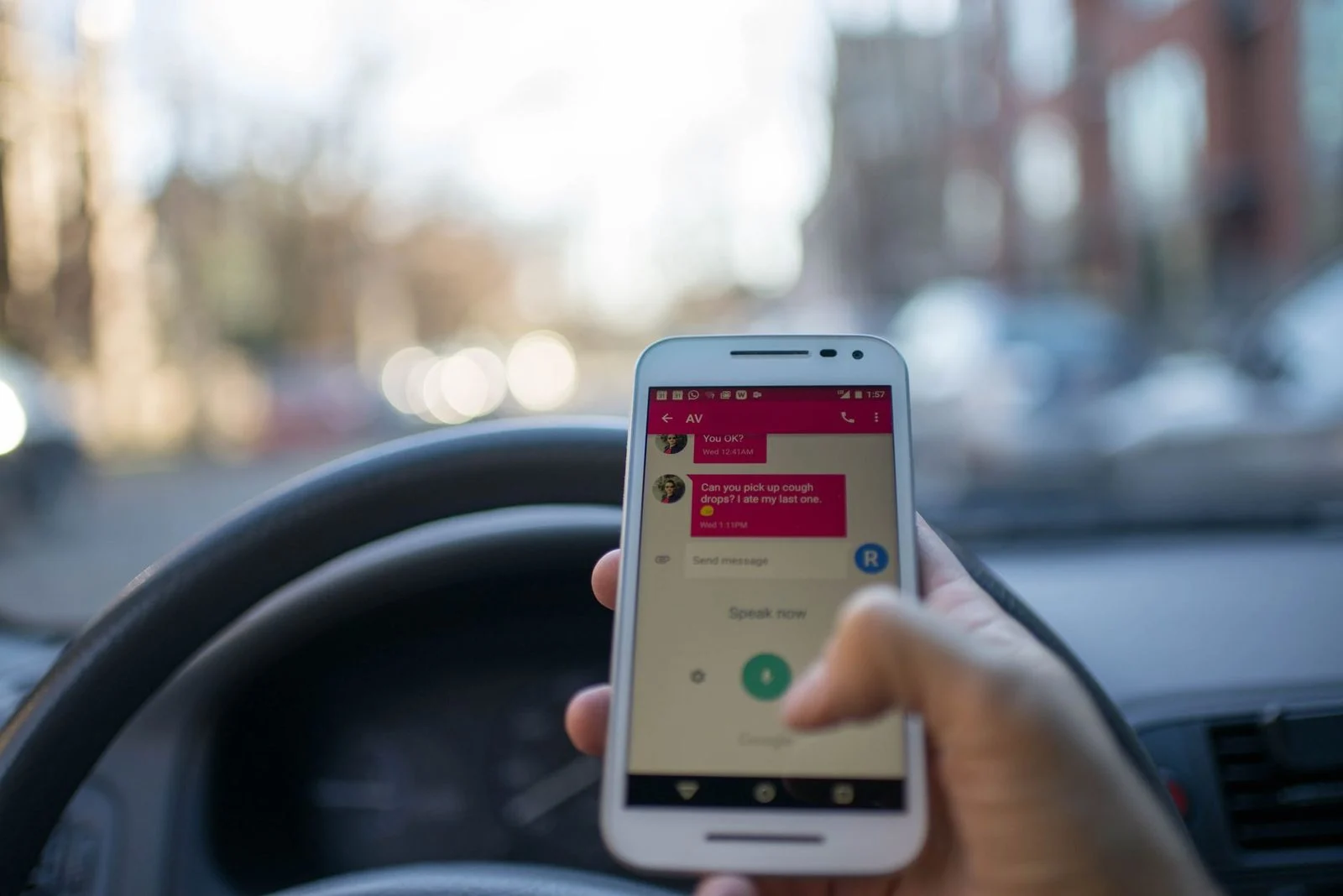
Georgia’s Hands-Free Law and Why It Matters to Your Claim
The rule applies even when a driver is stopped at a traffic signal or stop sign, according to the Georgia Governor’s Office of Highway Safety.
Georgia law also says that when the law requires a person to refrain from an act that may injure another, the injured person may recover for breach of that duty if they suffer damage (O.C.G.A. § 51-1-6). Still, proof that a driver broke a safety rule can help show what happened.
Commercial drivers face stricter federal rules. A commercial driver may not use a hand-held mobile phone while driving (49 CFR 392.82). The same driver may not text while driving (49 CFR 392.80). Both rules include an exception when a driver must communicate with law enforcement or other emergency services. For a truck crash, state and federal rules may both matter.
Phone Evidence That Can Show Distraction
Phone evidence helps most when it lines up with the crash clock. The key question is whether phone activity overlapped with the crash. Simply knowing a phone was in the car is not enough.
Useful phone evidence includes:
- Call and text logs with timestamps from the minutes before impact
- Carrier records, which are usually requested through a formal legal process
- Data and app activity that shows whether the screen was in use
- Preservation letters, sent early, asking that records not be deleted
Timing decides many distraction questions. Phone clocks, vehicle clocks, and police times can differ by seconds or minutes. Careful comparison matters. A message sent a minute before a crash tells a different story than one active at impact.
Waiting is a common mistake. Records can be lost in the ordinary course of business, so early requests matter.
Vehicle Data, Witnesses, and Police Reports
Vehicle data, witnesses, and the police report can show what phone records cannot. Many vehicles record braking, speed, and steering in the seconds before a crash. This event data can help show whether the other driver reacted or stayed on course.
Commercial trucks carry more records. Electronic logging data and driver communications may be relevant in a truck crash, depending on the facts.
Witnesses can describe a driver looking down, holding a device, or drifting across lanes. Their accounts are most useful when gathered early, while memories are fresh.
The police report records what the officer saw and heard. Notes about phone use can matter. But officers often arrive after a crash and rely on what drivers and witnesses say. The report is a starting point, not the full story.
Photos, dashcam footage, and nearby business or traffic camera video can disappear quickly. Asking for them early gives them the best chance of being kept.
How a Georgia Injury Claim Proceeds, Step by Step
A typical claim moves from review to evidence, medical records, insurer talks, and then negotiation or a lawsuit. Each case moves on its own schedule.
- Free case review. You talk through the crash, your injuries, and the records you already have.
- Evidence and insurance. The crash report is requested, evidence is preserved, and the at-fault driver’s insurance is identified, including any commercial policy.
- Medical documentation. Ongoing treatment is recorded. Georgia limits medical expense damages to the reasonable value of medically necessary care (O.C.G.A. § 51-12-1.1). Insurers may raise gaps in treatment, so keeping appointments matters.
- Demand and negotiation. A demand letter presents the claim. Your own medical payments coverage and any hospital lien can affect what you receive.
- Lawsuit, if needed. Georgia’s general deadline for injury claims is two years after the right of action accrues (O.C.G.A. § 9-3-33). Some claims carry different time limits.
Georgia Fault Rules and What Insurers Often Argue
Georgia reduces damages by the injured person’s share of fault. A person who is 50 percent or more responsible cannot recover damages (O.C.G.A. § 51-12-33). Under O.C.G.A. § 51-12-33, when an injured person is partly responsible, the judge reduces the damages awarded in proportion to that person’s percentage of fault, and a person who is 50 percent or more responsible is not entitled to receive any damages.
The same statute says the trier of fact sets each party’s percentage of fault. Damages are then divided among the liable parties by fault. They are not joint liability, so each party pays only its own share.
Insurers often argue that the injured person also contributed to the crash. They may claim the injuries were pre-existing or unrelated. They may ask for a recorded statement. A recorded statement can be used later, so speak with counsel before giving one.
A distracted driver’s insurer may also contact you early with an offer. Before you accept, make sure your injuries and bills are fully documented.
Not sure what your next step is?
Talk it through with our team — the first consultation is free, confidential, and carries no obligation.
Questions Readers Ask About Distracted Driver Claims
Is distracted driving negligence?
A driver who fails to keep a proper lookout while using a phone can be found negligent. Records and witnesses help decide whether that applies to your crash.
What if the other driver left the scene?
Report it to police right away and keep any evidence you have. Georgia requires auto liability policies to include uninsured motorist terms (O.C.G.A. § 33-7-11), so review your own policy.
What is the average settlement for a car accident in Georgia?
A single figure does not fit every case. Value depends on injuries, treatment, documented losses, and available coverage. Nobody can promise a result.
Can I still claim if I was partly at fault?
Possibly.
How long do I have to file?
Under Georgia law, actions for injuries to the person generally must be brought within two years after the right of action accrues (O.C.G.A. § 9-3-33). Some claims carry different time limits.
Under O.C.G.A. § 51-4-5, when death results from a crime or from criminal or other negligence, the personal representative of the deceased may recover funeral, medical, and other necessary expenses resulting from the injury and death.

Talk With Our Team About Your Crash
If you are still sorting out what happened, you do not have to face it alone. Many people reading this are in a hospital bed, in the middle of recovery, or grieving a family member while deciding what comes next.
Ugwonali Law Group is led by attorney Adanna Ugwonali. The firm is located at 3400 Peachtree Road NE, Atlanta, and represents injured people and families across metro Atlanta and Georgia, including Fulton, Clayton, Cobb, and Rockdale counties. Our team, including intake staff, can speak with you in English or Spanish.
The first consultation is free, confidential, and without obligation to continue (consulta inicial gratuita, confidencial y sin compromiso).
To request a free case evaluation or chat with our intake team, visit our contact page.
Attorney advertising. This page is general information. Responsible lawyer: Adanna Ugwonali, Ugwonali Law Group, 3400 Peachtree Road NE, Atlanta, Georgia.
What to Expect When You Contact Us
A Real Conversation
Our intake team listens to what happened, when it happened, and how the crash has affected your health and daily life.
Review of the Facts
We look at the crash report, medical records, and any available evidence of distraction, such as phone records or witness accounts.
Plain-Language Guidance
We explain how claims involving serious injuries and wrongful death typically work, so you can make informed decisions.
Support in Two Languages
Our intake staff assists clients in English or Spanish, so you can speak with us in the language you prefer.
Important: Protect Your Position
Before speaking with the other driver's insurance company, consider talking with a lawyer. Statements made early can be used later, and some documents may limit what you can recover. Keep copies of everything related to your crash and your treatment.
Steps to Take After a Distracted Driver Crash
Get Medical Care
Seek medical treatment right away, even if your injuries seem minor at first. Some serious conditions, including brain and spinal injuries, may not show symptoms immediately.
Document the Scene
If it is safe, take photos of vehicles, injuries, road conditions, and any signs of phone use. Write down names and contact details for witnesses.
Report the Crash
Ask for a police report and make sure your version of events is included. If the other driver left the scene, report it to police immediately.
Keep Records
Save medical bills, pay stubs, receipts, and notes about missed work or daily limitations. Organized records help explain the full impact of your injuries.
Talk With Ugwonali Law Group About Your Distracted Driver Crash
Related practice areas
- Car Accidents in Georgia: What Injured People Should Know Before They Call a Lawyer