

Atlanta Car Accidents | Georgia Law
Reporting a Car Accident in Georgia: Know the Steps Before You Need Them
A serious crash brings confusion, pain, and paperwork. Here is how the reporting process works, what to gather, and how a free case review can help you keep track of it all.
By Adanna Ugwonali · Published November 11, 2026
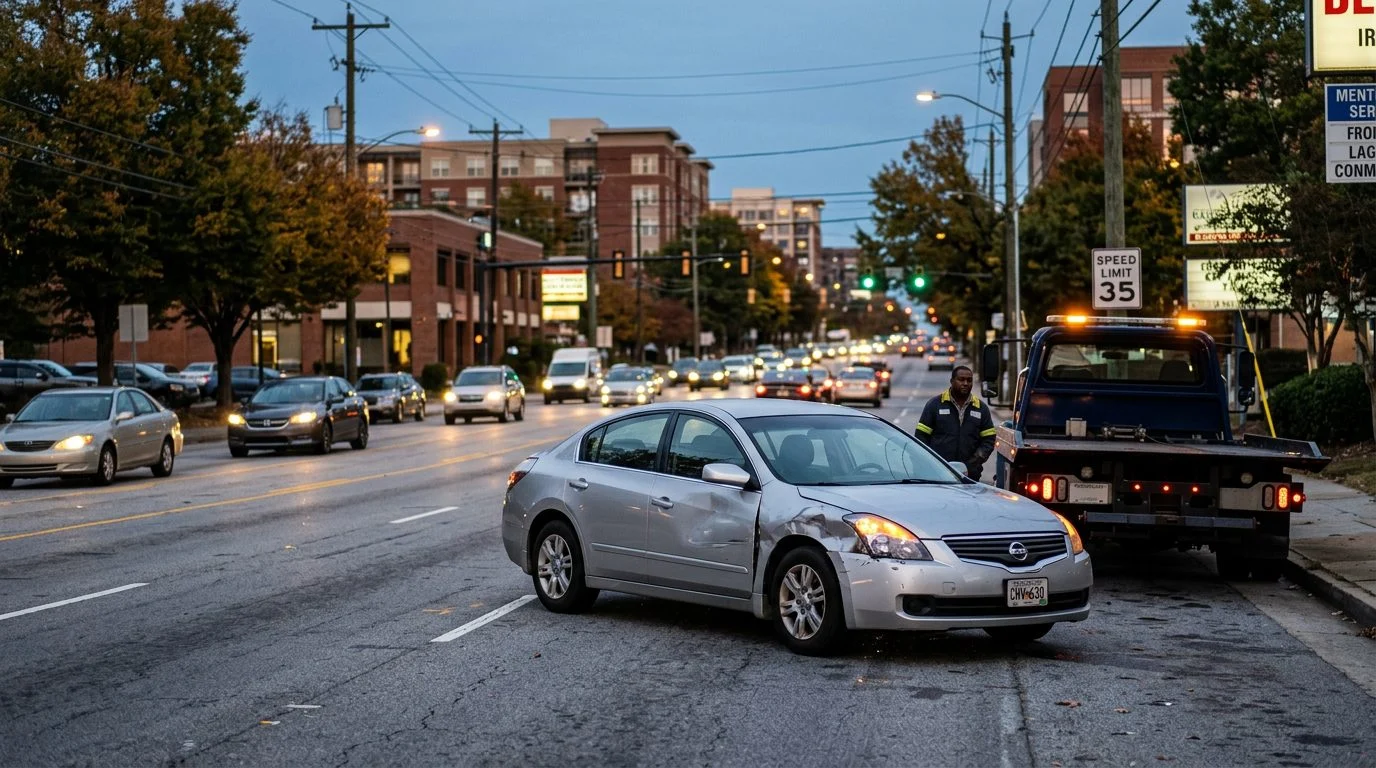
A crash can leave you hurt, shaken, and fielding calls from insurance adjusters in the same week. If you’re asking how long after an accident it must be reported, here is the direct answer for Georgia. A driver must give notice immediately, by the quickest means of communication, to the local police department if the crash occurs within a municipality, or otherwise to the county sheriff or the nearest state patrol office, when a crash causes injury, death, or property damage to an apparent extent of $500.00 or more.
Reporting isn’t one deadline. It’s several steps, each with its own timing, plus a separate clock for filing a lawsuit. This guide separates them so you can see which step applies to your situation.
The short answer: Georgia’s reporting deadlines at a glance
Reporting a Georgia crash involves three separate steps, and the timing differs for each. The first is notice to police. The second is what the driver does at the scene. The third is notice to your own insurer and the other driver’s insurer.
Under O.C.G.A. § 40-6-273, a driver involved in an accident resulting in injury to or death of any person or property damage to an apparent extent of $500.00 or more must immediately, by the quickest means of communication, give notice to the local police department if the accident occurs inside a city. Outside a city, it goes to the county sheriff’s office or the nearest state patrol office.
Medical care comes first. Injuries and deaths make prompt reporting especially important, but no one should wait on paperwork before getting treatment. The lawsuit filing deadline is a fourth, separate clock, and it is covered below.
If a crash left you or someone you love hurt and unsure whether every step was handled in time, our team is ready to talk through your options with you. Talk it through with our team — the first consultation is free, confidential, and carries no obligation.

Reporting the crash to police at the scene
Contact police right away when a crash causes injury, a death, or $500.00 or more in property damage. Waiting until a later day creates gaps in the record that are hard to fill.
The statute asks for notice “by the quickest means of communication.” Speed matters more than form. A phone call made right away meets that goal far better than a report filed days later.
An officer’s crash report usually records the people and vehicles involved, insurance details, witness names, and what the officer observed at the scene. An early report also fixes the facts while they are fresh, including injuries, road conditions, and who was involved.
What to exchange and record at the scene
At the scene, the driver must give the other people involved a name, an address, and the vehicle’s registration number. Under O.C.G.A. § 40-6-270, the driver must also show an operator’s license on request, if one is available.
Your own notes help more than many people expect. Write down the time, the location, the weather, and the other vehicle’s plate. Take photos of the vehicles, the road, and any visible injuries.
Mention every pain you feel to the officer, even if it seems minor at first. Keep the discharge papers, bills, and treatment notes together in one folder. Those records become the backbone of any later claim.
Notifying your own insurer and the other driver’s insurer
Tell your own insurer about the crash promptly, and follow the notice steps written in your policy. Each policy sets its own process, so the policy language controls the details.
Give the date, the place, the people involved, and any injuries. Stick to facts. Don’t guess about who caused the crash, and don’t speculate about how you feel days later. Statements made to an insurer can be used later in the claim.
Keep a record of every call. Write down the date, the representative’s name, and the claim number. A simple log protects you if the file is questioned later.
Georgia law requires auto insurers to offer uninsured motorist coverage, but a policyholder may reject it in writing (O.C.G.A. § 33-7-11), and if the coverage was rejected, it does not apply. Under O.C.G.A. § 33-7-11, a policy issued or delivered in Georgia on a motor vehicle then principally garaged or principally used in Georgia must contain provisions that pay the insured for bodily injury, loss of consortium, or death, or for injury to or destruction of property of an insured, sustained from the owner or operator of an uninsured motor vehicle, within limits the insured may choose.
What happens if a report is late or was never filed
A late report can create paperwork problems and slow an insurance claim. Those problems are different from the deadline to sue.
The lawsuit clock starts when the right of action accrues, meaning when the claim arose. For injuries to the person, O.C.G.A. § 9-3-33 sets a two-year deadline. For actions involving loss of consortium, the same statute sets a four-year deadline.
Those dates are the ones to track closely. Because every situation depends on its facts, talk with a lawyer about yours instead of assuming how the deadlines apply.
For the wider legal framework, read our Georgia car accident laws and injury claims guide.
Hit-and-run crashes and the other driver who left the scene
If the other driver left, report the crash to police as soon as possible, with every detail you can recall. Give the vehicle description, the plate if you saw it, the direction of travel, and the location and time.
Leaving the scene carries serious penalties. Under O.C.G.A. § 40-6-270, a driver who knowingly fails to stop faces a felony if the accident is the proximate cause of death or a serious injury. Upon conviction, that carries imprisonment for one to five years.
If the crash caused a lesser injury or damage to a vehicle, the same knowing failure is a misdemeanor. A first conviction carries a fine of $300.00 to $1,000.00, up to 12 months in jail, or both.
Time limits can also change.
Tell your own insurer promptly, too. For the full set of steps, see our hit-and-run car accident guide for Georgia.
Not sure what your next step is?
Talk it through with our team — the first consultation is free, confidential, and carries no obligation.

Talk with our team about your situation
If you’re sorting out these deadlines while someone you love is in the hospital, you don’t have to sort them out alone. Medical care, missed work, and insurance calls often arrive all at once.
Ugwonali Law Group handles serious injury matters, including truck crashes and car crashes, wrongful death, and slip and falls, across metro Atlanta and Georgia. Adanna Ugwonali is the responsible lawyer for this page. The office is at 3400 Peachtree Road NE, Atlanta, Georgia, and intake is available in English or Spanish.
How soon must a crash be reported to police in Georgia?
Under O.C.G.A. § 40-6-273, the driver must give notice immediately, by the quickest means, after injury, death, or $500.00 or more in property damage.
How long do I have to file an injury lawsuit in Georgia?
For injuries to the person, O.C.G.A. § 9-3-33 sets a two-year deadline from when the right of action accrues.
Can a criminal case change the lawsuit deadline after a hit-and-run?
If you have questions about your own timeline, you can reach our team through our contact page. The first consultation is free, confidential, and without obligation to continue.
Why Talk With Ugwonali Law Group
A Free First Consultation
Your first consultation is free, confidential, and comes with no obligation to continue.
English or Spanish
Our intake staff can speak with you in English or Spanish, on the first call and every call after.
Support Staff Who Answer
Our assistants and office staff help you get started, gather information, and understand what comes next.
Based in Atlanta
We are located at 3400 Peachtree Road NE, Atlanta, and we serve clients across metro Atlanta and throughout Georgia.
Before You Speak With an Insurance Adjuster
Insurance companies may contact you soon after a crash. Before giving a recorded statement or signing anything, consider speaking with our team so you understand what you are agreeing to.
What to Gather After a Serious Crash
Police and Crash Reports
Note the responding agency, the report number, and where you can request a copy once it is available.
Medical Records and Bills
Keep every visit summary, test result, prescription, and invoice from the doctors and hospitals treating your injuries.
Photos and Vehicle Details
Save images of the scene, vehicle damage, and visible injuries, along with the make, model, and plate numbers of the vehicles involved.
Witness and Insurance Information
Write down names and phone numbers of anyone who saw the crash, and keep copies of every insurance card and claim number.