

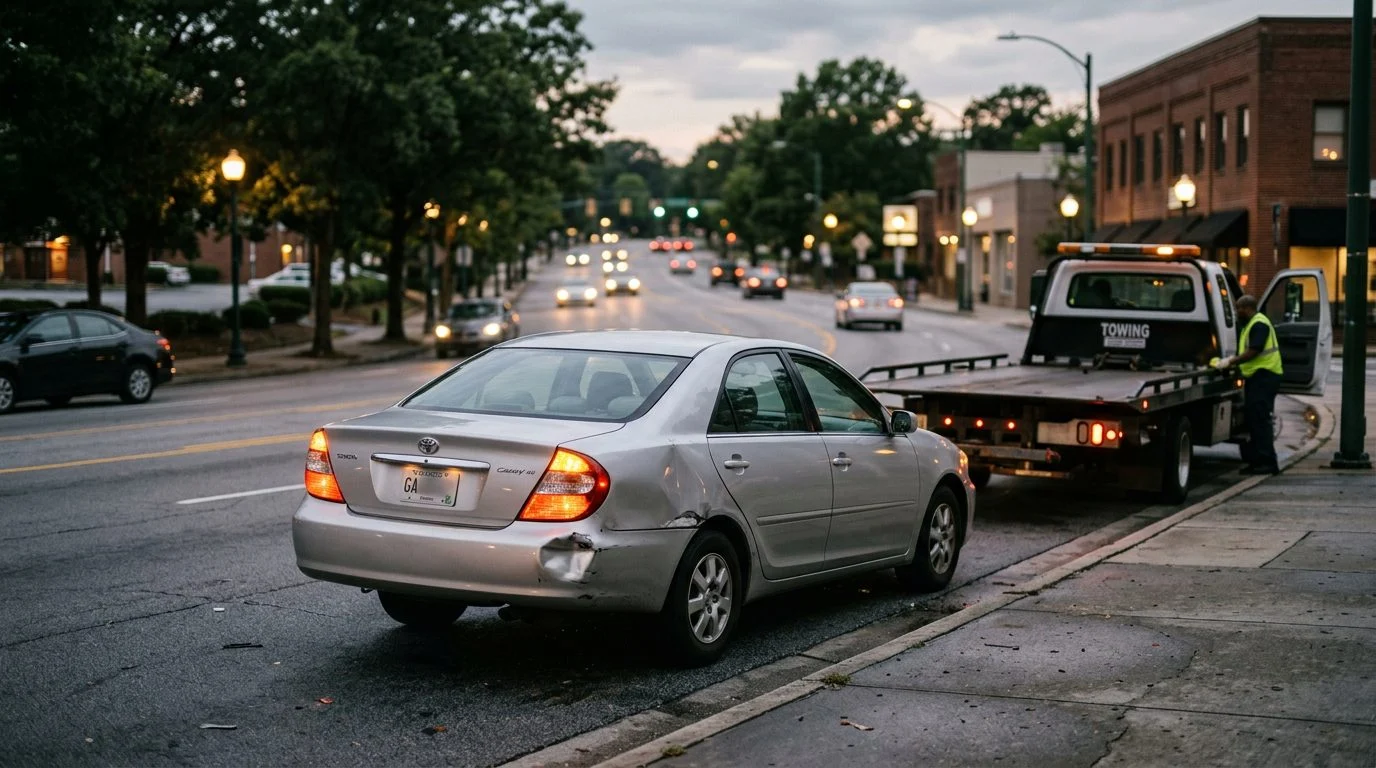
Car Accidents | Atlanta and Georgia
Hit by a Driver Who Didn't Stop? You Don't Have to Handle the Claim Alone
Ugwonali Law Group helps people seriously injured in hit-and-run crashes across metro Atlanta and statewide in Georgia. We explain each step in plain language, so you can focus on your recovery.
By Adanna Ugwonali · Published October 26, 2026
If another driver hits you and drives away, you may still have an injury claim in Georgia. A hit-and-run car accident injury claim can move forward even when the driver is never found. Your options depend on your insurance, your medical records, and the facts of the crash. This guide explains what a claim can cover, where money may come from, and which deadlines matter most.
Ugwonali Law Group represents people seriously hurt in truck and car crashes, unsafe-property and slip-and-fall incidents, and families in wrongful death cases across metro Atlanta and statewide in Georgia. Adanna Ugwonali is the responsible lawyer for this page.
What a Hit-and-Run Crash Is and Who This Guide Is For
A hit-and-run is a crash where a driver leaves the scene without stopping or giving the required information. The injured person may be a driver, passenger, pedestrian, or cyclist. The at-fault driver may later be identified, or may never be found.
This guide is for people with serious injuries, such as fractures, hospital stays, surgery, or brain and spinal injuries. It also helps families in wrongful death cases and anyone who isn’t sure what to do next.
If a driver hurt you and then drove away, our team is glad to talk through your situation and whether you may have a claim. Talk it through with our team — the first consultation is free, confidential, and carries no obligation.

What an Injury Claim Can Cover After a Hit-and-Run
An injury claim can seek money for the losses an injury causes. General damages are those the law presumes flow from the wrong. Special damages actually flow from the crash and must be proved, according to O.C.G.A. § 51-12-2.
Special damages often include:
- Emergency care, hospital stays, and surgery
- Imaging, medication, and physical therapy
- Future treatment your doctor says you will need
- Lost wages and reduced ability to earn
Georgia law says necessary expenses from an injury are a legitimate part of the damages estimate, under O.C.G.A. § 51-12-7. Medical expenses are limited to the reasonable value of medically necessary care, under O.C.G.A. § 51-12-1.1.
Pain and limits on daily life are real losses, even though they don’t appear on a bill. Your doctor’s notes and your own account help show them.
Catastrophic injuries, such as traumatic brain injury and spinal cord injury, often need longer medical documentation. Treatment may continue for months or longer.
When a crash causes a death, the rules differ. Under O.C.G.A. § 51-4-2, a surviving spouse, or children if there is no surviving spouse, may recover the full value of the decedent’s life, as shown by the evidence. Under O.C.G.A. § 51-4-5, when death of a human being results from a crime or from criminal or other negligence, the personal representative may recover funeral, medical, and other necessary expenses.
Where Compensation May Come From When the Driver Is Unknown or Uninsured
Your own auto insurance is often the first place to look. Under O.C.G.A. § 33-7-11, Georgia auto policies are required to include uninsured motorist coverage unless any insured named in the policy rejects that coverage in writing, and the insured may affirmatively choose uninsured motorist limits lower than the policy’s liability limits. O.C.G.A. § 33-7-11 reads: “(a)(1) No automobile liability policy or motor vehicle liability policy shall be issued or delivered in this state to the owner of such vehicle or shall be issued or delivered by any insurer licensed in this state upon any motor vehicle then principally garaged or principally used in this state unless it contains an endorsement or provisions undertaking to pay the insured damages for bodily injury, loss of consortium or death of an insured, or for injury to or destruction of property of an insured under the named insured’s policy sustained from the owner or operator of an uninsured motor vehicle, within limits exclusive of interests and costs which at the option of the insured shall be.” Whether that coverage pays for a driver who was never identified depends on the policy’s wording and the facts.
The Georgia auto insurance guide explains that liability coverage pays others, while optional coverage can pay for the insured driver’s own injuries or vehicle damage. Those minimums can be low for serious injuries, which is why your own coverage can matter.
Medical payments coverage is another optional coverage that may help pay medical bills, depending on the policy.
If the at-fault driver is identified and insured, a claim may be made against that driver’s liability coverage. In some crashes, a commercial policy may also apply, such as when a commercial vehicle is involved.
Georgia Deadlines, Police Reports, and Reporting Steps
Georgia’s general deadline for injury claims is two years after the right of action accrues, under O.C.G.A. § 9-3-33. The same statute sets four years for claims involving loss of consortium. Other claims may have different timing, so the type of claim matters.
Under O.C.G.A. § 9-3-99, the period of limitations for a tort claim brought by the victim of an alleged crime is tolled from the date of the crime or the act giving rise to the claim until the prosecution has become final or otherwise terminated, but that tolling may not exceed six years, except as otherwise provided in Code Section 9-3-33.1. Whether it applies depends on the facts of the crash and the prosecution. A criminal case does not replace an injury claim.
Report the crash to police as soon as you can. Crash reports are available through GDOT crash reporting, including through BuyCrash. The report helps document where and how the crash happened.
Police follow-up depends on what evidence exists. Witnesses, video, vehicle damage, and partial plate information can all help.
See a doctor promptly. Gaps in treatment can make it harder to connect your injuries to the crash.
Evidence to Preserve After a Hit-and-Run
Strong evidence is usually gathered early, before it disappears. Start as soon as it is safe.
- Photos of the scene, road conditions, skid marks, debris, and your vehicle’s damage
- Photos of visible injuries, taken over time as they change
- Names and phone numbers for witnesses, plus any details they recall about the other vehicle’s color, make, model, direction, or partial plate
- Video from nearby businesses, homes, or passing vehicles, which may be overwritten quickly if not requested
- Medical records, imaging reports, discharge papers, and receipts for every visit and out-of-pocket cost
- Pay stubs, employer letters, and records of missed work
- Your repair estimate and all insurance letters and call notes, kept in one place
How an Injury Claim Typically Moves Forward
An injury claim usually moves through medical care, insurance notice, documentation, negotiation, and, if needed, a lawsuit filed before the deadline.
- Get medical care and report the crash. Keep records organized from the first day.
- Notify your own auto insurer promptly. Include any uninsured motorist or medical payments coverage you have.
- Identify every possible source of recovery. This may include the at-fault driver’s coverage, if found, and any commercial or uninsured motorist policy that applies.
- Build your medical and wage record. Keep a timeline of treatment, recovery, and time away from work.
- Negotiate, and file suit if needed. If a fair resolution isn’t reached, a lawsuit must be filed within the deadline.
Timelines vary widely. Injury severity, insurance involvement, and the court schedule all affect how long each stage takes.
Not sure what your next step is?
Talk it through with our team — the first consultation is free, confidential, and carries no obligation.
Frequently Asked Questions About Hit-and-Run Injury Claims in Georgia
Can I bring a claim if I never find the driver?
Your own uninsured motorist coverage may apply, depending on your policy’s terms and the facts.
How long do I have to file?
Georgia’s general deadline is two years after the right of action accrues (O.C.G.A. § 9-3-33; Kenneth B. Cameron v. Jmp Pizza, Inc (2026)). Some claims, such as loss of consortium, have a four-year deadline.
Do I need a personal injury lawyer?
A lawyer can review your policies, medical records, and deadlines with you. You decide whether to hire one.
What counts as a serious injury?
Fractures, hospital care, surgery, brain and spinal injuries, and death are commonly treated as serious injuries.
Will police follow up on my hit-and-run?
Follow-up depends on the evidence available. You should still file a report and preserve your records.

Talk With Ugwonali Law Group About Your Hit-and-Run Injury
If you were hurt in a crash and the driver left, you may be dealing with pain, bills, and missed work. You may also be trying to understand a claim with no driver to name. You don’t have to sort it out alone.
Ugwonali Law Group handles serious injury matters from truck and car crashes, unsafe property, slip and falls, and wrongful death, across metro Atlanta and statewide in Georgia. Our office is at 3400 Peachtree Road NE, Atlanta. Intake is available in English or Spanish.
Your first consultation is free, confidential, and carries no obligation to continue. To talk about your situation, request a free case evaluation.
Disclaimer: This page is educational and is not legal advice. It does not promise or predict any result. Responsible lawyer: Adanna Ugwonali, Ugwonali Law Group, 3400 Peachtree Road NE, Atlanta, Georgia. Contact through our contact page.
How We Help Hit-and-Run Crash Victims
Free Case Review
Tell us what happened and we will review the facts of your crash and your injuries at no cost to you.
English or Spanish
Our intake team can speak with you in English or Spanish from your first call.
Plain-Language Guidance
We explain the legal and medical process in terms you can understand, including your insurance options and what to expect.
Focus on Your Injuries
Our team handles communication with insurers and paperwork so you can concentrate on medical care and recovery.
Get Medical Care Right Away
Some serious injuries, including head and spinal injuries, may not show symptoms right away. Seek prompt evaluation from a medical doctor after any crash, and keep copies of every record, bill and appointment.
Steps to Take After a Hit-and-Run
Get Medical Treatment
Visit a hospital or doctor as soon as you can. A medical record of your injuries is central to any claim.
Report the Crash
Contact the police and ask for a report number. Note the time, location and any details about the vehicle you saw.
Document the Scene
If you are able, photograph the area, your vehicle, visible injuries and any witnesses who saw what happened.
Call Ugwonali Law Group
Reach out for a free, confidential first consultation with no obligation to continue. We will walk you through your options.
Hurt in a Hit-and-Run? Talk to Us About Your Options Today
Related practice areas
- Car Accidents in Georgia: What Injured People Should Know Before They Call a Lawyer
- How Soon After a Car Accident Should You See a Doctor in Georgia, and Does a Treatment Gap Matter?