


Hit-and-Run Crashes in Georgia
Hurt by a Driver Who Fled? Understand Your Options Before You Decide
Ugwonali Law Group helps injured people in Atlanta and across Georgia understand how a hit-and-run claim works, what evidence matters, and what questions to ask.
By Adanna Ugwonali · Published November 24, 2026
If a driver hit you or someone you love and then drove away, you may be asking whether a lawsuit is worth the effort. In Georgia, it can be, but the answer turns on several factors, including who can be found and what insurance applies.
A claim is possible when the driver is found. When the driver is never found, your own uninsured motorist coverage is often the main path.
What Counts as a Hit-and-Run in Georgia
A hit-and-run is a crash where a driver leaves the scene without stopping, sharing information, or giving aid. Georgia law sets clear duties for drivers in these crashes.
A driver in a crash that causes injury or death must stop at the scene, or as close as possible, and return to it. The driver must give a name, address, and vehicle registration number. The driver must also give reasonable help, including arranging transport to a doctor or hospital when treatment appears necessary or when the injured person requests it. The driver must stay until these steps are done (O.C.G.A. § 40-6-270).
The penalty depends on the harm. If the crash is the proximate cause of death or serious injury, knowingly leaving the scene is a felony. The punishment is one to five years in prison. For other injuries or vehicle damage, it is a misdemeanor.
A crash with injury, death, or $500.00 or more in apparent damage also requires immediate notice, by the quickest means of communication, to the local police department within a municipality, or outside a municipality to the county sheriff or the nearest office of the state patrol (O.C.G.A. § 40-6-273).
A hit-and-run can take several forms. The driver may never be found. The driver may be identified weeks later. A pedestrian or cyclist may be struck by a vehicle that never stops. For an overview, see our Georgia car accident law guide.
If a hit-and-run left you or someone you love hurt, our team at Ugwonali Law Group can talk through your options in a free case review. Talk it through with our team — the first consultation is free, confidential, and carries no obligation.
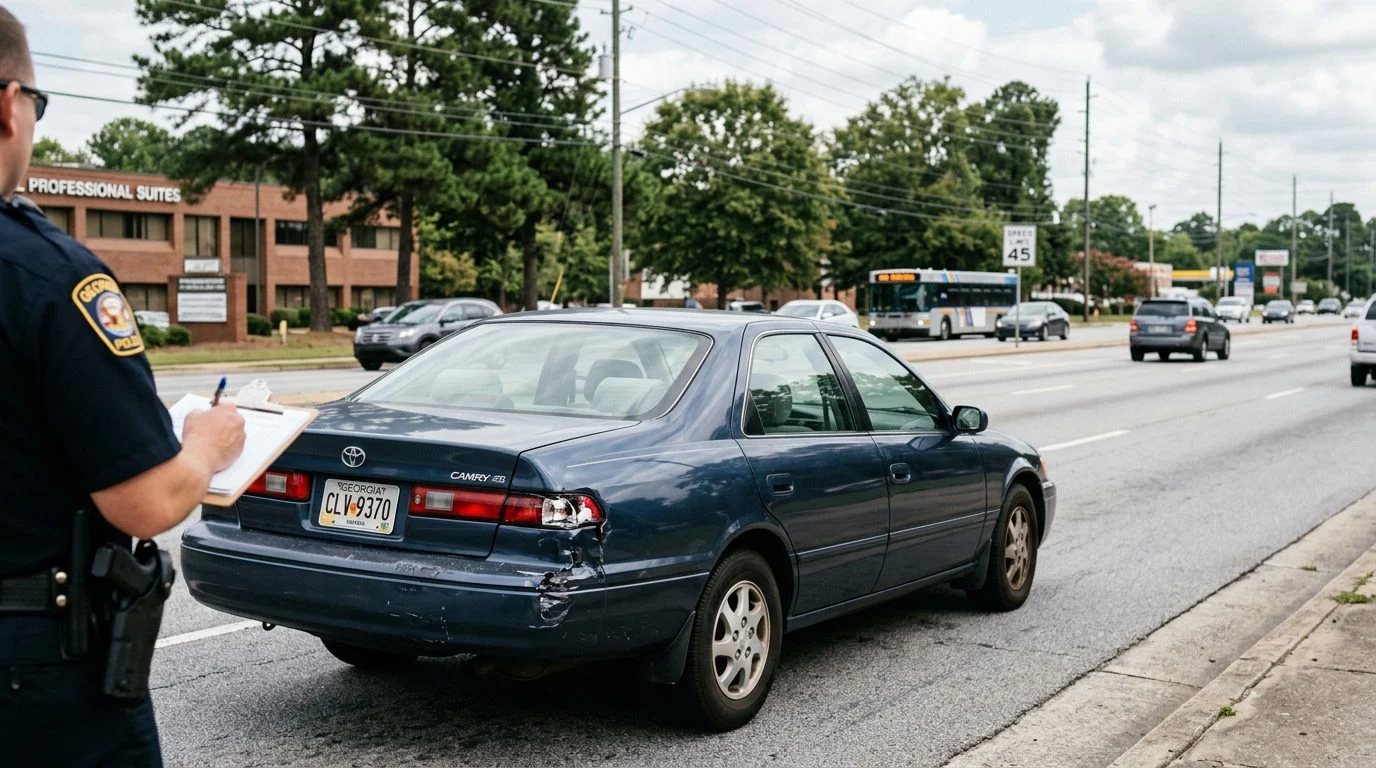
Can You Sue a Driver Who Cannot Be Identified?
Where the driver is unknown, a claim may sometimes be pursued under your own uninsured motorist coverage, and whether it can proceed depends on the policy terms and the facts of the crash.
Policies can have specific requirements, so write down the names of any witnesses to the crash early.
Your policy’s terms control how an uninsured motorist claim works. Readers in metro Atlanta can also review our Atlanta crash laws guide.
What You May Be Able to Recover
A claim can seek economic losses and non-economic losses. Economic losses include medical bills, future treatment, lost wages, and reduced earning ability. Non-economic losses include pain, suffering, and loss of enjoyment of life.
Georgia treats these differently. General damages are presumed to flow from a wrongful act and need no proof of amount. Special damages must be proved (O.C.G.A. § 51-12-2).
Medical expenses have limits. Recoverable medical expenses are limited to the reasonable value of medically necessary care (O.C.G.A. § 51-12-1.1). Complete records from the first visit help show that value.
The personal representative may also recover funeral, medical, and other necessary expenses resulting from the injury and death when the death results from a crime or from criminal or other negligence (O.C.G.A. § 51-4-5).
The value of any claim depends on documented injuries, treatment records, and how well the losses are proven. No amount can be promised in advance.
How Long You Have to File
Georgia’s general deadline for most injury lawsuits is two years after the right of action accrues (O.C.G.A. § 9-3-33). Claims for loss of consortium have a four-year window under the same statute.
Wrongful death claims have their own timing rules, so families should raise the question early.
Insurance claims, including uninsured motorist claims, often have their own notice and paperwork steps. Those steps can come sooner than the lawsuit deadline, so don’t wait on them.
Write down the crash date, when you reported it to police, and when you first notified your insurer. Keep copies of every notice, letter, and bill you send or receive. A dated list makes later questions easier to answer.
Why Evidence and Coverage Decide Whether a Claim Makes Sense
Evidence and coverage usually decide whether a hit-and-run claim is practical. Four factors matter most: how serious the injuries are, what insurance applies, whether the driver can be identified, and how strong the proof is.
Useful evidence includes the police report and its report number. Witness names, nearby business or traffic video, dashcam footage, vehicle debris, and photos of the scene and your injuries also help.
Evidence fades quickly. Skid marks wash away, witnesses move, and security video is often recorded over within days. Early preservation matters for that reason.
Pursuing a claim can involve case expenses, and those belong in the decision. Weigh them against the injuries, the coverage, and the proof you can gather.
Steps to Take Now and What to Share With a Lawyer
Start with your health. Get medical care right away, even if the injuries seem minor. If you have not called 911, do so as soon as you can. Report the crash to police and get the report number. Then notify your own insurer.
Keep a daily journal of symptoms, missed work, and treatment visits. These notes show how the injury affected your daily life.
Insurance adjusters may ask for a recorded statement. Understand what you are agreeing to before you give one. You can ask for time to review your notes first.
When you talk with a lawyer, share a complete and honest account of the crash. Bring every medical record, any prior injuries, and each document you received. Include the parts that seem unhelpful. A full picture allows a fair evaluation.
Not sure what your next step is?
Talk it through with our team — the first consultation is free, confidential, and carries no obligation.
Key Takeaways
- A claim against a hit-and-run driver is possible in Georgia. When the driver is unknown, uninsured motorist coverage often becomes the main path.
- Under O.C.G.A. § 9-3-33, actions for injuries to the person must generally be brought within two years after the right of action accrues.
- Evidence, injury severity, and available coverage shape whether a claim is worth pursuing.
- Georgia law requires drivers to stop and give aid, and the penalty depends on the harm caused.
For more on Georgia crash law, read our Georgia car accident law hub. Readers outside metro Atlanta can review our East Georgia guide or our South Georgia guide.
Talk With Our Team About Your Situation
A hit-and-run can leave a hospital stay, a long recovery, or the loss of someone you love. Many questions arrive all at once, and you don’t have to sort them out alone.
Our team at Ugwonali Law Group offers a free case review for people in metro Atlanta and across Georgia. You can request one through our free case evaluation form, call, or chat with our intake team. Spanish-language intake support is available.
La consulta inicial es gratuita, confidencial y sin compromiso de continuar.
This page is general information, not legal advice. Reading it does not create an attorney-client relationship. Responsible lawyer: Adanna Ugwonali, Ugwonali Law Group, 3400 Peachtree Road NE, Atlanta, Georgia.

Frequently Asked Questions
Can I sue a hit-and-run driver if I never find out who they are?
Usually you cannot sue an unidentified driver directly, so injured people often look to their own uninsured motorist coverage, which may apply to hit-and-run crashes. Georgia policies can have specific requirements for these claims, such as evidence of physical contact or an independent witness.
Is it worth pursuing a claim for a serious injury after a hit-and-run?
Serious injuries such as fractures, hospital stays, brain injuries, or spinal injuries can lead to large medical bills and lost income, which is why many people explore their options. Whether a claim is worth pursuing depends on your coverage, your medical records, and the evidence, and no specific result can be promised.
How long do I have to file a claim after a hit-and-run in Georgia?
Georgia generally allows two years after the right of action accrues to file a personal injury lawsuit under O.C.G.A. § 9-3-33. Insurance policies often require prompt notice of a claim, so acting early is important.
What evidence helps a hit-and-run claim?
Helpful evidence includes the police report, photos of the scene and vehicles, witness contact information, nearby security or traffic camera footage, and complete medical records showing your treatment. Keep track of bills and missed work, and talk with Ugwonali Law Group before giving recorded statements to insurers. The initial consultation is free, confidential, and carries no obligation to continue.
What Shapes a Hit-and-Run Claim
Your Own Coverage May Matter
When the at-fault driver cannot be identified, the injured person's own auto insurance may come into play. The terms of each policy determine what applies.
Evidence Can Be Hard to Gather
A police report, witness statements, photos, and any video of the scene can help show what happened when the other driver is unknown.
Medical Records Tell Part of the Story
Records of hospital care, imaging, and treatment by a medical doctor document the injuries and how they affected daily life.
Families Face Hard Decisions
When a hit-and-run crash causes a death, surviving family members often have questions about the process and their options under Georgia law.
Get Medical Care Right Away
Even if symptoms seem minor at first, a prompt medical evaluation creates a record of your injuries. Delays in treatment can make it harder to connect injuries to the crash later.
Questions to Think Through Before You Decide
Was the other driver ever identified?
Knowing whether a driver, vehicle, or insurer can be found changes which paths may be available.
What insurance do you carry?
Reviewing your policy's uninsured motorist coverage and medical payments provisions can clarify what may apply to your situation.
How serious are your injuries?
Fractures, head or spinal injuries, and extended hospital care often require a more detailed evaluation of both medical and legal options.
What records have you kept?
Photos, the police report number, bills, pay stubs, and notes about missed work help build a clear picture of what happened.