

Premises Liability | Brunswick, Georgia
Hurt in a Brunswick Slip and Fall? Start Saving the Evidence Now
Some of the most important proof in a fall case disappears within hours. Here is what to keep, and how a free case review can help you protect it.
Getting Started With Our Firm
Free
Case reviews, confidential and without obligation
EN / ES
Intake in English or Spanish
Statewide
Representing injured people across Georgia
By Adanna Ugwonali · Published November 12, 2026
A slip and fall in a store can leave you with a fracture, a hospital stay, or months of treatment. If that happened to you in Brunswick, Georgia, or anywhere else in the state, the proof you collect early matters.
In short, save photos of the hazard, the store’s incident report, any video, your receipts, witness names, and your medical records. Each item shows something different, from the hazard itself to how the fall changed your health.
Why Evidence Matters in a Georgia Store Slip and Fall
Evidence matters because a store owner must use ordinary care to keep its floors and walkways safe. Under O.C.G.A. § 51-3-1, an owner or occupier who invites people onto its land is liable for injuries caused by a failure to use ordinary care in keeping the premises safe (Official Georgia Code).
Many of these claims turn on one question. What did the store know, or what should it have known, about the hazard? A spill that sat for an hour tells a different story than one that just happened.
Photos, video, and written notes show the hazard, its location, and how long it may have been there. Medical records show how the fall affected your health. Together, they turn a memory into something a claim can be built on.
Timing matters most. Floors get mopped, mats get moved, and memories fade. Start your list the same day if you can. For the wider claim process, read our Georgia slip and fall claim guide.
If you're holding photos, receipts, or medical papers from a store fall, our team can go through them with you and talk through your next steps. Talk it through with our team — the first consultation is free, confidential, and carries no obligation.

Photograph the Scene and the Hazard Before It Changes
Photograph the hazard and the area around it as soon as it is safe. Try to do this before anyone cleans up the spill, moves a mat, or repairs a step.
Start wide. Capture the whole aisle, entrance, or stairway so the location is clear. Then move closer to show the wet spot, debris, torn carpet, or uneven edge (OSHA walking-working surface standards). Place a coin or pen beside the hazard to show its size.
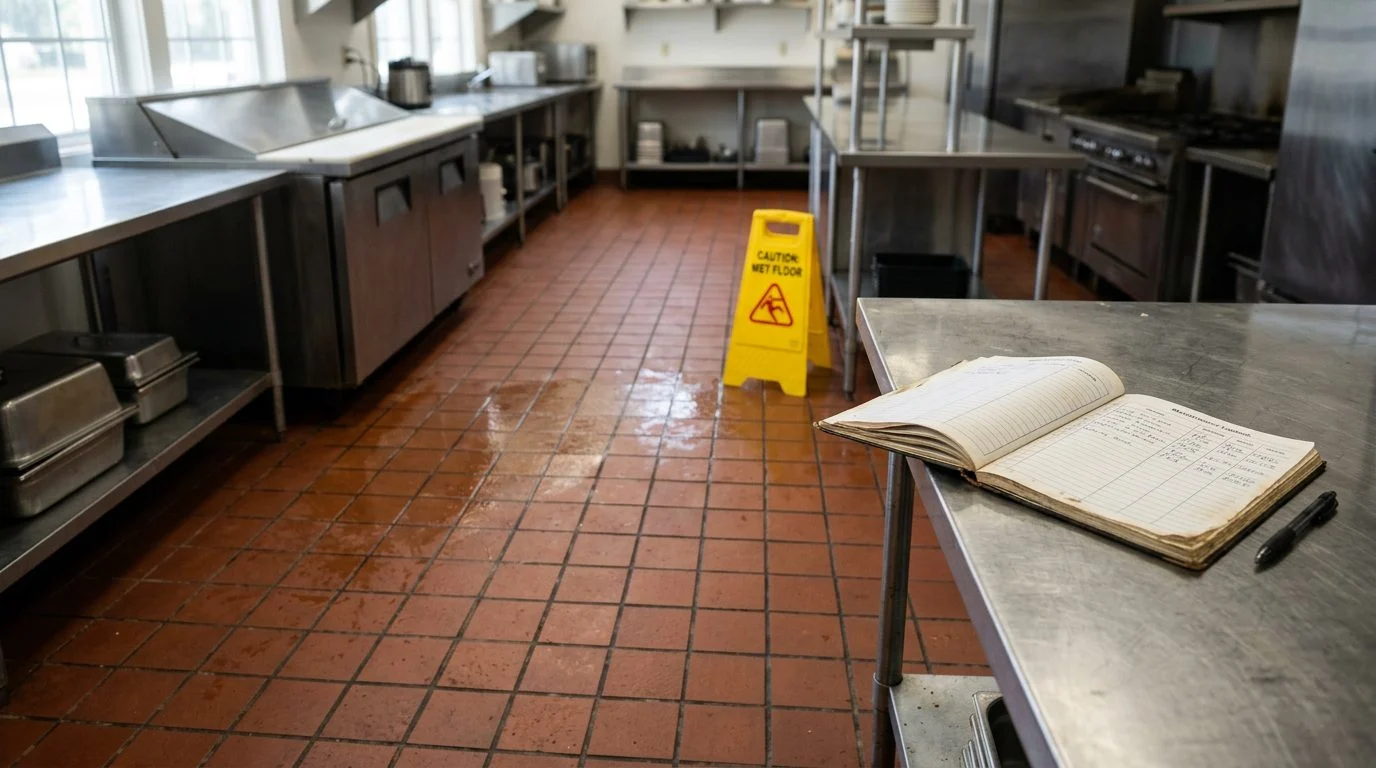
Look for context too. Note the lighting, any warning sign or cone, and whether the hazard was easy to see from where a shopper would walk.
Keep the original files. Do not crop, filter, or edit them. Most phones save the date and time automatically, and that data helps place the photos on the day of the fall.
If you can’t take photos yourself, ask a companion. Write down who took each photo and when.
Write Down the Facts While They Are Fresh
Write down what happened as soon as you can. Notes made the same day are easier to trust than notes made weeks later.
Record the date, the time, the store location, and the department. Write what you were doing just before the fall, such as walking toward the register or carrying a box. Describe what you saw on the floor and what you felt as you went down.
Note the conditions around you. If you were outside, write the weather and whether the ground was wet. If you were inside, note whether the lights were dim or a display blocked the path.
Stick to facts. Avoid guessing about who was at fault, and avoid saying “it was my fault.” Those words can be repeated later.
Keep a daily journal after the fall. Track pain, sleep, tasks you could not do, and missed work. These details explain how the injury affects your life.
Ask for the Store’s Incident Report and Keep a Copy
Ask the manager on duty whether the store filed an incident report. Request a copy or the report number. Stores often document falls on their own forms, and that record shows the store knew about the event.
Get names and job titles for employees who helped you, spoke with you, or cleaned up the area. Write down what each person said, as closely as you remember. A comment like “we just mopped that” can matter.
Read any paperwork before you sign it. A store may ask you to sign a statement or a form. If something seems unclear, do not sign it on the spot. Keep a copy of whatever you do sign.
Ask who insures the store, if staff will share that. Keep receipts, letters, and phone numbers from the store or its representatives.
If staff say the store will handle everything, write that down. Keep your own copies of photos, notes, and medical records. Do not rely only on the store’s paperwork.
Request That the Store Preserve Its Video Footage
Send a written request asking the store to keep its surveillance video from the day of your fall. Store video can be recorded over, so a prompt request matters.
Name the store and its address, the date, the approximate time, and the camera areas, such as the entrance, aisle, or checkout. Ask the store to confirm in writing that it saved the footage. Keep a dated copy of your request.
Explain why the video may matter. It can show the hazard, how long it was there, whether staff walked past it, and how the fall happened. For example, a clip showing a spill left on the floor for twenty minutes says a lot.
If the store does not answer, keep a record of every attempt. Note the date, the person you spoke with, and what they said.
Video is one of the first things that can be lost. Act early, even if you still feel shaken or sore.
Identify Witnesses, Receipts, and Your Footwear
Collect the names and phone numbers of anyone who saw the fall or came to help. Ask them to write down what they saw while it is fresh.
Keep your receipts or card statements. They show you were in the store, the date, and what you bought. A receipt helps place your visit at the right location and time.
Keep the shoes and clothing you wore during the fall. Do not wash, repair, or throw them away. Put them in a bag and label it with the date. Worn footwear can show wear or slickness that helps explain how you slipped.
Save anything else damaged in the fall, such as a phone, eyeglasses, or a bag. Photograph each item and keep the receipt or repair estimate.
Keep these items in one folder or box. Organized records are easier to review later.
Not sure what your next step is?
Talk it through with our team — the first consultation is free, confidential, and carries no obligation.
Keep Medical Records and Track Your Losses
Get medical care promptly, and tell each provider exactly how the fall happened. The way the injury occurred appears in your medical records and can matter later.
Keep emergency department papers, discharge instructions, imaging reports, prescriptions, and bills for every visit. These records document a fracture, hospital care, or treatment by a medical doctor.
Georgia law requires providers to keep certain records for a set time. Under O.C.G.A. § 31-33-2, a provider having custody and control of an evaluation, diagnosis, prognosis, laboratory report, or biopsy slide must retain it for not less than ten years from the date it was created, although the statute excepts certain situations, such as an individual provider who has retired from or sold a practice after notifying the patient and offering the records.
Medical bills matter too. Under O.C.G.A. § 51-12-1.1, in any civil action to recover damages resulting from injury or death to a person, medical expenses are limited to the reasonable value of medically necessary care, treatment, or services. Keep every bill and insurance statement.
Track out-of-pocket costs, missed work, and mileage to appointments in one log.
Know the Georgia Deadlines and How Fault Is Weighed
Under O.C.G.A. § 9-3-33, except as otherwise provided in that article of Georgia law, a personal injury lawsuit has to be filed within two years after the claim accrues, while actions for injuries to the person involving loss of consortium have four years after the right of action accrues. Early evidence work helps protect that timeline.
Fault works differently. Under O.C.G.A. § 51-12-33, a judge reduces damages in proportion to the injured person’s percentage of fault. If that share is 50 percent or more, the plaintiff recovers no damages.
A store may say you weren’t paying attention, or that the hazard was obvious. Your photos, notes, and witness names help show what happened and where the hazard came from.
How these rules apply to a specific store fall depends on the facts. That is why the details in this checklist matter.
Be careful about what you post online about the fall. Anything you share may be read by the store’s insurer.
Common Questions About Store Fall Evidence
Do I need to report the fall to the store?
Reporting the fall and asking for an incident report creates a written record of the event.
What if store staff say they will handle everything?
Keep your own copies of photos, notes, and medical records. Don’t rely only on the store’s paperwork.
What if the store blames me for the fall?
Your records help show what happened, which matters when a store points to your conduct.
Is this checklist only for minor injuries?
No. This checklist is for falls that cause real injury and medical treatment, such as a fracture or hospital stay.

Talk With Our Team About Your Georgia Store Fall
If you have photos, receipts, and medical papers from a store fall, our team can review them with you. Whether your fall happened in Brunswick or elsewhere in Georgia, bring the folder you’ve been building.
Ugwonali Law Group handles slip and fall and premises liability matters statewide in Georgia. Adanna Ugwonali is the responsible lawyer for this page. The firm’s office is at 3400 Peachtree Road NE, Atlanta. We offer intake in English or Spanish.
Your first consultation is free, confidential, and comes without any obligation to continue.
When you’re ready, request a free case evaluation and our team will walk through your materials with you.
What Our Team Does With Your Case
A Confidential First Call
We listen to what happened, answer your questions about the process, and explain what information would help us review your situation.
Organizing the Record
We help you gather incident reports, photographs, medical records, and bills so the facts of your fall are written down in one place.
Keeping Your Medical Focus
Your recovery comes first. We can help you keep track of appointments, treatment, and the way the injury affects your daily life.
Plain-Language Guidance
We explain each step of the legal and medical process in clear terms, in English or Spanish, so you know what to expect.
Before You Talk to the Property Owner's Insurer
Insurance adjusters may call quickly and ask for a recorded statement. Speaking with a lawyer before you give a statement or sign any release can help you understand what you are agreeing to.
Evidence Worth Saving After a Fall
Photos of the Scene
Pictures of the spot, the floor surface, lighting, wet or uneven areas, and any warning signs or their absence can capture conditions that may change later.
Your Footwear and Clothing
Keep the shoes and clothes you wore. Do not wash, repair, or throw them away until you have talked with a lawyer about them.
Witness Names and Contact Details
Write down the names and phone numbers of anyone who saw the fall or came to help, along with what each person said.
Incident Reports and Medical Records
Ask for a copy of any incident report, and keep every record from the emergency room, your doctor, imaging centers, and physical therapy.