

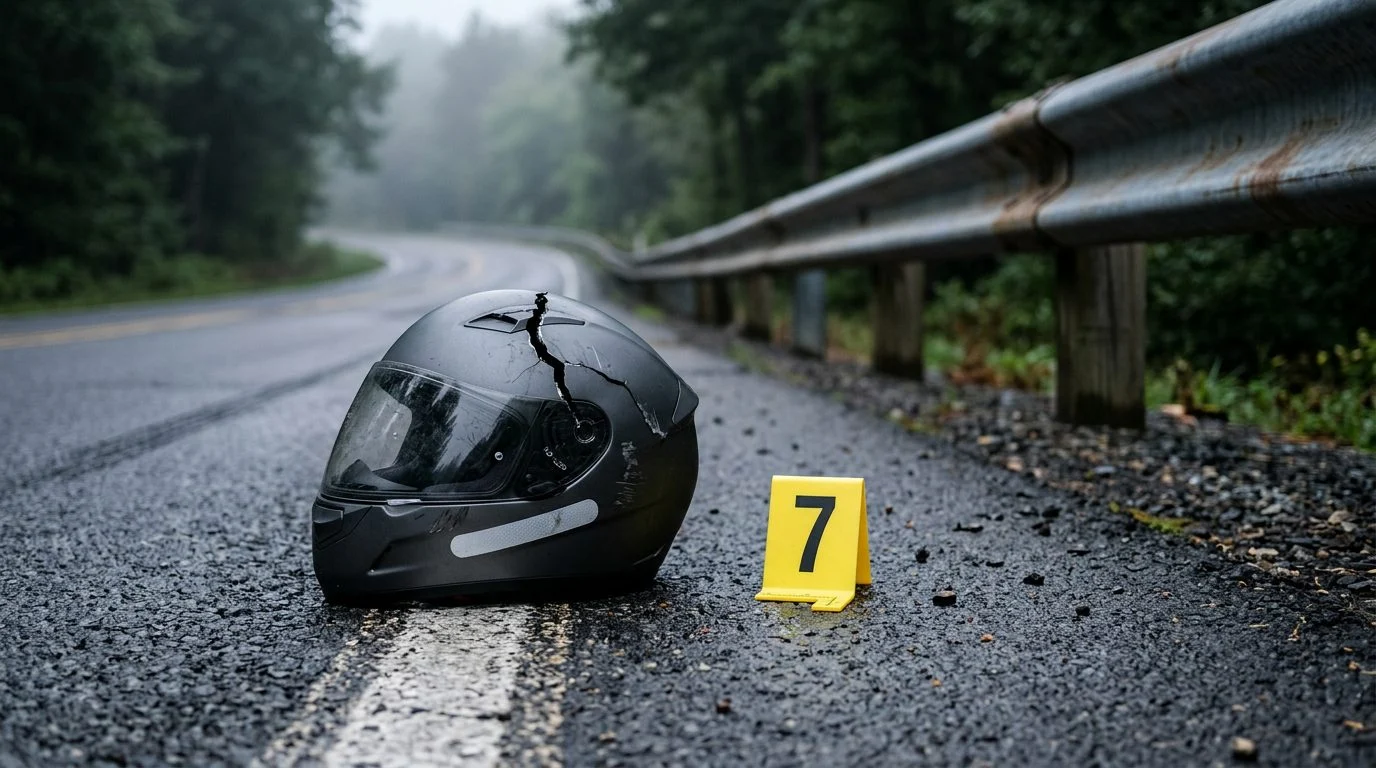
Brain Injury | Atlanta, Georgia
Feeling Fine After a Crash Doesn't Rule Out a Brain Injury
Many people hurt in car and truck crashes never lose consciousness, yet still have a traumatic brain injury. Learn what the signs can look like and how a free case review from Ugwonali Law Group can help you understand your options.
By Adanna Ugwonali · Published November 3, 2026
The Short Answer: Yes, a Brain Injury Can Happen Without Losing Consciousness
Can you have a brain injury without losing consciousness after a crash? Yes. A brain injury can happen after a car or truck crash even if you never black out. Losing consciousness is one possible sign of a brain injury. It is not a requirement.
Your brain floats in fluid inside your skull. In a hard stop or a sharp impact, the brain can move fast, strike the inside of the skull, or twist and stretch. Any of those motions can damage brain tissue, even when you stay awake.
Many people walk away from a crash talking, answering questions, and sure they feel fine. Some of them still have a brain injury. Crashes that feel minor can still hurt the brain, so the details matter. This page explains which signs matter, how doctors check for injury, what records to keep, and how these facts can affect a Georgia injury claim.
If you were hurt in a Georgia crash and now notice headaches or memory lapses, our team can talk through your options in a free, confidential call. Talk it through with our team — the first consultation is free, confidential, and carries no obligation.

Why Losing Consciousness Is Not the Test for a Brain Injury
A blackout is not the test that tells doctors whether your brain was hurt. Doctors look at the whole picture: how you were hurt, how you act, and what the tests show.
The Brain Injury Association of America notes that a brain injury after a motor-vehicle crash can be missed in the emergency room. Medical staff should assess loss of consciousness, memory loss, confusion, and disorientation. Each one is a separate clue.
Clinicians also use the Glasgow Coma Scale, a score built from eye opening, speech, and movement. A good score at the scene does not rule out a brain injury, because symptoms can change after the scene is cleared.
A brief dazed or confused feeling right after impact matters too, even without a blackout. It is one piece of the puzzle. For a broader overview, read our guide to traumatic brain injury after a crash.
Types of Brain Injury That Can Occur Without a Blackout
Several types of brain injury can happen in a crash without a blackout. Each one is different. Doctors sort them out with testing, not by memory alone.
- Concussion. A jolt or rotation of the head can disrupt normal brain function. Concussions range from mild to serious.
- Contusion. This is a bruise on brain tissue. It often forms at the point of impact.
- Coup-contrecoup injury. The brain can be hurt where it struck the skull and again on the opposite side as it rebounds.
- Diffuse axonal injury. Rapid acceleration and stopping can stretch and tear nerve fibers across the brain. Rotational forces are a common cause in high-speed crashes.
- Penetrating injury. This is rarer. An object breaks through the skull.
Which type you have is a medical question. A physician reviews your exam results and imaging. Your memory of the crash helps the doctor, but it does not decide the diagnosis.
Symptoms That Can Appear Hours or Days After the Crash
Brain injury symptoms can show up at the scene, or they can build over hours or days. Feeling fine right after a crash does not settle the question.
Physical symptoms include headache, dizziness, nausea, ringing in the ears, sensitivity to light or noise, and trouble sleeping. Thinking symptoms include confusion, slowed thinking, trouble concentrating, and short-term memory lapses. Mood symptoms include irritability, anxiety, low mood, and sudden personality changes that family members often notice first.
Many people blame stress or a bad night’s sleep, and that may be true. A headache that gets worse over time, or a new problem with speech or balance, needs prompt medical care. Tell your doctor about every symptom, even small ones that seem unrelated to the crash. A doctor can only weigh what you report.
Why a Prompt Medical Evaluation Matters Even Without a Blackout
Getting checked by a doctor soon after a crash creates a record that links your symptoms to the crash. Waiting makes that link harder to show later.
A physician starts with a neurological exam. That checks alertness, memory, balance, vision, and reflexes. When the doctor thinks it is needed, imaging such as CT or MRI scans can look for certain injuries. An EEG, which measures electrical activity in the brain, may be ordered when the doctor wants more information about brain function.
No single test catches every injury. Some findings do not appear on every scan. That is why follow-up visits and repeat testing often matter. If your symptoms change or last longer than expected, tell your doctor right away.
How to Document Memory and Mood Changes Over Time
Start a simple written record as soon as you notice changes in how you think, feel, or sleep. Your notes can help your doctor and can later support an injury claim.
Each day, write down the date, your headache level, your hours of sleep, how well you concentrated, any memory slips, and your mood. Use your own words. Short notes are fine. A repeated question, a forgotten appointment, or a missed bill all count.
Family members can add notes too. Loved ones often notice repeated questions, missed appointments, or a new short temper before the injured person does.
Keep copies of everything: visit notes, referrals, test results, prescriptions, and work absence records such as employer letters or pay stubs. Keep them in one folder, on paper or digitally, so they are easy to find.
Not sure what your next step is?
Talk it through with our team — the first consultation is free, confidential, and carries no obligation.
How a Brain Injury Without a Blackout Can Affect a Georgia Injury Claim
A Georgia injury claim rests on medical records and proof that the crash caused the injury. It does not rest on whether you blacked out. Insurers may question a brain injury when there was no blackout, which is why the records matter.
Georgia law generally gives two years to bring a lawsuit for injuries to a person. The statute, O.C.G.A. § 9-3-33, begins with the words “except as otherwise provided,” so other rules can apply in some cases. Do not assume the two-year rule fits your case without a closer look.
Under O.C.G.A. § 51-12-33, damages are reduced in proportion to the injured person’s percentage of fault. A plaintiff who is 50 percent or more responsible for the injury or damages claimed is not entitled to receive any damages. Every case depends on its facts.
Medical bills are part of a claim too. Under O.C.G.A. § 51-12-1.1, medical expense damages are limited to the reasonable value of medically necessary care. Gaps in treatment can make it harder to connect later symptoms to the crash.
Quick Answers to Common Questions
Can you have a brain injury without losing consciousness after a crash?
Yes. Losing consciousness is one sign of a brain injury, not a requirement for one.
How soon can brain injury symptoms start?
Symptoms can start at the scene or build over hours or days after a crash.
Other rules can apply, so the facts of your case matter.
Talk With Ugwonali Law Group About Your Crash
If you were hurt in a Georgia crash, never lost consciousness, and now have headaches, dizziness, or memory lapses, you may be weighing what to do next. Our team can talk that through with you.
Reach out through our contact page to request a free case review. Our intake team can speak with you in English or Spanish. The first consultation is free, confidential, and without obligation to continue.
Adanna Ugwonali is the responsible lawyer for this page. Ugwonali Law Group is located at 3400 Peachtree Road NE, Atlanta, Georgia. This page provides general information, not legal advice.
Don't wait to get checked
Symptoms of a brain injury can appear at the scene or build over hours or days. Get a medical evaluation from a doctor as soon as possible after any crash that involved a blow to the head or a sudden jolt, even if you feel okay. Keep records of every visit.
Signs to Watch For After a Crash
Headaches and dizziness
Headaches that get worse, persistent dizziness, or feeling off balance can be early signs that the brain was affected.
Confusion or memory gaps
Trouble remembering the crash, repeating questions, or feeling mentally foggy may show up in the days after an injury.
Changes in mood or sleep
Irritability, anxiety, depression, or unusual sleep patterns can follow a brain injury and should be shared with your doctor.
Vision, hearing, or speech changes
Blurred vision, ringing in the ears, slurred speech, or nausea deserve prompt medical attention.
How We Help Clients Through the Process
Free first consultation
Your initial consultation is free, confidential, and comes with no obligation to continue.
English or Spanish
Our intake staff can speak with you in English or Spanish from the first call.
Plain-language explanations
We take time to explain the legal and medical steps so you know what to expect at each stage.
Support for families
When a crash causes serious injury or death, our team works with families to answer questions and organize information.
Serving metro Atlanta and Georgia
From our office at 3400 Peachtree Road NE, Atlanta, we represent people injured in Fulton, Clayton, Cobb, and Rockdale Counties and across Georgia.
Focused on serious injuries
Our practice focuses on serious injuries that require real medical treatment, including truck and car crashes, traumatic brain injury, and spinal cord injury.