

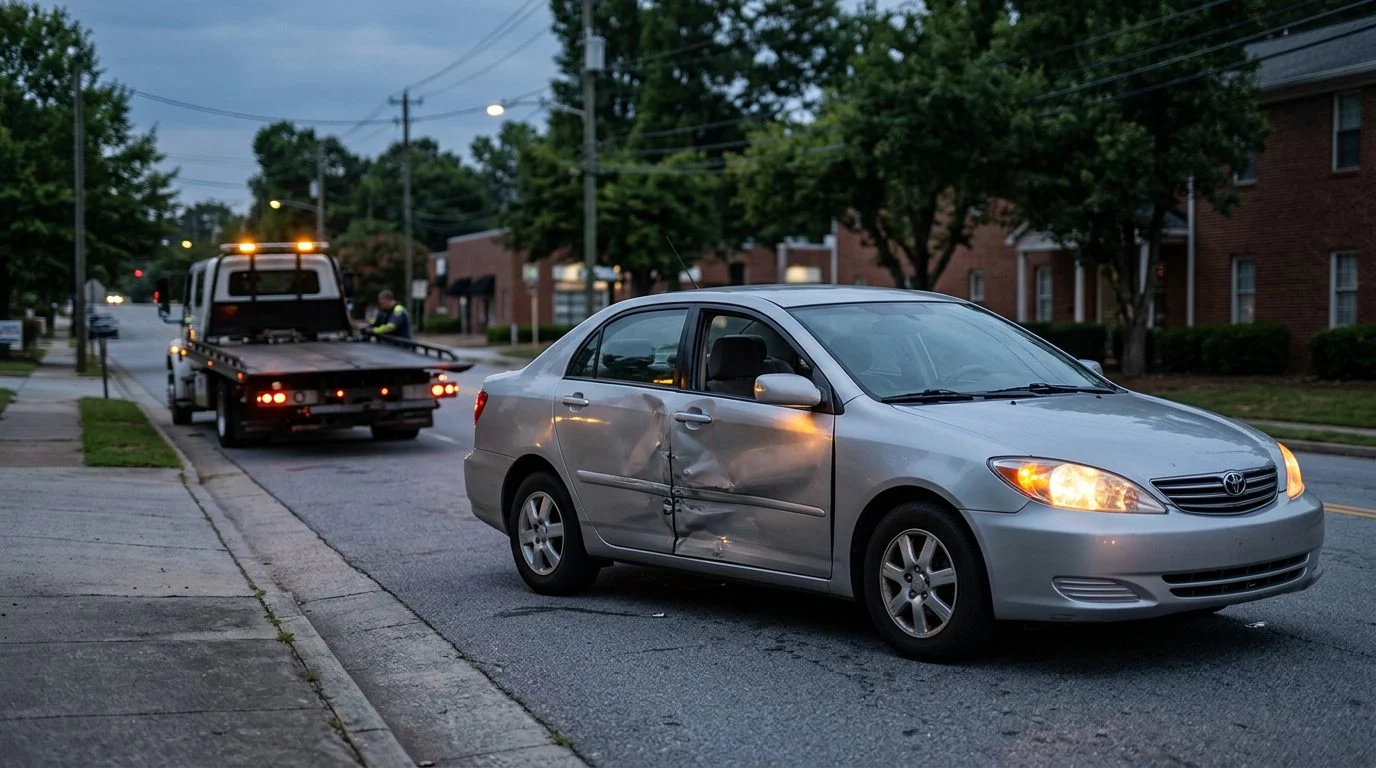
Cobb County Car Accident Injuries
Hurt in a Serious Car Accident in Cobb County? You Don't Have to Sort Out the Next Steps Alone.
Ugwonali Law Group helps injured people and their families understand the legal and medical process after a crash that changes daily life.
Our first call
Free
First consultation, confidential, with no obligation to continue
English & Spanish
Intake staff available in either language
Georgia
Representing injured people across metro Atlanta and statewide
By Adanna Ugwonali · Published November 8, 2026
If a car crash in Cobb County left you or someone you love seriously hurt, you probably have hard questions about medical bills, time, and next steps. A catastrophic car accident injury claim seeks compensation for severe harm, such as a broken bone that needs surgery, a brain or spinal cord injury, or a death, that another driver’s negligence may have caused. Here is what these claims cover, how the process usually works, and the Georgia deadlines and fault rules that shape them.
What a Catastrophic Car Accident Injury Claim Covers in Cobb County
A catastrophic car accident injury is a serious harm that can change a person’s health, work, and daily life for a long time. Common examples include:
- Fractures that need surgery or a long hospital stay
- Traumatic brain injury
- Spinal cord injury, including paralysis
- Internal organ damage
- Amputation
- A crash that causes death
These injuries often involve hospital admission, surgery, rehabilitation, and care from a medical doctor. Treatment can run for months or years. The Model Systems Knowledge Translation Center publishes research-based factsheets on life after spinal cord injury, which show how daily living can change.
Claims like these often come from drivers, passengers, pedestrians, and families in Cobb County, Marietta, and East Cobb. They arise when another driver appears to be at fault.
If a serious crash in Cobb County has left you hurt or a family member gone, you may have a claim, and our team can talk through your options in a free case review. Talk it through with our team — the first consultation is free, confidential, and carries no obligation.

Total-Loss Crashes and the Damages a Claim Can Include
A claim can cover medical bills, lost income, and other losses that flow from the crash. A total-loss crash adds a vehicle claim to the injury claim.
A total loss means the cost to repair the vehicle is more than the vehicle is worth. The vehicle part of the claim is separate from the injury part.
General damages are those the law presumes to flow from a wrongful act, and they can be recovered without proof of an amount. Special damages must be proved. See O.C.G.A. § 51-12-2.
Medical expenses have a specific test. Under O.C.G.A. § 51-12-1.1, special damages for medical care are limited to the reasonable value of medically necessary care, treatment, or services. Necessary expenses from an injury are also a legitimate part of the damages estimate under O.C.G.A. § 51-12-7.
If a crash causes a death, the family’s claim is different. Under O.C.G.A. § 51-4-2, a surviving spouse, or the children if there is no spouse, may recover the full value of the decedent’s life, as shown by the evidence. When death results from criminal or other negligence, O.C.G.A. § 51-4-5 lets the personal representative recover funeral, medical, and other necessary expenses.
Under O.C.G.A. § 33-7-11(a)(1), Georgia auto liability policies generally include uninsured motorist coverage that pays for bodily injury caused by an uninsured motor vehicle, within policy limits, and the coverage amounts are selected at the option of the insured. See O.C.G.A. § 33-7-11.
The value of any claim depends on the medical records, the evidence, and the insurance available. No one can predict the outcome of a claim in advance.
How the Claim Process Works, Step by Step
Most claims move through intake, investigation, negotiation, and, when needed, a lawsuit. Timelines vary from case to case.
- Intake. You describe the crash and your injuries to our team, in English or Spanish.
- Records review. The team reviews the crash report, medical records, and bills.
- Fault and coverage investigation. The team looks at how the crash happened and which insurance may pay. If a company vehicle was involved, the company’s commercial policy may be part of the review.
- Negotiation. The claim is presented to the insurers involved, who respond to it.
- Lawsuit, if needed. If a fair resolution isn’t reached, a lawsuit may be filed in the proper Georgia court.
- Resolution. You are informed at each stage, and your questions are answered as the case moves forward.
Timelines are longer when injuries are severe, when treatment is still going on, or when a case goes to trial. Keep every medical bill, discharge paper, and appointment record from the start.
Georgia Deadlines, Fault Rules, and Evidence to Protect
Georgia generally gives two years to file a lawsuit for injuries to a person. Under O.C.G.A. § 9-3-33, those actions must generally be brought within two years after the right of action accrues, except actions for injuries to the person involving loss of consortium, which must be brought within four years after the right of action accrues. The statute has exceptions, so the timing should be checked early.
Georgia also uses a shared-fault rule. Under O.C.G.A. § 51-12-33, damages are reduced in proportion to the injured person’s share of fault. A person found 50 percent or more responsible for the injury cannot receive damages.
Some evidence can disappear quickly after a serious crash. Useful items include:
- Vehicle data, which can be lost when a totaled car is moved, sold, or scrapped
- Photos of the scene and both vehicles
- Names and phone numbers of witnesses
- The crash report
- Dashcam or traffic camera footage, when it exists
Many people talk with a lawyer before giving a recorded statement to an insurer. That step can affect the claim, so it helps to understand it first.
Why Clients Contact Ugwonali Law Group
Ugwonali Law Group is a personal injury firm with its office at 3400 Peachtree Road NE, Atlanta, Georgia. Adanna Ugwonali is the responsible lawyer for this page.
The firm’s lawyers handle truck accidents, car accidents, wrongful death, traumatic brain injury, spinal cord injury, catastrophic injury, premises liability, and slip and fall claims. The firm represents people across metro Atlanta, Cobb County, Fulton, Clayton, and Rockdale counties, and statewide in Georgia.
Intake is available in English or Spanish. Our team explains each step in plain language and answers questions as the claim moves forward.
Common Questions About Serious Car Accident Claims
What if I was partly at fault?
Georgia reduces damages by your share of fault. You cannot recover damages if you are 50 percent or more responsible (O.C.G.A. § 51-12-33; Quynn v. Hulsey (2020)).
Do I have to go to court?
Many claims resolve without a trial. Some require a lawsuit, and you are kept informed about each choice.
How long do I have to file a claim?
Georgia generally allows two years for injury lawsuits under O.C.G.A. § 9-3-33. Other rules can change that timing, so ask early.
Can a claim be reviewed while I’m still in treatment?
A claim can be discussed while treatment continues. The timing of any settlement demand depends on the medical picture.
Is the first consultation free?
The firm offers a free first consultation that is confidential and carries no obligation to continue.
Not sure what your next step is?
Talk it through with our team — the first consultation is free, confidential, and carries no obligation.

Request Your Free Case Review Today
If a serious crash in Cobb County has left you hurt or a family member gone, you may have a claim, and our team can talk through your options in a free case review. You can request a free case evaluation or chat with our intake team in English or Spanish.
Attorney advertising. Ugwonali Law Group, 3400 Peachtree Road NE, Atlanta, Georgia. Responsible lawyer: Adanna Ugwonali. Contact: attorneyadanna.com/contact. This page is general education, not legal advice.
How we support Cobb County families
Plain-language answers
We explain each part of the claim, from medical records to insurance communications, in words you can follow.
Focus on your recovery
Our team keeps the conversation centered on your treatment and your family's needs, not just paperwork.
Organized documentation
We help gather crash reports, medical bills, and treatment notes so the full picture of your injuries is clear.
Support for families
When a crash causes serious injury or death, we help loved ones understand what comes next.
Intake in English or Spanish
Call and speak with our intake staff in the language you prefer, at no cost to start the conversation.
Get medical care first
If you were hurt in a crash, see a medical doctor promptly, even if your injuries do not seem severe at first. Keep discharge papers, prescriptions, and bills, and avoid posting about the crash or your injuries on social media.
Steps to take after a serious crash
Protect your health
Follow your doctor's treatment plan and attend follow-up visits. Your medical records are central to understanding your injuries.
Keep your records
Save crash reports, photos, bills, pay stubs showing missed work, and any letters from insurance companies.
Limit early statements
Be careful about recorded statements or settlement papers before you understand your injuries and their long-term impact.
Ask questions early
A free consultation can help you learn how the claim process works and what information matters most for your situation.