

Truck Accidents | Atlanta and Georgia
After a Serious Truck Crash, Take One Step at a Time
A plain-language guide from Ugwonali Law Group on medical care, evidence, and the legal process after a catastrophic injury. Adanna Ugwonali leads the firm, which represents injured people and families across metro Atlanta and statewide in Georgia.
By Adanna Ugwonali · Published October 31, 2026
If you were seriously hurt in a truck crash in Georgia, your first steps are medical care, a clear treatment record, and careful handling of evidence and insurer calls. Start with emergency care, then work through each step in order.
This guide walks through a catastrophic injury step by step, from the crash scene to the filing deadline. For each step, it explains who acts, what the step needs, and what comes next. Crashes on metro Atlanta roads and across Georgia follow the same basic path. Many people ask what to do after a truck accident in Georgia, and the answer starts the day of the crash. For more background, see our truck accidents in Georgia overview.
Step 1: Get Emergency Medical Care and Start a Record the Same Day
Get emergency care the same day, even if your pain seems mild. Call 911 right away if anyone is hurt.
Who acts: the injured person, a family member, or a passerby who calls 911. Emergency crews and the treating hospital take over from there.
Some injuries are not obvious at the scene. Brain injuries, spinal injuries, and internal bleeding can show up hours or days later. Learn more about traumatic brain injury claims.
What it needs: tell every clinician exactly how the crash happened. List every body part that hurts, including your head, neck, and back. Don’t shrink your symptoms to seem tough. Doctors can only treat what they know about.
What comes next: keep discharge papers, imaging results, and the names of every hospital and clinic that treated you. These papers become the start of your claim file.
If a truck crash left you with fractures, a brain or spinal injury, or a family member died, and an insurer is asking for a statement, we can talk through your options. Talk it through with our team — the first consultation is free, confidential, and carries no obligation.

Step 2: Follow Up With a Medical Doctor Within Days, Not Weeks
See a medical doctor within days of the crash, and keep every follow-up visit.
Who acts: the injured person, working with the treating doctor. The doctor may refer you to other physicians for fractures, brain injuries, or spinal injuries.
What it needs: describe your symptoms fully and the same way each time. Report new problems such as headaches, numbness, memory changes, or weakness. Write each one down the day it starts.
Why it matters: a gap in treatment gives an insurer a reason to question how serious your injury was. Your medical records document the care you received after a crash.
What comes next: ask for copies of your records and bills. Keep a simple log of appointments, medicines, and missed work.
Step 3: Get the Official Crash Report From Law Enforcement
The investigating law enforcement agency writes the official crash report. Request a copy once it is available.
Who acts: the responding officer writes the report. You, a family member, or your attorney requests the copy afterward.
What it needs: the date, time, location, and report number. You also need the names and insurance details of every driver and any truck company shown on the paperwork. Photos of the truck’s markings can help confirm the carrier’s name.
What comes next: read the report closely. Look for errors such as wrong street names, lane positions, or missing witnesses. Write down anything that looks wrong, and raise it with the attorney so it can be corrected or explained.
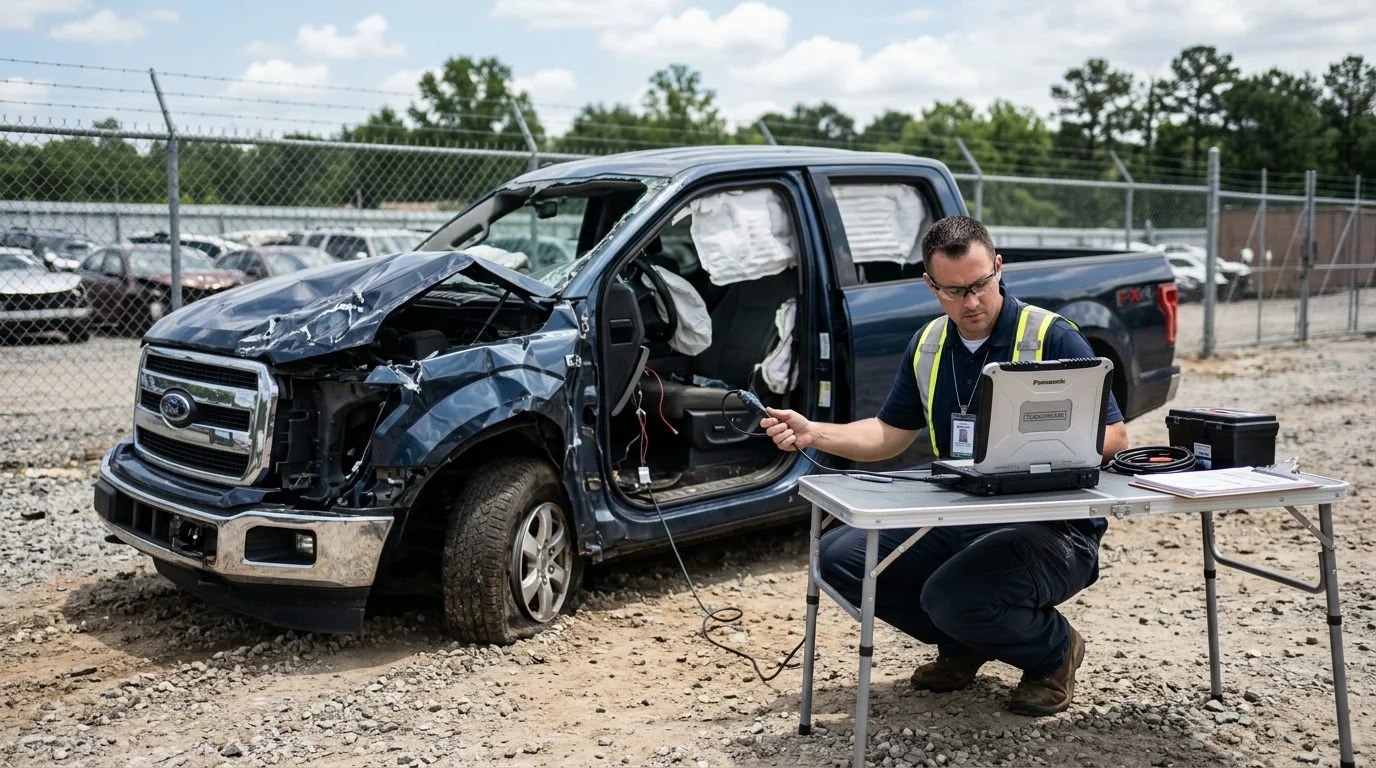
Step 4: Preserve Scene, Vehicle, and Witness Evidence Early
Evidence from a crash scene can change or disappear quickly. Collect and keep it as early as you can.
Who acts: the injured person and family members, working with the attorney’s investigators.
What it needs: photos and video of the scene, the vehicles, road conditions, signs, and visible injuries. Get names and phone numbers of witnesses. Save any dashcam or phone footage from the crash, and make a backup copy. Keep damaged items such as helmets, car seats, phones, and clothing.
What comes next: do not repair the vehicle or throw away damaged gear until you have talked with the attorney. Once a damaged vehicle is repaired or sold, it can be hard to examine again.
Step 5: Send a Preservation Demand to the Trucking Company and Its Insurer
A written preservation demand asks the trucking company and its insurer to keep crash-related records.
Who acts: the attorney’s team sends the request. It needs the crash date, the carrier’s name from the crash report or truck markings, and the driver’s name if known.
Records that often matter include driver logs, dispatch messages, inspection and maintenance files, and driver qualification files. Federal rules require carriers to keep driver duty-status records and supporting documents for at least six months from receipt. After a required retention period ends, a company may destroy its records at its management’s discretion, but this does not excuse compliance with any other governmental body’s longer retention requirements. That is why a written request matters early.
Georgia also makes a person liable for torts a servant commits within the scope of the business, under O.C.G.A. § 51-2-2. Investigators review the materials, and the attorney works out how the crash happened and who may be responsible.
Step 6: Think Carefully Before Giving a Recorded Statement to an Insurer
Insurance representatives often ask for a recorded statement early, before the full extent of an injury is known.
Who acts: you decide how to respond to any insurer call. You may give your name and say that an attorney will follow up.
What it needs: nothing more on a recorded line. You do not have to describe your injuries, your medical history, or the crash in detail. Early answers are often given before doctors know how serious an injury is. Later, an insurer can use those words to question the claim.
What comes next: send every insurer contact to the attorney. Keep a written log with the date, the caller’s name, and what was said. Keep copies of every letter you receive.
Not sure what your next step is?
Talk it through with our team — the first consultation is free, confidential, and carries no obligation.
Step 7: Track Bills, Missed Work, and Daily Limits
Keep a running record of bills, lost pay, and daily limits from the first week.
Who acts: the injured person or a family member keeps the record. The attorney uses it when working on the claim.
What it needs: medical bills, insurance explanation-of-benefits statements, mileage to appointments, and receipts for medicine and equipment. Add pay stubs, an employer letter about missed work, and a short daily note on pain, sleep, mobility, and tasks you can no longer do.
Why it matters: special damages are costs that actually flow from the crash. Documents are how those costs get proved.
What comes next: give copies of this record to the attorney. Avoid sharing it with an insurer or anyone outside the case.
Step 8: Watch the Two-Year Deadline and Request a Free Case Review
Georgia generally requires an action for injuries to the person to be brought within two years after the right of action accrues (O.C.G.A. § 9-3-33; Kenneth B. Cameron v. Jmp Pizza, Inc (2026)). Other rules and exceptions can apply, so timing depends on the facts.
Who acts: the injured person, or a family member for someone who died, contacts the firm. The attorney’s team reviews timing, evidence, and the next steps.
The general rule comes from O.C.G.A. § 9-3-33. A plaintiff who is 50 percent or more responsible for the injury or damages claimed cannot receive damages, under O.C.G.A. § 51-12-33. Fault is weighed across everyone who contributed to the injury, not just the driver.
No amount can be promised.
What it needs: the crash date, the names of medical providers, the crash report number if you have it, and any insurer contact information.
What comes next: after the initial review, the attorney explains the investigation and the claim process, including negotiation and litigation.

Talk With Ugwonali Law Group About Your Truck Crash Before Speaking to the Insurer
If you are dealing with fractures, a brain or spinal injury, or hospital care after a truck crash, the insurer’s call and the records request may be the decisions in front of you now. If you are a family member facing a wrongful death, those same decisions may be pressing.
Ugwonali Law Group, led by attorney Adanna Ugwonali, represents people seriously hurt in truck and car crashes and families in wrongful death cases across metro Atlanta and Georgia. The firm’s office is at 3400 Peachtree Road NE, Atlanta.
Intake staff can take your call in English or Spanish. The firm offers a free first consultation that is confidential and with no obligation to continue. No result can be promised, but the team can review your facts and explain your options. Request a free case evaluation with our team.
Frequently asked questions
What should I do first after a serious truck crash in Georgia?
Get emergency medical care the same day, even if you feel mostly fine. Keep every medical record and bill from the start.
Ask about your exact timing early.
Does sharing some fault stop a Georgia claim?
It can reduce damages. Under O.C.G.A. § 51-12-33, recovery is barred only at 50 percent or more.
How Our Firm Can Help
Support for injured people and families
Our team works with people who have fractures, hospital stays, brain or spinal injuries, and families facing a wrongful death after a truck crash.
Clear explanations at every stage
We explain the medical and legal process in plain language, so you can make informed decisions about your case.
Intake in English or Spanish
Speak with our intake team in English or Spanish. Your first call is a free, confidential consultation with no obligation to continue.
Based in Atlanta, serving Georgia
Ugwonali Law Group is located at 3400 Peachtree Road NE, Atlanta, and serves clients in Fulton, Clayton, Cobb, and Rockdale Counties and across Georgia.
Important: Talk to a Lawyer Before Speaking With the Trucking Company
Trucking companies and their insurers may contact you soon after a crash. Do not give a recorded statement, sign releases, or accept an offer before you have discussed your situation with a lawyer. Keep your medical records and bills.
Your First Steps After a Serious Truck Crash
1. Get medical care right away
Seek emergency care the same day, even if you feel mostly fine. Some serious injuries, including brain and spinal injuries, may not show symptoms right away.
2. Document the scene
If you are able, take photos of the vehicles, the road, visible injuries, and any weather or roadway conditions. Write down the date, time, and location.
3. Keep every record
Save medical records, bills, prescriptions, pay stubs, and notes about missed work and daily limitations. Organized records help explain the full impact of the crash.
4. Speak with our intake team
Call Ugwonali Law Group for a free, confidential consultation. We will listen to what happened and explain the options in plain language.