

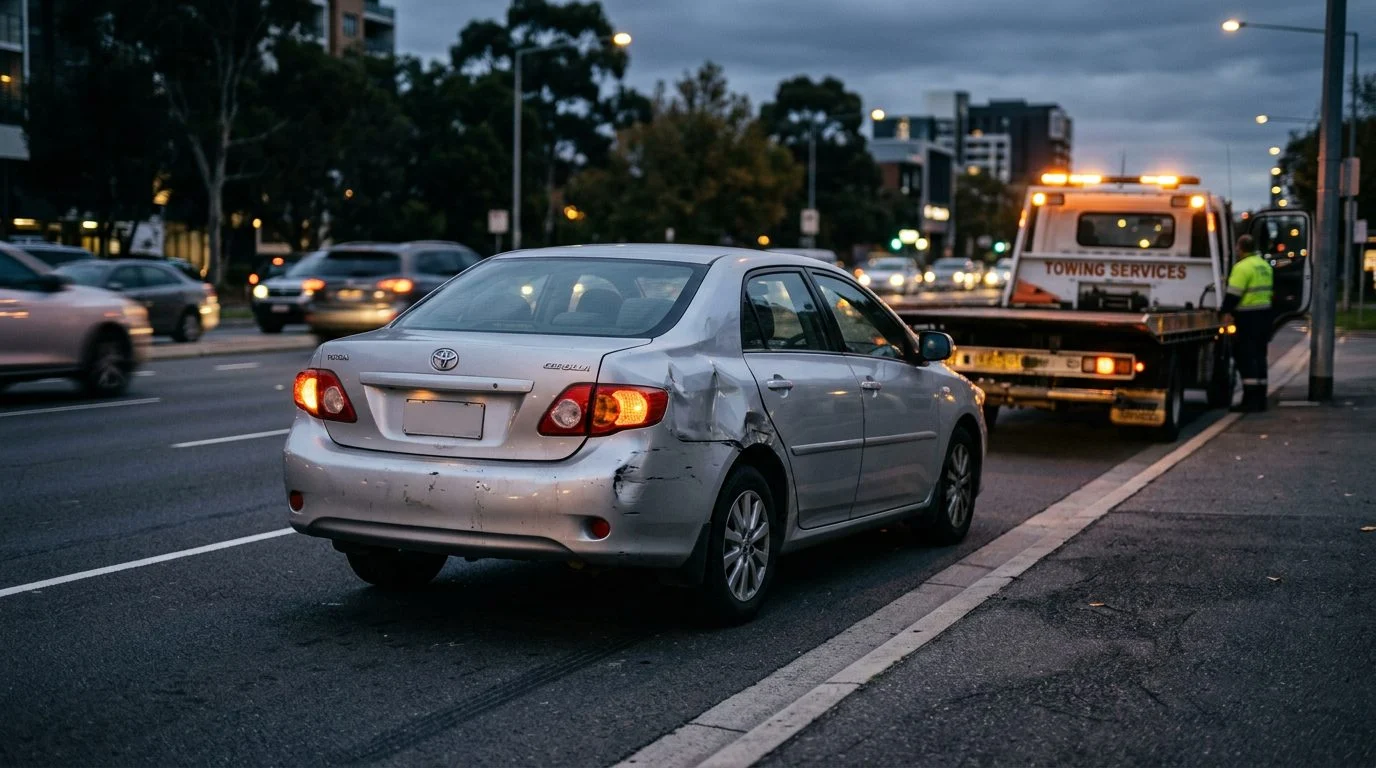
Head Injuries After a Car Crash | Atlanta, Georgia
Hit Your Head in a Car Crash? Here's What to Know About a CT Scan
A head impact can cause injuries that are not obvious right away. Learn how doctors decide whether a CT scan is needed, and how Ugwonali Law Group helps injured people in metro Atlanta and across Georgia.
About Ugwonali Law Group
Free
Case review and first consultation
English & Spanish
Intake in either language
Atlanta
3400 Peachtree Road NE, Atlanta, GA
By Adanna Ugwonali · Published October 30, 2026
If you hit your head in a car crash, see a medical doctor the same day. A doctor decides whether you need a CT scan, based on your exam and symptoms. Many people with milder head injuries get a normal CT result, so a normal scan doesn’t end the medical question.
This page explains how doctors think about imaging after a head impact, what warning signs need urgent care, and why your medical record matters if you later pursue a claim. It is general education, not medical advice.
Why a Head Impact in a Crash Needs a Doctor’s Evaluation
A head impact in a crash needs a medical evaluation, even if you feel alert. Head injuries can be serious without a visible wound, bruise, or bleeding from the scalp.
Shock and adrenaline are common after a crash. They can hide early symptoms. You may feel fine at the scene and notice headache, dizziness, or confusion hours later.
That is why a same-day evaluation is the practical first step. A doctor can check your memory, balance, eyes, speech, and strength. The doctor also decides whether imaging is needed.
Do not try to judge the injury yourself. You cannot see inside your skull, and a bump that looks minor can still matter. Let a treating doctor make that call.
If a head hit in your crash left you with questions about scans, symptoms, or what comes next, our team can talk with you. Request a free case review, and you won't have to sort it out alone. Talk it through with our team — the first consultation is free, confidential, and carries no obligation.
When a CT Scan Is Usually Recommended After a Head Hit
A CT scan is usually recommended when a doctor sees signs that the brain or skull may be hurt. It is a common imaging test in emergency care. It is not ordered for every bump.
The ASNR brain injury guidance says a CT scan is effective for detecting skull fractures. That makes it a useful test when a skull fracture is a concern.
Doctors look at several factors together. These can include whether you lost consciousness, whether you have memory loss around the crash, your age, and how the impact happened. The mix of findings guides the decision.
A CT scan is one tool, not the whole evaluation. Your doctor will weigh the scan result alongside your symptoms and exam. Ask your doctor to explain why a scan was or was not ordered.
Warning Signs That Need Emergency Care Right Away
Call 911 or go to the nearest emergency department if you notice serious warning signs. Do not wait for a routine appointment.
Watch for these signs after any head hit:
- A worsening or severe headache
- Repeated vomiting
- New confusion, unusual drowsiness, or trouble waking up
- A seizure
- Slurred speech, weakness or numbness on one side, or trouble walking
- Unequal pupils
- Loss of consciousness, or memory loss around the crash
- Clear fluid or blood from the ears or nose
If someone at the scene says you seem “off,” take that seriously. Family members often notice changes before the injured person does.
How Long After a Head Injury Should You Have a CT Scan
When a doctor recommends imaging, the scan is usually done as soon as practical after the injury. Timing depends on your symptoms and the doctor’s exam, so a doctor should set the timing.
Some symptoms can show up hours or days after a crash. These can include headache, dizziness, trouble focusing, or changes in mood and thinking. A first evaluation that looked normal does not rule out later symptoms.
Follow up with your doctor if new symptoms appear. Tell the doctor about every symptom, even ones that seem small or unrelated.
Delaying medical care after a head hit can make it harder to connect symptoms to the crash later. Records made close to the crash carry more weight than records made weeks later.
Will a CT Scan Show a Mild Concussion or Traumatic Brain Injury?
A normal CT scan does not, by itself, rule out a concussion. The ASNR brain injury guidance states the CT scan is typically normal in patients with milder traumatic brain injury, including concussion.
A CT scan is better at showing bleeding, fractures, and some structural problems. Concussion and mild traumatic brain injury often involve changes in how the brain works. Those changes may not appear on a scan.
Doctors may use a neurological exam, a review of your symptoms, and cognitive testing. In some cases, an MRI may be ordered. These tools help show how the brain is functioning.
A normal scan and ongoing symptoms can both be part of the medical picture. If symptoms continue, keep seeing a doctor and describe them clearly at each visit.
How the Medical Record Matters If You Pursue a Car Crash Claim
Medical records document what you reported, what the doctor found, which tests were ordered, and what treatment followed. They are the main proof of your injury.
Georgia law limits medical expense damages to the reasonable value of medically necessary care. Under Georgia medical expense law, O.C.G.A. § 51-12-1.1(b) sets that limit, and the trier of fact decides the amount. Subsection (f) lets either side challenge the reasonableness or necessity of treatment.
Georgia also separates damages. Under Georgia damages law, O.C.G.A. § 51-12-2(b) says special damages, such as medical bills, must be proved to be recovered.
Gaps in treatment, or delays before the first medical visit, can make the link between the crash and the injury harder to show. Consistent, timely care helps keep that link clear. Every claim turns on its own facts and medical evidence, so no outcome can be predicted here.
Not sure what your next step is?
Talk it through with our team — the first consultation is free, confidential, and carries no obligation.
Talk With Our Team About Your Head Injury and Crash
If a head hit in your crash left you unsure about imaging or symptoms, you don’t have to figure out the next step alone. Ugwonali Law Group, led by attorney Adanna Ugwonali, can talk with you about your situation and the legal process. Our intake team at 3400 Peachtree Road NE, Atlanta, offers help in English or Spanish.
The first consultation is free, confidential, and carries no obligation to continue. Request a free case review when you’re ready to talk.
Frequently Asked Questions
Should you get a CT scan after a car crash?
A doctor decides after examining you. A CT scan is usually considered when a head impact comes with warning signs or concerns about a skull fracture.
Can you have a concussion with a normal CT scan?
Yes. A normal CT scan does not rule out a concussion or mild traumatic brain injury.
How does Georgia’s fault rule work?
Under Georgia’s fault rule, O.C.G.A. § 51-12-33, damages are reduced by your share of fault. A plaintiff 50 percent or more at fault recovers nothing.
Disclaimer: This page is general education and is not legal advice. Responsible lawyer: Adanna Ugwonali, Ugwonali Law Group, 3400 Peachtree Road NE, Atlanta, Georgia. Reading this page does not create an attorney-client relationship.
Warning Signs to Report to a Doctor Right Away
Worsening headache
A headache that gets stronger over time, or one that does not respond to over-the-counter medication, should be reported promptly.
Repeated vomiting or nausea
Vomiting after a head impact is a symptom that medical professionals take seriously and should be evaluated the same day.
Confusion or unusual drowsiness
Trouble thinking clearly, difficulty staying awake, or a person who is hard to wake up needs urgent medical attention.
Fluid from the nose or ears
Clear fluid or blood from the nose or ears after a head impact can signal a skull fracture and calls for prompt medical care.
Important: A Normal CT Scan Does Not Rule Out Every Brain Injury
A CT scan can show bleeding, swelling, or skull fractures, but it may not show a concussion or mild traumatic brain injury. Symptoms that appear days or weeks later still deserve medical follow-up. Describe every symptom to your doctor, even if it seems minor.
Common Questions About Head Injuries After a Crash
Who decides on a CT scan?
A medical doctor examines you and decides which tests are appropriate. Imaging is typically considered when there are warning signs or a concern about a skull fracture or bleeding inside the head.
Why keep a symptom journal?
Writing down headaches, dizziness, memory problems, sleep changes, and mood shifts helps your doctor track your recovery and gives a clear record of how the injury affects your daily life.
Why does early treatment matter?
Following your doctor's treatment plan, attending follow-up visits, and keeping every medical record protects your health and documents the care you received after the crash.
How can a lawyer help?
Our team can explain the medical and legal process in plain language, help you gather records, and answer your questions about a claim during a free, confidential consultation with no obligation to continue.