

Atlanta, Georgia · Catastrophic Injury
When a Child Is Catastrophically Hurt, Settlement Questions Need Clear Answers
Plain-language guidance from Ugwonali Law Group for families navigating a serious injury claim involving a minor.
By Adanna Ugwonali · Published November 16, 2026
Short Answer: Minor Settlement Court Approval in Georgia for a Catastrophic Injury
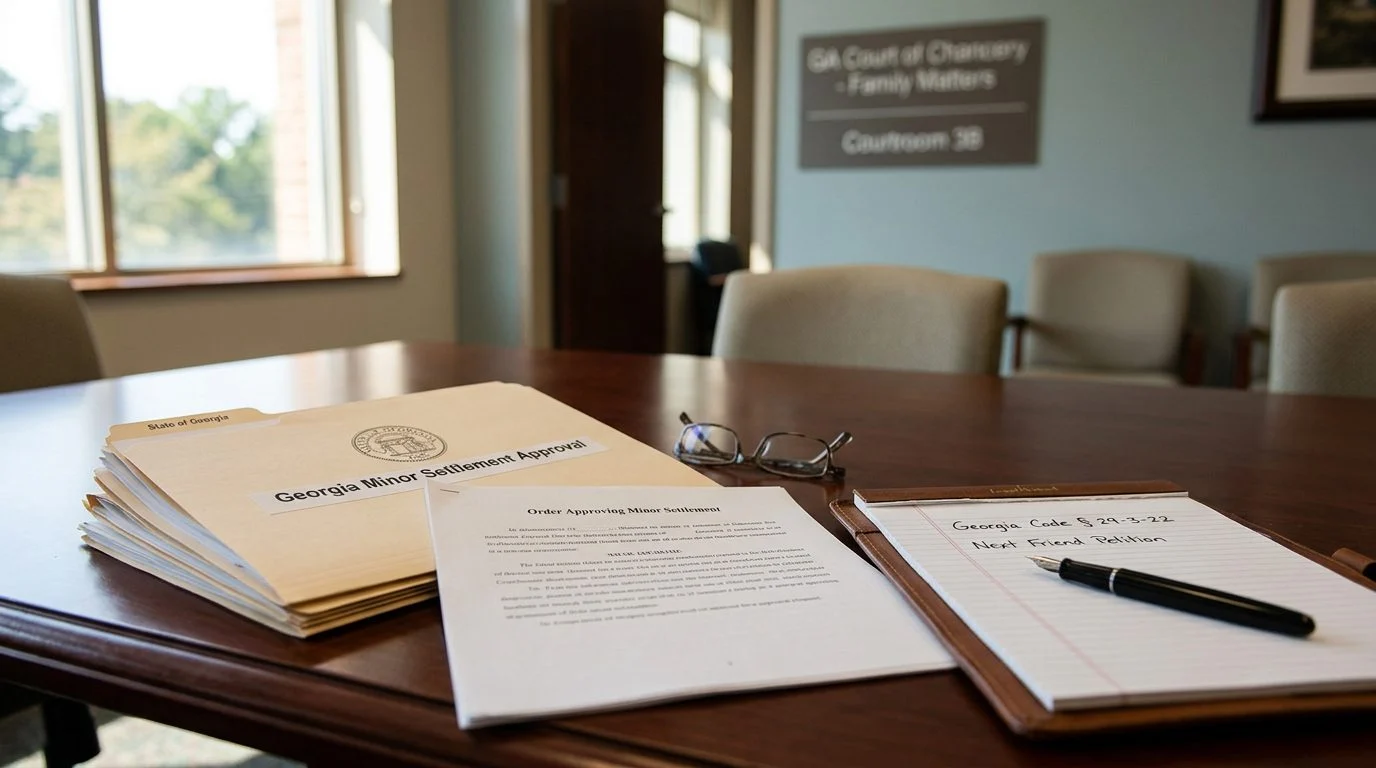
Every injury case depends on its own facts, and a settlement involving an injured child can raise questions that a case-specific review helps answer. A parent or guardian usually handles the claim for a child, so the court review helps protect the child’s own interests.
Families facing a child’s serious injury often have a lot to sort out at once. Georgia’s damages statute, O.C.G.A. § 51-12-13, addresses how future economic damages are reduced to present value.
Medical bills are a common example of special damages, so they need records behind them. A child’s injury can also affect school, play, and daily life for a long time.
If your child was hurt and you're making decisions for them while medical bills arrive, you don't have to sort out the approval questions alone. Talk it through with our team — the first consultation is free, confidential, and carries no obligation.

How Minor Settlement Court Approval Works: Records Come First
A review of a child’s settlement is built on records that show what the injury cost and what care the child needs. Those records carry much of the weight.
Under O.C.G.A. § 51-12-1.1, medical expenses are limited to the reasonable value of medically necessary care, and the trier of fact (the person or group deciding the case) sets that amount. A bill alone does not answer the question.
Either side may challenge those figures. The statute says the reasonableness of medical expenses and the medical necessity of treatment can both be challenged. That is why organized records matter.
Gather these items as soon as you can:
- Hospital, surgery, and therapy records
- Itemized bills and insurance statements
- Doctors’ notes on the child’s prognosis and future care
- A written log of daily limits, missed school, and activities
Records that show a steady pattern of care are easier to explain. If a child missed months of school, a school record helps tell that story. If available, photos and crash or incident reports add context. Keep originals and a backup copy of everything.
Where a Child’s Settlement Money Goes
Families should read any court order closely and keep a copy in a safe place. A court order sets out the terms, so it helps to know exactly what it says.
Past care has its own place in the damages picture. Bills from the injury therefore belong in the family’s records.
Parents often pay bills before a case is resolved. Save every statement, and note who paid what and when. Keep receipts for co-pays, medical supplies, and travel to appointments so each cost is documented.
Future costs work differently from past bills. A settlement for a child often covers both past costs and future needs, and the two are handled in different ways. The sections below explain the future side.
Medical Bills, Liens, and What Must Be Resolved First
Medical bills can carry claims that affect how a settlement is handled. They need a careful look before any money moves.
Some hospitals, health plans, and government programs may seek repayment from a settlement. Our Medicare and Medicaid liens guide explains how those claims work in Georgia injury cases.
Health insurance also affects the evidence. The statute says that if the plaintiff in any such civil action has any form of public or private health insurance, including benefits under a governmental workers’ compensation program, the evidence relevant to the reasonable value of medically necessary care includes both the amounts charged and the amounts actually necessary to satisfy those charges under the insurance contract or the applicable governmental workers’ compensation program. That is true whether or not the insurance was used (O.C.G.A. § 51-12-1.1).
Some providers treat a child now and wait to be paid from a later settlement. Georgia law makes the letter, the itemized and coded charges, and any sale of the bill to a third party below invoice price relevant and discoverable. The law also makes relevant whether the child was referred for treatment under a letter of protection or other similar arrangement and, if so, who made the referral.
Keep every letter, billing statement, and referral note. These papers show how each bill was created and who is owed.
Deadlines: Why a Child’s Claim Runs on a Different Clock
A child hurt before age 18 generally gets the same time to sue as others, counted from age 18. Under O.C.G.A. § 9-3-90(b), a person under 18 when the claim arises gets the same time after turning 18 that others get. The statute notes an exception in § 9-3-33.1.
Under O.C.G.A. § 9-3-33, actions for injuries to the person must generally be brought within two years after the right of action accrues, except as otherwise provided in that article.
A later start date for a child’s own claim is not a reason to wait on evidence. Crash reports, witness names, and video can disappear over time. Early investigation keeps the record intact. Our statute of limitations guide covers the general framework.
Families sometimes hear one date and assume it applies to everyone. Each claim has its own facts, so check dates early.
Catastrophic Injuries and Planning for Future Care
A catastrophic injury, such as a traumatic brain injury or spinal cord injury, can shape a child’s needs for many years. Care may include therapy, medical equipment, and changes to the home.
Our spinal cord injury home modification costs guide covers the housing side in more detail. For the broader category, see our catastrophic injury page.
Future costs are treated differently from past bills. Georgia law allows the trier of fact to reduce future economic damages, including future medical expenses, to present value. The statute uses a 5 percent rate as an example, or any other rate the trier of fact finds appropriate (O.C.G.A. § 51-12-13).
Under O.C.G.A. § 51-12-13, the trier of fact may reduce future medical expenses to present value; separately, future care must be medically necessary and reasonably valued under O.C.G.A. § 51-12-1.1. That is why records about future needs matter. Doctors’ notes and therapy plans help show what the child may need down the road.
Not sure what your next step is?
Talk it through with our team — the first consultation is free, confidential, and carries no obligation.

Preparing for Minor Settlement Court Approval and Talking With Our Team
The most useful steps now are simple. Keep every medical record and bill. Write down the child’s daily limits. Note every call or letter from insurers, and keep copies. These habits make any later review easier to follow.
Frequently Asked Questions
What deadline applies to a child’s injury claim in Georgia?
A child hurt before age 18 generally gets the same time to sue as others, counted from age 18, with some exceptions. The general two-year deadline comes from O.C.G.A. § 9-3-33.
Keep every copy you receive.
Under O.C.G.A. § 51-12-13, the trier of fact may reduce future economic damages to present value using a discount rate of 5 percent or any other rate the trier of fact deems appropriate.
If your child was hurt and you’re making decisions for them while medical bills arrive, you don’t have to sort out the approval questions alone. Ugwonali Law Group offers a free, confidential first consultation with no obligation to continue, in English or Spanish. Contact our team.
Disclaimer: This page is general educational information, not legal advice. Responsible lawyer: Adanna Ugwonali, Ugwonali Law Group, 3400 Peachtree Road NE, Atlanta, Georgia.
How our team approaches a child's serious injury claim
Clear paperwork
We explain each document in plain language before you sign anything, so you know what it means for your child.
Family at the center
Parents and guardians make the decisions, and our team keeps you informed at every step.
Your child's long-term needs
Our team focuses on how a proposed resolution fits your child's future medical care and daily life.
English or Spanish
Our intake staff can speak with you in English or Spanish on your first call.
Do not sign anything yet
Settlement offers in a child's case can arrive quickly and can feel urgent. Before you accept an offer or sign any document, talk with a lawyer about what it means for your child.
How to prepare for your free case review
Gather the medical picture
Keep discharge papers, doctor referrals and treatment notes together. Medical records help explain how the injury affects your child now and over time.
Bring the paperwork
Send along any settlement letters, insurance communications and court papers you have received so we can review them with you.
Ask your questions early
No question is too small. Our team will walk you through the process in plain language at your free case review.