

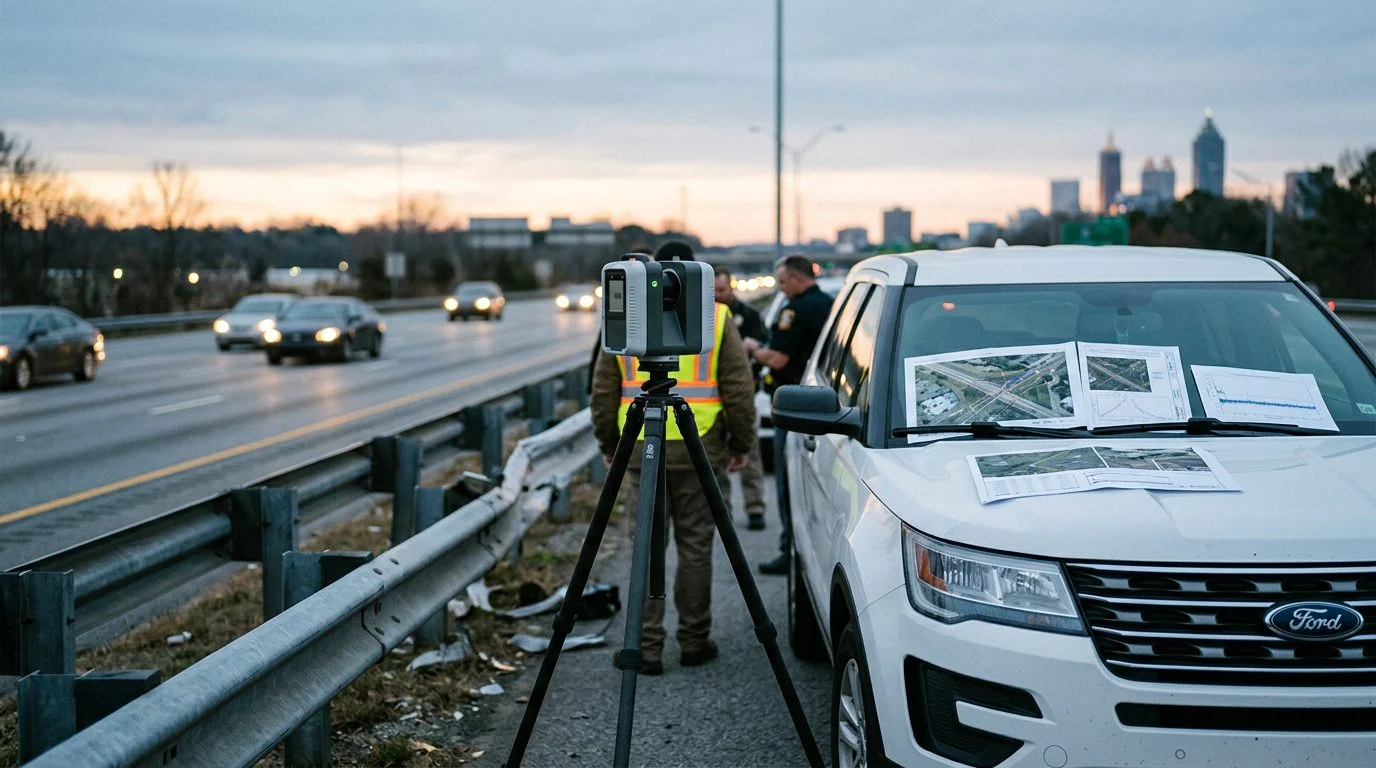
Atlanta, Georgia | Rideshare Crash Injury Claims
Hurt in an Uber or Lyft Crash? Get Clear Answers About Your Options
A rideshare collision can involve more parties, more insurance questions, and more paperwork than an ordinary crash. Our team can help you understand each step while you focus on your recovery.
How We Work With You
Free
First consultation, confidential, with no obligation to continue
EN / ES
Intake in English or Spanish
By Adanna Ugwonali · Published November 9, 2026
A serious crash with an Uber or Lyft driver can mean broken bones, a head or spine injury, a long hospital stay, or the death of someone you love. Many people ask one question first: which insurance policy pays?
In Georgia, the answer often depends on what the driver’s app was doing at the moment of impact. Was the app off, on and waiting, or carrying a passenger? That timing can decide which policies may respond. This page explains how those pieces fit together, what to document now, and where to start.
Why Rideshare Crashes Raise Different Insurance Questions
A rideshare crash often involves more than one insurance policy. Finding each one early helps you protect your options.
Uber and Lyft drivers often drive their own cars. Georgia’s ride share liability statute refers to a ride share driver operating a personal passenger car, so the driver’s own policy is part of the picture from the start. See O.C.G.A. § 40-1-201.
The company’s coverage may also apply. Georgia’s insurance rules for rideshare work, which the statute calls transportation network company services, are set out in O.C.G.A. § 33-1-24.
Serious injuries raise the stakes. Fractures, head and spine injuries, and hospital care can bring large medical bills, lost wages, and a long recovery. The sooner you know every possible source of coverage, the more options you keep.
The first question that shapes coverage is usually simple: who was on the app at the moment of impact? Many people assume the driver’s own policy always pays.
If you were seriously hurt in a crash with an Uber or Lyft driver and the insurance question is still open, our team can help you sort out your options. Talk it through with our team — the first consultation is free, confidential, and carries no obligation.
The Three App Periods That Shape Coverage
Georgia’s statute defines rideshare work as a “services” period. That period starts when a driver accepts a ride request on the transportation network company’s digital network and runs until the driver completes the transaction or the ride is complete, whichever is later. See O.C.G.A. § 33-1-24.
Three timing points matter most in practice.
App off. The driver is not logged on to the rideshare network.
Logged on and waiting. Being logged on is not the same as carrying a passenger. Still, the statute lets insurers exclude coverage for loss that occurs while a driver is logged on. This window can matter even with no one in the car.
From accepting a request to drop-off. This is part of the statute’s services period; the full period also includes the time a driver is logged on and available to accept a ride request until the driver logs off. Ask about the company’s motor vehicle coverage for this stretch. When the rideshare company is providing primary insurance coverage for a loss that occurs while a personal vehicle is available to provide rideshare services, and the driver or the driver’s insurer is named as a defendant in a civil action, the company’s insurer has the duty to defend and indemnify the driver and the driver’s insurer.
Taxis, limousine carriers, and other commercially registered vehicles with commercially licensed drivers fall outside this definition. See O.C.G.A. § 33-1-24.
The exact coverage depends on the timing and the policies involved. That is why the app timeline is worth documenting from day one.
Why the Driver’s Personal Auto Policy May Not Pay
A personal auto policy may not pay for a crash that happens while the driver is logged on to a rideshare app. Georgia’s statute lets insurers exclude that coverage.
Under the statute, insurers that write motor vehicle policies may exclude coverage under the owner’s policy for any loss or injury while a driver is logged on or providing rideshare services. Personal vehicle insurers may, at their discretion, also offer an endorsement that covers rideshare use, sometimes with a separate charge. Drivers must receive a disclosure that their personal policy may exclude coverage for injuries to the driver and to others. See O.C.G.A. § 33-1-24.
A denial does not end the search. The company’s motor vehicle coverage does not depend on the personal insurer first denying a claim. For a claims coverage investigation, the personal insurer can ask the company for the precise times, within 12 hours before and after the accident, that the driver logged on and off. The company must answer within 15 days. Those times can show whether the app was on when the crash happened.
A common mistake is waiting for one insurer to finish before asking about another. Ask every carrier that may be involved, and write down the date of each response.
When Uninsured or Underinsured Motorist Coverage Can Matter
Uninsured motorist coverage can pay you when the at-fault driver has no insurance. Georgia auto liability policies generally must include uninsured motorist coverage for an insured’s bodily injury, loss of consortium, or death caused by the owner or operator of an uninsured motor vehicle, but that coverage does not apply if a named insured on the policy rejected it in writing. See O.C.G.A. § 33-7-11.
Underinsured motorist coverage works differently. Whether a particular policy includes underinsured motorist coverage depends on that policy’s terms. It can help when the at-fault driver’s limits are too low to cover serious injuries. Your own policy determines whether you have it.
Rideshare crashes add a layer of uncertainty. The at-fault driver may be covered by a company policy, a personal policy, or a policy that does not respond. Your own coverage may still matter in that case.
Start by pulling your own policy and finding the declarations page. It lists which coverages you carry and their limits. Tell your own insurer about the crash, and keep copies of everything you send and receive.
What Changes When a Rideshare Crash Causes a Death
In Georgia, a surviving spouse may bring a claim for the death of a spouse or parent. If there is no surviving spouse, the children may. The statute measures the claim by “the full value of the life of the decedent, as shown by the evidence.” See O.C.G.A. § 51-4-2.
If no one is entitled to bring the action, the administrator or executor may bring it for the next of kin. When death results from criminal or other negligence, the personal representative may also recover funeral, medical, and other necessary expenses. See O.C.G.A. § 51-4-5.
Families often need the deceased person’s medical records. Georgia law lets an appointed executor or administrator request them first. If none is appointed, the surviving spouse may ask, then a surviving child, then a parent. See O.C.G.A. § 31-33-2.
Under O.C.G.A. § 9-3-33, actions for injuries to the person generally must be brought within two years after the right of action accrues. See O.C.G.A. § 9-3-33. Families can read more about wrongful death claims on our site.
Keep the trip records, app screenshots, funeral bills, and medical paperwork from the first days after the death.
What to Document After a Serious Rideshare Crash
The right records show who was logged on, where the car was, and how badly you were hurt. Start collecting them as soon as you can.
- App and trip details. Take screenshots of the app if you can. Note when the trip started and ended. Keep any receipts or emails from the company.
- Police notice. Georgia law requires a driver in a crash involving injury, death, or property damage of $500.00 or more to give notice right away. Notice goes to local police, or to the county sheriff or nearest state patrol office outside a city. See O.C.G.A. § 40-6-273. Keep the report number, the other drivers’ names and insurance details, and any witness contacts.
- Photos. Photograph the vehicles, the roadway, visible injuries, and any hazards as soon as it is safe.
- Medical care. Keep every emergency record, imaging report, diagnosis, follow-up visit, and prescription from your medical doctor. Georgia limits medical expense damages to the reasonable value of medically necessary care. See O.C.G.A. § 51-12-1.1. Keep itemized bills and insurer explanations too.
- Work and costs. Note missed workdays, pay stubs, mileage to appointments, out-of-pocket costs, and how the injury limits daily tasks.
Ask your providers for copies of your records in writing. See O.C.G.A. § 31-33-2.
Not sure what your next step is?
Talk it through with our team — the first consultation is free, confidential, and carries no obligation.
Who Shares Fault When More Than One Party Is Involved
When more than one driver or company may share blame, Georgia divides damages by each party’s percentage of fault, and a plaintiff who is 50 percent or more responsible for the injury or damages claimed cannot recover any damages. See O.C.G.A. § 51-12-33.
Under that statute, each liable person’s share is separate. The award is not a joint liability among them. The fact-finder also considers the fault of people who contributed to the injury, even if they were never sued.
Georgia’s ride share liability statute protects a rideshare company from liability for a driver’s operation of a personal car, but only under conditions. Those conditions include no negligence or criminal misconduct by the company itself, and background checks at least once every two years. See O.C.G.A. § 40-1-201. That means the company’s own conduct still matters.
In Quynn v. Hulsey, the Supreme Court of Georgia held that the apportionment statute, O.C.G.A. § 51-12-33, abrogated the rule that an employer’s admission of vicarious liability for an employee’s conduct bars separate claims against the employer for negligent hiring, retention, entrustment, supervision or training. The decision addresses that rule and how fault is apportioned, and it does not decide whether a rideshare company is responsible for a driver’s conduct.
How Georgia Injury Claims Are Handled Locally
Ugwonali Law Group, at 3400 Peachtree Road NE in Atlanta, represents people seriously hurt in car and truck crashes. The firm also represents families in wrongful death cases. Its work covers metro Atlanta, including Fulton, Clayton, Cobb, and Rockdale counties, and Georgia statewide.
Our team includes intake staff who can speak with you in English or Spanish. Adanna Ugwonali is the responsible lawyer for this page.
A first call with our team starts with the facts of the crash and your injuries. Serious injury matters often involve several insurers, medical records, and deadlines, so organized facts help from the start.
This page gives general information. It is not legal advice about your case.
Talk With Our Team About Your Rideshare Crash
If you were seriously hurt and still don’t know which policy will respond, our team can help you sort through the timeline.
You may be dealing with a hospital bill, a missed paycheck, and an insurer that has not answered yet. You may not know whether the app was on at the moment of impact. You don’t have to sort that out alone.
Our first consultation is free, confidential, and comes with no obligation to continue. Reach out through our contact form at https://www.attorneyadanna.com/contact. Our intake team can speak with you in English or Spanish.

Frequently Asked Questions
Can I file an injury claim if I was hurt in a crash involving an Uber or Lyft in Georgia?
Yes, people hurt in crashes involving rideshare vehicles may be able to bring an injury claim in Georgia, depending on how the crash happened and who was at fault. Ugwonali Law Group offers a free, confidential first consultation, without obligation to continue.
Which insurance may apply to an Uber or Lyft crash in Georgia?
Georgia law requires rideshare companies to maintain, or cause to be maintained, primary insurance coverage for their drivers. That requirement can be met by a commercial motor vehicle insurance policy purchased by the company or the driver, or by a rideshare rider, endorsement or express provision of coverage for rideshare services within the driver’s personal auto policy, which may be combined with an excess policy provided by the company. The required coverage can depend on whether the driver was logged into the app, waiting for a ride, or carrying a passenger. Other drivers’ policies may also apply, so the specific facts of the crash matter.
Do I need medical treatment to support a claim after a rideshare crash?
Getting prompt evaluation and treatment from a medical doctor is important for your health, and it also creates the medical records that document your injuries. Insurers and courts generally look at these records along with the crash facts, so keeping every appointment and bill is helpful.
How long do I have to file an injury claim after an Uber or Lyft crash in Georgia?
Under Georgia law, most personal injury lawsuits must generally be filed within two years of the injury date (O.C.G.A. § 9-3-33), though other deadlines can apply depending on the facts. Because deadlines can be complicated, it is wise to speak with a lawyer early.
What to Expect When You Reach Out
A Real Conversation
Call or request a case evaluation and speak with our intake team about what happened and how you are doing.
Plain-Language Explanations
We explain the legal and medical process in terms you can follow, so you know what questions to ask.
Support in Your Language
Our intake staff and team can work with you in English or Spanish.
Focus on Your Health
Getting proper medical care comes first. We help you organize the information that matters to your claim.
Be Careful With Insurance Calls
Insurance representatives may contact you soon after a crash. Before you give a recorded statement or sign any release, consider talking with a lawyer first.
Practical Steps After a Rideshare Crash
Get Medical Care
Seek evaluation from a medical doctor, even if your injuries seem minor at first. Keep every visit and bill.
Record What You Can
Write down the date, time, location, and driver details. Photos of the scene and your injuries can help.
Save the App Information
Screenshots of your trip, ride receipts, and messages can help show what happened.
Talk With Us
Request a free case review and our team will walk you through what to gather next.