

Serious Injury Guide · Atlanta, Georgia
Understanding Fault After a Serious Crash in Georgia
Fault is a question of negligence, and the answer often depends on several kinds of evidence. Here is how the questions are usually approached, in plain language.
By Adanna Ugwonali · Published November 8, 2026
What counts as an at-fault accident? An at-fault accident is a crash caused by one driver’s careless conduct and the harm that followed. In Georgia, the question is who failed to use the care the law expects, and how much each person’s conduct contributed. This guide explains fault in plain words, using the Georgia rules that apply after a serious car or truck crash.
What does “at fault” mean in a Georgia car accident?
At fault means the person whose careless conduct caused the crash and the injuries that followed. Georgia looks at cause, not just at who was on the road. Two drivers may be in the same intersection, but only one driver’s choice may have started the chain of events.
The law measures conduct against ordinary care. Ordinary diligence is the care that ordinarily prudent people use in similar circumstances. Failing to use that care is called ordinary negligence. O.C.G.A. § 51-1-2
Injury claims often come down to a few questions about what happened and who is responsible. Who was responsible for acting safely is often one of the central questions in these cases. Whether the other party acted with reasonable care is often examined closely. Medical records and accident evidence are often used to connect an incident to an injury. Injuries can affect work, daily life and long-term health. Georgia law allows recovery when someone breaks a legal duty and the injured person suffers damage as a result. O.C.G.A. § 51-1-6 Our catastrophic injury overview explains how these claims move from the crash through medical care.

What qualifies as an at-fault accident?
Most at-fault accidents involve a driver who broke a basic rule of safe driving. Common examples include speeding, running a red light or stop sign, failing to yield, unsafe lane changes, following too closely, and distracted or impaired driving. Each of these choices can be the cause that starts a crash.
Breaking a traffic rule is often used as evidence of negligence. Georgia’s traffic laws appear in the Official Code of Georgia Annotated. The rule is not automatic, though. The facts of each crash decide what the rule means in that moment.
Commercial trucks face added rules. Georgia requires every commercial motor vehicle to be kept in a safe condition at all times. O.C.G.A. § 40-1-8 Drivers employed to operate a motor vehicle for a motor carrier must hold a valid license and may not use prohibited drugs or alcohol while on duty. Georgia may also adopt federal trucking safety rules by reference, and courts take notice of them.
The same idea applies to unsafe property. An owner or occupier who invites people onto land must use ordinary care to keep the premises and approaches safe. O.C.G.A. § 51-3-1 That duty is the starting point in premises liability and slip and fall cases.
Who is usually at fault if a car hits the back of you?
In many rear-end crashes, the driver who hit from behind is found at fault. Drivers are generally expected to leave enough room to stop safely. Following too closely is a common reason rear-end crashes happen.
Some rear-end crashes look different. A lead driver may stop suddenly without a reason. A driver may reverse or change lanes abruptly in front of traffic. Brake lights that were not working can also change the picture. Each of these facts can shift some fault to the lead driver.
A rear-end crash can still involve shared fault. The facts of the crash decide how fault is weighed. Neck and spinal injuries are often documented in medical records, including the timing of first treatment. Those records help connect the injury to the impact.
Do police reports and officers decide who is at fault?
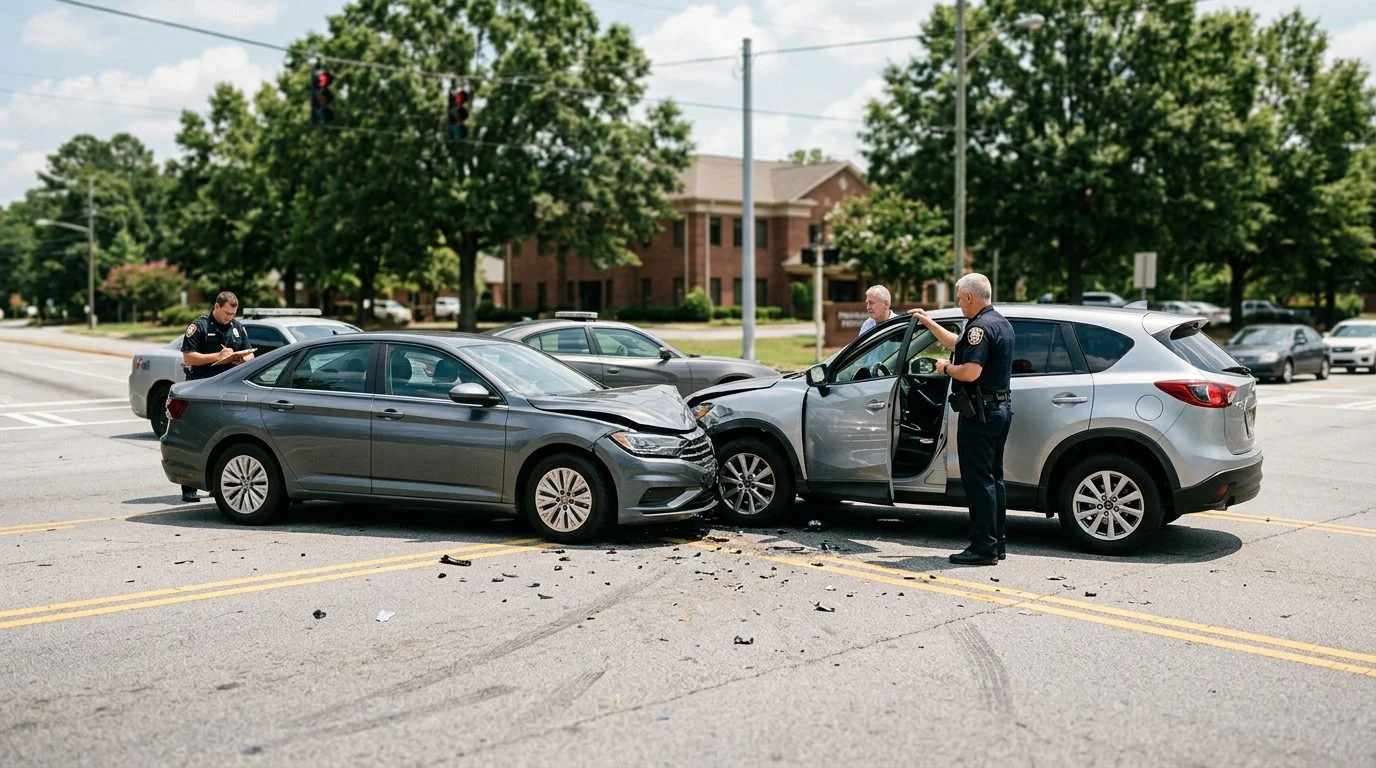
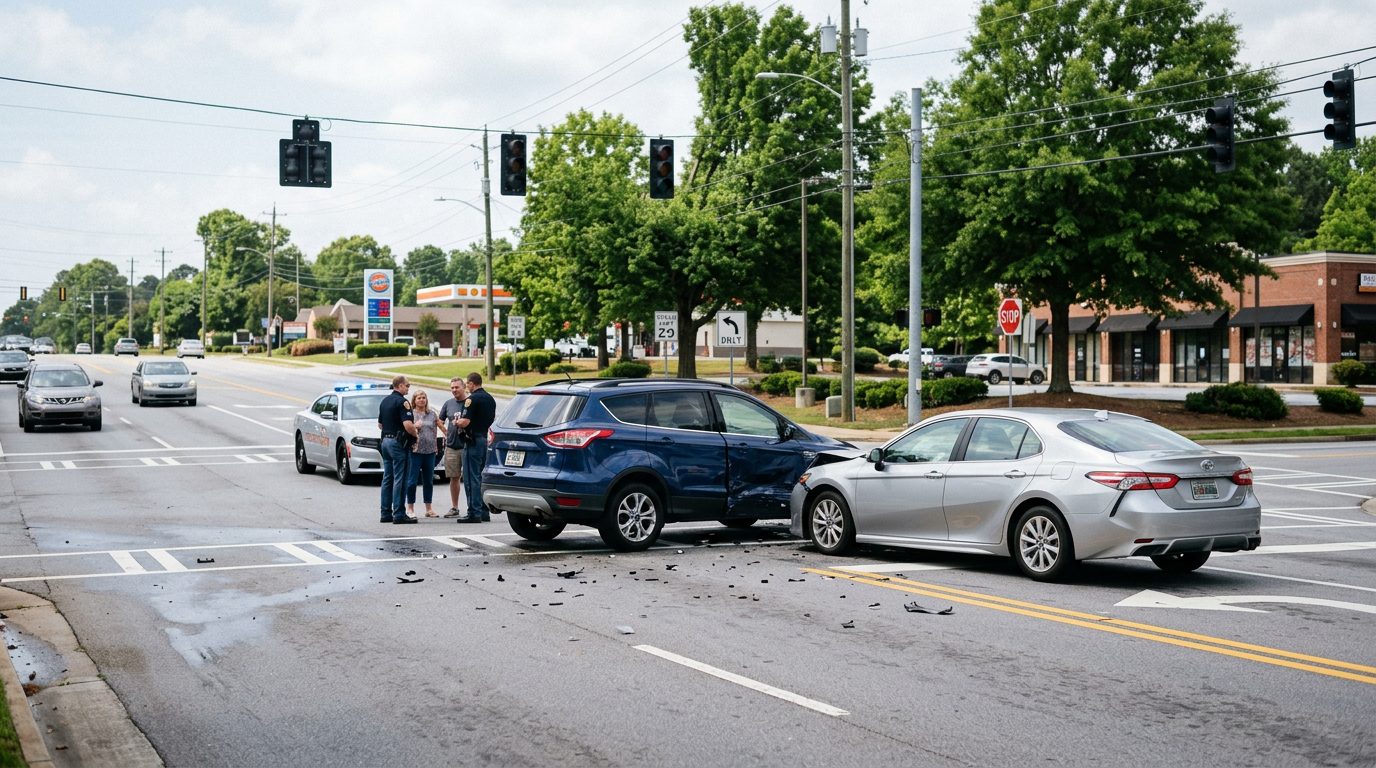
A police report is important evidence, but it does not settle fault by itself. Officers typically record vehicle positions, road and weather conditions, witness names, and any citations issued. They also write down what drivers and witnesses say at the scene.
The report is not the final word. It can be disputed, amended, or outweighed by other evidence. Insurers and courts look at the full record, including photos, medical records, and witness accounts.
A traffic citation alone does not decide fault. It can still be relevant evidence that a driver was negligent. Compare the report with what you remember, and note any errors early, while details are still clear.
How does Georgia split fault when both drivers share the blame?
Georgia reduces an injured person’s damages by their share of fault. If that share reaches 50 percent or more, the injured person cannot recover damages. The statute says the judge reduces the award “in proportion to his or her percentage of fault.” O.C.G.A. § 51-12-33
Imagine a jury finds the injured driver 20 percent at fault. It also finds the injured driver 20 percent at fault. The award would drop by 20 percent. If the injured driver were 50 percent at fault, the statute bars recovery. This example uses round numbers to show the math, not a prediction.
When several parties share fault, each one answers for its own percentage. The law says those damages are not joint, and they are not subject to contribution. O.C.G.A. § 51-12-33 A trucking company or property owner can be part of that picture.
How do insurance companies decide fault, and does an at-fault finding affect insurance?
An insurance company makes its own fault decision to handle a claim. That decision is not the same as a legal finding by a court. The two can differ, and an insurer’s early view does not end the question.
Insurers usually review the police report, statements, photos, and their own investigation. They weigh that information against the policy and the claim. Their conclusion may change as more evidence arrives.
The state’s guide explains that liability coverage pays for harm a driver causes to others. Optional coverage can pay for the insured driver’s own injuries or vehicle damage. Georgia auto insurance guide An at-fault finding may affect your own premiums or claims. Read your own policy wording, and check the state guide for the rules that apply to you.
What evidence is used to show who was at fault?
The strongest evidence is often what was recorded soon after the crash. Photos of the vehicles, the roadway, skid marks, traffic signals, and visible injuries matter. Take them at the scene or as soon as you can.
Dash camera and nearby business or traffic camera footage can show the order of events. Many recording systems write over old footage, so ask for it to be preserved early. Witness statements matter too. Names and phone numbers let someone follow up while memories are fresh.
Medical records document injuries and the timing of treatment. A medical doctor’s diagnosis and the records that follow help connect the injury to the crash. In a truck crash, vehicle data and trucking company records can be part of the investigation. A lawyer can request those records as part of a case.
When the injuries are serious, what changes?
Serious injuries usually mean longer treatment, more records, and more insurance policies to review. Fractures, internal bleeding, burns, traumatic brain injuries, and spinal cord injuries each add layers to the file. Each one can also bring more parties and insurers into the picture.
Georgia crash cases show these injuries in different ways. Some examples include burn injuries in a car accident, internal bleeding after a car accident, and multiple fractures in a truck crash. Each page explains the medical side in plain terms.
Georgia limits medical expense damages to the reasonable value of medically necessary care, treatment, or services. The trier of fact decides that amount. O.C.G.A. § 51-12-1.1 A medical doctor’s diagnosis and treatment plan form the basis for documenting serious injuries.
Wrongful death claims are covered by the same medical expense rule: under O.C.G.A. § 51-12-1.1, in any civil action to recover damages resulting from injury or death to a person, special damages for medical and healthcare expenses are recoverable only as provided in that Code section. Questions about how Georgia law applies to a particular situation are best discussed with a lawyer. Those questions are worth raising with a lawyer early.
Talk with our team about your crash
What counts as an at-fault accident in Georgia?
An at-fault accident is one where a driver’s negligence caused the crash and the injuries. Breaking a traffic rule is often evidence of that negligence.
Does a police report decide fault in Georgia?
A police report does not decide fault alone. Insurers and courts weigh it with photos, medical records, and witness accounts.
Can I recover damages if I was partly at fault?
Yes, if your share of fault is less than 50 percent. Your damages are reduced by your percentage of fault. O.C.G.A. § 51-12-33
If you were hurt in a crash, or you’re helping a family member through medical visits while an insurer questions who was at fault, you don’t have to sort it out alone. Ugwonali Law Group offers a free case review, with intake staff available in English or Spanish. The first consultation is free, confidential, and without obligation. Our office is at 3400 Peachtree Road NE, Atlanta, Georgia. Adanna Ugwonali is the responsible lawyer for this page.
Questions people often ask about fault
What is negligence?
In general terms, negligence means a person did not act with the care a reasonable person would use in the same situation, and that failure contributed to the harm.
Is a police report the final word?
A police report is one piece of the picture. It is usually considered alongside photos, witness accounts, medical records, and other evidence.
Can more than one party share responsibility?
Crashes can involve more than one driver, a vehicle owner, an employer, or a property owner. Each situation has its own facts.
Why do medical records matter?
Records of treatment help show how a serious injury happened and what care it required, which is why they are often reviewed closely.
Before you talk about the crash
Be careful about what you say to insurance adjusters or post online about the crash. Keep copies of your medical records, photos, and any correspondence, and let a lawyer review the details of your situation.
Evidence commonly reviewed after a serious crash
Scene and vehicle evidence
Photos, vehicle damage patterns, road conditions, and traffic signals can help show what happened.
Medical documentation
Emergency care records, imaging, and treatment notes from a medical doctor can connect the injury to the crash.
Witness statements
Accounts from people who saw the crash can add independent detail about the sequence of events.
Insurance and coverage information
Commercial or corporate policies behind a driver or business can affect how a claim is investigated and handled.