

Premises Liability | Atlanta and Georgia
What Premises Liability Insurance Covers After a Serious Injury
Plain-language answers for people hurt on someone else's property, from the team at Ugwonali Law Group in Atlanta.
Getting started with our firm
Free
First consultation, confidential and without obligation to continue
English & Spanish
Intake staff take your call in either language
Atlanta
Offices at 3400 Peachtree Road NE, Atlanta, GA
By Adanna Ugwonali · Published November 25, 2026
If you were hurt on someone else’s property, you may have heard the term premises liability from an insurance adjuster or in a letter. If you are helping a family member who was hurt, you may be dealing with the same term. In insurance, premises liability means a property owner can be legally responsible when an unsafe condition on the property causes someone’s injury. The money to pay those claims usually comes from the liability part of the owner’s policy, not the property part.
Insurance terms can feel like a foreign language, especially after a serious injury. Here is what the words mean, how they show up in a claim, and which Georgia rules often shape the process.
What premises liability means, in plain terms
Premises liability is the legal responsibility an owner or occupier can have when someone is hurt by an unsafe condition on the property. The occupier is the person who controls the property day to day.
Under O.C.G.A. § 51-3-1, an owner or occupier who invites people onto the property for a lawful purpose must use ordinary care to keep the premises and approaches safe. People invited for business, such as customers and visitors, are often called invitees.
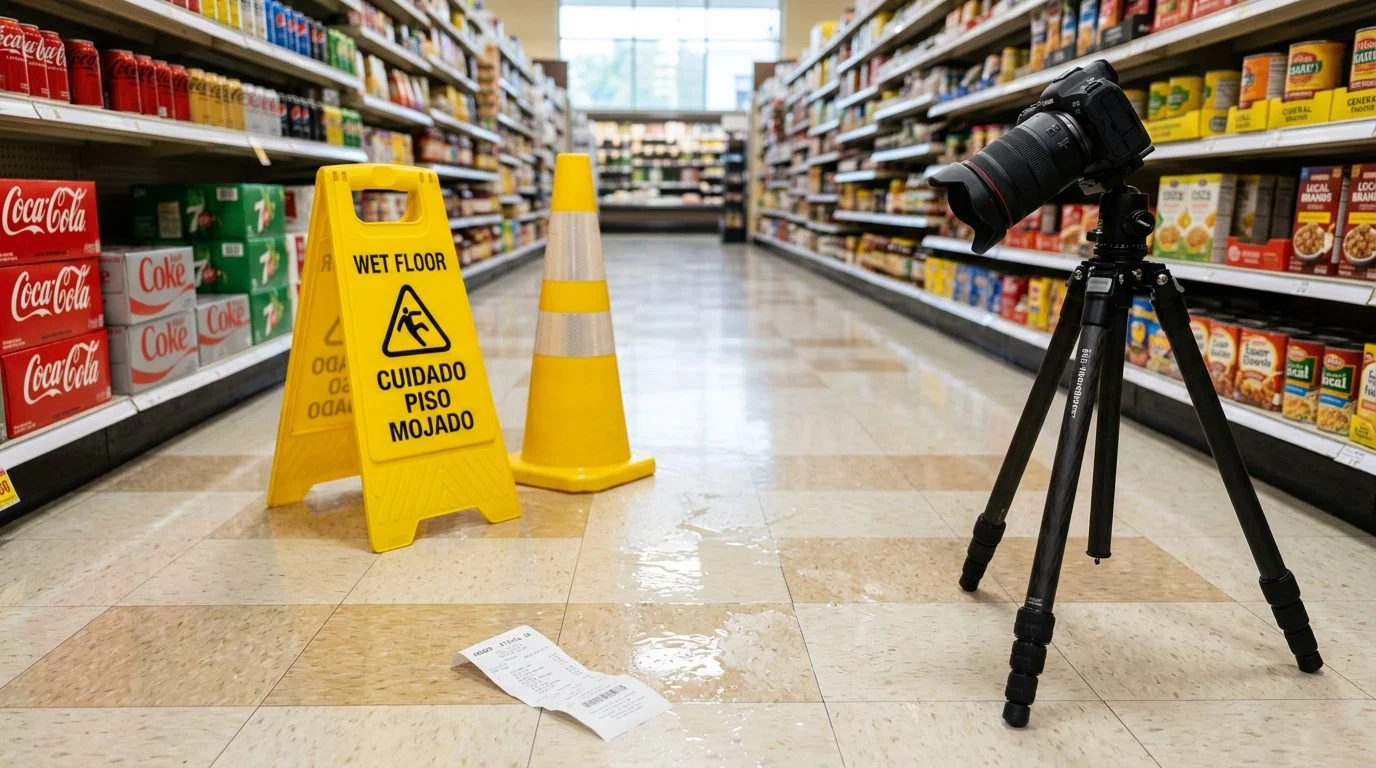
Common examples include a wet store floor with no warning sign, a broken stair in a building’s common area, poor lighting in a parking lot, and a loading dock edge with a hidden hazard. Each one can lead to an injury claim against the owner.
If someone you love was hurt on another person's property, you don't have to sort out the insurance side alone. Our team can talk through what happened with you in English or Spanish. Talk it through with our team — the first consultation is free, confidential, and carries no obligation.
How premises liability shows up in an insurance claim
Most premises injury claims go to the property owner’s liability insurer. The claim is made against the owner, and the insurer decides how to respond on the owner’s behalf.
Your own health insurance is a separate track. It may help pay medical bills while a claim is pending, and it follows its own rules. Under O.C.G.A. § 51-12-1.1, medical expenses in a lawsuit are limited to the reasonable value of medically necessary care.
An insurer usually looks at how the incident happened, the medical records and treatment, the condition of the property, and whether anyone disputes the owner’s fault.
Fault matters too. Under O.C.G.A. § 51-12-33, damages are reduced in proportion to the injured person’s share of fault. A person who is 50 percent or more responsible may not receive any damages.
You do not need to know every policy term to begin. You do need to report what happened and keep your records.
Liability coverage vs. property insurance
Liability coverage pays claims by other people for injury or property damage. Property insurance pays to repair or replace the owner’s own building or contents.
People often mix these up because both can appear in the same commercial package. A single commercial policy may include a property part and a liability part.
For a slip and fall or a trip and fall, the liability part is the one that responds. The injured person is making a claim against the owner. The injured person is not asking for repairs to the building.
A simple way to see the difference: a property claim asks what the building lost. A liability claim asks who was hurt and whether the owner’s conduct or conditions caused the injury.
What premises operations coverage means
Premises operations coverage is the part of a commercial general liability policy that covers injury claims from the everyday running of a business property. It is one of the most common ways premises claims are handled.
Daily operations include walkways, entrances, parking areas, stairs, and routine maintenance such as mopping or repairs. The coverage is tied to what the business does on the property and what happens there.
The coverage applies to the insured’s legal liability. The insurer’s obligations are set out in the written policy, so the wording matters more than any general description, including this one.
A common mistake is assuming one policy covers everything on a property. Whether a particular injury falls under premises operations coverage depends on the facts and the policy wording.
Policy limits and exclusions that can shape a claim
Policy limits are the most an insurer will pay under a policy. Exclusions are situations the policy says it does not cover.
Limits come in two common forms. A per-occurrence limit caps payment for one incident. An aggregate limit caps total payments over a policy period.
Why does this matter for serious injuries? A fracture that needs surgery, a head injury, or a spinal injury can mean long treatment. Medical costs and time away from work can add up quickly, and a policy limit may be lower than the full harm.
Exclusions and endorsements also appear in the written policy, and they differ from policy to policy. Georgia’s damages rules still apply. Under O.C.G.A. § 51-12-2, special damages, such as medical bills, must be proved.
Questions to think about before speaking with an insurance adjuster
You can ask an adjuster what a recorded statement is for before you agree to give one. It is reasonable to ask for time to understand the process.
Practical steps help. Keep a written timeline of the incident. Take photos of the spot, if you can do it safely. Write down names of witnesses. Keep every medical record, bill, and receipt.
Be careful about signing a release or settling before you know the full medical picture. Fractures, head injuries, and spinal injuries can take time to evaluate, and symptoms can change.
Timing matters as well. Under O.C.G.A. § 9-3-33, Georgia generally requires personal injury actions to be brought within two years after the right of action accrues.
Frequently asked questions
What does premises liability mean in insurance?
It is the liability coverage that pays injury claims when a property owner is legally responsible for an unsafe condition.
Is liability insurance the same as property insurance?
No. Liability insurance pays others’ injury claims, while property insurance pays for the owner’s own building or contents.
Not sure what your next step is?
Talk it through with our team — the first consultation is free, confidential, and carries no obligation.

Talking through your situation with Ugwonali Law Group
If you’re working out who pays after an injury on someone else’s property, our team can talk through the facts with you. You may be dealing with a broken bone, a head or spine injury, the death of a family member, or insurance calls you didn’t expect.
Ugwonali Law Group serves people in metro Atlanta and across Georgia. Adanna Ugwonali is the responsible lawyer for this page. Our office is at 3400 Peachtree Road NE, Atlanta, Georgia, and our intake staff can speak with you in English or Spanish.
The initial consultation is free, confidential, and carries no obligation to continue. La consulta inicial es gratuita, confidencial y sin compromiso de continuar.
For a broader overview, read our premises liability guide. If you’d like to share the basic facts of what happened, contact our team here.
How our team supports you
Clear explanations
We explain the insurance terms in your claim, including the difference between liability coverage and property coverage, in everyday language.
Intake in your language
Our intake staff speak English and Spanish and will guide you through your first call.
Focus on your recovery
Serious injuries affect families as well as the person hurt. We keep you informed so you can concentrate on medical care.
Questions answered
Bring your questions about the process, the medical side, and the insurance involved. We take the time to answer them.
Think before you speak to an insurer
An insurance adjuster may contact you soon after an incident. Before you give a recorded statement or sign any release, talk with our team. The first consultation is free, confidential, and carries no obligation to continue.
What to bring to a free case review
Medical records
Emergency room notes, hospital discharge papers, imaging results, and bills help show the treatment you received from a medical doctor.
Photos and location details
Pictures of the hazard, the area, and your injuries, along with the address and time of the incident.
Witness information
Names and phone numbers of anyone who saw what happened or helped you afterward.
Insurance information
Any letters, claim numbers, or policy details you have received from the property owner or insurer.
Talk with our team about your injury, free and confidential
Related practice areas
- Premises Liability in Atlanta
- Dacula Premises Liability: How Georgia Injury Claims Work