

Premises Liability | Atlanta and Georgia
When a Child Is Hurt by a Dangerous Condition on Someone Else's Property
A plain-language guide to attractive nuisance in Georgia, written for families who want to understand the legal and medical process after a serious injury.
Ugwonali Law Group at a glance
Free
Case reviews and a confidential first consultation with no obligation to continue
English & Spanish
Intake staff sign clients on the first call, in either language
Georgia
Representing injured people across metro Atlanta and statewide, from 3400 Peachtree Road NE
By Adanna Ugwonali · Published October 30, 2026
What is attractive nuisance?
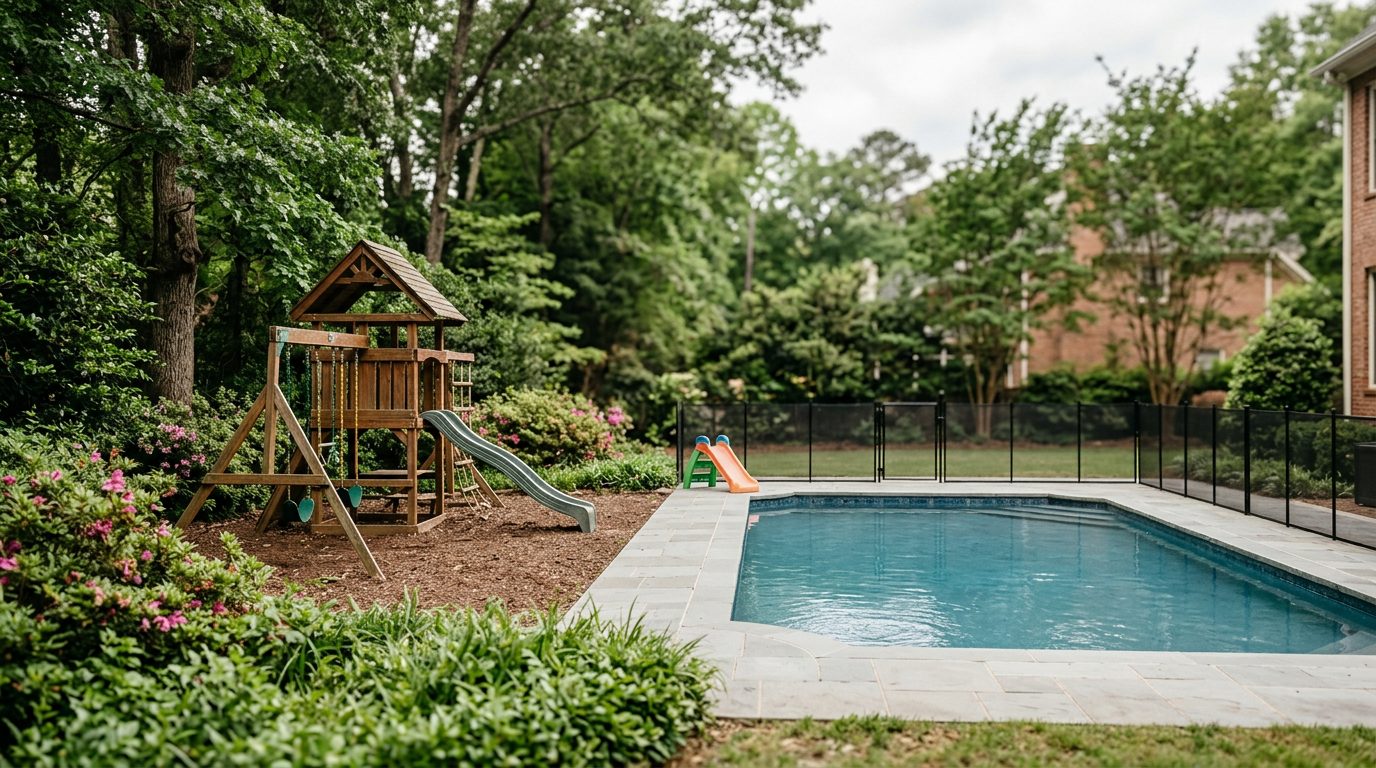
The condition draws children in. Examples include an unfenced pool or a piece of heavy machinery.
The phrase describes a type of situation. It is not a finding that anyone is at fault. A dangerous thing that appeals to children does not decide a case by itself. Courts look at the whole picture: what the condition was, who knew about it, what precautions existed, and how the child came to be there.
This page explains how the doctrine works in plain terms. It does not predict how any particular claim will turn out.
If your child was hurt on property someone else controls, our team can talk through the facts with you in a free, confidential first consultation. Talk it through with our team — the first consultation is free, confidential, and carries no obligation.
Where the attractive nuisance doctrine comes from
The doctrine grew out of court decisions over many years.
The reasoning is simple. Children do not always understand danger the way adults do. A young child may see a swimming pool as a place to play, not as a risk of drowning. Courts have long treated that gap as a reason to examine how an owner guarded the property.
The doctrine is discussed through court decisions, so the exact test can differ from state to state. That is why this page treats the common questions as a guide, not a fixed formula.
In Georgia, the starting point for injuries on land is the state’s premises liability statutes. Those laws set the basic duty an owner or occupier owes to people on the property.
The elements courts look at in an attractive nuisance claim
Courts that use the doctrine often ask the same kinds of questions. Treat this list as a guide, not a Georgia checklist.
- The condition. Is something on the property dangerous, and would a child likely find it appealing?
- Knowledge. Did the owner know about the condition, or should the owner have known?
- The child’s understanding. Did the child’s age keep the child from seeing the risk?
- Burden versus risk. Was it cheap or easy to fix or guard the condition, compared with the danger it posed?
- Precautions. Were there fences, locks, pool covers, alarms, warning signs, or removal of the hazard?
Each question is a fact question. A judge or jury weighs evidence on each one. The outcome depends on the facts of the case.
A common mistake is to think a hazard alone proves a claim. Courts usually ask more. They ask what was done to guard the hazard, and whether those steps were reasonable.
Attractive nuisance versus private nuisance
Examples include constant loud noise, a strong odor from a neighbor’s operation, or water that keeps running onto someone else’s land.
Private nuisance focuses on ongoing harm to how someone uses their land. The complaint is usually that another person’s activity keeps interfering with daily life.
Attractive nuisance focuses on a child who is hurt by a dangerous condition on the land. The question is not whether a neighbor was bothered. The question is whether a child was injured because a hazard was left unguarded.
People often mix up the two terms, and the mix-up causes real confusion. When a child is hurt, the claim centers on the injury and the condition that caused it. Noise and odor cases do not fit that situation. Knowing the difference helps families ask the right questions from the start.
Common examples of attractive nuisances
Common examples answer the question “Can you give me an example of a nuisance?” In the attractive nuisance setting, these conditions often come up:
- Swimming pools and hot tubs, especially those without fences, covers, or alarms
- Unfenced construction sites, open excavations, and stacked building materials
- Abandoned buildings, open wells, and unsecured structures
- Heavy machinery, farm equipment, and vehicles that children can reach
- Retention ponds and other water hazards on residential or commercial land
A list like this does not decide a case. Each item still has to be measured against the questions above. A fence that was in place, a locked gate, or a warning sign may matter a great deal.
Many injuries from these conditions involve broken bones, head injuries, or spinal injuries. When that happens, the medical picture matters as much as the property picture.
How attractive nuisance fits within Georgia premises liability law
Georgia premises law starts with the owner’s duty. Under O.C.G.A. § 51-3-1, an owner or occupier who invites people onto the land for a lawful purpose is liable for injuries caused by a failure to use ordinary care in keeping the premises and approaches safe.
The law also sorts people by their status on the land. O.C.G.A. § 51-3-2 defines a licensee as a person who is neither a customer, a servant, nor a trespasser, has no contract with the owner, and is permitted, expressly or impliedly, to go on the land merely for his own interests, convenience, or gratification. Under that section, the owner is liable to a licensee only for willful or wanton injury.
A child who entered without permission may still be part of the analysis. The facts decide how a court classifies the child and what duty the owner owed.
Georgia’s fault-sharing rules matter too. Under O.C.G.A. § 51-12-33, a judge reduces damages in proportion to the injured person’s percentage of fault. A plaintiff who is 50 percent or more responsible is not entitled to receive any damages. That is why a parent’s conduct, or someone else’s, can come up.
Ugwonali Law Group handles premises liability matters, including unsafe-property injuries, slip and falls, and trip and falls. The firm’s premises liability overview covers that broader practice area.
Not sure what your next step is?
Talk it through with our team — the first consultation is free, confidential, and carries no obligation.
Evidence and time limits families should understand
Evidence of the condition matters early. Useful items include:
- Photographs of the condition, the fence, gates, or locks
- Warning signs, or proof that none were posted
- Maintenance records, permits, and inspection reports
- Names of witnesses and a copy of any incident report
A common mistake is waiting. Repairs or removal can change the scene, so photos and notes taken soon after an incident can be important.
Medical records matter too. Hospital care, follow-up visits with a medical doctor, and treatment for fractures, head injuries, or spinal injuries all become part of the record. Keep copies of bills, discharge papers, and work notes.
Head injuries can be easy to miss. The Veterans Affairs traumatic brain injury guidance explains that mild traumatic brain injury can produce a range of symptoms. Worsening or newly appearing symptoms, including after a motor vehicle accident, should be reported promptly to a medical provider. For spinal cord injuries, the Georgia spinal cord injury facts page covers causes, consequences, and common complications.
Time limits are strict. O.C.G.A. § 9-3-33 says actions for injuries to the person must generally be brought within two years after the right of action accrues. Minors follow a different rule. Under O.C.G.A. § 9-3-90, a child under 18 when the claim arises gets the same time as other persons after turning 18, except as another Code section provides. Because exceptions exist, the timing should be reviewed promptly rather than left to memory.
Frequently asked questions about attractive nuisance
What is attractive nuisance in simple terms?
Attractive nuisance is a legal idea about a dangerous condition that draws children in. It can matter when a child is hurt on land someone else controls.
What is the legal definition of a private nuisance?
Disputes between neighbors over how property is used can raise complicated questions, and the details of each situation matter. It often involves ongoing harm, such as noise or odor.
What are the essential elements of nuisance?
Private nuisance focuses on unreasonable interference with land use. Attractive nuisance uses the questions about the condition, knowledge, the child’s understanding, burden versus risk, and precautions.
Can a child who trespassed still have a claim?
The doctrine is often discussed in cases involving children who entered without permission. Whether a claim exists turns on the specific facts, including how the child came onto the land and what the owner knew.
Does a parent’s supervision matter?
It can.

Talking through a child’s injury on someone else’s property
If a child you love was hurt on land someone else controls, you may be facing a hospital stay, a fracture, a head or spinal injury, or a loss. You may also be trying to learn what happened and what your options are. That is a hard place to be, and you do not have to sort it out alone.
Request a free case evaluation with Ugwonali Law Group. The first consultation is free, confidential, and carries no obligation to continue. Intake staff can speak with you in English or Spanish.
This page is general information, not legal advice. Adanna Ugwonali is the responsible lawyer for this page. Ugwonali Law Group, 3400 Peachtree Road NE, Atlanta, Georgia. No result is promised for any matter.
How our team approaches these cases
Clear explanations
We explain the legal ideas and medical records in plain language so you can make informed decisions at every stage.
Focus on the injured child
We keep the child's treatment, recovery, and long-term needs at the center of every conversation.
Support for families
Our team works with parents and caregivers, in English or Spanish, through a stressful and confusing time.
Fair compensation as the goal
We work to hold the responsible party accountable and to pursue fair compensation for medical care and lasting harm.
Act early, and keep the evidence
Photos of the condition, the names of witnesses, and copies of medical records can be valuable. Avoid posting about the incident online or discussing fault with the property owner before speaking with a lawyer.
Common questions families ask
What is attractive nuisance?
Each situation depends on its specific facts.
What kinds of injuries are involved?
Serious cases often involve fractures, hospital care, traumatic brain injuries, spinal injuries, or, in the worst cases, wrongful death.
What should I bring to a consultation?
Bring any medical records, bills, photographs, and the names of people who saw what happened. Our intake team will tell you what else is useful.
What does the first call involve?
You can speak with our intake team in English or Spanish. The first consultation is confidential and comes with no obligation to continue.