

Car Accidents | Atlanta and Georgia
Chain Reaction Crashes in Georgia: Understanding Who May Share Fault
When one collision triggers a series of impacts, serious injuries can come from several directions. Ugwonali Law Group explains how these cases work, in plain language, and helps injured people and families in metro Atlanta and across Georgia understand their options.
By Adanna Ugwonali · Published November 5, 2026
In a chain reaction car accident, fault in Georgia is usually split among several drivers, not placed on just one. This guide explains chain reaction car accident Georgia fault rules in plain language, from the first impact to the deadlines that follow. Georgia uses comparative fault, so each driver’s share can reduce what that driver recovers (O.C.G.A. § 51-12-33; Quynn v. Hulsey (2020)). At 50 percent or more, a person cannot recover damages at all.
What Makes a Chain-Reaction Crash Hard to Sort Out
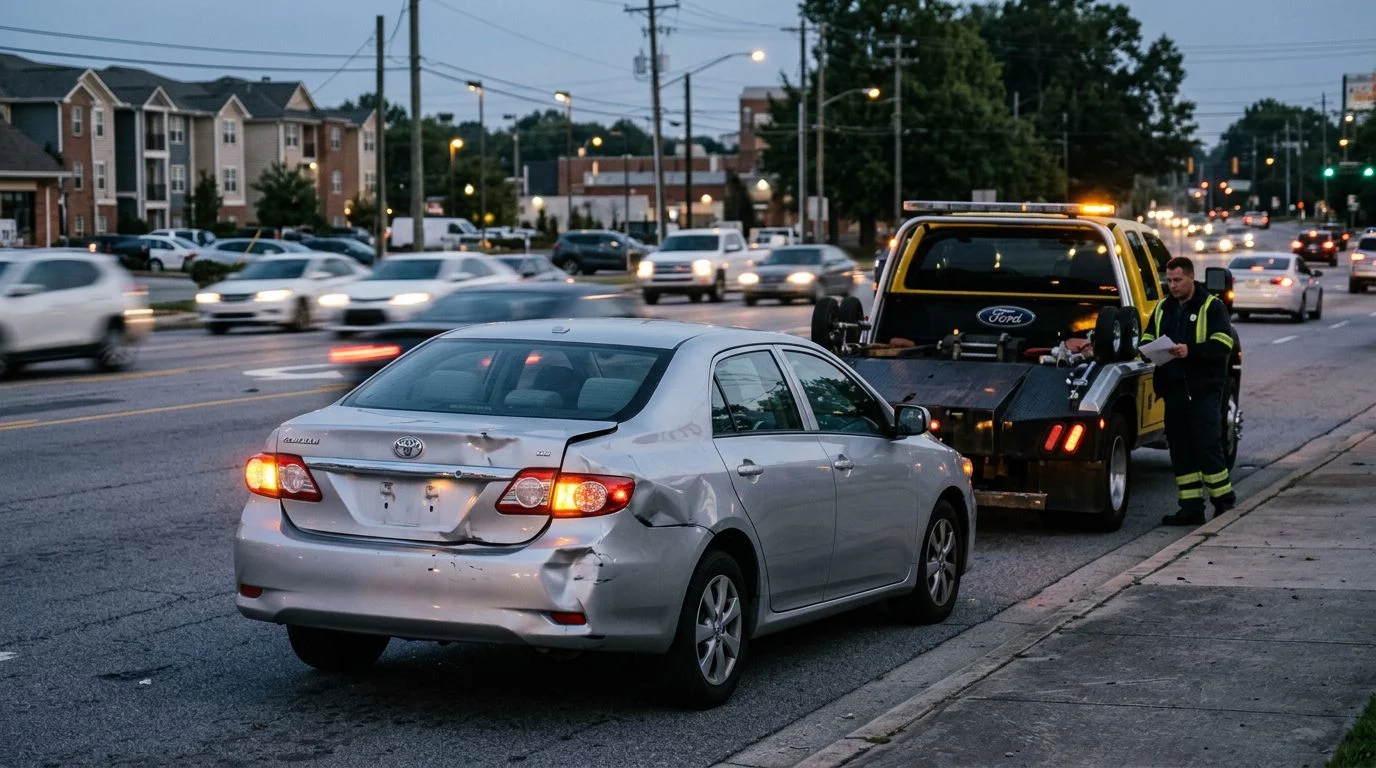
A chain-reaction crash is a collision where one impact pushes or stops vehicles into others. The cars are hit one after another, and each new impact can change the picture. These crashes happen on busy interstates and surface streets in metro Atlanta, where traffic can stop fast.
The order of impacts matters. The first collision may show who started the sequence. Later impacts may have different causes. A vehicle struck twice can carry responsibility from both events. Sorting out those steps is the first job in any fault review.
Who may be responsible for a crash often depends on the specific facts of each case. Several drivers can be involved. Each driver may have a separate insurer. A commercial carrier may also be part of the picture, and each party can take a different position.
For a broader view of how this firm approaches car accident claims, see the car accident claims overview.
If a family member was hurt in a pileup, you don't have to sort out who is responsible alone. Our team can review the facts with you in a free, confidential first consultation. Talk it through with our team — the first consultation is free, confidential, and carries no obligation.
The Lead Vehicle, the Struck Vehicle, and the First Impact
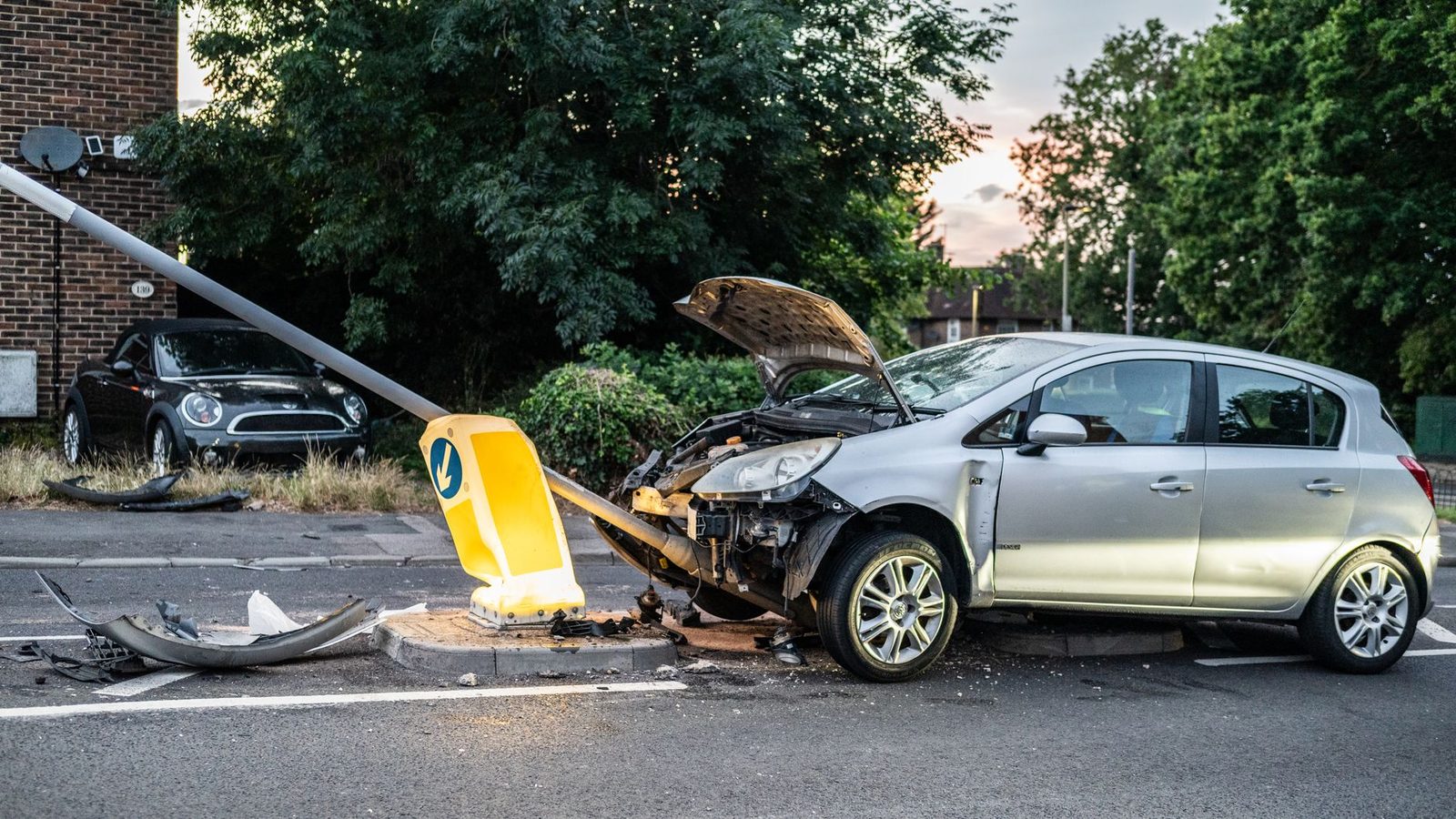
The first impact is usually the starting point for fault. It shows which driver failed to stop, yield, or control speed. Investigators and insurers often work backward from that moment.
A driver who stops suddenly is not automatically at fault. The reason for the stop matters. A sudden stop for a real hazard, such as debris or a car that cut in, is judged differently than a stop for no clear reason. Traffic conditions at the time matter too.
A vehicle pushed into another by a collision it did not cause is often treated differently from a vehicle whose driver created the hazard. Witness statements, photos, and vehicle positions help show which situation happened.
The facts of each sequence decide the result. This page describes general principles, not a prediction for any crash. Results depend on the facts, so every chain reaction case needs its own review.
Following Too Closely Under Georgia Law
Following too closely is a common reason one crash turns into several. When a driver leaves too little room, a stop ahead can become a chain of impacts. Many pileups start this way.
Insurers and investigators often look at several factors when they review a following distance. These include speed, stopping distance, weather, visibility, and how traffic was moving. The driver’s speed in the moments before the first hit can be central to that review.
A driver who was pushed into the car ahead by someone behind them may have a different analysis. The question is whether that push or the driver’s own distance caused the impact. Skid marks and final rest positions can help answer it.
Rear-end collisions give the clearest example. The driver in the back often faces the first questions. Still, the rear driver is not always the only one who contributed. The vehicle ahead may have stopped without warning, and that can matter too.
How Georgia’s At-Fault and Comparative Fault Rules Split Responsibility
Georgia divides fault by percentage, and a person’s own share reduces what they can recover. Under O.C.G.A. § 51-12-33, the judge reduces damages in proportion to the plaintiff’s own fault.
The same statute divides damages among the people found liable. Each person pays only the share assigned to them. Those damages are not joint liability, and they are not subject to contribution.
The trier of fact, meaning the person or group deciding the facts, must consider everyone who contributed to the harm. That includes people who are not named in the lawsuit. A defendant can also name a nonparty as partly at fault by giving notice no later than 120 days before trial.
The most important line is the 50 percent bar. The statute says a plaintiff who is 50 percent or more responsible “shall not be entitled to receive any damages (O.C.G.A. § 51-12-33; Quynn v. Hulsey (2020)).” How fault is described in the crash report and by witnesses matters a great deal.
When a Commercial Truck or Corporate Policy Is Involved
A commercial truck in a pileup can bring more parties into the claim. Under O.C.G.A. § 51-2-2, a person is liable for torts committed by a servant within the scope of that person’s business. This can reach the company that employed the driver.
Except for private motor carriers of passengers (nonbusiness), federal rules require motor carriers to require each driver to record the driver’s duty status for each 24-hour period, usually on an electronic logging device, under 49 C.F.R. § 395.8. Carriers must keep those records and supporting documents for at least six months from receipt. That short window is one reason to act early.
Brake condition is another focus. Under 49 C.F.R. § 393.48, all brakes must at all times be capable of operating, subject to listed exceptions. Dispatch messages, cargo papers, and inspection records can also matter.
Federal law requires minimum financial responsibility for certain interstate carriers of property, as set out in 49 U.S.C. § 31139. Which policies apply, and their limits, are found through the claims process.
Defective Vehicle Parts and Other Causes Beyond Driver Error
A brake failure, tire blowout, or steering defect can start a chain reaction even when the driver reacts well. A vehicle that cannot stop can push others into the line. Recognizing this early helps protect important evidence.
Federal brake rules, 49 C.F.R. § 393.48, show why brake condition gets close review in truck cases. A damaged vehicle or part is evidence. Ask that it not be repaired or discarded before it is inspected.
A product-related cause can open a separate line of responsibility against a manufacturer, distributor, or repair provider. That claim differs from a driver-to-driver claim. The parties, the proof, and the timing can all be different.
For a fuller explanation, see defective part car accident claims in Georgia. The goal here is recognition. Not every chain reaction involves a defect, and no defect should be assumed without evidence.
Not sure what your next step is?
Talk it through with our team — the first consultation is free, confidential, and carries no obligation.
The Evidence That Usually Shapes Fault in a Multi-Car Crash
The evidence that shapes fault most often includes the crash report, photos, video, and witness statements. Each piece shows a different part of the sequence. Together, they help show the order of impacts.
Timing matters. Video can be overwritten, and skid marks, debris, and vehicle positions can change quickly. Requests for footage and scene photos work best when they are made early.
Medical records tie injuries to the crash. Records from emergency care, imaging, and follow-up treatment by a medical doctor help show that link. Under O.C.G.A. § 51-12-1.1, medical expense damages are limited to the reasonable value of medically necessary care, treatment, or services.
That same section makes certain treatment arrangements relevant. In any claim for medical and healthcare expenses rendered under a letter of protection, the letter, all itemized charges, whether the claimant was referred for treatment under a letter of protection or other similar arrangement and, if so, the identity of the person who made the referral, and, if the provider sold the accounts receivable at less than the invoice price, the related sale information are relevant and discoverable.
In complicated pileups, a reconstruction of the impact sequence may be used. How much each piece of evidence matters depends on the facts of the case.
How Insurers Assign Fault and Why Their Findings Are Not the Final Word
Each insurer may reach its own view of fault. An insurer’s fault finding is a position in a negotiation. It is not a court ruling on who is legally responsible. Early positions are often taken before all the evidence is in.
Before giving a recorded statement, it helps to ask what is being requested and why. Early settlement offers can arrive before the full medical picture is known. Take time to understand both before answering.
Property damage and bodily injury claims can move on different timelines. For a fuller explanation, see property damage versus injury claims.
Official crash investigations are not always about blame. The NTSB accident report summary states that the agency’s role is fact-finding, and its reports do not assign fault or liability.
Deadlines to Know: Time Limits for a Georgia Claim
For most injury claims in Georgia, the lawsuit deadline is two years. Except as otherwise provided in this article, O.C.G.A. § 9-3-33 provides that actions for injuries to the person shall be brought within two years after the right of action accrues, except for injuries to the reputation, which shall be brought within one year after the right of action accrues, and except for actions for injuries to the person involving loss of consortium, which shall be brought within four years after the right of action accrues. Loss of consortium claims have four years under the same statute.
Under O.C.G.A. § 51-4-2, a surviving spouse, or a child if there is no spouse, may recover for the homicide of a spouse or parent the full value of the life of the decedent, as shown by the evidence. Don’t assume the two-year injury deadline applies to every claim from the same crash.
Claims for damage to a vehicle or other property can also follow different time limits. Other facts in a case can change the clock, so the timing should be checked against each claim.
For more on where a Georgia case is filed, see where a Georgia lawsuit is filed.

Where to Start If Someone You Care About Was Hurt in a Pileup
Start by gathering the facts you already have. A pileup can leave a family juggling hospital visits, calls from several adjusters, and questions about the crash. That is a hard place to research from, and you are not expected to have every answer yet.
Three decisions usually come first. One is how to respond to insurers for several vehicles. Another is how to keep medical records, bills, and the crash report in one place. The third is what coverage each at-fault party may have.
Who is at fault in a chain reaction car accident in Georgia?
Fault can be split among several drivers by percentage. Each share is based on the facts of the crash.
Can I recover damages if I was partly at fault?
Georgia reduces damages by your own percentage of fault (O.C.G.A. § 51-12-33; Quynn v. Hulsey (2020)). A person who is 50 percent or more responsible cannot recover damages.
How long do I have to file a lawsuit after a crash in Georgia?
For most injury claims, the deadline is two years from the injury. Wrongful death and property damage claims can follow other timing rules.
Can a trucking company be liable for its driver’s crash?
A business can be liable for a worker’s wrongful acts done within the scope of the business. Each case turns on its own facts.
If you are reading this while a family member is in the hospital, you do not have to work out who is responsible alone. Ugwonali Law Group offers a free, confidential first consultation, with no obligation to continue. Reach out to the team at 3400 Peachtree Road NE, Atlanta, or request a free case evaluation at https://www.attorneyadanna.com/contact. Intake is available in English or Spanish.
This page is general information, not legal advice. Adanna Ugwonali is the responsible lawyer for this page at Ugwonali Law Group, 3400 Peachtree Road NE, Atlanta.
How we help people after a multi-vehicle crash
Plain-language education
We explain the legal and medical steps in terms you can follow, so you know what to expect at each stage.
English or Spanish
Our intake team speaks with clients in English or Spanish from the first call.
Free first consultation
Your first consultation is free, confidential, and comes with no obligation to continue.
Based in Atlanta
Ugwonali Law Group is located at 3400 Peachtree Road NE, Atlanta, Georgia, and serves clients across metro Atlanta and statewide.
Focused on real injuries
We focus on serious injuries that involve hospital care, treatment by a medical doctor, fractures, brain and spinal injuries, and wrongful death.
Get medical care, even if you feel 'mostly fine'
Seeing a medical doctor soon after the crash creates a record of your condition and helps your health come first.
Who may be involved in a chain reaction crash
The first driver
The initial collision often sets off the chain. Its driver's actions, speed, and attention can be part of the story of how the crash unfolded.
Drivers who follow too closely
In many multi-vehicle crashes, one or more drivers strike a vehicle ahead of them after the first impact. Skid marks, vehicle positions, and dash camera footage can help show the sequence.
Commercial and truck drivers
Large trucks and commercial vehicles sometimes play a role in these crashes. Company records, driver logs, and insurance information may be relevant to the investigation.
Injured in a chain reaction crash?
Talk with our team at Ugwonali Law Group, 3400 Peachtree Road NE, Atlanta. Your first consultation is free, confidential, and carries no obligation to continue.