

Georgia Car and Truck Crash Claims | Atlanta and Statewide
Vehicle Damage After a Serious Georgia Crash: Understanding Your Timing
When a crash leaves you with a hospital stay, a fracture, or a lasting injury, the paperwork for your car can feel like one more thing to manage. Here is a plain-language guide to how the pieces fit together.
By Adanna Ugwonali · Published November 24, 2026
After a crash leaves your car wrecked or a family member’s vehicle totaled, one question comes up fast: how long do you have to file a car accident property damage claim? For a lawsuit over damage to a vehicle, Georgia generally allows four years. Under O.C.G.A. § 9-3-31, actions for injuries to personal property must be brought within four years after the right of action accrues.
That is only one clock. Injury claims, insurance claims, and lawsuits each run on their own timing. This guide explains each one in plain language so you can track what matters after a serious crash.
The Short Answer: Generally Four Years for a Property Damage Lawsuit in Georgia
Georgia generally gives you four years to sue for damage to a vehicle or other personal property in a car accident (O.C.G.A. § 9-3-31). Write that date down first. It is your reference point for every other deadline.
The four-year rule covers injury to property, such as a car, a fence, or the contents of a vehicle. It is separate from how your insurance claim is handled.
This guide focuses on serious crashes. That means crashes that cause real injuries requiring medical treatment, crashes that total a vehicle, or crashes that result in a death, where another driver caused the wreck. The details of any one claim depend on the facts.
If you're juggling repairs, medical care, and claim paperwork after a serious crash, our team can talk through your deadlines with you. Talk it through with our team — the first consultation is free, confidential, and carries no obligation.
Property Damage Deadline vs. Injury Deadline: Why Georgia Treats Them Differently
Georgia generally gives injury claims a shorter window of two years, so the property and injury deadlines are not the same. Under O.C.G.A. § 9-3-33, actions for injuries to the person must be brought within two years after the right of action accrues. Claims involving loss of consortium have four years under the same section.
A serious crash can create both kinds of claims. The car damage has one clock. Any injury has another. Tracking only one date can lead to missing the other. Because the injury clock is shorter, many people mark it first. For the broader injury timeline, see our Georgia car accident claims guide.
What Counts as Property Damage After a Car Accident
Property damage after a car accident covers more than the car’s body panels. In a serious crash, the list often includes these items:
- The vehicle: body panels, frame, glass, wheels, and mechanical damage from the impact.
- Personal belongings: phones, car seats, laptops, tools, and other items inside the car.
- Other property: guardrails, fences, utility poles, mailboxes, and landscaping.
- Loss of use: rental costs or other transportation while the car is out of service.
- Total losses: when repair costs exceed the car’s value, the insurer works out a value for the car instead of paying for repairs.
Georgia law says necessary expenses that follow from an injury are a legitimate part of the damage estimate, as stated in O.C.G.A. § 51-12-7. Keep receipts for towing, storage, and rentals. Those records show what the crash cost you.
Insurance Claim vs. Lawsuit: Two Different Calendars
An insurance claim is a request for payment. A lawsuit is a court case with a filing deadline. Most people start with an insurance claim. A lawsuit comes later, only if the claim does not resolve.
The at-fault driver’s liability coverage usually handles property damage claims against that driver. That insurer may pay without any lawsuit. Still, the lawsuit clock keeps running in the background.
Your own collision coverage may also pay for repairs first, depending on your policy. Ask your insurer how it handles reimbursement. Keep the claim number and the adjuster’s name in one place. Write down every call, including the date and what was said.
Reporting the Claim and Documenting the Damage
Report the crash to the right agency first, then start a written record of the damage. Under O.C.G.A. § 40-6-273, a driver in an accident resulting in injury, death, or property damage to an apparent extent of “$500.00 or more” must immediately give notice. Inside a city, notice goes to the local police. Outside a city, it goes to the county sheriff or the nearest state patrol office.
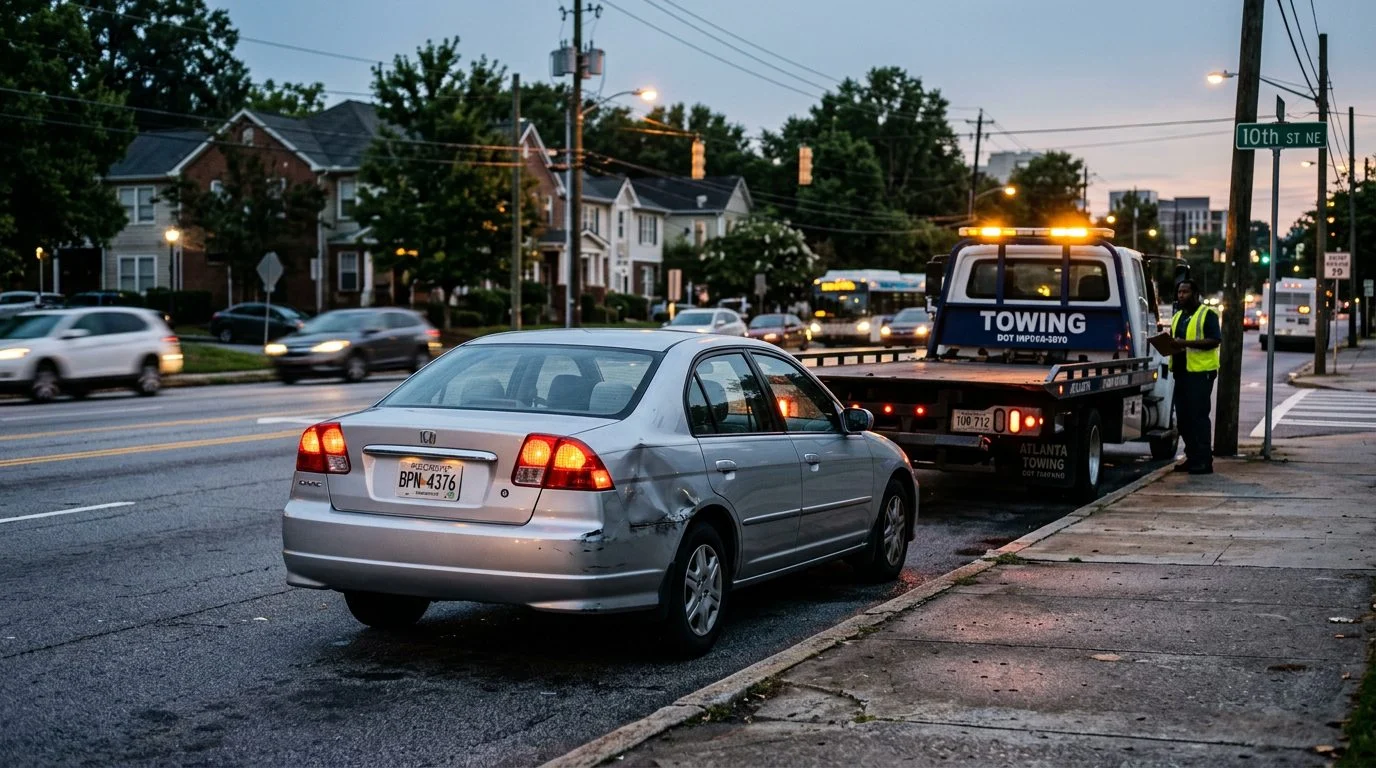
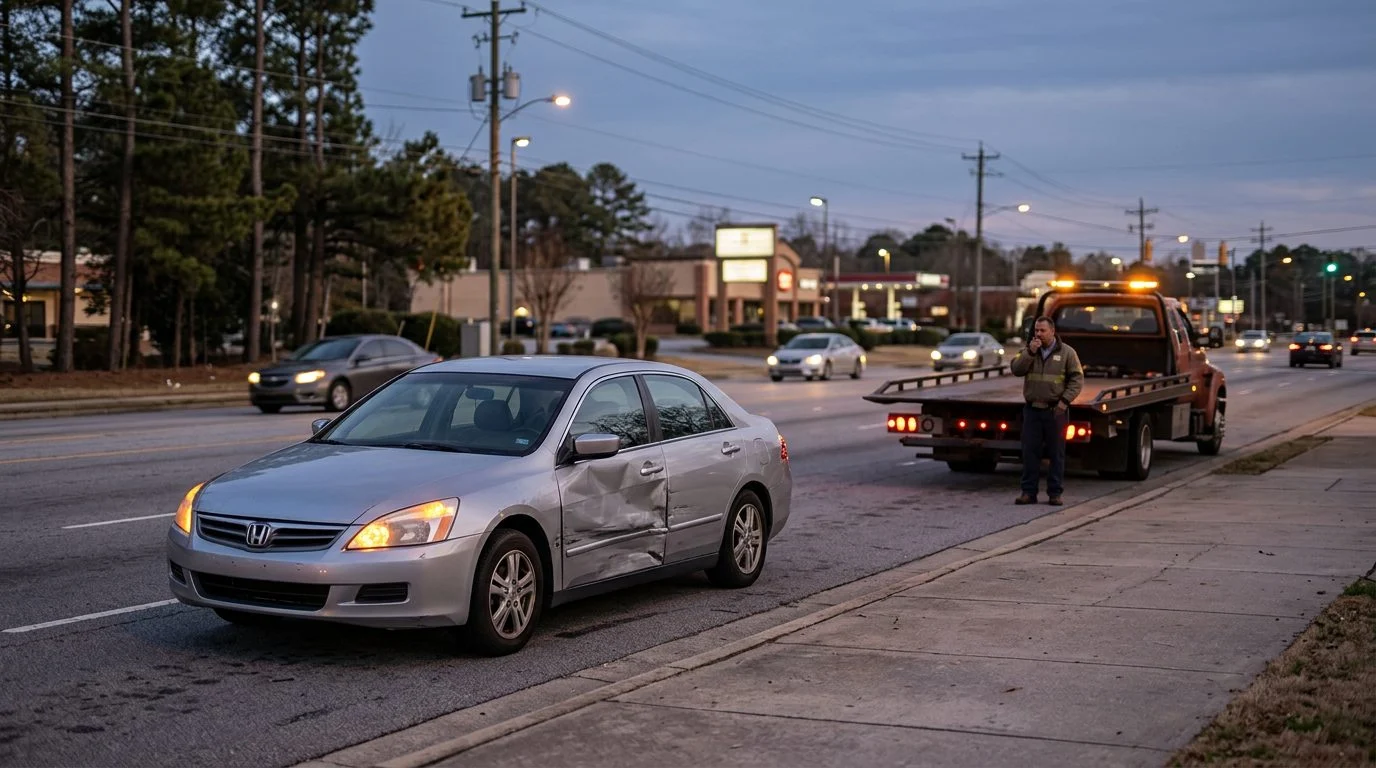
Then document everything. Get the crash report number. Photograph the car, the scene, and any damaged property from several angles before repairs or towing. Keep receipts for towing, storage, rental, and out-of-pocket costs.
Write down the time, the place, the weather, the road conditions, and what each driver said. Do this while it is fresh. If the injured person can’t do it, a family member can help.
Getting Repair Estimates and Comparing Valuations
Get a written repair estimate, and ask the insurer for its estimate in writing too. Two estimates often differ on parts prices, labor hours, or paint charges. Compare them line by line. Ask why each item is included or left out.
For a total loss, ask how the insurer reached its value. Ask which comparable vehicles it used, what adjustments it made, and what deductions apply. Diminished value, the drop in worth a repaired car may carry, is a separate question to raise early.
Keep copies of every valuation document. Put them in one folder with the crash report, photos, and receipts. A single file makes later questions easier to answer.
Not sure what your next step is?
Talk it through with our team — the first consultation is free, confidential, and carries no obligation.
Common Challenges in Property Damage Claims
Delays are a frequent frustration. An insurer may take time to review damage, especially when the injured person is still in treatment and the full picture isn’t clear.
Disagreements also come up. One common dispute is the scope of repairs, such as whether a hidden frame problem belongs in the estimate. Another is the car’s pre-crash value, especially for older vehicles or cars with aftermarket parts.
Pressure to accept a quick payment is another challenge. A fast offer may come before the full damage is known. Hidden mechanical problems or rental costs may still be growing. Read every document carefully before you sign a release or accept a payment.
What to Say and Avoid When Filing an Insurance Claim
Stick to facts you saw and heard. Give the time, the place, the vehicle damage, and any visible injuries. Avoid guessing about speed, who was at fault, or how the crash happened. A guess can be quoted back to you later.
Do not estimate the value of damage you have not seen repaired. If treatment is still going on, say you are still being evaluated. Saying “I’m fine” can be misread if symptoms appear later.
Describe medical care accurately. Tell the insurer when a medical doctor has seen you, and what treatment you’ve had. Give dates. Keep records of every appointment.
Write when you can. Email and letters create a record. Keep a copy of every message you send and receive.
How Insurance Works When the Crash Was Not Your Fault
When another driver caused the crash, that driver’s liability insurance is usually the main source for property damage payment. Your own collision coverage can pay for repairs first. Your insurer may then seek reimbursement from the at-fault driver’s insurer.
Liability coverage has limits.
Georgia also reduces damages by a person’s share of fault. Under O.C.G.A. § 51-12-33, a judge reduces damages in proportion to the plaintiff’s percentage of fault. If the plaintiff is 50 percent or more responsible, the plaintiff cannot recover damages. The facts of the crash matter for this reason, so keep notes that show what each driver did.
Why Missing the Deadline Can Cost You the Claim
Once the deadline passes, you may lose the right to sue for the damage. That can happen even when the facts are strong.
Put two dates on your calendar from the crash date. Mark four years for property damage under O.C.G.A. § 9-3-31 and two years for personal injury under § 9-3-33, except one year for injury to reputation and four years for actions for injuries to the person involving loss of consortium. Set reminders months ahead of each date.
When someone is hurt, tracking dates can be hard. A family member can keep a shared folder, log calls, save bills, and note appointments. Keep the crash report number in that folder too.
Quick Answers
How long do I have to sue for car damage in Georgia?
Georgia generally allows four years for an action for injury to personal property, such as a vehicle.
Is the injury deadline the same?
No. Georgia generally requires injury claims to be brought within two years.
What if I’m partly at fault?
Georgia reduces damages by your percentage of fault, and you recover nothing at 50 percent or more (O.C.G.A. § 51-12-33; Quynn v. Hulsey (2020)).
Talk With Ugwonali Law Group About Your Crash and Your Deadlines
If you are managing repairs, medical visits, and paperwork for someone you care about, you don’t have to track every deadline alone. Ugwonali Law Group represents people hurt in truck and car crashes, unsafe-property injuries, slip and falls, and wrongful death cases. The firm serves Atlanta, Fulton County, Clayton County, and statewide Georgia. Intake is available in English and Spanish.
To talk through your property damage and injury deadlines, reach out on our contact page. In Spanish, the firm says: La consulta inicial es gratuita, confidencial y sin compromiso de continuar.
This page is general information, not legal advice. Adanna Ugwonali is the responsible lawyer for this page. Ugwonali Law Group, 3400 Peachtree Road NE, Atlanta, Georgia.
How Ugwonali Law Group Can Help
Speak with intake right away
Our intake team can sign you on during your first call, in English or Spanish, so you do not have to sort out the next steps alone.
Plain-language explanations
We walk you through the legal and medical process in terms you can follow, so you understand each step before you decide what comes next.
Attention to the whole claim
Vehicle damage, medical treatment, and injury claims are often connected. Our team looks at how they fit together after a serious crash.
Serving Atlanta and Georgia
Based at 3400 Peachtree Road NE, Atlanta, the firm represents injured people and families across metro Atlanta and throughout Georgia.
Do not wait to ask about your timing
Vehicle repair and injury care often run on different schedules. Waiting to find out how the rules apply to your situation can leave you with fewer options. Talk with someone soon after the crash.
Steps to Take After a Serious Crash
Protect your medical record
Get evaluated by a medical doctor and follow the treatment plan you are given. Keep copies of bills, imaging, and discharge papers.
Document the vehicle
Photograph the damage, keep repair estimates and total-loss valuations, and save towing and rental receipts.
Gather crash details
Write down what you remember, and keep the police report number, the other driver's insurance information, and names of witnesses.
Ask for a free case review
Our team can explain how your vehicle claim and injury claim may connect, and what information will be needed. The first consultation is free, confidential, and carries no obligation to continue.