

Premises Liability · Metro Atlanta & Statewide Georgia
Hit Your Head in a Fall on Someone Else's Property? Here's What to Know
Head injuries from slips, trips and falls can be serious, and they are often hard to see at first. Ugwonali Law Group helps injured people and families understand the medical and legal process, with a free case review.
How We Can Help You Get Started
Free
Case review and first consultation
EN / ES
Intake in English or Spanish
Atlanta
3400 Peachtree Road NE, Atlanta, Georgia
Georgia
Serving metro Atlanta and communities statewide
By Adanna Ugwonali · Published November 2, 2026
A head injury from a fall on property in Georgia can be serious, even when it looks minor at first. In most of these cases, the central question is whether the property owner kept the area reasonably safe. This guide explains how these claims work, the deadlines and fault rules that apply, and what to gather after a fall. Ugwonali Law Group represents injured people across metro Atlanta and statewide in Georgia.
What Premises Liability Means When a Fall Causes a Head Injury
Premises liability is the duty property owners have to keep their property reasonably safe for people who come in for a lawful reason. Georgia law makes an owner or occupier liable, when it induces or leads others by express or implied invitation to come upon its premises for any lawful purpose, for injuries caused by its “failure to exercise ordinary care in keeping the premises and approaches safe.” See O.C.G.A. § 51-3-1.
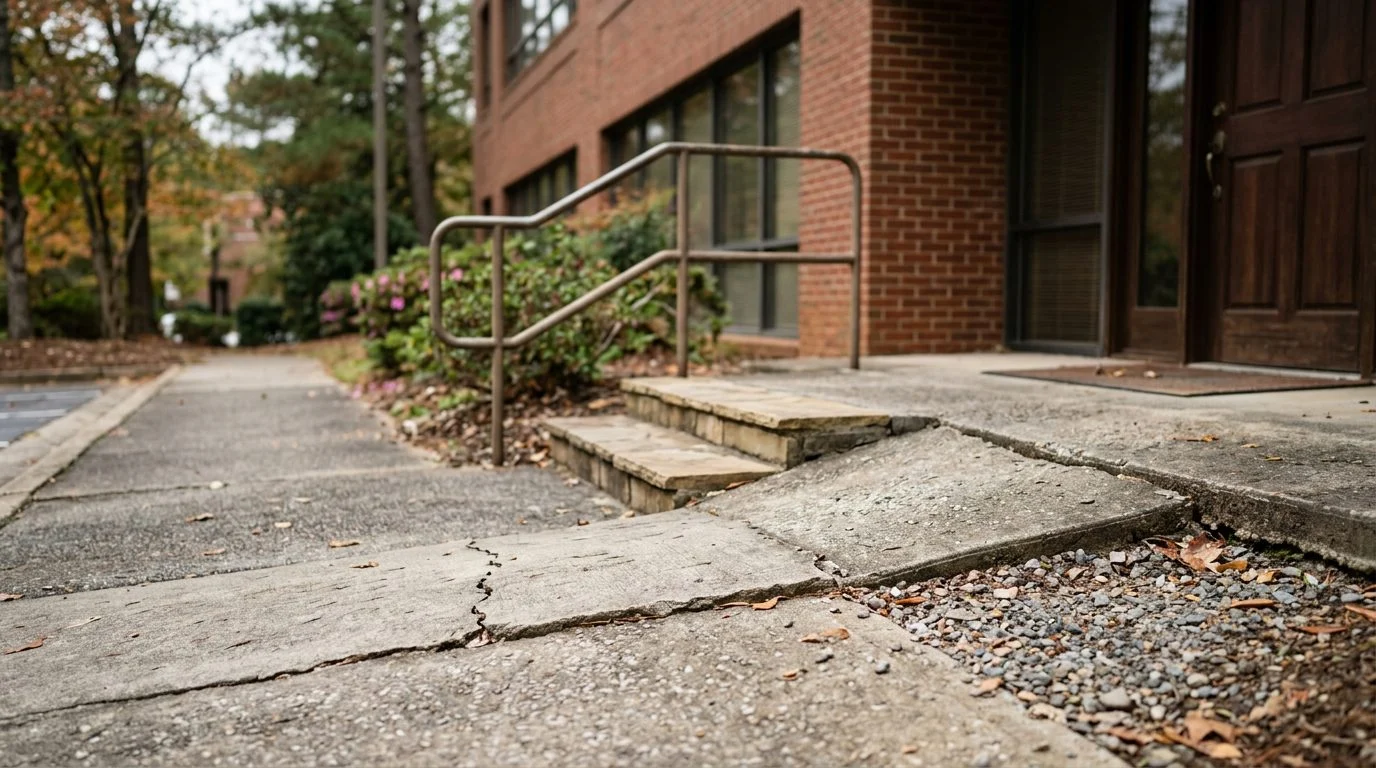
Falls often happen in grocery and retail stores, parking lots, apartment common areas, stairwells and walkways. Common hazards include wet or unmarked floors, broken stairs or railings, uneven pavement, poor lighting and debris. OSHA walking-working surfaces guidance addresses slip, trip and fall hazards.
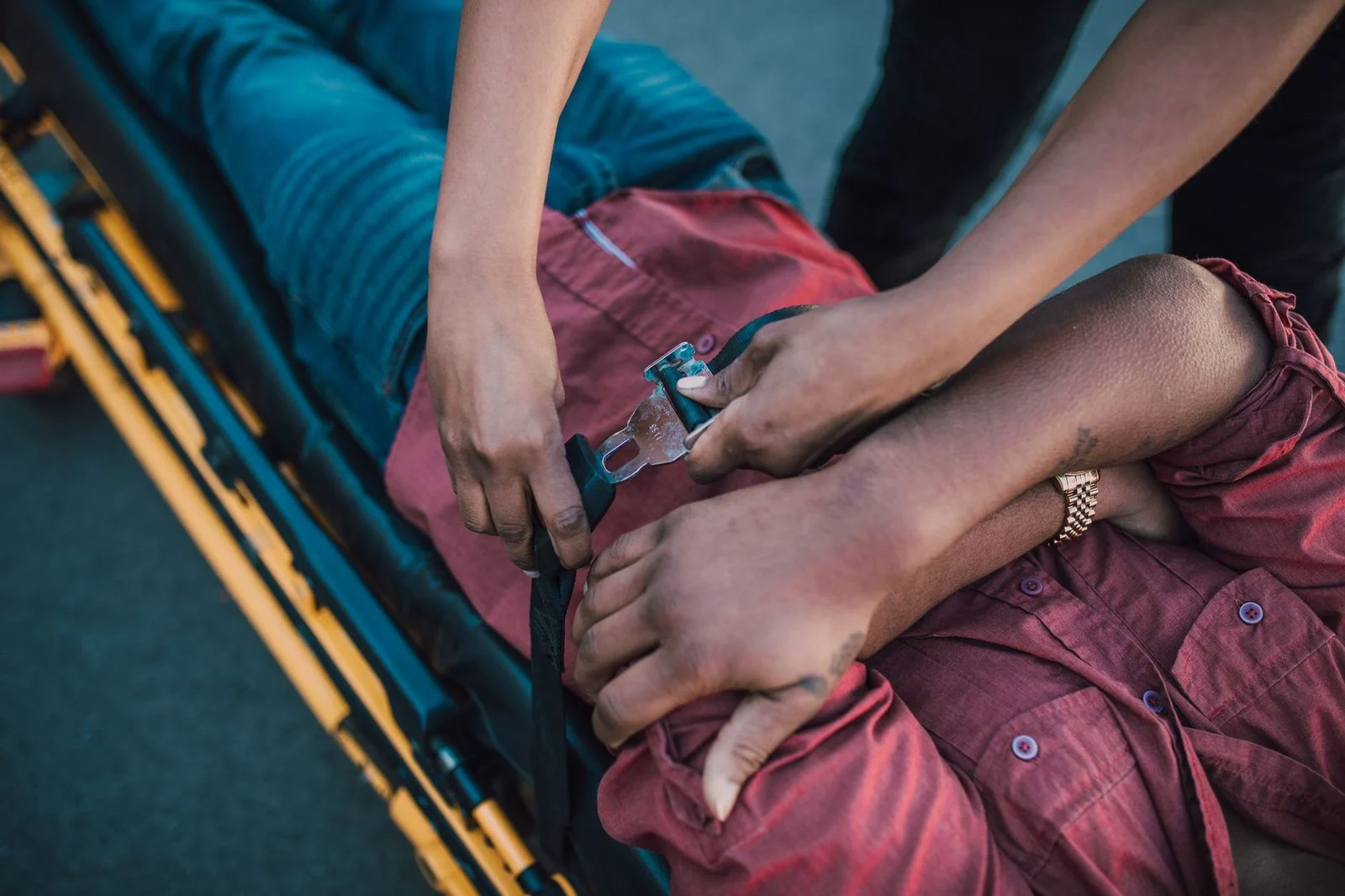
Head injuries from falls can include concussion, traumatic brain injury, skull fracture and bleeding inside the skull. Any of these can require hospital care.
If a fall on a store floor, in a parking lot or in an apartment common area left you with a head injury, you may have a claim, and our team can talk it through with you. Talk it through with our team — the first consultation is free, confidential, and carries no obligation.

Why Head Injury Symptoms Can Appear Days or Weeks Later
Head injury symptoms do not always appear right away. Some people feel fine for a while before problems start. Watch for these changes over the following days and weeks:
- Headaches that keep coming back
- Dizziness or balance trouble
- Blurred or double vision
- Trouble with memory or focus
- Irritability, mood changes or sleep changes
- Nausea
A normal first visit does not rule out a brain injury. Tell every doctor about the fall, including any hit to the head, even if it seemed small. Follow-up visits create a record of what you still feel. Many people also notice changes at work or at home before they connect them to the fall. A simple daily note about symptoms, sleep and missed activities can help.
Get emergency care right away for a worsening headache, confusion, repeated vomiting, a seizure or loss of consciousness.
For more on how these injuries show up after a crash, read our traumatic brain injury after a crash guide.
Who May Be Responsible for a Fall on Someone Else’s Property
The property owner is often the first party to look at, but other parties can share responsibility. Possible responsible parties include:
- The property owner
- The business that runs the store, restaurant or venue
- A property management company
- A cleaning or maintenance contractor that worked in the area
- A tenant, in some situations
Who controlled the spot where you fell matters. So does who had the job of inspecting and repairing it. A hazard the owner created, or knew about after a prior complaint, is different from one that appeared minutes before the fall. Both can matter, depending on the facts.
Landlords follow a different rule. Under O.C.G.A. § 44-7-14, a landlord that has fully parted with possession and the right of possession is not responsible to third parties for damages resulting from a tenant’s negligence or illegal use of the premises. The landlord remains responsible for defective construction and for failing to keep the premises in repair.
Insurance for the at-fault party often shapes how a premises claim is handled. Knowing who insures the property can matter early.
Georgia Deadlines and Fault Rules That Affect a Head Injury Claim
Georgia law generally gives two years to file a lawsuit for injuries to the person. Under O.C.G.A. § 9-3-33, these actions “shall be brought within two years after the right of action accrues,” with some exceptions. Don’t wait to learn which deadline applies to you.
Georgia also uses a shared-fault rule. Under O.C.G.A. § 51-12-33, a person who is 50 percent or more responsible for the injury may not receive any damages. Under O.C.G.A. § 51-12-33, the judge reduces the damages otherwise awarded to the plaintiff in proportion to his or her percentage of fault, and a plaintiff who is 50 percent or more responsible for the injury or damages claimed is not entitled to receive any damages. Under the same statute, the trier of fact determines the plaintiff’s percentage of fault, and the judge then applies that percentage to the damages otherwise awarded.
Each liable party pays only its own share of the award, and that liability is not joint. Under Georgia law, the fault of everyone who contributed to the injury is considered, regardless of whether those people were or could have been named as parties. A nonparty’s fault is considered if the plaintiff settled with that nonparty, or if a defending party gives notice not later than 120 days before trial that the nonparty was wholly or partially at fault. O.C.G.A. § 51-12-33
Fault in a fall often turns on details. Examples include footwear, posted warnings, whether you were distracted, and whether the hazard was visible.
Medical Records and Evidence to Gather After a Fall
Strong premises claims rely on records that tie the fall to your injuries and treatment. Gather these items as you can:
- Emergency department notes and imaging reports, such as CT or MRI results
- Hospital admission and discharge papers
- Notes from neurology, concussion clinic or therapy visits
- A list of every provider, prescription and missed appointment, with the reason
- Photos of the hazard, lighting and signs, taken as soon as it is safe
- Any incident report the property gives you, plus names of managers who responded
- Names and phone numbers of anyone who saw the fall
- A written request to preserve surveillance video, since footage may be erased if no one asks for it
- Pay stubs or an employer letter showing missed work
- Receipts for out-of-pocket medical costs and transportation
- The shoes and clothing you wore, kept unwashed if possible
Medical costs matter in these claims. Under O.C.G.A. § 51-12-1.1, medical expense damages are limited to the reasonable value of medically necessary care. Under O.C.G.A. § 51-12-2, special damages must be proved to be recovered.
How a Premises Head Injury Claim Moves Forward
A claim usually moves through a free case review, records gathering, a demand to the insurer and, only if needed, a lawsuit.
- Free case review. You describe the fall, your injuries and your care. The first consultation is free, confidential and with no obligation to continue.
- Records and preservation. The firm helps collect medical records and incident reports. It can send requests to preserve evidence to the property owner and insurer.
- Investigation. The team reviews the hazard, prior complaints or repairs, inspection practices and the medical picture, with input from treating doctors as needed.
- Demand and negotiation. A settlement demand goes to the insurer, and negotiations follow.
- Lawsuit if needed. If a fair resolution is not reached, a lawsuit may be filed within the Georgia deadline.
Timelines vary widely because treatment and insurance responses differ. The firm explains the expected steps for each matter.
Ugwonali Law Group is located at 3400 Peachtree Road NE, Atlanta. The firm represents injured people across metro Atlanta and statewide in Georgia, with intake in English or Spanish. Adanna Ugwonali is the responsible lawyer for this page.
Not sure what your next step is?
Talk it through with our team — the first consultation is free, confidential, and carries no obligation.
Questions People Ask About Head Injury Claims From Falls
Can you fully recover from a brain injury?
Recovery differs from person to person. Treating doctors assess the outlook for each injury.
Do I need a lawyer to file a premises claim?
You can bring a claim without one. A head injury often needs medical proof, and a lawyer can help organize that proof.
What if I was partly at fault for the fall?
Georgia still allows recovery if you are less than 50 percent at fault. Your award is reduced by your share.
How long do I have to file?
Georgia law generally gives two years for injuries to the person, with some exceptions. Learn your deadline early so it doesn’t catch you off guard.
If a fall in a store, parking lot or apartment common area left you with a head injury, you may have a claim. Our team can talk it through with you in English or Spanish. You can request a free case review with Ugwonali Law Group.
Get Medical Care First
Some head injuries show symptoms hours or days after a fall, including headaches, confusion, dizziness, nausea or changes in sleep or mood. See a medical doctor promptly, even if you feel mostly fine. Medical records are also an important part of documenting your injury.
What a Head Injury Claim Often Involves
Medical Evaluation
Your treating doctors diagnose the injury, order imaging and recommend a treatment plan. Their records form the medical foundation of any claim.
Documenting the Fall
Photos of the location, incident reports, witness names and details about lighting, flooring or warning signs can help explain how the fall happened.
Identifying the Property Owner
Premises cases look at who controlled the property and what was done, or not done, to address a known hazard. Our team reviews those facts with you.
Understanding the Process
Head injury cases can take time. We explain each stage in plain language so you know what to expect and can focus on recovery.
How Ugwonali Law Group Supports You
Compassionate Listening
We understand that a head injury affects your health, your work and your family. We take time to hear your story.
Plain-Language Guidance
We explain medical terms, legal steps and the questions you may face, so you can make informed decisions.
Easy First Contact
Our intake staff can speak with you in English or Spanish and begin your free case review on the first call.
Focused Advocacy
Our attorneys focus on seriously injured people across Georgia and work to pursue fair compensation for losses.