

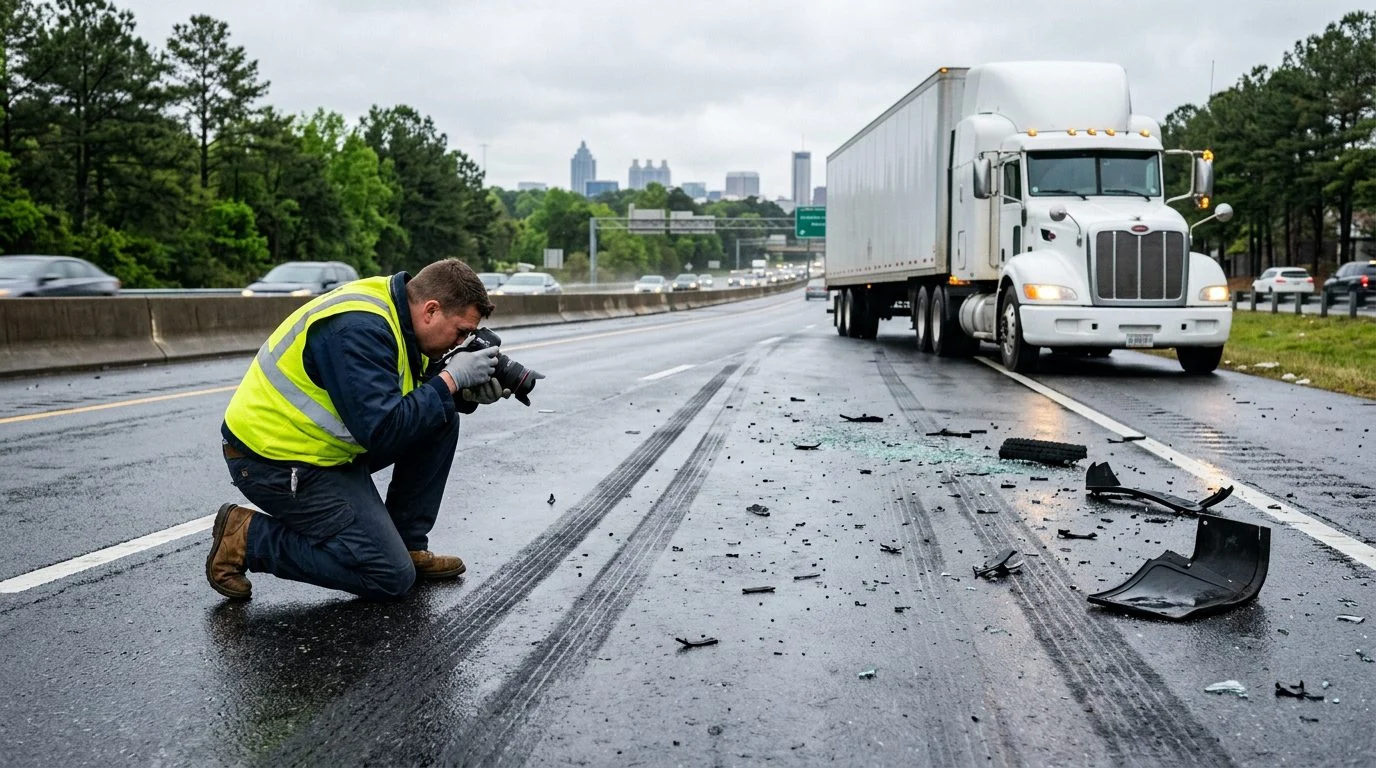
Truck Accidents | Atlanta and Georgia
Are Truck Drivers Liable for Damages After a Georgia Crash?
A truck collision can involve more than one company and more than one person. Learn how responsibility is commonly examined so you can ask the right questions.
How Ugwonali Law Group Can Help
Focused on serious injuries
The firm focuses on people hurt in truck and car crashes, including fractures, brain and spinal injuries, and wrongful death.
Plain-language guidance
We explain the legal and medical steps in terms you can follow, so you know what to expect at each stage.
English or Spanish
Our intake team can speak with you in English or Spanish, whichever is more comfortable for you.
Based in Atlanta
Ugwonali Law Group is located at 3400 Peachtree Road NE, Atlanta, Georgia, and serves clients across metro Atlanta and statewide.
By Adanna Ugwonali · Published November 22, 2026
If a truck crash has left you or someone you love hurt, you may be asking who pays. A truck driver can be held responsible for damages when careless driving causes the crash, but the answer depends on the facts of each case.
Damages are the money a court can award for harm. That can include hospital care, lost wages, future treatment, and, in a wrongful death case, the losses a family suffers. This page explains how Georgia law looks at the driver, the trucking company, and the deadlines that apply.
Short Answer: Truck Drivers Can Be Held Responsible for Damages
Yes, a truck driver can be held responsible when negligence causes a serious injury. Georgia law says that when the law requires a person to act for another’s benefit or to refrain from an act that may injure another, the injured party may recover for the breach of that legal duty if he suffers damage (O.C.G.A. § 51-1-6). Responsibility depends on how the crash happened, not only on the size of the truck. Courts look at speed, attention, and the choices the driver made on the road.
Damages come in two kinds. Special damages, such as medical bills and lost pay, must be proved (O.C.G.A. § 51-12-2). That is why bills, pay stubs, and records of care matter from the start.
If a truck crash has left you or someone you love facing hospital bills and lost pay, we can talk through what it may mean for your claim. Talk it through with our team — the first consultation is free, confidential, and carries no obligation.
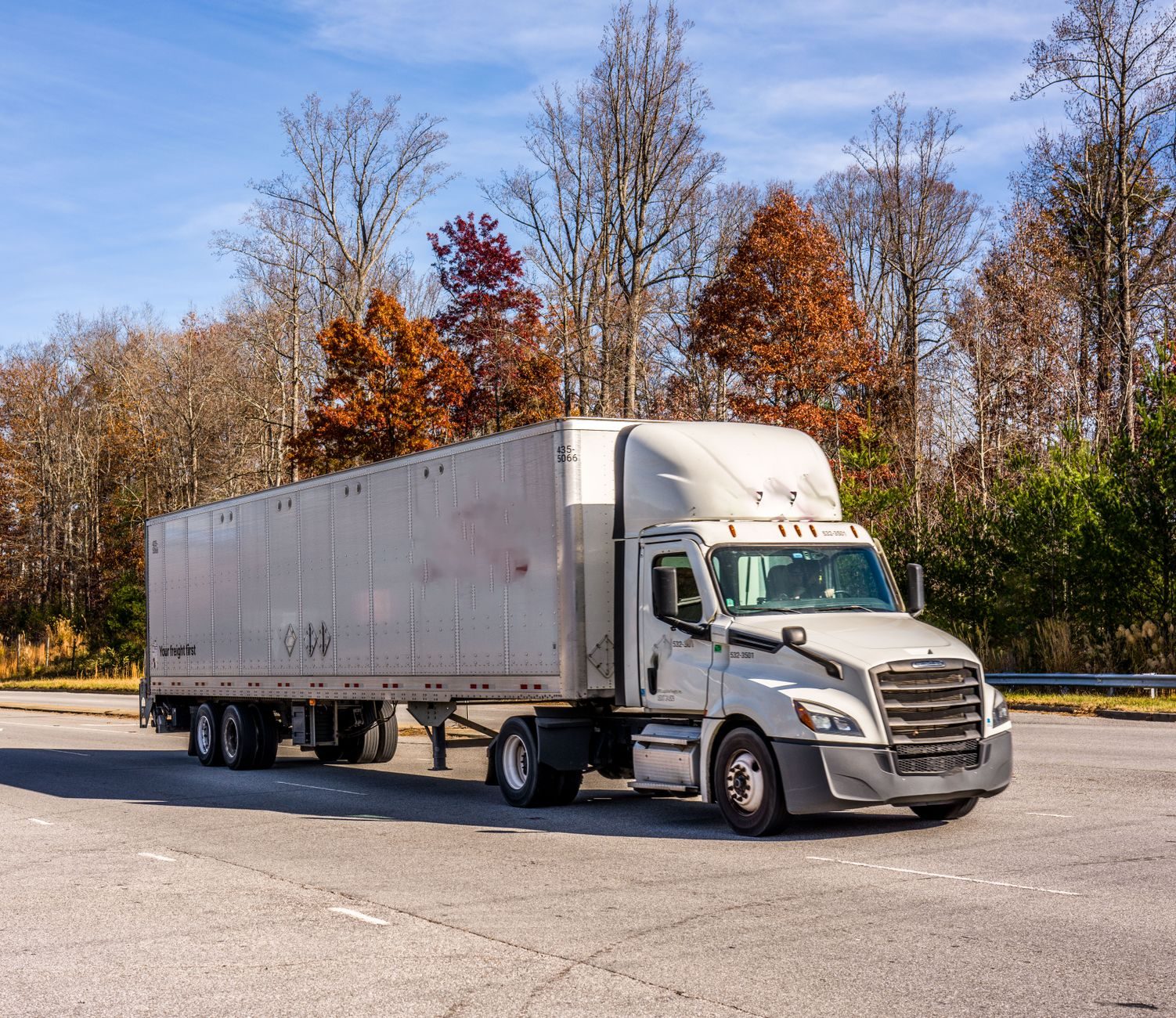
Can I Sue a Truck Driver for Hitting Me?
Yes, a person hurt in a truck crash can generally bring a claim against the driver whose negligence caused the injury. Negligence means failing to use the care an ordinarily prudent person would use in similar circumstances (O.C.G.A. § 51-1-2).
Serious truck crashes often involve drivers who speed, drive while distracted, or follow too closely. Others change lanes into traffic without checking, or drive while impaired. A claim generally asks whether the driver broke a legal duty and whether that break caused the harm. The driver can be named as a defendant personally. The claim targets the party whose negligence caused the injury, not the size of the vehicle.
When the Trucking Company Is Also Responsible
An employer is often responsible too. Georgia law makes a person liable for torts committed by a servant in the prosecution and within the scope of the business, whether committed by negligence or voluntarily (O.C.G.A. § 51-2-2). Claims for negligent hiring, training, supervision, and retention are based on the alleged negligent acts of the employer (Quynn v. Hulsey, 310 Ga. 473 (2020)). In plain terms, when a driver is working for the company and causes a crash on the job, the company may answer for that driving.
Not every driver is an employee. An employer generally is not responsible for an employee who runs an independent business and is not under its immediate direction and control (O.C.G.A. § 51-2-4). A company can still be liable for a contractor’s negligence in listed cases. One example is when it keeps the right to direct or control the time and manner of the work (O.C.G.A. § 51-2-5). Dispatch records, pay arrangements, and company instructions often show who held that control.
Negligent Hiring, Training, and Supervision Claims
A trucking company can also face claims based on its own choices. An employer must use ordinary care not to hire or keep an employee it knew or should have known posed a risk of harm. That applies where the harm was reasonably foreseeable from the employee’s tendencies (Munroe v. Universal Health Services).
Negligent supervision requires enough evidence that the employer reasonably knew or should have known of the employee’s tendencies relevant to the injuries (Novare Group v. Sarif). The Georgia Court of Appeals has also said an injured person may bring a claim against a company for negligently training an employee (Beasley v. A Better Gas Co.).
In Quynn v. Hulsey, the court held that negligent hiring, retention, supervision, and training claims rest on the employer’s own alleged negligent acts.
Federal Safety Rules Drivers and Companies Must Follow
Federal trucking rules set specific duties for drivers and carriers. Hours-of-service rules limit how long a property-carrying driver may work and drive. A driver may not drive without first taking 10 consecutive hours off duty. A driver may drive a total of 11 hours within a 14-hour period (49 CFR 395.3). The Federal Motor Carrier Safety Administration also publishes information on hours of service.
Maintenance rules apply to the company. Every motor carrier must systematically inspect, repair, and maintain its vehicles. Parts must be in safe and proper operating condition at all times (49 CFR 396.3). Carriers, except private motor carriers of passengers (nonbusiness), must maintain or cause to be maintained records for each vehicle they control for 30 consecutive days, and those records must be retained where the vehicle is either housed or maintained for a period of 1 year and for 6 months after the motor vehicle leaves the motor carrier’s control (49 CFR 396.3). Hiring rules require a carrier to check a new driver’s prior three years of driving history within 30 days of the date the driver’s employment begins (49 CFR 391.23).
A rule violation can be evidence in a claim. It does not decide a case on its own. The facts of the crash still control the outcome.
Comparative Fault, Filing Deadlines, and Other Parties
Georgia reduces damages by the injured person’s share of fault. Under the modified comparative fault rule, damages are reduced in proportion to the injured person’s fault. The person recovers nothing if they are 50 percent or more responsible (O.C.G.A. § 51-12-33). Each liable person’s share is their own liability, not joint liability. The jury also considers the fault of all persons or entities who contributed to the injury or damages, regardless of whether they were named as a party to the suit; a nonparty’s fault is considered if the plaintiff settled with them or a defending party gives notice not later than 120 days before trial that they were wholly or partially at fault.
Timing matters too. Georgia’s general deadline for injury claims is two years after the right of action accrues (O.C.G.A. § 9-3-33). Loss-of-consortium claims in injury cases have four years. Wrongful death claims have their own time limits, and waiting can affect a claim.
Other parties may share fault in some crashes. Maintenance contractors, cargo loaders, or equipment makers can be part of the picture, depending on the facts.
Frequently Asked Questions
Who can be responsible in a Georgia truck crash?
The driver can be, and the trucking company can be in some cases. Other parties whose fault contributed may also share responsibility.
How long do I have to file?
Georgia’s general deadline for actions for injuries to the person is two years after the right of action accrues (O.C.G.A. § 9-3-33; Kenneth B. Cameron v. Jmp Pizza, Inc (2026)). Wrongful death claims have their own time limits. Wrongful death claims have their own time limits.
What if I was partly at fault?
Your recovery is reduced by your share of fault (O.C.G.A. § 51-12-33; Quynn v. Hulsey (2020)). You recover nothing if you are 50 percent or more responsible.
Not sure what your next step is?
Talk it through with our team — the first consultation is free, confidential, and carries no obligation.
Talk With Ugwonali Law Group About Your Situation
If you are reading this from a hospital room, or while caring for someone after a crash, these questions can feel urgent. You don’t have to sort out who is responsible on your own. Ugwonali Law Group can talk with you about your crash in a free case review. You can reach out through our contact page.
La consulta inicial es gratuita, confidencial y sin compromiso de continuar. (The first consultation is free, confidential, and carries no obligation to continue.)
This page is general information, not legal advice. Results depend on the facts of each case. Responsible lawyer: Adanna Ugwonali, Ugwonali Law Group, 3400 Peachtree Road NE, Atlanta, Georgia.
Protect Your Evidence Early
Keep every medical record, bill, photo, and note about your crash. Write down what you remember while it is fresh. Be careful about giving recorded statements to anyone representing another party before you have talked with a lawyer.
Parties That May Be Part of a Truck Crash Claim
The truck driver
The driver's actions, such as speeding, distraction, fatigue, or failing to follow traffic rules, may be examined after a crash.
The trucking company
The carrier or employer may be connected to the crash through the driver's work, hiring, training, or supervision.
Maintenance and repair providers
Brake, tire, or equipment work performed by a third party may be reviewed if a mechanical failure played a role.
Cargo loaders and manufacturers
Improperly secured loads or defective parts can sometimes contribute to a crash, so these parties may also be looked at.