

Box Truck & Delivery Vehicle Crashes | Atlanta and Georgia
Hurt in a Box Truck or Delivery Van Crash? Talk With Our Team.
Crashes involving commercial vehicles often involve more parties, more paperwork, and more questions than a typical car accident. We take the time to explain each step in plain language, in English or Spanish.
By Adanna Ugwonali · Published November 17, 2026
If a box truck or delivery van crash has left you or someone you love seriously hurt, you may be dealing with hospital bills, lost pay, and calls from insurance companies. A box truck or delivery vehicle claim seeks payment from the people and businesses whose negligence helped cause the crash. These cases often involve several parties and several insurance policies, which makes them different from a typical car claim.
This guide explains who may be responsible, what a claim can cover, which evidence disappears first, and the deadlines Georgia sets. Our team can explain how these rules apply to a specific case during a free case review. This page is general information only.
What a Box Truck or Delivery Vehicle Claim Is
A box truck or delivery vehicle claim is a request for payment after a commercial vehicle crash causes serious injury or death.
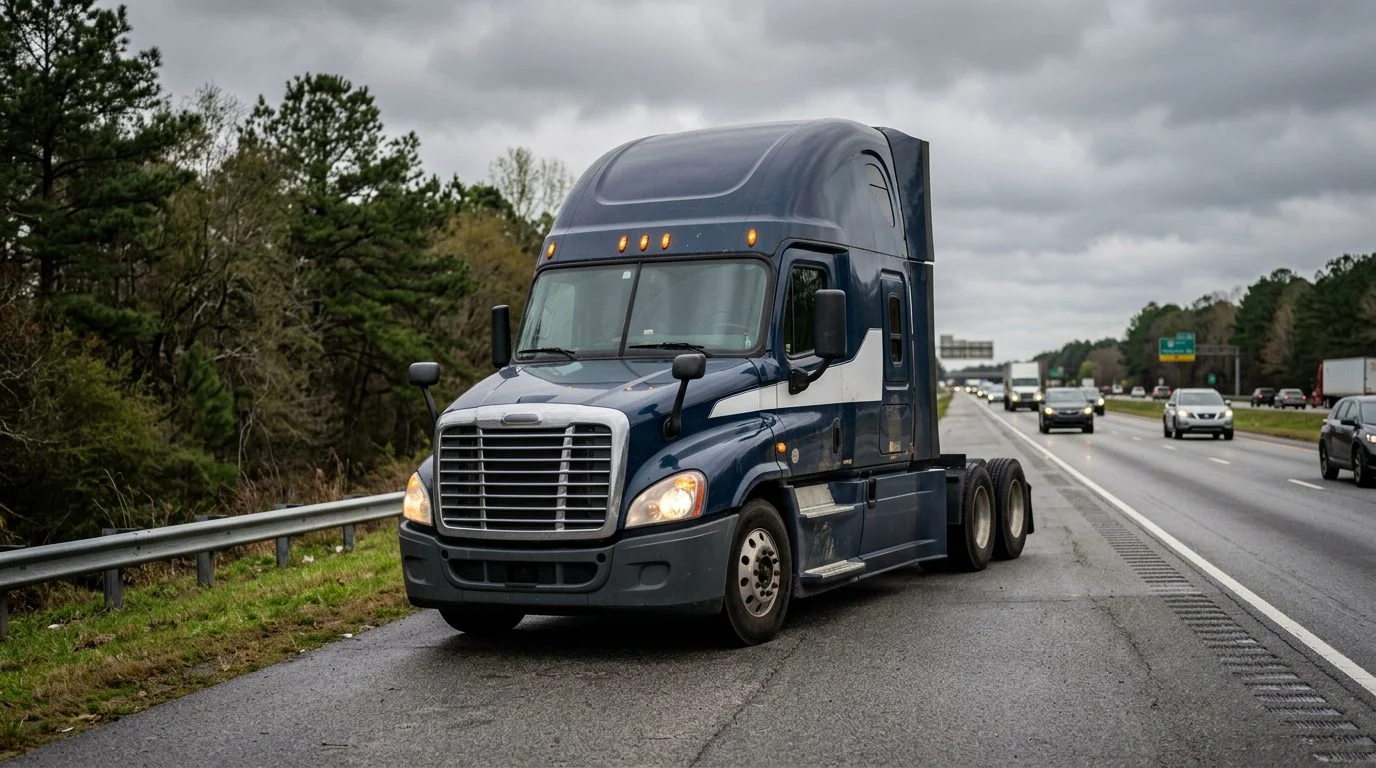
A box truck is a medium-duty cargo truck with an enclosed box behind the cab. A delivery vehicle is a box van, step van, or delivery van that a business uses to move goods. Businesses that run these vehicles usually carry commercial insurance.
The injuries in these cases are often serious. They include fractures, internal organ injuries, traumatic brain injury, spinal cord injury, and other catastrophic injuries that need hospital care. A claim can also follow a death.
Because a business often owns, leases, or dispatches the vehicle, a claim may involve more than one party and more than one policy. Our guide to truck crash claims in Georgia covers the wider picture.
If a box truck or delivery van crash has changed your family's life, our team can talk with you and review whether a claim may be possible. Talk it through with our team — the first consultation is free, confidential, and carries no obligation.
Who Can Be Responsible After a Box Truck or Delivery Van Crash
Several people or companies may share responsibility, depending on how the crash happened.
- The driver, for conduct such as speeding, distraction, or driving while too tired to drive safely.
- The employer or motor carrier, when the driver was working for it.
- The delivery company, if it dispatched the route, set the schedule, or loaded the vehicle.
- The vehicle owner or lessor.
- A maintenance contractor, if a mechanical failure played a part.
Under Georgia law, a business can be liable for torts its servant commits within the scope of the business (O.C.G.A. § 51-2-2). The Supreme Court of Georgia has also held that claims for negligent hiring, training, supervision, and retention are based on the employer’s own alleged negligent acts. In Quynn v. Hulsey, the Supreme Court of Georgia treated a claim that an employer was careless in hiring, training, supervising, or keeping an employee as resting on the employer’s own alleged negligence, separate from the employee’s conduct.
Business policies can differ from personal auto policies. Finding every policy early matters.
Georgia uses modified comparative fault, or shared fault. A judge reduces damages in proportion to the injured person’s share of fault (O.C.G.A. § 51-12-33). No damages are recovered at 50 percent or more. Each liable person pays only its own share, and those shares are not joint liability.
Driver fatigue, distraction, speeding, improper loading, and missed maintenance can each support a negligence claim.
Injuries and Losses a Claim Can Cover
A claim can seek payment for medical bills, lost income, and other losses the crash caused.
Typical items include emergency and hospital bills, surgery, rehabilitation, medication, future medical care, lost wages, and reduced ability to earn a living. Pain, suffering, and loss of enjoyment of life are part of many claims too.
Medical expenses follow their own rule. Recovery is limited to the reasonable value of medically necessary care, and the jury decides that value (O.C.G.A. § 51-12-1.1). When treatment is given under a letter of protection (a promise to pay the provider from a future recovery), that letter and the itemized charges can be discoverable in a lawsuit.
Care from a medical doctor and steady follow-up create the records that prove these losses.
The statute says the amount of recovery is the full value of the decedent’s life. When a death results from a crime or from criminal or other negligence, the personal representative of the person who died may also recover funeral, medical, and other necessary expenses from the injury and death (O.C.G.A. § 51-4-5).
Which Evidence Matters Most Early
The evidence that matters most is often the evidence that is easiest to lose.
- Electronic logging device and hours-of-service records. Carriers must keep duty-status records and supporting documents for at least 6 months from receipt (49 CFR § 395.8).
- Maintenance and inspection records. These must be kept for 1 year, and for 6 months after the vehicle leaves the carrier’s control (49 CFR § 396.3).
- GPS and telematics data, dash camera footage, and vehicle event data recorder information.
- Dispatch messages, delivery schedules, and loading records.
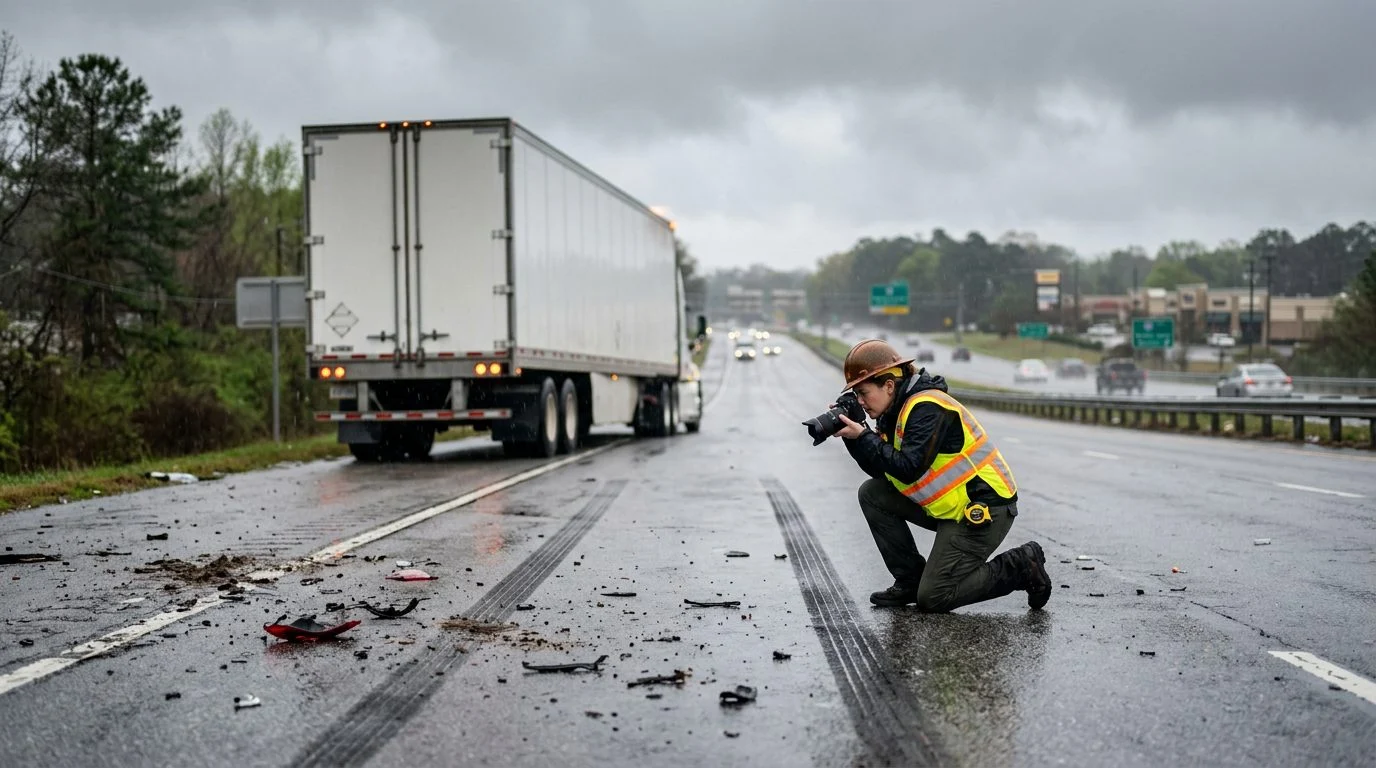
- The police crash report, scene and vehicle photos, witness contact details, and your medical records and bills.
Some electronic data can be overwritten on a set schedule. Waiting to ask can make key records harder to find. Bring what you already have to a free case review, and the team can see what to request first.
How a Box Truck Claim Usually Unfolds
A box truck claim usually moves from medical care to investigation, then to a demand to insurers. A lawsuit comes only if it is needed.
- Get medical care and keep every record. Save bills, visit notes, and records of missed work.
- Report the crash and gather details. Note the police report number, insurance information for each vehicle, and witness contact details.
- Investigate. Requests may cover commercial policy information, driver and telematics records, and written requests to preserve evidence.
- Review damages. Build a timeline of treatment and estimate losses to date and future costs.
- Demand and negotiate. Many claims are pursued through negotiation with insurers. If a fair resolution is not reached, a lawsuit may be filed.
- Litigate if needed. Discovery, mediation, and trial are possible. The National Center for State Courts notes that case-management issues can add delay, and that alternative dispute resolution may resolve disputes more quickly.
Georgia generally gives two years to sue for injuries to the person (O.C.G.A. § 9-3-33). Earlier action keeps more options open.
How Ugwonali Law Group Serves Injured Georgians
Ugwonali Law Group represents people seriously hurt in truck and car crashes, unsafe-property injuries, slip and falls, and wrongful death. The firm serves metro Atlanta and clients statewide in Georgia.
Adanna Ugwonali is the responsible lawyer for this page. The firm’s office is at 3400 Peachtree Road NE, Atlanta, Georgia.
Clients from Clayton County and Jonesboro, Fulton County, and Cobb County can review our pages on Clayton County, Fulton County, and Cobb County truck crash claims.
Intake staff can sign a client on the first call. Services are available in English and Spanish, and our team explains each step in plain language.
Not sure what your next step is?
Talk it through with our team — the first consultation is free, confidential, and carries no obligation.
Common Questions About Box Truck and Delivery Vehicle Claims
Here are short answers to common questions about these claims.
What makes a box truck claim different from a car claim?
More parties can share responsibility, business insurance may apply, and electronic records can be lost on set schedules.
How long do I have to file?
Under O.C.G.A. § 9-3-33, actions for injuries to the person generally must be brought within two years after the right of action accrues. The rule has exceptions, so timing should be reviewed early.
Under O.C.G.A. § 51-12-33 (O.C.G.A. § 51-12-33), when a plaintiff is to some degree responsible for the injury or damages claimed, the judge reduces the amount of damages otherwise awarded to the plaintiff in proportion to his or her percentage of fault, but the plaintiff shall not be entitled to receive any damages if the plaintiff is 50 percent or more responsible for the injury or damages claimed.
What is the average settlement against a semi truck?
No one can predict a figure. Each case turns on injuries, medical costs, lost income, and fault.
How much of a settlement will I keep?
That varies with the case and the terms you agree to. Our team can walk you through those terms during a free consultation.
Talk With Our Team About Your Box Truck Crash
If a box truck or delivery van crash has put you or your family in this spot, you don’t have to face the medical bills and insurance calls alone.
Maybe a parent is in the hospital, a spouse is recovering at home, or a family is planning a funeral while unfamiliar insurance adjusters call. When you’re ready, you can call for a free case review, request a free case evaluation, or chat with our intake team in English or Spanish.
The initial consultation is free, confidential, and comes with no obligation to continue. La consulta inicial es gratuita, confidencial y sin compromiso de continuar.
Responsible lawyer: Adanna Ugwonali, Ugwonali Law Group, 3400 Peachtree Road NE, Atlanta, Georgia. This page is general information only.
What Sets These Cases Apart
More Parties Involved
A delivery or box truck crash can involve the driver, the vehicle owner, the employer, and other businesses, each with its own insurance.
Business Records Matter
Logs, dispatch notes, and maintenance histories can shape how a claim is investigated, and they do not always stay on file for long.
Commercial Insurance May Apply
Many delivery and commercial vehicles carry business policies that differ from personal auto coverage. We help you understand what may be available.
Focus on Your Recovery
Serious injuries call for medical care first. We work to keep the legal process clear so you can concentrate on getting better.
Before You Speak With an Insurance Company
Adjusters for the other side may ask for a recorded statement soon after a crash. Call us before you give one, and keep copies of your medical records, bills, and photos of the scene and vehicles.
How We Help After a Delivery Vehicle Crash
1. Free Case Review
Call or chat with our intake team. The first consultation is free and confidential, with no obligation to continue.
2. Clear Explanation
We explain the medical and legal process in plain terms, so you know what to expect at each stage.
3. Investigation
We look into the vehicles, the companies involved, and the records that may help document what happened.
4. Ongoing Updates
Our team keeps you informed as your case moves forward and answers your questions along the way.