

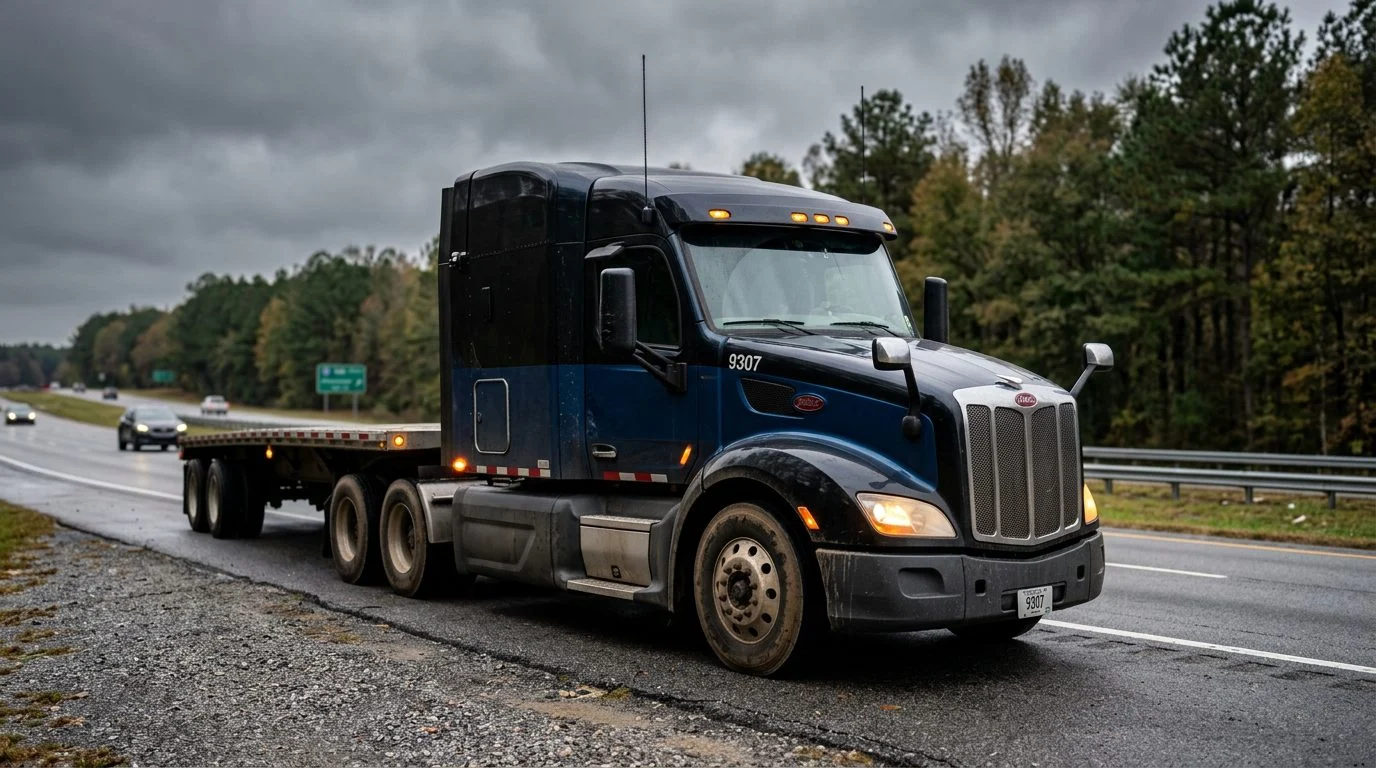
Atlanta, GA | Truck Accident Injury Claims
Hurt in a Truck Crash? Get Clear Answers About Your Injury Claim.
Ugwonali Law Group helps people with serious injuries from commercial truck collisions across metro Atlanta and Georgia. Learn how the process works, what your options are, and how we can help, starting with a free, confidential case review.
Why Clients Start With Us
Free
Case reviews with no obligation to continue
English & Spanish
Intake team available on the first call
Atlanta
Office at 3400 Peachtree Road NE
By Adanna Ugwonali · Published November 4, 2026
A truck accident injury compensation claim asks the people responsible for a semi-truck crash to pay for the harm it caused. In Georgia, that harm can include medical bills, lost income, and other losses. Families can also bring wrongful death claims after a fatal crash. This guide explains who may be responsible, which insurance may apply, what affects value, and what to do first. It’s written for injured people and families who didn’t choose this situation and are dealing with hospital care, time off work, and insurance calls.
What Is a Catastrophic Injury Claim From a Semi-Truck Crash?
A catastrophic injury claim seeks compensation for serious harm with lasting or permanent effects, or for a death. Semi-truck crashes can cause injuries like these.
Common examples include:
- Traumatic brain injury
- Spinal cord injury
- Multiple fractures or surgeries
- Amputation
- Severe burns
- Wrongful death
A claim like this is a civil case. It asks responsible parties to pay for losses. It is separate from any criminal case.
This page is for injured drivers, passengers, and pedestrians, and for families of people killed in semi-truck crashes in Georgia. Ugwonali Law Group handles truck accidents, car accidents, wrongful death, traumatic brain injury, spinal cord injury, catastrophic injury, premises liability, and slip and fall matters. The firm’s office is at 3400 Peachtree Road NE, Atlanta.
If a semi-truck crash has left you or someone you love with serious injuries, you may have a claim, and our team can talk it through with you. Talk it through with our team — the first consultation is free, confidential, and carries no obligation.

Who Can Be Responsible After a Semi-Truck Crash?
More than one party can share responsibility after a semi-truck crash. The driver, the company that operates the truck, and other companies in the chain may each have a role.
Georgia law says a person can be liable for torts committed by a servant in the prosecution and within the scope of that person’s business (O.C.G.A. § 51-2-2). A motor carrier, the truck’s owner or lessor, a maintenance contractor, a cargo loader, or a broker may be involved, depending on what happened.
Federal rules set minimum insurance for many trucks. For for-hire carriers moving nonhazardous property in interstate or foreign commerce, the federal minimum is $750,000 for vehicles rated 10,001 pounds or more (49 CFR 387.9). That number is a floor. It is not the value of any claim.
Commercial policies are written for trucking operations. They can differ from personal auto policies in limits and in who they cover. Finding every policy that may apply early can matter.
What Compensation May Include in a Georgia Truck Crash Claim?
Georgia separates general damages from special damages, and a claim can include both. General damages are losses the law presumes flow from the wrong. They can be recovered without proof of a specific amount. Special damages actually flow from the wrong and must be proved (O.C.G.A. § 51-12-2).
Economic losses often include:
- Past and future medical bills
- Hospital, surgery, and rehabilitation costs
- Prescriptions and medical equipment
- Home modifications and attendant care
- Lost wages now, and lost earning ability later
Non-economic losses include physical pain, emotional distress, loss of enjoyment of life, and changes to daily activities and relationships.
When future losses are involved, the trier of fact (the judge or jury) may reduce them to present value. The trier may use a 5 percent rate or another rate it finds appropriate (O.C.G.A. § 51-12-13).
In a wrongful death case, a surviving spouse may recover the full value of the decedent’s life, as shown by the evidence. If there is no surviving spouse, children may recover. The spouse’s share is no less than one-third of the recovery (O.C.G.A. § 51-4-2).
What Affects the Value of a Catastrophic Truck Injury Claim?
No one can know a claim’s value from the crash alone. Value turns on the injury, the records, the coverage, and how fault is divided.
Key factors include:
- Severity and permanence. Is the prognosis clear enough to value future care?
- Medical documentation. Diagnoses from a licensed medical doctor, imaging, surgical records, and treatment plans all matter.
- Work history. Age, earning ability before the crash, and earning ability after it.
- Available insurance. Limits across all responsible parties.
A bodily injury payout is the amount an insurer pays under the at-fault party’s bodily injury liability coverage. The policy limits that amount.
Fault also changes the math. Georgia reduces damages in proportion to the injured person’s share of fault (O.C.G.A. § 51-12-33). Under the same statute, a plaintiff who is 50 percent or more responsible recovers no damages. Each liable person pays only its own apportioned share, not joint liability. A defending party may give notice that a nonparty was wholly or partially at fault if the notice is given not later than 120 days prior to the date of trial. The notice is given by filing a pleading in the action that designates the nonparty and sets forth the nonparty’s name and last known address, or the best identification of the nonparty possible under the circumstances, together with a brief statement of the basis for believing the nonparty to be at fault (O.C.G.A. § 51-12-33(d)).
Evidence to Preserve and Deadlines to Know
Georgia’s general deadline for injury claims is two years after the right of action accrues. Loss of consortium claims have four years under the same statute, with some exceptions (O.C.G.A. § 9-3-33). Waiting can limit your options. Families should ask about timing early.
Some evidence disappears quickly:
- Electronic logging device data and duty-status records. Carriers must keep records of duty status and supporting documents for at least six months from receipt (49 CFR 395.8).
- Post-accident drug and alcohol testing. After certain crashes, employers must test surviving drivers. If an alcohol test is not given within eight hours, the employer must stop trying and keep a record of why (49 CFR 382.303).
- Dash camera footage, maintenance records, and cargo papers. These show the truck’s condition and the load.
Keep your own records too. Save medical records, bills, and pay stubs. Write down symptoms and daily limits. Photograph the scene and vehicles. Talk with the firm before giving a recorded statement to an insurer.
Claims are often valued after the injured person reaches maximum medical improvement, the point where the condition is stable. For catastrophic injuries, that can take months or longer.
How Does a Catastrophic Truck Injury Claim Usually Move Forward?
Most claims move through a consultation, investigation, medical documentation, negotiation, and, if needed, a lawsuit.
- Free first consultation. The firm offers a free, confidential first consultation with no obligation to continue. Intake is available in English or Spanish.
- Investigation. The firm can send preservation letters to the carrier and other parties. It can also collect police reports and medical records.
- Medical documentation. Treating doctors document the diagnosis, prognosis, and future care needs.
- Demand and negotiation. A demand goes to insurers based on documented losses and available coverage.
- Lawsuit, if needed. If a fair resolution isn’t reached, a case may be filed in the appropriate Georgia court. Timelines vary. Settlement and litigation can each take a long time.
Not sure what your next step is?
Talk it through with our team — the first consultation is free, confidential, and carries no obligation.
Frequently Asked Questions About Truck Accident Injury Compensation
How long does a truck accident injury compensation claim take?
Timelines vary with how stable the injury is and how many insurers are involved. Settlement and lawsuits can each take a long time.
Can I recover compensation if I was partly at fault?
Georgia reduces damages by your share of fault. You recover nothing if you are 50 percent or more responsible (O.C.G.A. § 51-12-33).
Who can be sued after a semi-truck crash?
The answer turns on who employed the driver and who owned or leased the truck. Several parties may be involved.
Do I have to go to court?
Many claims resolve before trial. Preparing as if a case may go to court is still part of the process.
Can I talk to someone in Spanish?
Yes. Intake is available in English or Spanish, and the first consultation is free and confidential.

Talk With Ugwonali Law Group About Your Truck Crash Questions
If you’re caring for someone hurt in a semi-truck crash, you may be reading this between hospital visits and insurance letters. You don’t have to sort it all out on your own. Ugwonali Law Group, led by responsible attorney Adanna Ugwonali, is at 3400 Peachtree Road NE, Atlanta. You can reach the team through the contact page to request a free case evaluation. The firm serves metro Atlanta, including Fulton, Clayton, Cobb, and Rockdale counties, and clients across Georgia.
How We Approach Truck Accident Cases
Clear Explanations
We explain the legal and medical steps in plain language so you know what to expect at every stage of your claim.
Focus on Your Recovery
Serious injuries take time to heal. We keep your medical care and your well-being at the center of the conversation.
Careful Investigation
Truck crash claims often involve several parties and detailed records. We work to gather the evidence that supports your claim.
Families Included
When a truck crash causes a death, we work with surviving family members through the wrongful death process with compassion.
Before You Speak With an Insurance Adjuster
Insurance companies may contact you soon after a crash. Consider speaking with a lawyer before giving a recorded statement or signing any release. Your first call with our intake team is free and confidential.
Common Questions About Truck Crash Injury Claims
Medical Care Comes First
Get evaluated by a medical doctor, even if you feel you are only sore. Keep every appointment and follow your treatment plan.
Document the Scene
If you are able, take photos of your vehicle, injuries, and the surroundings. Write down the date, time, and location while your memory is fresh.
Keep Your Records
Save medical bills, prescriptions, pay stubs, and letters from insurers. Organized records help explain how the crash affected your life.
Ask Us What Applies
Every truck crash is different. Our team can review your situation, explain your options, and answer your questions at no cost.
Talk With Ugwonali Law Group About Your Truck Crash
Related practice areas
- Truck Accidents in Clayton County
- Truck Accidents in Cobb County
- Premises Liability