

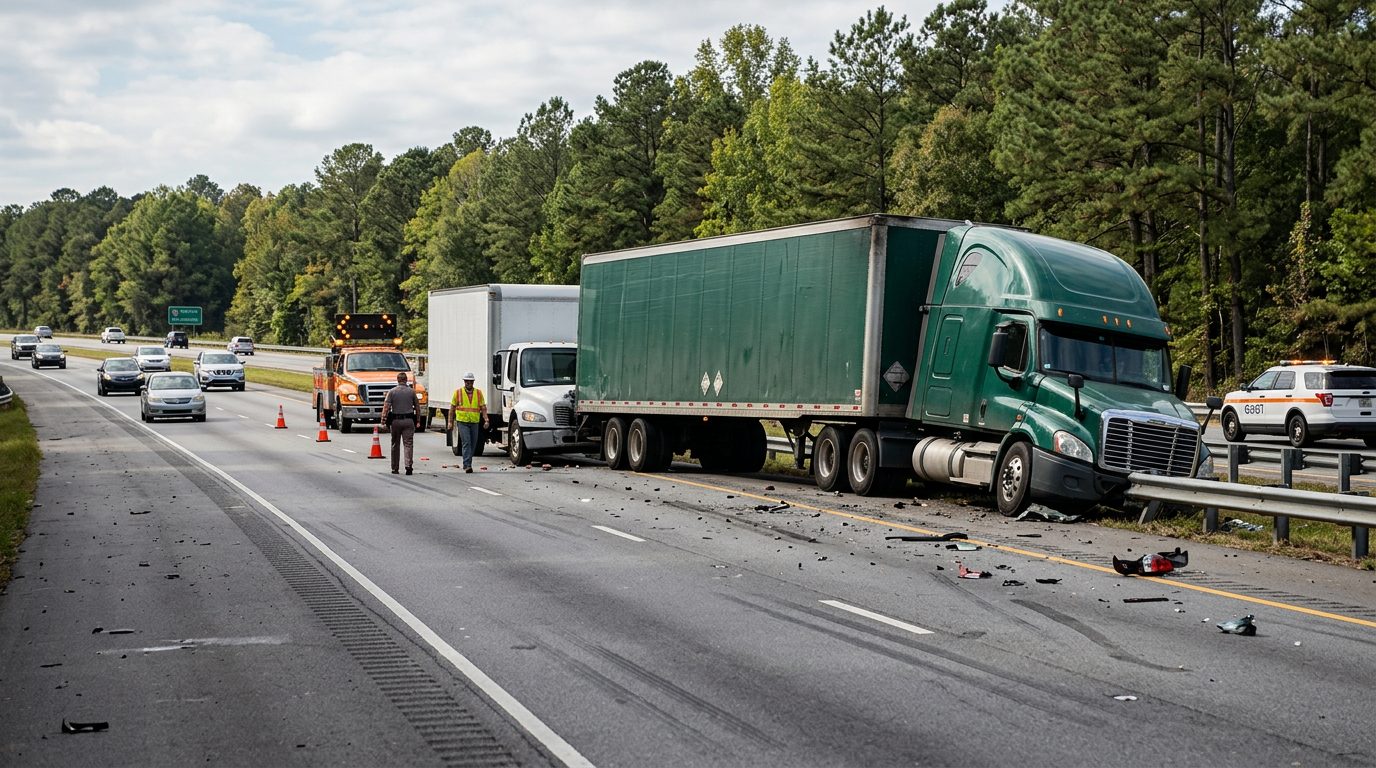
Trucking Accidents | Atlanta and Georgia
Driver Error Is the Leading Cause of Trucking Accidents in Georgia
Distraction, fatigue, speeding, and unsafe lane changes often sit behind serious truck crashes. Ugwonali Law Group helps injured people and families understand what happened and what the legal and medical process looks like.
How We Work With You
Free
Case reviews and first consultation
English & Spanish
Intake team available in both languages
3400 Peachtree Rd NE
Our Atlanta office
By Adanna Ugwonali · Published November 4, 2026
Driver error is the leading cause of trucking accidents. That means the choices a truck driver makes behind the wheel, such as distraction, fatigue, speeding, and following too closely, sit at the center of many serious crashes. Federal rules set out what drivers and trucking companies must do to prevent them.
A truck crash can change a family’s life in seconds. If you’re reading this, you may be trying to understand what happened to someone you love, or to yourself. This guide explains the leading causes in plain language. It draws on federal truck safety rules and Georgia law, and it’s written for people in metro Atlanta, including Fulton, Clayton, Cobb, and Rockdale counties, and for anyone across Georgia.
What Crash Research Says Is the Leading Cause
Driver-related error is the cause that crash research on large trucks most often points to. The Large Truck Crash Causation Study, run by the Federal Motor Carrier Safety Administration (FMCSA), looked at serious large truck crashes. Investigators assigned a critical reason to each crash. That reason was tied to the driver, the vehicle, or the environment. Driver-related reasons made up the largest group.
“Driver error” is a broad label. It covers specific behaviors, including distraction, fatigue, speed, unsafe lane changes, and impaired driving. Each behavior has a federal rule attached to it. Knowing the rule helps you ask the right questions about what happened in the leading cause of trucking accidents in your own case.
If a truck crash has left someone you love in the hospital or gone, you don't have to sort out the questions alone. Our team offers a free, confidential first consultation, without obligation to continue. Talk it through with our team — the first consultation is free, confidential, and carries no obligation.
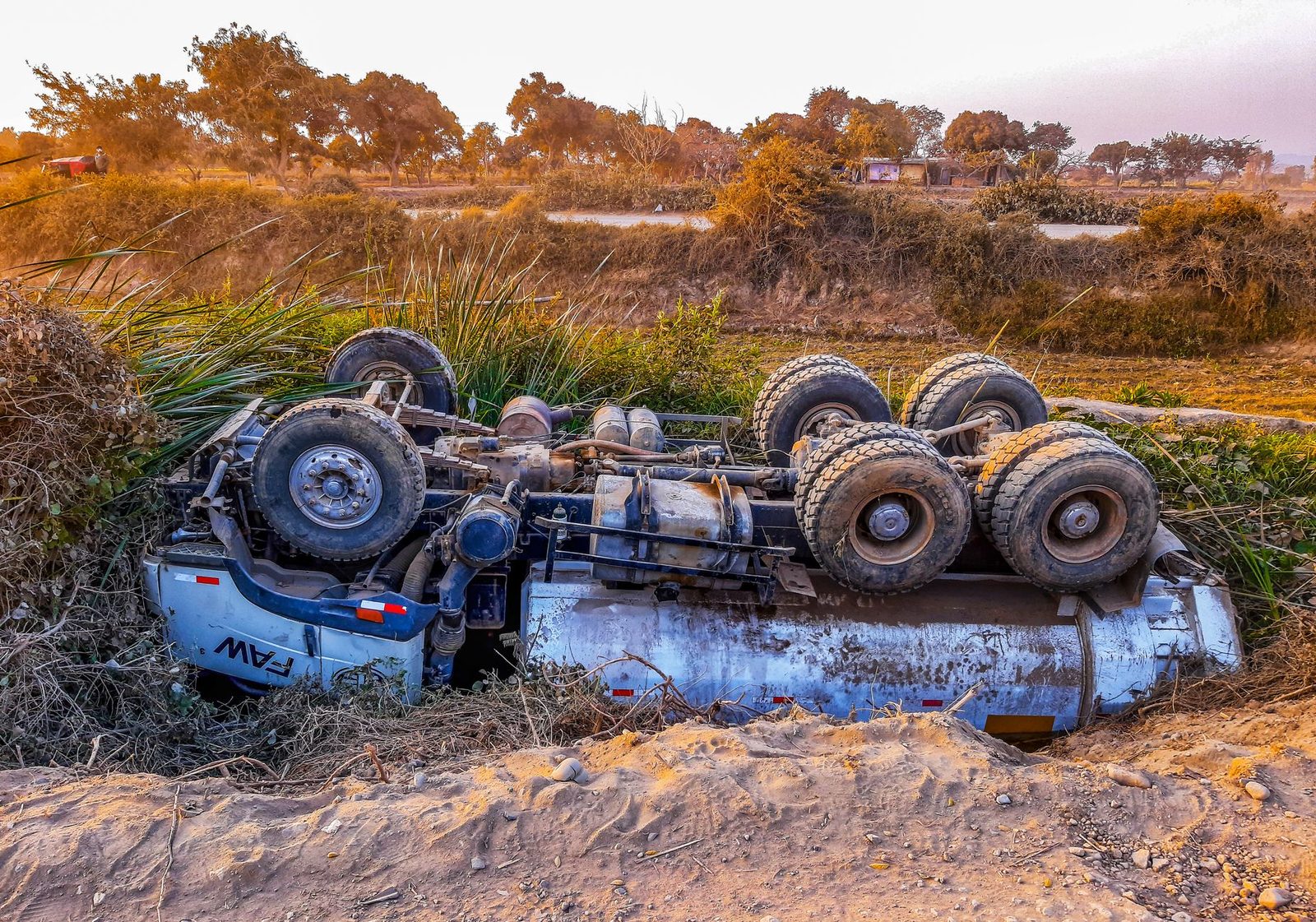
Distracted Driving Behind the Wheel
Distraction is a driver behavior that federal rules restrict directly. Under 49 C.F.R. § 392.82, a driver may not use a hand-held mobile telephone while driving a commercial motor vehicle. The rule counts stops in traffic as driving. It allows hand-held phone use when necessary to communicate with police or other emergency services.
Under 49 C.F.R. § 392.80, a driver may not engage in texting while driving. A carrier may not allow or require it either.
Common distractions include handheld phone use, dispatch and navigation screens, eating, and reaching for items in the cab. Each one pulls a driver’s eyes or hands away from the road.
At highway speed, a loaded truck covers a long stretch of road in just a few seconds. A driver who looks away for that long may have no time to brake or steer clear. Investigators often check phone records, dash camera footage, and vehicle data early. These records can show what the driver was doing in the moments before impact.
Driver Fatigue and Hours-of-Service Limits
Driver fatigue is one of the factors that may be examined after a serious truck crash. Under 49 C.F.R. § 395.3, a driver may not drive without first taking 10 consecutive hours off duty. A driver also may not drive after 14 consecutive hours that begin after that 10-hour rest.
Under 49 C.F.R. § 395.3, a driver may drive a total of 11 hours during the period specified in paragraph (a)(2) of this section. Driving is also not permitted once more than 8 hours of driving time have passed without at least a 30-minute break from driving. Certain short-haul drivers have exceptions, so the facts of each job matter.
Weekly limits apply too. A driver may not drive after 60 hours on duty in 7 consecutive days, or 70 hours in 8 consecutive days, depending on how the carrier runs its schedule.
Separately, 49 C.F.R. § 392.3 bars a driver from operating a truck when fatigue, illness, or any other cause makes it unsafe. It also bars a carrier from requiring that driving. Signs investigators look for include long shifts, irregular rest, and logbook entries that don’t match other records.
Speed, Following Distance, and Lane Changes
Speeding for conditions and unsafe lane changes are common driver behaviors in truck crashes. Federal rules address speed in a specific way. Under 49 C.F.R. § 392.6, a motor carrier may not schedule a run that would require speeds greater than those the jurisdictions being traveled allow.
That rule links speed to the schedule. A tight delivery window can push a driver to go faster than the road allows, and the rule addresses that pressure directly.
Speed for conditions is more than the posted limit. A loaded trailer, heavy traffic, rain, or fog can make a legal speed too fast. Following too closely matters as well. A heavy truck needs far more room than a car to stop, so a short gap leaves little margin when traffic brakes.
Unsafe lane changes and blind-spot collisions are another common pattern. A large trailer has wide blind spots on its sides and behind it. A driver who changes lanes without checking those areas can strike a car the driver never saw.
When the Trucking Company Shares Responsibility
A trucking company’s responsibility depends on the facts of each crash. Several federal rules show where a carrier’s own decisions can be reviewed. Under 49 C.F.R. § 391.23, a motor carrier must request each new driver’s motor vehicle record for the prior 3 years within 30 days of when employment begins. It must also investigate the driver’s safety history with prior DOT-regulated employers.
Maintenance is another area. Under 49 C.F.R. § 396.3, every motor carrier must systematically inspect, repair, and maintain its vehicles. Parts that affect safe operation, including the frame, suspension, axles, wheels and rims, and steering, must be in safe and proper operating condition at all times. Carriers must keep those records for 1 year where the vehicle is housed or maintained, and for 6 months after it leaves their control.
Cargo can also play a role. Under 49 C.F.R. § 393.106, cargo must be firmly immobilized or secured. A load that shifts can affect how the truck handles.
Georgia law adds another layer. Under O.C.G.A. § 51-2-2, a person is liable for torts committed by a servant by the person’s command or in the prosecution and within the scope of that person’s business. The section does not separately address personal errands; it covers torts committed by a servant by the person’s command or in the prosecution and within the scope of that person’s business, whether committed by negligence or voluntarily.
Insurance is part of the picture too.
Road Conditions, Weather, and Other Outside Factors
Road defects, weather, and poor work-zone setup usually play a smaller role than driver actions in crash research. They still matter. Wet or icy pavement, low visibility, faded signs, and poorly marked construction zones can add danger. A driver is still expected to slow down and adjust to conditions.
These factors are usually reviewed alongside driver and carrier records. A bad road may explain part of a crash. It rarely explains all of it.
Fault is often shared. Georgia applies what’s called modified comparative fault, or shared fault. Under O.C.G.A. § 51-12-33, a plaintiff’s damages are reduced in proportion to the plaintiff’s own fault. If the plaintiff is 50 percent or more responsible, the plaintiff may not receive damages.
Not sure what your next step is?
Talk it through with our team — the first consultation is free, confidential, and carries no obligation.
Why Large Truck Crashes Often Cause Serious Injury
Large truck crashes often cause serious injury because of the size and weight difference. A passenger vehicle has far less mass to absorb the force of a heavy truck. Occupants may face fractures, internal injuries, traumatic brain injury, or spinal cord injury.
According to MedlinePlus, motor vehicle crashes can cause spinal cord injuries. That makes spinal cord trauma a distinct and serious injury.
Medical records matter. Emergency care, hospital stays, and treatment by a medical doctor document what happened to a person’s body. Those records often become central when an injury is reviewed later.
When a crash causes a death, Georgia law provides a path for the family. Under O.C.G.A. § 51-4-5, when death of a human being results from a crime or from criminal or other negligence, the personal representative of the deceased may recover funeral, medical, and other necessary expenses resulting from the injury and death. When no one else is entitled to bring a wrongful death claim, the administrator or executor may bring one for the next of kin, and the recovery is the full value of the life of the decedent. Families often face bills and funeral plans at the same time. More on that is available on our wrongful death page.

If a Loved One Was Hurt in a Truck Crash
If a truck crash hurt someone you love, the first step is understanding what happened. That step is reasonable, even when the questions feel overwhelming. Many families are juggling hospital visits, insurance calls, and work at the same time.
For more background on how these cases are handled, see our truck accident page. Our team offers a free, confidential first consultation, without obligation to continue. Intake is available in English or Spanish. You can reach us through our contact page.
Frequently Asked Questions
What is the leading cause of trucking accidents?
Driver error is the leading cause, according to crash research on large trucks. It includes distraction, fatigue, speeding, and unsafe lane changes.
Can a truck driver use a phone while driving?
Federal rules bar drivers from using a hand-held mobile telephone while driving a commercial vehicle. An emergency exception applies to calls to police or emergency services.
How many hours can a truck driver drive?
Under 49 C.F.R. § 395.3, a driver may drive a total of 11 hours during the period specified in paragraph (a)(2) of this section, which is a 14-consecutive-hour period that begins after coming on duty following 10 consecutive hours off duty.
Does Georgia law bar recovery for shared fault?
Under Georgia law, a plaintiff who is 50 percent or more responsible for the injury or damages claimed is not entitled to receive any damages (O.C.G.A. § 51-12-33 (Quynn v. Hulsey (2020))(g)).
This page is provided by Ugwonali Law Group, 3400 Peachtree Road NE, Atlanta, Georgia. The responsible lawyer is Adanna Ugwonali. This information is educational and is not legal advice.
Common Driver Errors Behind Serious Truck Crashes
Distracted driving
Federal rules bar commercial drivers from using a hand-held phone while driving, but distraction still contributes to many crashes.
Fatigue and hours of service
Long shifts and tight schedules can lead to drowsy driving, slowed reactions, and microsleeps at highway speeds.
Speeding and unsafe conditions
Driving too fast for weather, traffic, or the weight of a loaded trailer raises the risk of rollovers and jackknife crashes.
Unsafe lane changes
Drifting, merging without checking blind spots, and cutting across lanes are frequent causes of multi-vehicle collisions on Georgia roads.
Keep Your Records
If you have been hurt in a truck crash, keep copies of your medical records, bills, photos, and any paperwork from the crash. Written notes about what you remember can also help when you speak with our team.
What to Expect When You Reach Out
1. A confidential first call
Our intake team listens to what happened and answers your questions, in English or Spanish.
2. A review of the facts
We look at the crash, the injuries, and the medical care you have needed, and explain the process in plain language.
3. Clear options
You decide what comes next. The first consultation is free, confidential, and comes with no obligation to continue.