

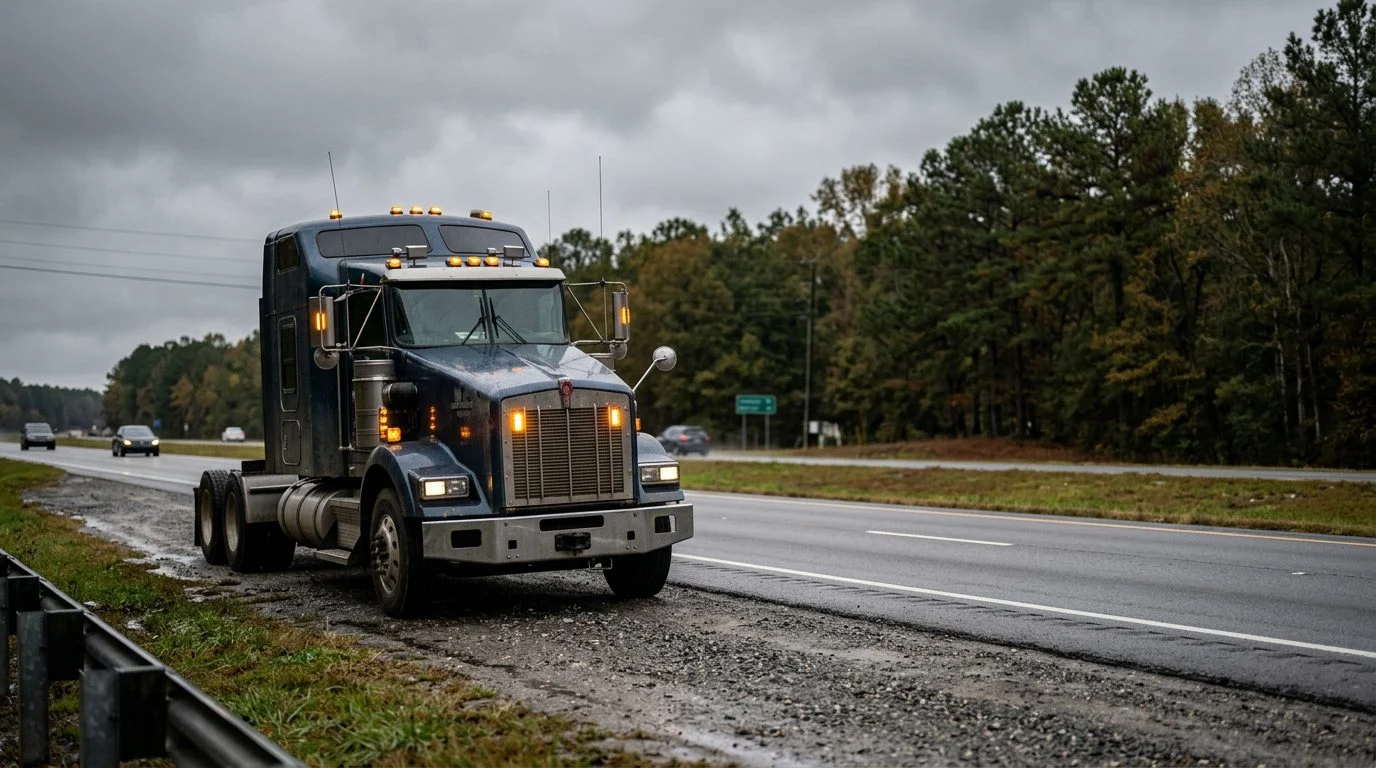
Truck Accidents | Atlanta and Statewide Georgia
Hurt in a Commercial Truck Crash? Talk With Our Team About Your Options
Large trucks bring large insurance policies, multiple companies, and fast-moving adjusters. Here is how these claims are organized and what to bring to your first conversation.
Getting Started
Free
First consultation, confidential and with no obligation to continue
2
Languages: English and Spanish
Georgia
Representing injured people across metro Atlanta and statewide
By Adanna Ugwonali · Published November 12, 2026
Commercial Carrier Injury Claim in Georgia
A commercial carrier injury claim in Georgia seeks compensation for serious injuries or death caused by a commercial truck or other commercial vehicle. The claim can reach more than the driver. It can include the company that employed the driver and other businesses tied to the truck. These cases move on strict timelines and depend on records that can disappear quickly. This page explains the basics in plain language. Ugwonali Law Group represents people seriously hurt in truck and car crashes and families in wrongful death cases across metro Atlanta and statewide in Georgia.
Not sure what your next step is?
Talk it through with our team — the first consultation is free, confidential, and carries no obligation.

What a Commercial Carrier Injury Claim Is and Who It Is For
A commercial carrier injury claim is a claim for serious harm or death in a crash involving a commercial truck or fleet vehicle. It is often brought against the companies behind the vehicle, not only the person who was driving.
This page fits people with fractures, hospital stays, traumatic brain or spinal cord injuries, and families who lost a loved one. Many of these cases involve a commercial or corporate insurance policy. Those policies can have different limits and terms than a personal auto policy. As a result, the insurance question is often more involved.
This page is about serious injuries, not minor fender-benders with no real harm. The rest of it assumes real medical treatment, such as a hospital stay, a fracture, or a head or spine injury.
What a Claim Can Cover
A claim can seek money for the harm a crash caused, including medical bills, lost income, and other losses from the injury.
Special damages are losses that actually flow from the crash, and you must prove them. Medical costs fall here. Bills from a treatment arrangement called a letter of protection can be reviewed in the case (Georgia medical expense rules).
General damages are harms the law presumes flow from a wrongful act. Georgia damages rules provide that damages compensate for injury, and that nominal damages apply where an injury is small or mitigating circumstances are strong (Georgia damages rules).
When a crash causes a death, the family may have a wrongful death claim, and the dates should be reviewed early.
The value of any claim depends on the facts: the injury, the medical record, the evidence, and the insurance available.
Who May Be Responsible After a Truck Crash
Several parties can share responsibility, not just the driver. A business can answer for wrongs its worker commits while doing the business’s work.
Other possible parties include the vehicle owner, a leasing company, a company that loaded the cargo, or a maintenance contractor. Which parties apply depends on what happened in the crash.
Choosing an unsafe carrier can also create liability.
Federal rules also limit how long a driver can drive. Under federal driving-hour limits, except as otherwise provided in federal rules, a driver of a property-carrying commercial motor vehicle may not drive without first taking 10 consecutive hours off duty. These limits can help show what a driver was doing before a crash.
Evidence That Can Disappear Quickly
Trucking records are often the first evidence to lock down.
Ask early for these records:
- Electronic logging device data and driver logs
- Dispatch and communication records
- Driver qualification and drug testing files
- Maintenance and inspection records
- Onboard truck data
- Police and crash reports, photos, and witness contact details
- Your medical records and your own written account, written while memory is fresh
Before you give a recorded statement or sign a release from the trucking company’s insurer, ask for a free case review. These documents can affect your claim.
Georgia Filing Deadlines
Georgia generally gives two years to file a lawsuit for injuries to a person, with exceptions (O.C.G.A. § 9-3-33).
Wrongful death claims are handled on their own dates, so family members should have the dates reviewed early. Claims against several companies can add complications. Waiting can also make records harder to obtain, even before a deadline arrives.
Not sure what your next step is?
Talk it through with our team — the first consultation is free, confidential, and carries no obligation.
How a Commercial Carrier Injury Claim Usually Moves Forward
A claim usually moves from a free case review to investigation, medical documentation, negotiation with the insurer, and, if needed, a lawsuit. Here is the typical path.
- Free case review. You share the crash date, your injuries, your treatment, and any insurer contacts.
- Investigation and preservation. Letters can ask the carrier to keep its records. The crash file, employment records, and medical records get collected.
- Medical documentation. Treating doctors’ records and their opinions about your injury and future care are central to the claim.
- Demand and negotiation. A demand goes to the carrier’s insurer. This stage can take months.
- Lawsuit, if needed. A case may move through discovery, which is the exchange of records, then depositions, which are recorded sworn testimony, mediation, and possibly trial.
Timelines vary widely from case to case.
Common Challenges When Dealing With Trucking Companies
Early settlement offers and fault disputes are among the most common hurdles. An offer may arrive before doctors know the full extent of an injury. Signing a release usually ends the claim. Review any offer before you accept it.
Under Georgia’s comparative-fault law, damages are reduced by the injured person’s percentage of fault, and a person found 50% or more at fault cannot recover damages at all (O.C.G.A. § 51-12-33; Quynn v. Hulsey (2020)).
Trucking defendants may argue that the other driver braked suddenly or merged unsafely. Logs, vehicle data, and crash reports help test those arguments.
Why Readers Contact Ugwonali Law Group
Ugwonali Law Group represents people seriously hurt in truck and car crashes and families in wrongful death cases. The firm also handles unsafe-property injuries, falls, and slip and fall claims across metro Atlanta and statewide in Georgia. The office is at 3400 Peachtree Road NE, Atlanta, Georgia.
Adanna Ugwonali is the responsible lawyer for this page. Our team includes assistants and office staff who work with clients from the first call. Intake is available in English or Spanish.
Your first consultation is free, confidential, and comes with no obligation to continue (Spanish: consulta inicial gratuita, confidencial y sin compromiso).
Frequently Asked Questions
Do I need a lawyer for a commercial carrier claim?
You don’t have to hire anyone, and the decision is yours. An early review can help you understand deadlines and the insurance involved.
Who can be sued after a truck crash?
Possible defendants include the driver, the employing carrier, and other companies connected to the truck. Which ones apply depends on what happened.
What if the trucking company’s adjuster calls me?
You can decline a recorded statement. You can also ask for a free case review before you say anything on the record.
How is pain and suffering valued in Georgia?
Georgia law treats damages as compensation for injury; generally, where an injury can be estimated in money, that compensation is the measure of damages, but if an injury is small or the mitigating circumstances are strong, only nominal damages are given (O.C.G.A. § 51-12-4). How a case is valued depends on the injuries and the evidence.
How long does a case take?
Timing depends on the injuries, the medical records, and whether the case settles or goes to trial.
If a commercial truck crash has left you or a loved one seriously hurt, you don’t have to sort out the deadlines and insurance calls alone. Request a free case evaluation with our team.
What Our Firm Focuses On
Serious injuries
We focus on crashes that cause fractures, hospital stays, traumatic brain injuries, spinal cord injuries, and other catastrophic harm.
Insurance and company involvement
We look at the driver, the carrier, and other companies connected to the truck to understand which insurance policies may be involved.
Families in wrongful death cases
When a loved one dies in a commercial truck crash, we work with families through a difficult process with patience and clear explanations.
Timing questions addressed early
Our review can cover how time limits and evidence preservation may affect your situation, so questions are raised while they can still be acted on.
Before You Speak With an Insurer
Trucking companies and their insurers often contact injured people quickly. Talking with a lawyer before giving a recorded statement or signing any paperwork can help you understand what you are agreeing to.
How Your Free Case Review Works
1. Reach out
Call or chat with our intake team in English or Spanish. Our staff will listen to what happened and answer your first questions.
2. Share the basics
Tell us about the crash, your injuries, the medical treatment you have received, and any papers or photos you have gathered.
3. Review your options
Attorney Adanna Ugwonali, the responsible lawyer for this page, reviews your situation and explains the legal and medical steps in plain language.