


Car Accident Injuries | Atlanta, Georgia
A Compression Fracture After a Car Accident Is Serious. Here Is What to Know.
Ugwonali Law Group, led by attorney Adanna Ugwonali, helps people injured in crashes across metro Atlanta and Georgia understand the medical and legal process. Free case reviews, in English or Spanish.
What to expect when you contact us
Free
First consultation, confidential and with no obligation to continue
2
Languages: English and Spanish
Same call
Intake staff can sign you on during your first call
By Adanna Ugwonali · Published October 31, 2026
Yes, a car crash can cause a compression fracture. A compression fracture is a break in a spine bone (vertebra) in which the front of the bone collapses. If you were hurt in a crash and feel back pain, see a medical doctor promptly, even if the pain seems mild.
Many people looking up compression fracture car accident Georgia information are still sore, worried about bills, and unsure what comes next. This guide explains how these fractures happen, what symptoms to watch for, why medical records matter, and how Georgia’s filing deadline works.
What Is a Compression Fracture?
A compression fracture is a type of fracture, which means a broken bone. In this injury, a vertebra loses height because the bone is squeezed, usually at the front. Most often it happens in the thoracic spine (the middle back) or the lumbar spine (the lower back).
Not every compression fracture is the same. Some are stable, meaning the spine keeps its normal alignment. Others are unstable, meaning the spine segment may shift or move out of place. Only a medical evaluation, usually with imaging, can tell which kind you have.
Compression fractures can also come from a fall or from bones that have become weak. When a crash is the cause, the key question is how the force of the crash loaded your spine. Your medical history and your scans both help answer that question.
If a car or truck crash left you with a compression fracture, our team is ready to talk through your medical and legal questions with you. Talk it through with our team — the first consultation is free, confidential, and carries no obligation.
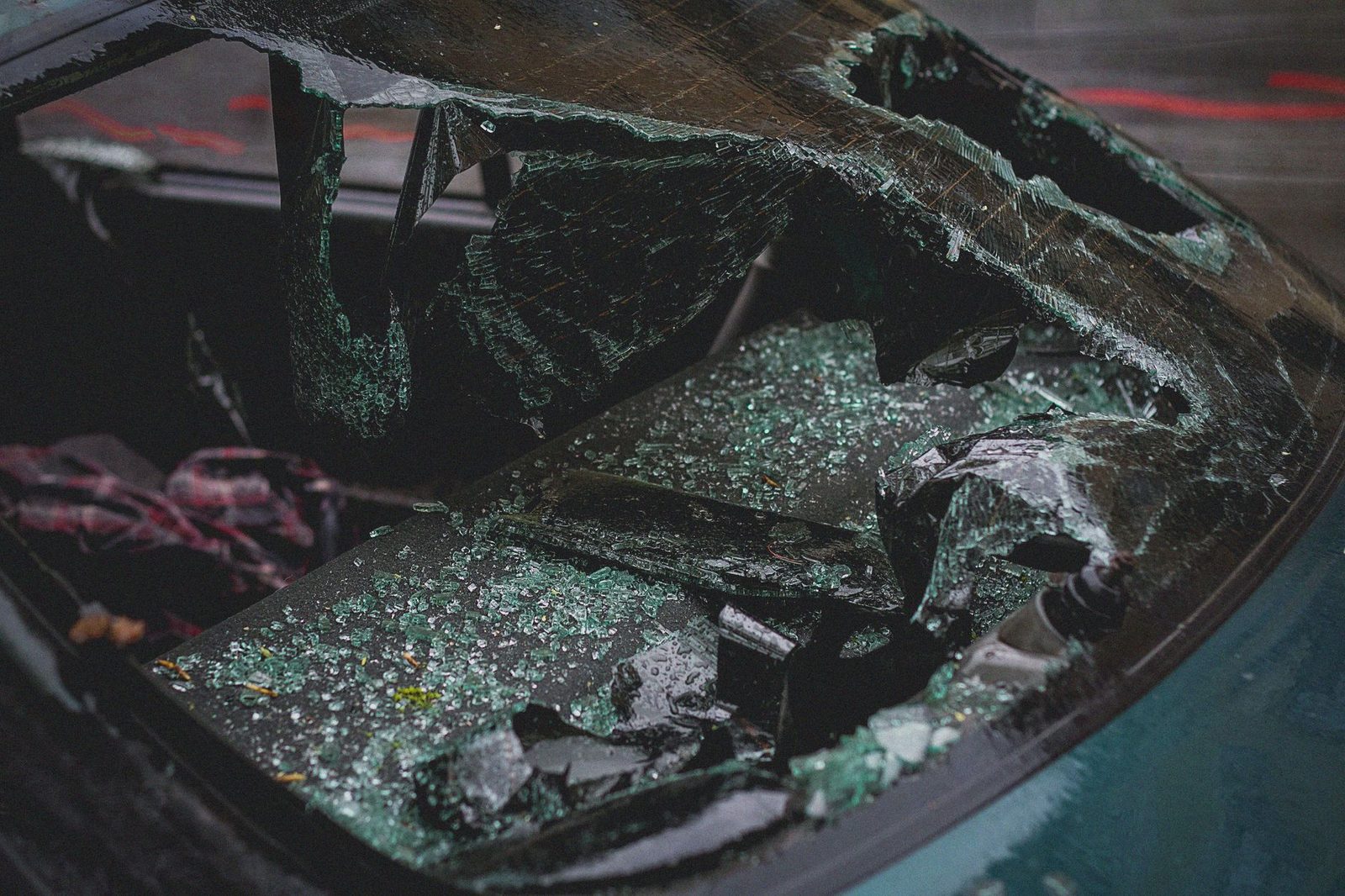
Can a Car Accident Cause a Compression Fracture?
Yes, a car accident can cause a compression fracture. A 2012 PubMed Central study by F.A. Pintar reports that compression-related thoracolumbar fractures are occurring in frontal impacts. The thoracolumbar spine is the area where the mid-back meets the lower back.
The same study says the mechanism of injury is poorly understood. In plain terms, researchers know these fractures happen in front-end crashes. They do not fully know how the force moves through the spine. That gap is one reason a doctor should examine each person directly rather than assume what happened.
A crash can hurt your spine even if you didn’t hit your head. It can also happen when you feel only mild pain at the scene. Many people feel shaken and focus on the injuries they can see. Back pain can grow over the next hours or days, so pay attention to changes.
Who Is More at Risk in a Crash?
Weaker bones can break with less force, so bone health is a major factor. Bone density means how strong and dense your bone is. People with osteoporosis or low bone density have weaker vertebrae.
For these people, a fracture can happen in a crash that might not seriously hurt someone with strong bones. Older adults are more likely to have lower bone density. Some medical conditions and medicines can also affect bone health.
A person who looks healthy can still have a fracture. A crash can expose a weakness that was never known. Don’t skip medical care because you feel fine or seem too healthy to be hurt.
Tell the treating doctor about any prior back injury, past spine imaging, osteoporosis history, or medicines that affect bones. Accurate history helps the doctor read your results. It also helps your records show what changed after the crash.
Symptoms to Watch For
Sudden or worsening back pain after a crash is the main signal to get checked. Pain from a compression fracture often changes with position. Common symptoms include:
- Sudden or worsening back pain
- Pain that gets worse when you stand or walk
- Pain that eases when you lie down
- Tenderness over the spine
- Less ability to move or bend as you normally do
- Over time, height loss or a curved, hunched upper back
Some signs need emergency care right away:
- Numbness or tingling in the legs
- Leg weakness or trouble walking
- Loss of control of the bladder or bowels
- Severe pain after a crash
Call 911 or go to the nearest emergency room if you have any of these signs. Even mild symptoms should be reported to a medical doctor. Symptoms alone do not always show how much the spine is hurt, so testing matters.
Why Seeing a Medical Doctor Matters
A medical doctor is the person who can confirm whether a spine bone is broken. A doctor may do a physical exam, X-rays, a CT scan, or an MRI. Bone density testing may also be used when bone health is a concern.
Imaging can show a fracture, how old it looks, and whether nerves or the spinal cord are involved. These details shape the treatment plan. Prompt care also helps doctors spot complications early, while they are easier to manage.
Medical records matter for more than your health. Under O.C.G.A. § 51-12-1.1, medical expenses in a claim are limited to the reasonable value of medically necessary care, treatment, or services. The trier of fact (the judge or jury who decides the facts) determines that amount. Your records should show the care was needed and tied to the crash. Gaps in treatment can make that link harder to prove.
Treatment Options
Treatment depends on the fracture type, whether the spine is stable, and your overall health. Care for a stable fracture often focuses on pain control, activity limits, bracing, and physical therapy. Your doctor may order follow-up imaging to check healing.
Some doctors consider procedures such as vertebroplasty or kyphoplasty. These procedures are used for some fractures. The choice depends on the fracture type and the patient’s health. Ask your doctor whether either one applies to you.
Surgery may be considered when the spine is unstable, when the spinal cord or nerves are involved, or when the spine curves more over time. Each option has its own recovery timeline, so ask about it directly.
When you meet with your doctor, write down your questions. Ask what the plan is, how long recovery is expected to take, and when the next scan will be. Keep copies of every answer and every instruction.
Not sure what your next step is?
Talk it through with our team — the first consultation is free, confidential, and carries no obligation.
Kyphosis, Segmental Instability, and Spinal Cord Damage
Kyphosis, segmental instability, and spinal cord damage are three complications that can follow a serious spine fracture. Each one needs follow-up care from a medical doctor.
Kyphosis is a forward curve of the upper spine. It can develop after a vertebra collapses. Kyphosis can affect posture, breathing, and daily activities like sitting, lifting, and sleeping.
Segmental instability means a spine segment does not hold its normal alignment. A segment that moves out of place may need medical or surgical stabilization. Doctors watch for this with repeat imaging.
Spinal cord damage can happen when a fracture presses on or injures the spinal cord or the nerve roots. This can cause lasting weakness, numbness, or loss of function. Not every fracture does this, which is why imaging and exams matter early on.
These complications are a reason to keep up with appointments. A medical doctor can check your spine over time and catch changes early. Missed follow-up visits can leave important changes unnoticed.
What Affects a Claim: Medical Records and Deadlines
A car accident injury claim generally depends on proving fault, the injury, and the medical care tied to the crash. Georgia uses a modified comparative fault rule, which means shared fault can reduce what a person recovers (O.C.G.A. § 51-12-33; Quynn v. Hulsey (2020)).
Under O.C.G.A. § 51-12-33, damages are reduced in proportion to the plaintiff’s percentage of fault. The same statute says a plaintiff who is 50 percent or more responsible for the injury or damages claimed is not entitled to receive any damages.
Special damages are the costs that must be proved. Under O.C.G.A. § 51-12-2, special damages “must be proved in order to be recovered.” Under O.C.G.A. § 51-12-7, necessary expenses from an injury are a legitimate item in the estimate of damages.
Keep every record you can. That includes ER and hospital records, imaging reports, follow-up physician notes and therapy notes, prescriptions, bills, and records of missed work. Keep your health insurance statements too.
Under O.C.G.A. § 9-3-33, actions for injuries to the person must generally be brought within two years after the right of action accrues.

Talking With Our Team About Your Next Step
If a car or truck crash left you with a compression fracture, you can talk with our team about your next steps. You may be dealing with back pain, a diagnosis you are still learning about, missed work, and questions about bills. You don’t have to sort all of that out alone.
Ugwonali Law Group is led by attorney Adanna Ugwonali. The firm is located at 3400 Peachtree Road NE, Atlanta, Georgia. It represents people with serious crash injuries across metro Atlanta and statewide in Georgia. Intake help is available in English or Spanish.
The first consultation is free, confidential, and comes with no obligation to continue.
If you have a compression fracture from a car crash and want to understand your options, request a free case evaluation.
Can a car accident cause a compression fracture?
Yes. A frontal crash can injure the thoracic or lumbar spine, and a medical doctor can confirm it with imaging.
Is a compression fracture a break?
Yes. It is a type of fracture, meaning a broken bone in a spine vertebra.
How long do I have to file an injury lawsuit in Georgia?
Georgia generally allows two years from when the right of action accrues, but the statute has exceptions.
Symptoms to take seriously after a crash
Sudden or worsening back pain
Pain that starts after a collision, or grows over the following days, should be checked by a medical doctor without delay.
Numbness, tingling, or weakness
Changes in feeling or strength in the legs, arms, or hips can signal pressure on the spinal nerves. Report them right away.
Loss of bladder or bowel control
This is a medical emergency. Go to an emergency department or call 911 immediately.
Pain that seems mild at first
Some compression fractures cause little pain in the first hours. Imaging and a medical exam are the only reliable way to know.
Get medical care first
A medical doctor can confirm a compression fracture with imaging such as X-rays, CT, or MRI. Keep every appointment, follow your treatment plan, and ask for copies of your records. Your health comes first, and your records help document what happened.
How Ugwonali Law Group can help
Start with a free consultation
Call or request a free case evaluation. The first consultation is confidential and comes with no obligation to continue.
Talk with our intake team
Our intake staff can speak with you in English or Spanish and explain the process in plain language.
Organize your records
We help you think through medical records, imaging, bills, and crash reports so you understand what is involved.
Serving metro Atlanta and Georgia
Our office is at 3400 Peachtree Road NE, Atlanta, and we work with clients across Fulton, Clayton, Cobb, and Rockdale counties and beyond.
Focused on people who are hurt
Our team focuses on serious injuries, from fractures and spinal injuries to wrongful death, and we explain each step along the way.
Injured in a Georgia car accident?
Talk with our team about your next steps.
Related practice areas
- Catastrophic Injury
- Catastrophic Injury in Atlanta
- Overloaded Truck Crash Georgia Lawsuit: Key Facts