

Truck Accidents | Clayton County, Georgia
Injured in a Truck Crash in Clayton County? Get Clear Answers First.
Our team at Ugwonali Law Group helps people hurt in serious commercial truck collisions understand the legal and medical steps ahead, in English or Spanish.
By Adanna Ugwonali · Published November 21, 2026
Truck Crash Lawsuit in Clayton County, Georgia: Where the Crash Happened Is Only Part of the Picture
Not sure what your next step is?
Talk it through with our team — the first consultation is free, confidential, and carries no obligation.

Short Answer: Where the Crash Happened Is Only Part of the Picture
A truck crash lawsuit in Clayton County, Georgia, follows the same state law as one filed in Atlanta. Where a case is filed depends on the facts of each case, and our team can explain how that question applies to yours.
If you were hurt on a road in Jonesboro, Forest Park, Riverdale, or elsewhere in Clayton County, the crash location is one fact among several. The trucking company’s location, the defendants named, and where the company does business can all matter.
A serious truck crash often brings hospital bills, missed work, and early calls from insurance adjusters. Knowing how the basic rules fit together can help you ask better questions. This page explains how those rules work. Every case turns on its own facts, so nothing here predicts how a particular claim will turn out.
How Georgia Decides Where a Lawsuit Can Be Filed
Questions about which county a lawsuit can be filed in can be complex and depend on the facts of each case, so they are worth reviewing with a lawyer.
An individual driver and a company can have different connections to a county. That is why the answer for one defendant may differ from the answer for another.
Georgia also holds a company responsible for certain conduct of the people who work for it. Under O.C.G.A. § 51-2-2, a person is liable for torts committed by a servant in the prosecution and within the scope of the person’s business, whether committed by negligence or voluntarily. In a truck crash, this rule can matter when the driver was working for the carrier at the time. The facts of the trip and the job decide that question.
The plain summary is this. A trucking company may be tied to more than one Georgia county. The crash location and the company’s business footprint both deserve a close look.
Why the Trucking Company’s Location Can Matter More Than the Crash Scene
The company that runs a truck may keep its office, terminal, or dispatch somewhere other than the road where the crash happened. That company’s business activity in a county can create a venue connection that is separate from the wreck itself.
Responsibility can also reach more than one party. In assessing percentages of fault, O.C.G.A. § 51-12-33, the trier of fact must consider the fault of all persons or entities who contributed to the alleged injury or damages. That is true whether or not they were, or could have been, named in the suit.
The same statute divides damages among the liable people by each person’s share of fault. Those shares are not joint liability. Identifying every party comes first. Possible parties include the driver, the motor carrier, and any cargo loader or maintenance contractor tied to the trip. Which county works is a legal question. It is answered from the crash facts and the defendants named.
Clayton County Versus Atlanta: What Changes and What Stays the Same
The core rules of a Georgia injury claim stay the same in Clayton County and Atlanta. The court, its schedule, and the travel involved can differ.
Under O.C.G.A. § 51-12-33, a judge reduces damages in proportion to the injured person’s percentage of fault. An injured plaintiff who is 50 percent or more responsible for the injury or damages claimed cannot receive any damages. This is called modified comparative fault (shared fault with a cutoff).
What can differ is the court where a case is filed, that court’s docket, and the travel needed for depositions, hearings, and medical visits. A resident of Jonesboro may face a different drive to a hearing than someone living in Atlanta. A county change does not change the injury, the treatment a medical doctor recommends, or the evidence that must be preserved.
Ugwonali Law Group represents people across metro Atlanta and statewide from its base at 3400 Peachtree Road NE, Atlanta.
What Makes Truck Crash Cases Different From Ordinary Car Crash Cases
Federal safety rules for commercial trucks often shape the evidence in a truck crash case. These rules create records that a car crash case usually does not have.
Driving limits are one example. Under 49 CFR § 395.3, a driver of a property-carrying commercial motor vehicle may drive a total of 11 hours during the 14 consecutive hours after coming on duty following 10 consecutive hours off duty.
Duty records matter too. Trucking companies keep records of driver hours, which can show when a driver was working and when the driver was resting.
Driver files and vehicle inspection records can also be relevant evidence in a truck crash case.
After some crashes, testing follows. Federal regulations, including 49 C.F.R. § 382.303, address post-accident alcohol and drug testing of commercial truck drivers in certain situations, so whether and when a driver was tested can be an important record to look for after a serious truck crash. A brain or spinal cord injury can need follow-up care over a long period, which is why each visit and bill matters. More on that is on our catastrophic injury page.
Not sure what your next step is?
Talk it through with our team — the first consultation is free, confidential, and carries no obligation.
Time Limits and Evidence Steps That Do Not Depend on the County
Georgia generally requires an injury lawsuit to be filed within two years after the right of action accrues. That rule comes from O.C.G.A. § 9-3-33. The same statute sets different periods for some other claims, such as loss of consortium claims, which have four years.
Evidence can disappear quickly after a truck crash. Early steps help protect your claim. Useful items include the crash report, photos, names and phone numbers of witnesses, and a complete set of medical records. Trucking records such as logs and maintenance files can also be requested early.
Medical costs follow specific rules. Under O.C.G.A. § 51-12-1.1, in a civil action to recover damages resulting from injury or death to a person, medical expenses are limited to the reasonable value of medically necessary care, as the trier of fact determines. If a plaintiff has any form of public or private health insurance, including benefits under a governmental workers’ compensation program, the evidence includes both the amounts charged and the amounts actually needed to satisfy the charges under the insurance contract or program, regardless of whether the health insurance has been used, is used, or will be used to satisfy such charges.
Damages also come in two types. Under O.C.G.A. § 51-12-2, general damages are presumed to flow from a wrongful act and need no proof of an amount. Special damages actually flow from the act and must be proved.

Talk With Ugwonali Law Group About Your Clayton County Truck Crash Lawsuit
The first step after a Clayton County truck crash is a conversation about the facts. Your location, the trucking company, and your medical needs all shape the next steps.
Common Questions About Truck Crash Lawsuits in Georgia
Does the crash county decide where I can sue?
Not automatically.
How long do I have to file an injury lawsuit?
Georgia generally allows two years after the right of action accrues for injuries to the person, except for actions for injuries to the person involving loss of consortium, which must be brought within four years after the right of action accrues, under O.C.G.A. § 9-3-33.
Can a trucking company answer for its driver?
Georgia law can hold a company liable for a worker’s torts within the scope of the job, under O.C.G.A. § 51-2-2.
Does a fault share reduce my recovery?
Yes. Under Georgia law, a plaintiff’s damages are reduced in proportion to the plaintiff’s percentage of fault, and a plaintiff who is 50 percent or more responsible for the injury or damages claimed is not entitled to receive any damages (O.C.G.A. § 51-12-33).
If a truck crash has left you with hospital bills and a question about which court fits your case, reach out for a free case review at our contact page. Our intake team can talk with you in English or Spanish. The first consultation is free, confidential, and comes without any obligation to continue. For the full picture, see our truck accident page.
Attorney advertising. Adanna Ugwonali is the responsible lawyer for this page. Ugwonali Law Group, 3400 Peachtree Road NE, Atlanta, Georgia. Contact: https://www.attorneyadanna.com/contact.
How Ugwonali Law Group Works With You
Plain-Language Guidance
We explain each stage of a truck crash claim without legal jargon, so you know what to expect and why.
Attention to Your Medical Care
Your recovery comes first. We keep the focus on the treatment your doctors recommend and the records that document it.
Support in English or Spanish
Our intake staff can speak with you in English or Spanish from your first call.
Free, Confidential Consultation
Your first consultation is free, confidential, and comes with no obligation to continue.
Serving Clayton County and Metro Atlanta
We represent people injured in Clayton County and across metro Atlanta and statewide in Georgia, from our office at 3400 Peachtree Road NE, Atlanta.
Think Before You Speak to the Insurer
Trucking companies and their insurers often contact injured people quickly. Before giving a recorded statement or signing anything, consider talking with a lawyer about your injuries and your options.
Helpful Steps After a Serious Truck Crash
Get Medical Care
Seek evaluation from a medical doctor, even if symptoms seem minor at first. Follow through with recommended treatment and keep every appointment record.
Document the Scene
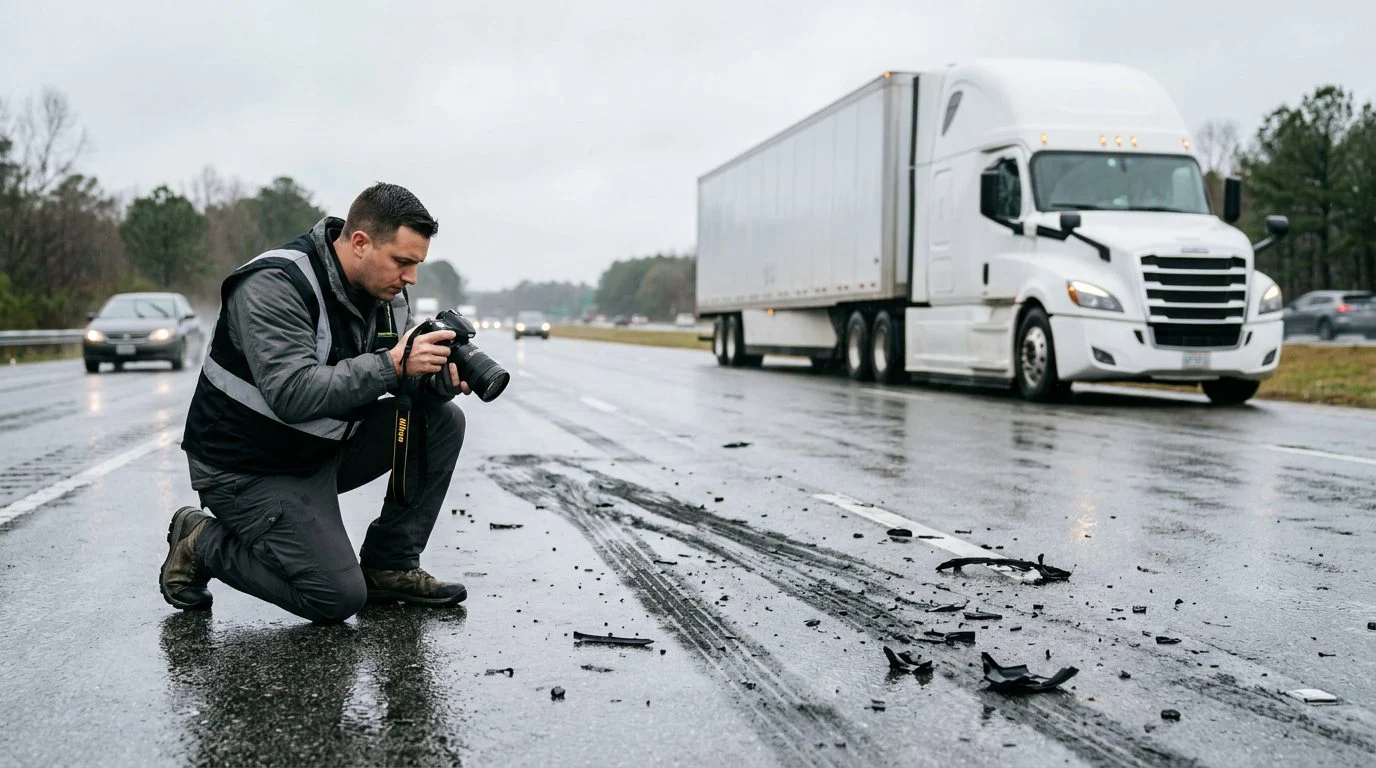
If you are able, take photos of vehicles, road conditions, and visible injuries, and write down the names and contact details of witnesses.
Preserve Your Records
Keep police reports, hospital bills, pay stubs, and notes about missed work or daily limitations in one place.
Talk With a Lawyer Early
Early guidance can help you understand the parties involved, including the trucking company and its commercial insurance, and what evidence may matter.