

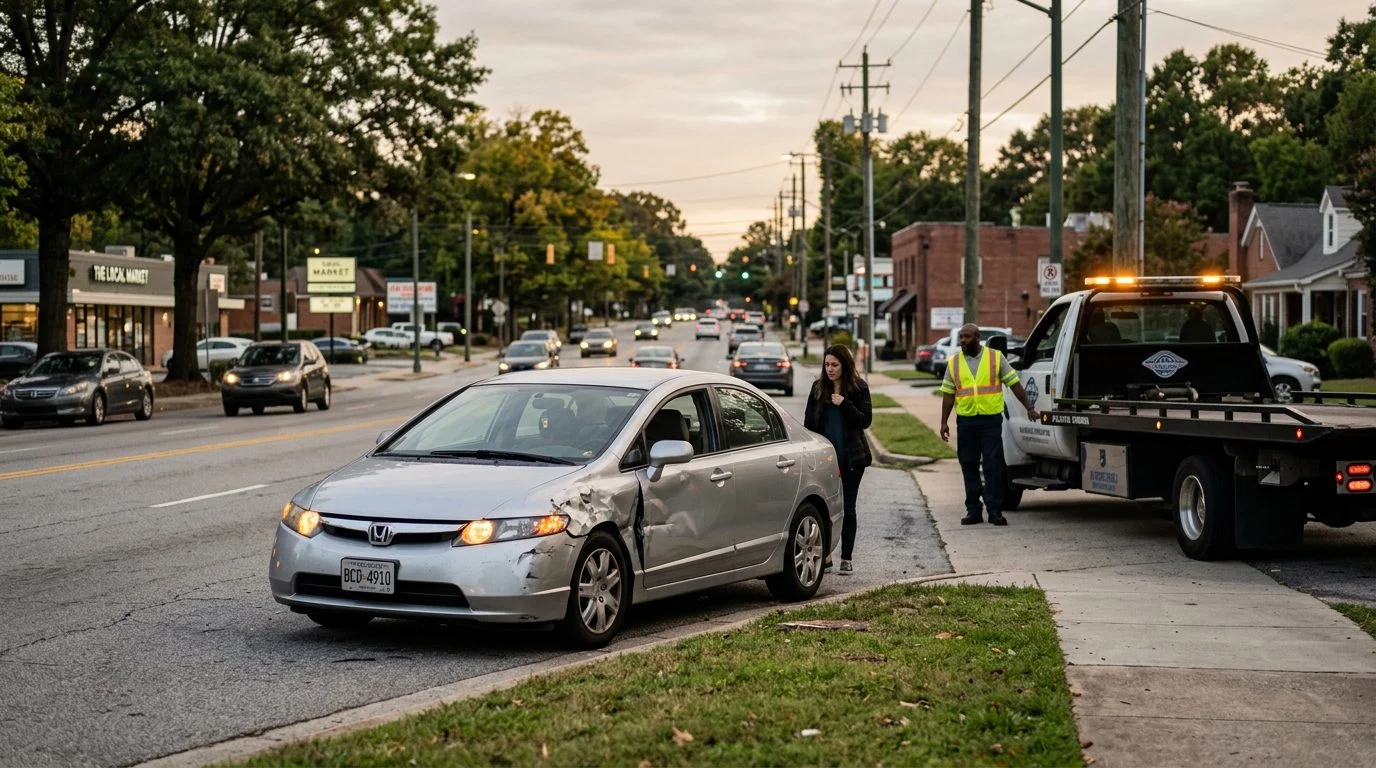
Car accidents | Atlanta and statewide Georgia
Hurt in a Car Crash in Georgia? Start With Clear Answers
Plain-language guidance on the legal and medical steps that often follow a serious collision, from Ugwonali Law Group in Atlanta.
By Adanna Ugwonali · Published November 20, 2026
After a serious crash, many people ask who pays the medical bills and whose insurance has to respond. Georgia is not a no-fault state for car accidents. It is an at-fault state, so the driver who caused the crash is generally responsible for the damages that follow. Here is what that means for an injured person or a family, in plain language.
Short answer: Georgia is an at-fault state
Georgia works differently for injury claims.
Georgia also requires drivers to carry insurance. Under Georgia’s insurance requirement for vehicle owners, an owner may not operate a registered vehicle, or let someone else drive it, unless the owner carries liability insurance that meets the state’s security requirement.
Damages after a crash usually fall into two groups. Special damages are actual losses, such as medical bills and lost pay, and they must be proved. General damages, such as pain and suffering, are presumed to flow from the injury and need no proof of an exact amount, as Georgia damages law explains.
Insurance has limits. A serious injury, such as a fracture that needs hospital care or a brain injury, can cost more than a policy pays. How much is available depends on the at-fault driver’s policy and the facts of the crash.
If a crash has left you or someone you love hurt and unsure who should pay, our team can talk it through with you, and you don't have to face it alone. Talk it through with our team — the first consultation is free, confidential, and carries no obligation.
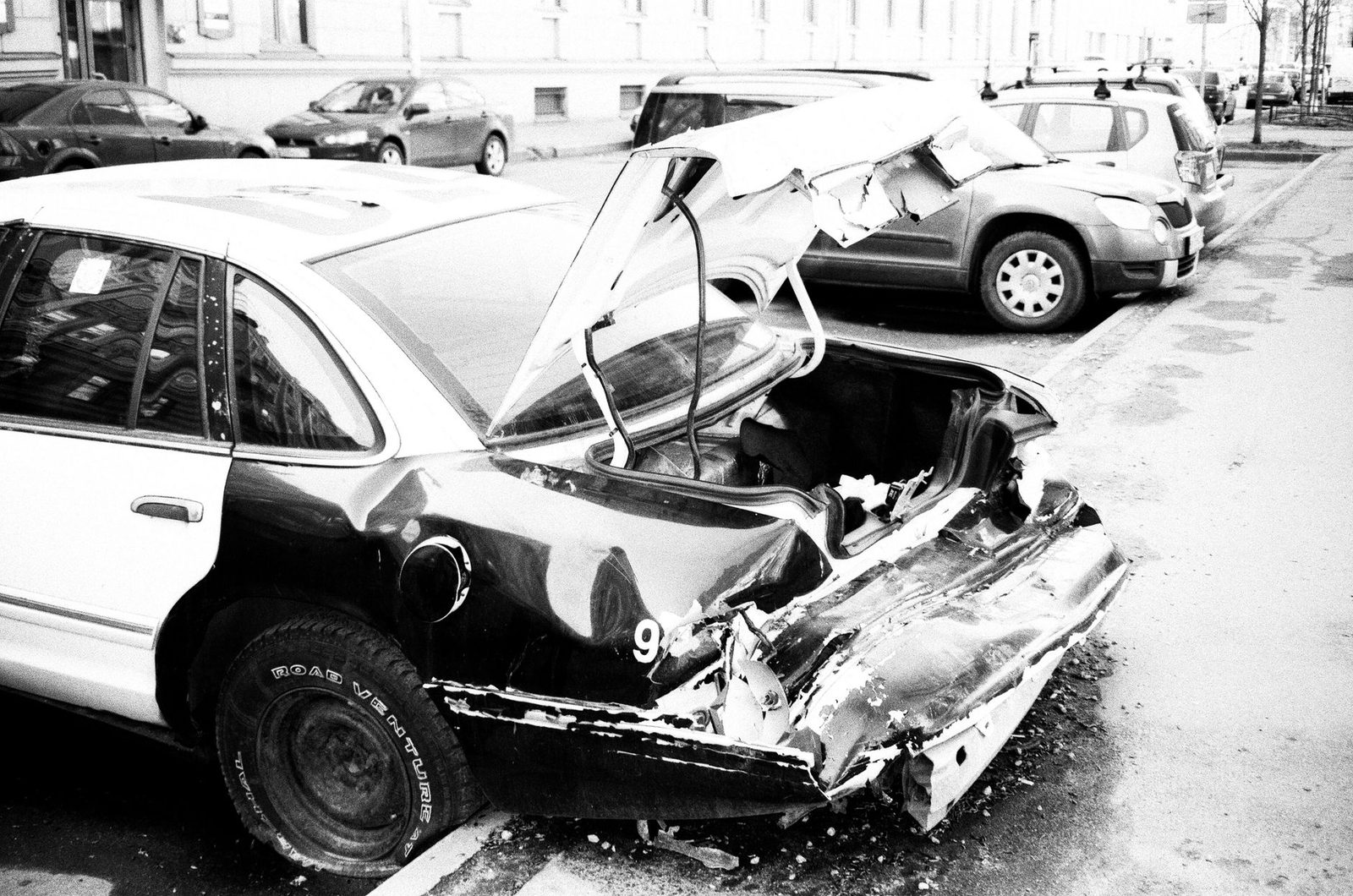
At-fault and no-fault insurance, explained
Under a no-fault model, you usually turn to your own insurer first. Under an at-fault model, the injured person looks to the responsible driver.
Knowing which model applies tells you whose policy to examine first. It also explains why the at-fault driver’s insurer may contact you soon after a crash. Their policy, not yours, is usually the first place a claim for the other driver’s fault is directed.
Your own policy still matters. Uninsured motorist coverage can apply when the at-fault driver has no insurance, as the sections below show.
How a claim works under Georgia’s at-fault system
A claim usually goes to the at-fault driver’s liability coverage. Your own uninsured motorist coverage may apply when that driver has no insurance.
Georgia sets minimum insurance levels by statute. A minimum policy can pay less than the cost of a serious injury. That gap is one reason the other driver’s policy limits matter so much.
Georgia law also requires auto policies to include uninsured motorist protection. Under Georgia’s uninsured motorist law, the policy must pay the insured for bodily injury, loss of consortium, or death caused by an uninsured motor vehicle’s owner or operator. The insured chooses the limits within the statute’s terms.
Keep your own policy in view. Check what it covers, and note any notice steps it requires after a crash.
Comparative negligence: how fault can be split
Georgia divides fault by percentage. You can still recover if you are less than 50 percent at fault, but your award is reduced by your share.
Under Georgia’s apportionment law, the jury decides the injured person’s percentage of fault, and the judge reduces the award in proportion. If the injured person is 50 percent or more responsible, the statute says that person may not receive any damages.
The jury must also consider everyone who contributed to the harm, even people who were never sued. Each liable person then owes only its own apportioned share, not a joint amount.
In a truck case, the employer’s own fault can count too. In Quynn v. Hulsey, the Supreme Court of Georgia held that negligent hiring, training, supervision, and retention claims rest on the employer’s own alleged negligent acts, so fault may be assigned to the employer for them.
Sudden-stop crashes turn on specific facts. Those include following distance, how quickly and why the car stopped, signals, and what each driver could see. For more, read about who is usually at fault.
Time limits that apply to Georgia car accident claims
Georgia law generally requires that actions for injuries to the person be brought within two years after the right of action accrues (O.C.G.A. § 9-3-33). Claims for damage to property are governed by a different deadline, which generally runs four years.
The injury deadline comes from Georgia’s time limits for injury claims. The same statute gives loss of consortium claims four years.
Insurance claims follow their own schedules. Policies set their own notice requirements, which may differ from the lawsuit deadline.
Georgia also requires prompt police notice. When a crash causes injury or death, or property damage of $500 or more, the driver must immediately notify the local police department inside a city. Outside a city, notice goes to the county sheriff or the nearest state patrol office, under Georgia’s accident reporting law.
Delay can make proof harder. Reporting promptly keeps the record clear.
Evidence that can support fault in a Georgia crash
The strongest proof usually combines an official report, photos, witness information, and medical records that link the injury to the crash.
| Evidence | Why it helps |
|---|---|
| Police report | Official record of the scene and the parties |
| Scene and vehicle photos | Show positions, damage, and road conditions |
| Dashcam or traffic camera footage | Shows how the crash happened |
| Witness names and contact details | Lets others confirm what they saw |
| Medical records and bills | Connect the injury to the crash |
| Records of lost work | Document lost income |
| Statements by the other driver | Become part of the record |
Medical expenses need careful proof. If you have health insurance, the evidence can include both the amounts billed and the amounts actually needed to satisfy those charges.
Keep treatment records, and follow the plan your doctor recommends. Photos taken soon after a crash show where vehicles stopped and how they were damaged.
Traffic rules also matter.
Not sure what your next step is?
Talk it through with our team — the first consultation is free, confidential, and carries no obligation.
Mistakes that can hurt a claim after an accident
The most common missteps are giving recorded statements too early, delaying medical care, and failing to keep records.
Insurers, including the at-fault driver’s insurer, may ask for a recorded statement or signed forms. Before you agree, make sure you understand your injuries and what the claim involves. For more, see what not to tell an insurance company.
Delaying care or skipping recommended follow-up can make it harder to tie an injury to the crash. Gaps in treatment can be questioned by insurers.
Keep a simple file. Save bills, receipts, mileage to appointments, notes about pain, and records of missed work. Write down what you can no longer do, such as lifting a child or working a full shift.

When it may be time to talk with a lawyer
If someone you love has been seriously hurt or killed, or you are living with a serious injury, a lawyer can review the facts, the insurance, and the deadlines in your case.
You may be sitting beside a hospital bed, managing a head or spinal injury, or trying to understand a family member’s death while bills keep arriving. You did not choose this, and it is a heavy load to carry alone.
Ugwonali Law Group, led by attorney Adanna Ugwonali, represents people hurt in truck and car crashes, unsafe-property injuries, and slip and falls, along with families in wrongful death cases. The firm is at 3400 Peachtree Road NE, Atlanta, Georgia, and serves metro Atlanta and communities across Georgia. For an overview of injury claims after serious crashes, see car accident claims in Georgia.
Quick answers
How long do I have to file a car injury lawsuit in Georgia?
Generally two years from the date of injury (O.C.G.A. § 9-3-33; Kenneth B. Cameron v. Jmp Pizza, Inc (2026)).
Can I recover damages if I share some of the fault?
Yes, if you are less than 50 percent responsible, though your award is reduced by your share. At 50 percent or more, the statute bars recovery (O.C.G.A. § 51-12-33; Quynn v. Hulsey (2020)).
Do I have to report a crash to police in Georgia?
Yes, when it involves injury, death, or property damage of $500 or more.
If a crash has left you or someone you love injured and unsure who should pay, our team can talk it through with you. The first consultation is free, confidential, and comes with no obligation to continue, and intake is available in English or Spanish. Request a free case evaluation.
This page is general information about Georgia law, not legal advice. The responsible lawyer is Adanna Ugwonali, Ugwonali Law Group, 3400 Peachtree Road NE, Atlanta, Georgia.
How we help people hurt in car accidents
Plain-language explanations
We explain the legal and medical process in terms you can follow, so you know what to expect at each step.
Free case review
Call or request a free case evaluation to talk through your crash, your injuries and your questions with our intake team.
English or Spanish
Our intake staff can speak with you in English or Spanish, whichever you prefer.
Based in Atlanta
Our office is at 3400 Peachtree Road NE, Atlanta, and we represent people across metro Atlanta and throughout Georgia.
Protect your health and your records
Getting prompt medical care after a crash matters for your health. Keep copies of medical bills, appointment notes, photos and insurance correspondence, and be cautious about giving recorded statements to insurers before you have spoken with someone who can advise you.
Questions to bring to your free case review
What happened?
Tell us where and when the crash occurred, who was involved, and what you remember about the moments before and after impact.
What treatment have you had?
List the hospital visits, doctor appointments, imaging and therapy you have received, including any ongoing care.
Who has contacted you?
Share any communications from insurance companies or other parties so we can review them with you.
How will the process work?
Ask us to explain each stage of a claim, what information we may need, and how the consultation works. The first consultation is free, confidential and carries no obligation to continue.