

Truck Accidents | Atlanta and Statewide Georgia
Hit by a Truck on Your Motorcycle? Understand Your Options Before You Decide
Ugwonali Law Group helps injured riders make sense of the legal and medical steps ahead, starting with a conversation about what happened and what you need now.
Ways to Reach Our Team
Free
First case review
EN / ES
Intake in English or Spanish
Atlanta
3400 Peachtree Road NE
Phone
Call to speak with intake
By Adanna Ugwonali · Published November 20, 2026
If a tractor-trailer hit you on a motorcycle, or hit someone you love, the next weeks can feel overwhelmed by bills, insurance calls, and hard medical news. You may be trying to decide whether to bring in a lawyer at all.
For many people in this situation, talking with a lawyer early is worth doing. A trucking company, its driver, and its insurer may all be involved, and some deadlines are short. An early conversation helps you understand your options before you make decisions that are hard to undo.
What a Tractor-Trailer Crash Does to a Motorcyclist
A tractor-trailer is far heavier than a motorcycle, and a rider has little protection around the body. That size and weight gap is why these crashes so often cause serious harm.
A rider can also slide under the trailer’s side or rear. Underride crashes can cause severe head and upper-body injuries.
Riders in these crashes often suffer broken bones, internal injuries, traumatic brain injury, spinal cord injury, and long hospital stays. Some brain and spine injuries do not show their full effect in the first days. Ongoing medical checkups matter, and your medical team is the right source for what your injuries mean.
This page is for two kinds of readers. The first is the injured rider. The second is a spouse, parent, or adult child acting for someone who was hurt or killed. Georgia’s wrongful death rules apply when a loved one dies, and those rules are covered below.
If a tractor-trailer hit you or someone you love on a motorcycle, you may have a claim, and our team can talk it through with you. Talk it through with our team — the first consultation is free, confidential, and carries no obligation.

Should You Hire a Lawyer After This Kind of Crash?
Hiring a lawyer makes sense for many people in this situation. Whether it makes sense for you depends on the facts of your crash and your injuries.
People in this position often talk with a lawyer for several reasons:
- Several parties and insurers may be involved, including a trucking company and its insurer.
- A commercial defendant may move quickly to protect its records and its position.
- Medical care, bills, and lost work can continue for months.
- Legal deadlines apply, and some of them are short.
Ask yourself a few questions:
- How serious are the injuries, and is treatment still ongoing?
- Is a trucking company or its insurer involved?
- Has the other side made a quick offer or asked for a recorded statement?
- Are you unsure what to do next after a serious injury?
Our team can help you answer these questions in one conversation. You can get answers without committing to anything more.
Georgia Rules That Shape a Motorcycle-Truck Claim
Georgia law looks at each person’s share of fault for the injury. Under O.C.G.A. § 51-12-33, a court reduces damages in proportion to the injured person’s share of fault. If that share is 50 percent or more, the injured person cannot recover damages.
Georgia also requires motorcycle riders to wear protective headgear. Under O.C.G.A. § 40-6-315, no person may operate or ride a motorcycle unless wearing headgear that meets state standards, though this does not apply to persons riding within an enclosed cab or motorized cart or to the operator of a three-wheeled motorcycle used only for agricultural purposes. Whether a helmet question affects a claim can turn on the specific facts and on how the other side raises it.
Timing matters too. Under O.C.G.A. § 9-3-33, except as otherwise provided in this article, a person generally has two years from when the right of action accrues to bring a claim for injuries to the person. Claims for loss of consortium, which cover a spouse’s loss, have a four-year period under the same statute.
Waiting can cost you evidence and options. Witnesses forget, and records can be lost. Starting early keeps your choices open.
Who Is Usually at Fault When a Truck Hits a Motorcycle?
Fault is decided by the evidence in each crash. Several kinds of driver actions often appear in these collisions. Examples include a lane change into the rider’s lane, a failure to check mirrors and blind spots, following too closely, and turning across a rider’s path.
More than one party may share responsibility. The driver, the trucking company, and cargo or maintenance contractors may each have a role, depending on what happened.
Georgia law makes a person liable for torts committed by a servant within the scope of the person’s business. See O.C.G.A. § 51-2-2. The Georgia Supreme Court has also held that a trucking company can answer for its own negligent hiring, retention, supervision, training, and entrustment. In Quynn v. Hulsey, claims for negligent hiring, training, supervision, and retention are based on the alleged negligent acts of the employer.
Insurance is another part of the picture: federal rules set minimum financial-responsibility levels for many commercial trucks, and the required amount depends on the type of carriage and the commodity transported (49 C.F.R. § 387.9).
Evidence and Damages a Truck Crash Case Often Involves
Start with the basics. A police crash report, 911 and scene records, photos and video, dashcam footage, witness contact details, and the motorcycle and riding gear all can matter.
Trucking records often matter as well. These can include electronic control module data, electronic logging device records, driver qualification files, inspection and maintenance records, and drug and alcohol testing records. Federal rules require carriers to keep records of duty status and supporting documents for at least six months from receipt. See 49 C.F.R. § 395.8. Early requests to preserve evidence matter for that reason.
Damages fall into two groups. Under O.C.G.A. § 51-12-2, general damages are presumed to flow from a wrongful act, while special damages actually flow from it and must be proved. Special damages often include medical bills and lost wages.
For families in a wrongful death case, Georgia law allows the personal representative to recover funeral, medical, and other necessary expenses when a death results from criminal or other negligence. See O.C.G.A. § 51-4-5.
How the Process Works, From the First Call Onward
A case usually moves through a few stages. The timing of each stage depends on the injuries and the defendants involved.
- Case review. You share the crash date, the location, your injuries, and any insurance letters. The first conversation is confidential.
- Early steps. We work to preserve evidence, identify every insurer involved, and handle contact with adjusters. This lets you focus on medical care.
- Treatment and records. We help gather medical records and bills. Follow-up care often shapes the timeline of a claim.
- Investigation and demand. We build the fault and damages picture and prepare a written demand to the insurer.
- Negotiation or lawsuit. Many claims resolve through negotiation. Some require filing suit before the deadline.
Georgia sets rules for written settlement offers in motor vehicle claims. Under O.C.G.A. § 9-11-67.1, an offer to settle a motor vehicle injury claim that is prepared by or with an attorney’s help, made from the time a cause of action accrues until the named defendant files an answer (or, with multiple named defendants, until all have filed answers or been found in default), must give a payment date at least 40 days after receipt. The recipient may also seek clarification in writing without that request counting as a counteroffer, but seeking to modify the material terms under paragraph (1) of subsection (b) of the statute is not clarification. No one can promise how long a case will take.
Not sure what your next step is?
Talk it through with our team — the first consultation is free, confidential, and carries no obligation.
Why Ugwonali Law Group Handles These Cases
Ugwonali Law Group represents people hurt in serious crashes and other serious-injury matters. Adanna Ugwonali is the responsible lawyer for this page. The firm is located at 3400 Peachtree Road NE, Atlanta, Georgia, and represents clients across metro Atlanta and statewide in Georgia.
The firm handles truck accidents, car accidents, wrongful death, traumatic brain injury, spinal cord injury, catastrophic injury, premises liability, and slip and fall cases. Our intake team works with clients in English or Spanish.
Our approach is educational. We explain the legal and medical steps in plain language as your case moves forward, so you know what is happening and why.
Frequently Asked Questions
Is Georgia a no-fault state for car and truck accidents?
Georgia’s apportionment law looks at each person’s share of fault for the injury. That share affects how damages are reduced under O.C.G.A. § 51-12-33.
Should I talk to the trucking company’s insurance adjuster?
Be careful with recorded statements and early releases. Talk with a lawyer before you sign anything or give a statement.
How does Georgia law divide fault when more than one person contributed to an injury?
Georgia reduces your damages by your share of fault. Under O.C.G.A. § 51-12-33 (Quynn v. Hulsey (2020))(g), the plaintiff shall not be entitled to receive any damages if the plaintiff is 50 percent or more responsible for the injury or damages claimed.
How long do I have to file?
Georgia’s general time limit for most injury claims is two years, counted from when the right of action accrues (O.C.G.A. § 9-3-33; Kenneth B. Cameron v. Jmp Pizza, Inc (2026)). Family claims have their own timing questions, which our team can review with you.
Can I talk with the firm in Spanish?
Yes. Our intake team works in English or Spanish.

Talk With Our Team About Your Motorcycle Crash
If you are still recovering, or you are deciding for someone you love, you do not have to sort out the legal side alone. Reach out for a case review by phone, through the online evaluation request, or by chatting with our intake team. The first consultation is free, confidential, and carries no obligation to continue. Request your case evaluation here.
Ugwonali Law Group, responsible lawyer Adanna Ugwonali, 3400 Peachtree Road NE, Atlanta, Georgia. This page provides general information, not legal advice.
Steps That Can Help Protect Your Health and Your Claim
Get medical care right away
Even if you feel shaken rather than badly hurt, a medical evaluation creates a record of your injuries. Some motorcycle crash injuries, including head and spinal injuries, may not show symptoms until later.
Document the scene
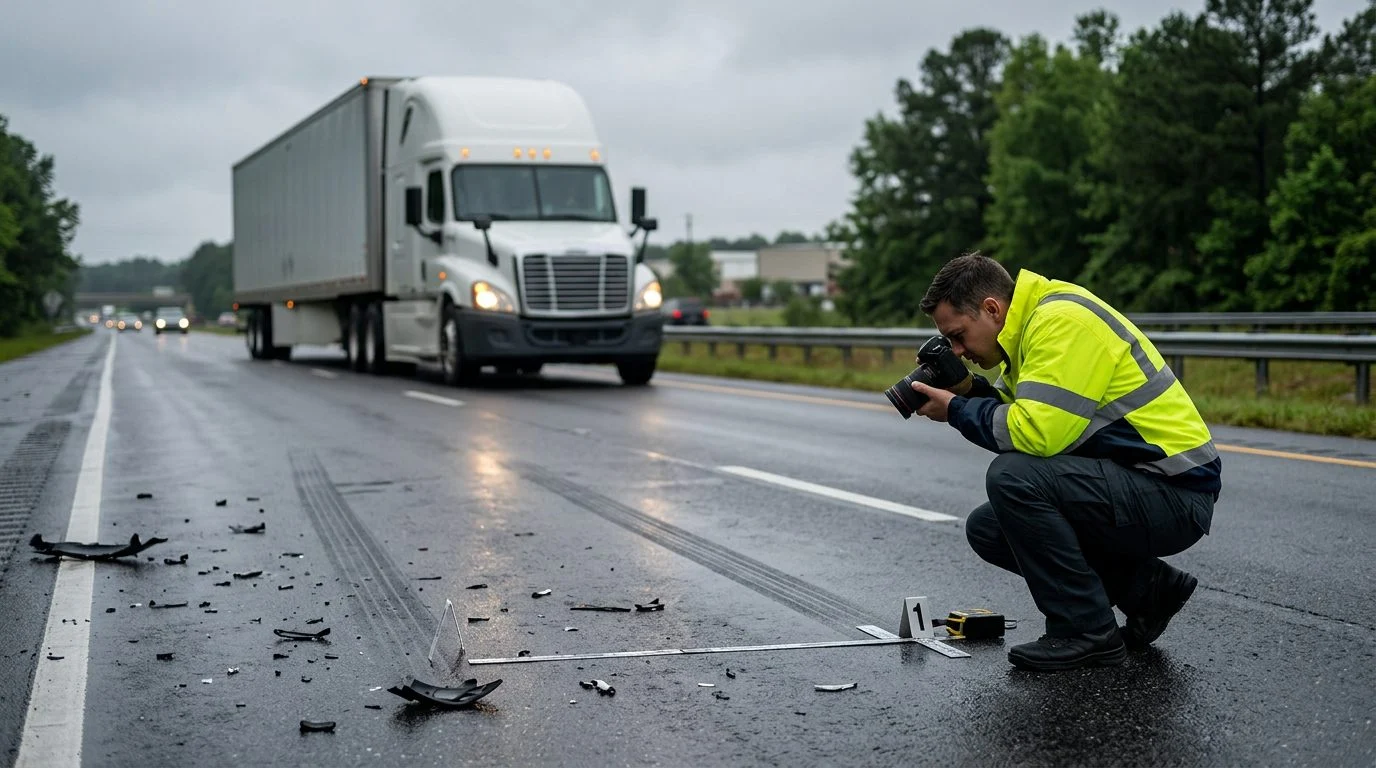
If you are able, photograph the vehicles, the roadway, lane markings, and any visible damage or injuries. Write down the names and contact details of witnesses and the truck's company information.
Keep your records together
Save hospital bills, prescriptions, repair estimates for your motorcycle, and notes about missed work. Organized records make it easier to explain your losses to anyone reviewing your case.
Be careful with insurers
The trucking company's insurer may contact you quickly. Before giving a recorded statement or signing any release, talk with a lawyer about what you are being asked to agree to.
Why Riders Talk With Ugwonali Law Group First
Plain-language explanations
We explain the legal process and the medical side of a serious crash in terms you can follow, so you can make informed decisions at your own pace.
Help in English or Spanish
Our intake staff can speak with you in English or Spanish from the first call.
Support for your whole family
When a crash affects a spouse, children, or other loved ones, we take time to understand how it has changed daily life.
A confidential first step
The first consultation is free, confidential, and comes with no obligation to continue.
Important: Do Not Sign Anything in a Hurry
Early settlement offers and insurance releases can close off options before you understand your injuries. Speak with a lawyer before you sign any document or give a recorded statement.