

Premises Liability | Atlanta and Statewide Georgia
Georgia Premises Liability Laws: A Plain-Language Guide
A serious fall or an unsafe property can change your health, your work, and your family in a single moment. Here is how Georgia law approaches property owners and the questions injured visitors often face next.
By Adanna Ugwonali · Published November 15, 2026
If someone you care about was hurt on another person’s property, you likely have many questions at once. The core rule in Georgia is this: an owner or occupier must use ordinary care to keep its premises and approaches safe for people it invites in. The rest of the law adds detail on who counts as a visitor, how fault gets divided, and how long a person has to file a claim.
This guide explains those rules in plain language, using Georgia’s statutes as the source. It covers what counts as a premises claim and how each rule works in practice. Read it as general information about the law, not as advice about your own case.
What Premises Liability Means Under Georgia Law
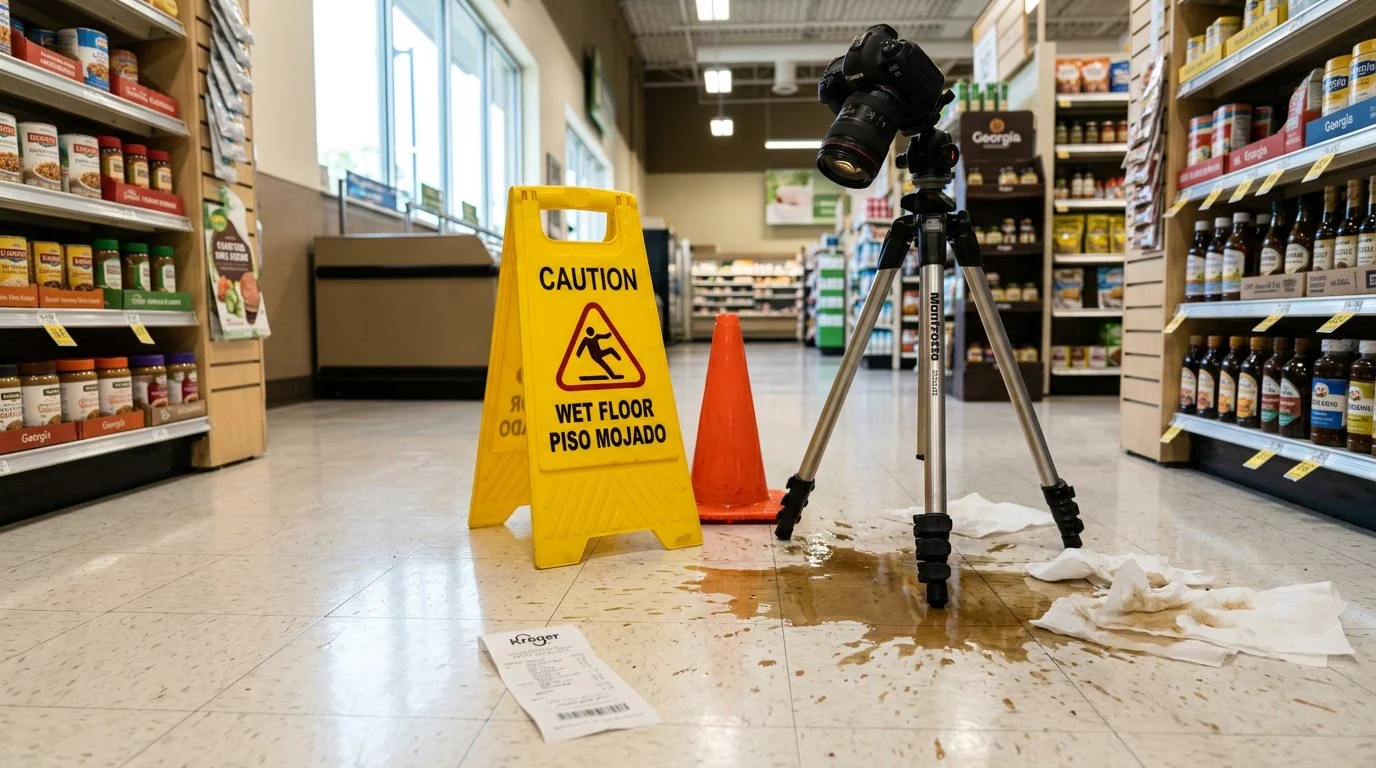
Premises liability is the area of law that decides when a property owner must pay for injuries caused by dangerous conditions on its land. Wet store floors, broken stairs, cracked walkways, and poor lighting are common examples. Slip and fall and trip and fall injuries are one common type of these claims.
Georgia handles these claims under its tort law, which covers harm one person causes another. The injured person must show that the owner’s fault in keeping the property safe caused the harm. A claim does not need a large company behind it. Landlords, businesses, and private property owners can all face these claims, though the details turn on why the person was there.
Serious injuries raise the stakes. A fracture, a head injury, or a spinal injury can mean hospital stays, long treatment, and missed work. For a broader look at how we approach these cases, see our premises liability page.
If a family member was hurt or lost their life on someone else's property, you may have a claim worth discussing, and our team is ready to talk it through with you. Talk it through with our team — the first consultation is free, confidential, and carries no obligation.

The Core Duty Under O.C.G.A. § 51-3-1
The main Georgia rule is found in O.C.G.A. § 51-3-1. The statute says an owner or occupier who invites people onto its land “for any lawful purpose” is liable for injuries caused by “his failure to exercise ordinary care in keeping the premises and approaches safe.”
Ordinary care is defined in O.C.G.A. § 51-1-2. Under that section, ordinary diligence is the care that ordinarily prudent people use under the same or similar circumstances. Failing to use it is called ordinary negligence. In plain terms, the owner must act as a careful, reasonable owner would under the same conditions.
Whether a particular owner met that standard depends on the facts of each incident. Shoppers in a store and customers doing business on a property are typical examples of people invited for a lawful purpose.
Visitor Status: Invitees and Licensees
Georgia law treats a visitor differently based on why they were on the property. Two categories matter most for everyday cases.
A licensee is a person who is neither a customer, a servant, nor a trespasser, who does not stand in any contractual relation with the owner of the premises, and who is permitted on the premises merely for their own interests, convenience, or gratification. A licensee is allowed on the property merely for their own interests, convenience, or gratification, according to O.C.G.A. § 51-3-2. Under that same section, an owner is liable to a licensee only for willful or wanton injury. That is a narrower standard than the ordinary-care duty owed under § 51-3-1.
The reason for the visit often decides which standard applies. A person who came to shop or do business fits the invitation language of § 51-3-1. A person who was only allowed to cross the property for their own convenience may fall under the licensee rule. Families sometimes assume that any visit to a store means the same rules apply. The reason a person was on the property can matter to a claim, so writing that reason down as soon as you can may be helpful.
Actual Knowledge Versus Constructive Knowledge of a Hazard
An owner’s knowledge of a hazard matters because ordinary care includes finding and fixing what a careful owner would find. Actual knowledge is the simplest case. An employee who saw a spill and walked away shows the owner knew about it.
Inspection logs, incident reports, cleaning schedules, and maintenance records can show what the owner knew or should have known. These records often decide how the question is answered.
Federal workplace rules offer a useful reference point. Still, they show how regulators think about these risks.
A common mistake is waiting to record what happened. Photos, the names of witnesses, and the exact spot of a fall can be lost quickly. Notes made close to the event are often the most useful.
The Elements of a Negligence Claim
A Georgia injury claim generally asks whether the owner was at fault and whether that fault caused real harm. Each case turns on its own facts, and our team can explain how those facts are reviewed during a free case review.
The duty to use ordinary care comes from § 51-3-1, which applies to an owner or occupier who, by express or implied invitation, induces or leads others to come upon the premises for any lawful purpose. The breach is the unsafe condition or the failure to fix it. Causation asks whether that condition is what caused the fall. Damages include medical bills, lost income, and pain and suffering. Georgia law allows recovery when the law requires a person to perform an act for another’s benefit or to refrain from an act that may injure another, that person breaches that duty, and the injured party suffers damage, as stated in O.C.G.A. § 51-1-6.
In a slip or trip case, the hazard is the condition, the fall is the injury event, and medical records tie the two together. A claim can run into trouble if one piece cannot be shown. That is why records of the condition, the injury, and treatment matter from the start.
Comparative Fault and How Georgia Divides Responsibility
Georgia reduces your damages by your share of fault. If you are 50 percent or more responsible, you cannot recover damages. O.C.G.A. § 51-12-33 sets out these rules.
Subsection (a) says the judge reduces the damages “in proportion to his or her percentage of fault (O.C.G.A. § 51-12-33; Quynn v. Hulsey (2020)).” Subsection (g) says the plaintiff “shall not be entitled to receive any damages if the plaintiff is 50 percent or more responsible for the injury or damages claimed.” Someone found less than 50 percent at fault can still recover, reduced by their share.
Fault can be spread among several parties. Under § 51-12-33 (Quynn v. Hulsey (2020))(b), each liable person owes only its own apportioned share, and those shares are not joint liability.
A business may also answer for a contractor’s negligence. O.C.G.A. § 51-2-5 lists situations where an employer is liable for a contractor’s negligence. One is when the employer keeps the right to direct or control the time and manner of the work. Fault is often argued over footwear, attention, and posted warnings.
Not sure what your next step is?
Talk it through with our team — the first consultation is free, confidential, and carries no obligation.
The Two-Year Filing Deadline Under Georgia Law
Georgia generally requires an injury claim to be brought within two years. O.C.G.A. § 9-3-33 says actions for injuries to the person “shall be brought within two years after the right of action accrues.”
The statute begins with the words “Except as otherwise provided in this article.” That means other rules in the same article can change the timing. The clock runs from when the right of action accrues, so the date of the injury is the first date to note.
Families often lose track of dates while focused on medical care. Recovery takes time, and that time passes. Write down the date, the place, and the names of anyone who saw what happened. Keep copies of every medical bill and every letter you receive.
Premises Liability Compared With General Liability
They are related but different. General liability is a type of insurance coverage. Premises liability is a claim about fault.
A business’s general liability insurance may be part of how a claim gets paid. Insurance does not prove fault, though. The injured person still must show the owner’s duty and breach under the rules described above. A policy in place does not, by itself, establish that the owner was careless.
Our team represents people in Atlanta, Fulton County, and across Georgia. Many premises claims begin with a simple question about where the fall happened and who controlled that space. Those facts shape how the claim is reviewed from the start.
Talk With Our Team About Your Situation
If someone you love was hurt or died on someone else’s property, you did not choose this situation. You may be trying to understand the law while also dealing with medical care, bills, and grief.
Common Questions About Georgia Premises Liability
Who may be responsible for a fall on a store floor? The store may be responsible under O.C.G.A. § 51-3-1 (Kristina Holston v. Aboebarensi, Inc (2026)) if it failed to use ordinary care in keeping the premises and approaches safe for people it invited or led onto the premises by express or implied invitation for a lawful purpose.
How long do I have to file? Georgia generally gives two years for personal injury claims under O.C.G.A. § 9-3-33, but claims for loss of consortium must be brought within four years and injuries to reputation within one year.
Can I recover if I was partly at fault? Yes, but your damages are reduced by your share, and you recover nothing at 50 percent or more (O.C.G.A. § 51-12-33; Quynn v. Hulsey (2020)).
Are general liability and premises liability the same? No. General liability is insurance coverage, and premises liability is a claim about fault.
If a family member was hurt or lost their life on someone else’s property, you may have a claim worth discussing. Our team at Ugwonali Law Group, 3400 Peachtree Road NE, Atlanta, Georgia, can talk it through with you. You can contact our team for a free case review. The first consultation is free, confidential, and without obligation to continue. La consulta inicial es gratuita, confidencial y sin compromiso de continuar. Intake staff can speak with you in English or Spanish.
This page is general information, not legal advice. The responsible lawyer for this page is Adanna Ugwonali, Ugwonali Law Group, 3400 Peachtree Road NE, Atlanta, Georgia.

Frequently Asked Questions
What duty does a property owner owe to visitors in Georgia?
Under O.C.G.A. § 51-3-1, owners and occupiers must use ordinary care to keep their premises and approaches reasonably safe for invited visitors.
Does an injured visitor have to prove the owner knew about the hazard?
Generally, yes. The injured person usually must show the owner had actual or constructive knowledge of the hazard, such as when the owner created it or it existed long enough that a reasonable inspection would have found it.
How does comparative fault affect a Georgia premises liability claim?
Georgia applies modified comparative negligence under O.C.G.A. § 51-12-33. Any award is reduced by the injured person’s percentage of fault, and the claim is barred if that person is 50 percent or more responsible.
How long does someone have to file a premises liability lawsuit in Georgia?
Under O.C.G.A. § 9-3-33, most personal injury lawsuits in Georgia, including premises liability claims, must generally be filed within two years of the injury. Time limits for filing legal claims are set by Georgia law, and exceptions can change them, so acting early is important.
What Injured Visitors Should Understand
Who Owes a Duty
Georgia law looks closely at the relationship between the property owner and the person who was on the property, and at what the owner knew or should have known about the hazard.
What Often Needs to Be Shown
A premises case typically turns on evidence:
Medical Care Comes First
Getting evaluated by a medical doctor and following treatment plans protects your health and creates a clear record of how the injury affected your life.
Families Are Included
When a fatal incident occurs on someone else's property, surviving family members may face questions about wrongful death that deserve careful, compassionate answers.
Protect Your Evidence Early
If you were hurt on someone else's property, seek medical care as soon as you can, take photos of the hazard and the area, and keep records of your treatment and expenses. Do not give recorded statements to the property owner or its insurer before speaking with a lawyer.
Common Premises Liability Situations
Slip and Fall
Wet floors, icy walkways, uneven flooring, and spills that were not cleaned up can lead to fractures, head injuries, and long recoveries.
Trip and Fall
Broken stairs, torn carpeting, damaged curbs, and poor lighting can cause serious falls, especially for older adults and people carrying heavy loads.
Unsafe Property Injuries
Defective railings, collapsing structures, and hazards left unmarked or unrepaired can cause injuries that require hospital care and ongoing treatment.
Catastrophic and Fatal Injuries
Traumatic brain injuries, spinal cord injuries, and wrongful death claims often involve complex medical needs and a detailed, careful investigation.