

Premises Liability | Atlanta and Statewide Georgia
Understanding Who Is Responsible When Someone Is Hurt on Someone Else's Property
A plain-language guide to how Georgia law looks at a property owner's duty to visitors, and what injured people can do early on to protect their claim.
By Adanna Ugwonali · Published November 18, 2026
If someone you love was hurt on another person’s property, you may be trying to learn what the law requires.
If you were hurt in a fall on someone else’s property, the central question is what you can prove. This page explains each part of that question in plain words and shows how it applies to a fall on someone else’s property.
What is liability for damages?
Liability for damages is a legal responsibility to pay for harm that another person caused. Georgia law lets an injured person recover when someone breaches a legal duty and that breach causes damage (O.C.G.A. § 51-1-6).
People often say “four grounds for liability” when they mean the four elements of negligence. Lawyers and courts usually call them elements. Negligence starts with a failure to use ordinary care. Georgia defines ordinary diligence as the care that ordinarily prudent people use in similar circumstances. A lack of that care is ordinary negligence (O.C.G.A. § 51-1-2).
A claim is about proof. Each element needs facts and evidence behind it. Whether the proof is enough depends on the facts of the case.
If a fall or crash has left someone you love in treatment, our team can talk through the facts with you at no cost. Talk it through with our team — the first consultation is free, confidential, and carries no obligation.
What are the essential elements of tort liability?
Here is an everyday example. A shopper slips on an unmarked spill near the produce aisle and breaks a wrist. The store owed shoppers reasonable care to keep the floor safe, which is the duty. Store staff knew about the spill or should have found it during a normal check, which is the breach. The spill, not something else, made her fall, which is causation. Her surgery, bills, and missed work are the damages.
The same four questions apply in truck accidents and car accidents. The facts change from case to case, but the framework stays the same. It also applies to traumatic brain injury and spinal cord injury claims, where the harm is often more serious and the proof takes more work.
Elements 1 and 2: Duty of care and breach of duty
The duty of care is the obligation to keep property safe for visitors. Breach of duty is the failure to meet that obligation. Under O.C.G.A. § 51-3-1, an owner or occupier who invites people onto land for a lawful purpose must use ordinary care to keep the premises and approaches safe.
An invitee is a visitor who comes onto property for a lawful purpose, such as a customer in a store or a guest at a business. The duty depends on why the person was there. Visitor status matters.
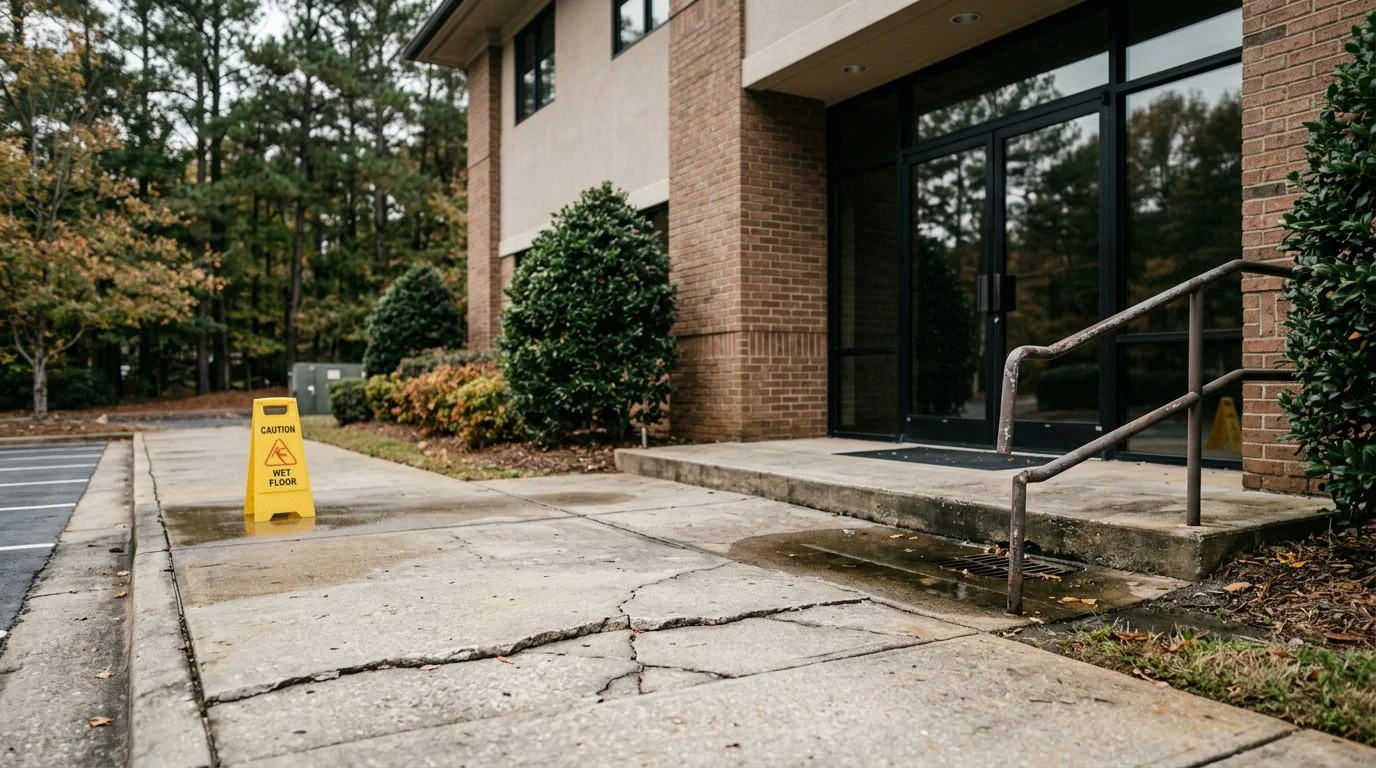
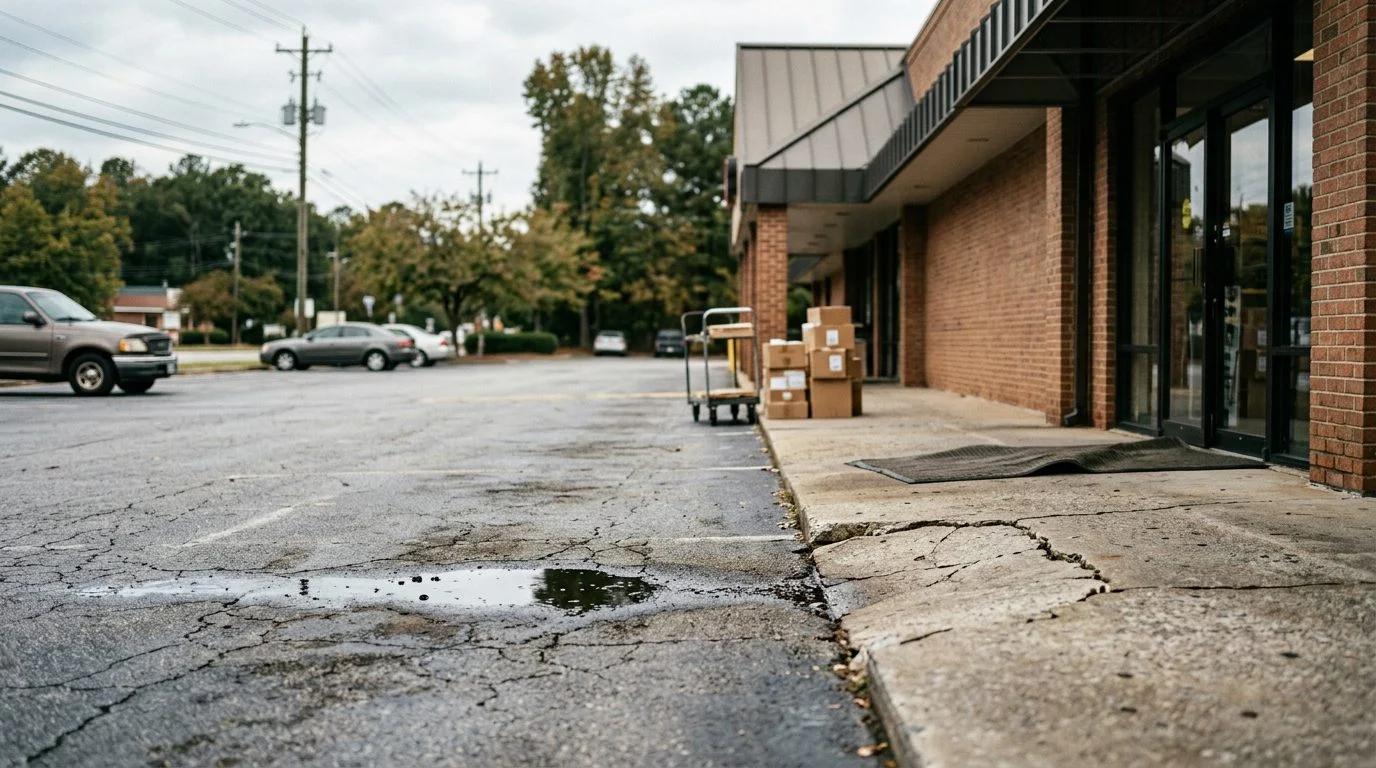
Common examples in slip and fall and trip and fall cases include wet floors with no warning sign, loose stair treads, torn flooring, dim walkways, and uneven pavement near entrances.
A common mistake is cleaning up or repairing the hazard before anyone takes photos. Photos and notes made soon after the fall can show what the condition was.
Element 3: Causation
Causation is the link between the unsafe condition and the injury. The hazard has to be what caused the fall, crash, or injury.
Two questions matter. Was the hazard there? Did it actually cause this fall? A store can have a hazard in one aisle while a shopper falls over a different object. Both questions need answers.
Medical records, incident reports, photographs, video, and witness accounts can help connect the injury to the event. Records made close in time record what the injured person reported and what the treating doctor found.
Other factors can complicate causation. A pre-existing condition, a later separate event, or a different cause may all come up. Local records can also help.
Element 4: Damages, and how serious injuries are documented
Damages are the losses the injured person suffered because of the injury. Georgia separates general damages from special damages. General damages are presumed to flow from a wrongful act and may be recovered without proof of an amount. Special damages actually flow from the act and must be proved (O.C.G.A. § 51-12-2).
Special damages usually include medical bills and lost wages, so they need records. Georgia describes damages as compensation for injury. A very small injury may lead only to nominal damages (O.C.G.A. § 51-12-4).
Serious injuries such as fractures, traumatic brain injury, and spinal cord injury are documented through treatment by a medical doctor, hospital records, imaging, and follow-up visits. Keeping every appointment and record helps show how the injury was treated and what it cost in time and money.
Fault also matters. Under O.C.G.A. § 51-12-33 (Quynn v. Hulsey (2020))(g), the plaintiff shall not be entitled to receive any damages if the plaintiff is 50 percent or more responsible for the injury or damages claimed.
If someone you care about was hurt on someone else’s property
If you are researching this for someone who was hurt, you may be doing it while they are still in the hospital or recovering at home. That is a hard time to sort out legal questions.
Start with simple notes. Write down where the fall happened, when it happened, who saw it, and what treatment followed. Those notes map directly onto duty, breach, causation, and damages.
Ugwonali Law Group handles premises liability matters, including slip and fall and trip and fall claims. Adanna Ugwonali is the responsible attorney for this page. The firm is located at 3400 Peachtree Road NE, Atlanta, Georgia. The first consultation is free, confidential, and carries no obligation to continue. La consulta inicial es gratuita, confidencial y sin compromiso de continuar. Intake staff can assist in English or Spanish.
This article is general information, not legal advice. If a fall or crash has left someone you love in treatment, you can request a free case evaluation with our team.
Not sure what your next step is?
Talk it through with our team — the first consultation is free, confidential, and carries no obligation.
FAQ
Who is an invitee under Georgia premises law?
An invitee is a visitor who comes onto property for a lawful purpose, such as a customer in a store. Because the visit is by invitation, Georgia law expects the owner to use ordinary care to keep the premises reasonably safe for that person, while other visitors, such as licensees or trespassers, may be owed a different, more limited duty.
Talking With Our Team
Free First Consultation
The initial consultation is free, confidential, and carries no obligation to continue.
English or Spanish
Our intake team can speak with you in English or Spanish, so you can explain what happened in the language you are most comfortable using.
Support for Injured People and Families
Ugwonali Law Group, led by attorney Adanna Ugwonali, focuses on people seriously hurt on unsafe property and their families across metro Atlanta and Georgia.
Atlanta Office
Visit us at 3400 Peachtree Road NE, Atlanta, Georgia, or call to start your review.
Keep Your Records From the Start
Photos of the hazard and the scene, names and contact details of witnesses, incident reports, and every medical record and bill can help show what happened. Store originals safely and avoid posting details about the injury online while your claim is pending.
Helpful Details to Gather
The Scene
Photos or video of the spot where you fell or were hurt, taken as soon as you safely can, including lighting, floor surfaces, and any warning signs or their absence.
Medical Care
Records from emergency rooms, doctors, imaging centers, and physical therapists document your injuries and the treatment you needed.
Witnesses
Names and phone numbers of anyone who saw the hazard or the fall can be valuable while memories are fresh.
Incident Reports
Any report made to the property owner, manager, or store staff, along with copies of correspondence from the property's insurer.