

Premises Liability · Georgia
Hurt on Someone Else's Property? Learn How Georgia Injury Claims Work
Ugwonali Law Group helps people seriously injured in slip and falls, trip and falls, and other unsafe-property accidents, explaining each step in plain language.
By Adanna Ugwonali · Published November 25, 2026
If someone you care about was hurt on another person’s property, you may be asking who is responsible and what happens next. In Georgia, a claim like this is called premises liability. Dacula premises liability claims generally turn on whether the property owner or occupier used ordinary care to keep the property safe.
This page explains how these claims work for people hurt in metro Atlanta and across Georgia. It covers who may be responsible, the hazards that cause serious injuries, the filing deadline, and the steps a typical claim follows.
What Premises Liability Means in Georgia
Premises liability is a personal injury claim for harm caused by an unsafe condition on property that someone owns or controls.
Under O.C.G.A. § 51-3-1, an owner or occupier who invites or leads others onto its premises for a lawful purpose can be liable for injuries caused by its “failure to exercise ordinary care in keeping the premises and approaches safe.”
Ordinary care is a familiar standard. Under O.C.G.A. § 51-1-2, ordinary diligence is the care that ordinarily prudent people use in the same or similar circumstances. Failing to use that care is ordinary negligence.
Georgia law also sorts visitors by their status, and the owner’s duty changes with that status.
- Invitees are people invited onto the property for a lawful purpose, such as a customer in a store.
- Licensees are people who are neither a customer, a servant, nor a trespasser, have no contractual relation with the owner, and are permitted on the property merely for their own interests, convenience, or gratification. Under O.C.G.A. § 51-3-2, an owner is liable to a licensee only for willful or wanton injury.
In insurance, the term usually refers to the liability coverage a property owner or business buys for injuries on its property. A claim is often presented to the insurer that carries that coverage.
If a fall or injury has left you or someone you love facing hard decisions, someone may be responsible, and our team can talk through what that could mean for your situation. Talk it through with our team — the first consultation is free, confidential, and carries no obligation.
Who May Be Responsible for a Dacula Premises Injury
The responsible party is usually whoever owned, controlled, or created the unsafe condition. That can be more than one person.
- Property owners
- Occupiers who run the property day to day, such as a store or restaurant operator
- Property managers who control maintenance
- Contractors who created or worked on the hazard
- Landlords, in some situations
Landlords have a limited role. Under O.C.G.A. § 44-7-14, a landlord that has fully parted with possession and the right of possession is not responsible to third persons for damages resulting from the negligence or illegal use of the premises by the tenant. The landlord remains responsible for defective construction and for failing to keep the premises in repair.
Contractors can also bring in the hiring business. Under O.C.G.A. § 51-2-5, an employer can be liable for a contractor’s negligence in listed situations. One example is when the employer keeps the right to direct or control the time and manner of the work.
When a business or property owner carries commercial liability insurance, that policy may be relevant to the claim. The facts of each case decide which parties and policies come into play.
Dacula premises liability cases can arise in many settings across Gwinnett County. Shopping center parking lots, apartment complexes, restaurants, office buildings, and store entrances after rain or snow are common examples.
Common Hazards and Serious Injuries in Premises Cases
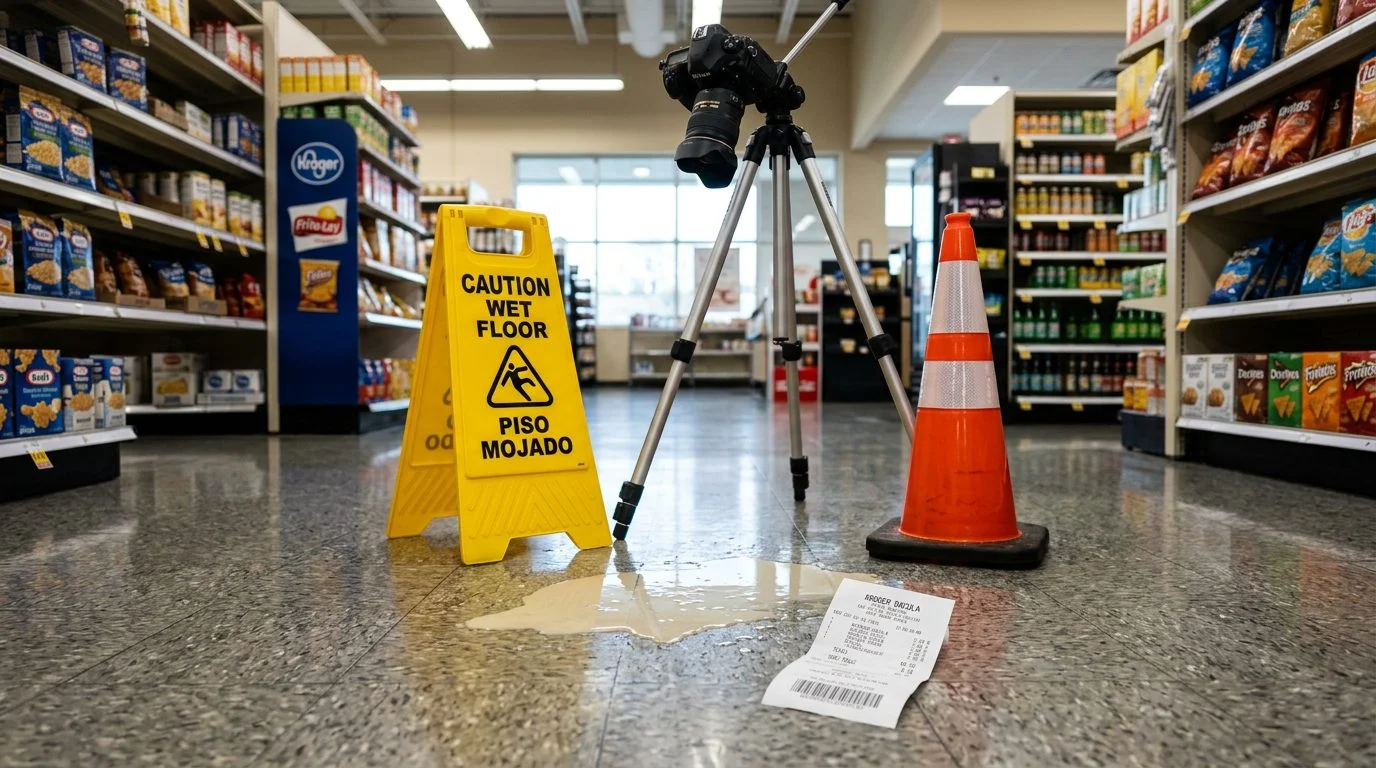
The hazards behind serious premises injuries include ice or snow on walkways, wet floors without warning signs, broken stairs or railings, uneven pavement, poor lighting, and falling merchandise or fixtures.
These hazards can cause serious harm. Fractures of the hip, wrist, or ankle often bring people to the hospital. Some falls cause traumatic brain injuries or spinal cord injuries. A fatal fall can lead to a wrongful death claim.
A medical evaluation soon after a fall creates a record of what happened. Some head and spinal injuries are not obvious at first. Tell a doctor about every fall and every symptom, even mild ones.
Ice and snow cases turn on what the owner knew. The Georgia Court of Appeals has described the owner’s duty to invitees as ordinary care. Questions about notice and timing are often central to these claims.
Are Premises Liability Cases Hard to Win?
These cases turn on facts, so no result can be predicted in advance.
Several facts usually decide the question:
- What the hazard was
- How long it had been there
- Whether the owner knew or should have known about it
- What reasonable inspection or maintenance would have revealed
Defendants often argue that the injured person saw the hazard, was distracted, or could have avoided it. Georgia law addresses this. Under O.C.G.A. § 51-11-7, if the plaintiff by ordinary care could have avoided the consequences of the defendant’s negligence, the plaintiff is not entitled to recover. In other cases, the defendant is not relieved, even though the plaintiff may have contributed to the injury.
Under O.C.G.A. § 51-12-33, the judge reduces the damages in proportion to the injured person’s percentage of fault. A plaintiff who is 50 percent or more responsible for the injury is not entitled to receive any damages.
Clear records of the scene and your medical care help answer these arguments. Early, careful documentation keeps the facts clear.
Deadlines and Evidence: Why Timing Matters
Georgia generally requires personal injury lawsuits to be filed within two years. Under O.C.G.A. § 9-3-33, actions for injuries to the person must be brought within two years after the right of action accrues. The same statute sets longer periods for some other claims, such as loss of consortium, which has four years. Other rules can apply, so timing should be reviewed early.
Evidence can disappear quickly. Start with these items:
- Photos of the hazard, the spot, and the surrounding area
- Names and contact details of witnesses
- Incident reports or notes from the property
- Written requests for video footage
Video is often kept for a limited time, so early requests matter. Keep every medical record, bill, and note about missed work. Together, they show how the injury developed over time.
How a Premises Injury Claim Typically Proceeds
A premises claim usually moves from a first consultation to investigation, medical documentation, negotiation, and, if needed, a lawsuit.
- Free first consultation. The first consultation is free, confidential, and comes with no obligation to continue. La consulta inicial es gratuita, confidencial y sin compromiso de continuar. Our intake team can speak with you in English or Spanish.
- Investigation. The team identifies the property owner, any occupier or contractor, and the insurer. It requests records and footage.
- Medical documentation. Treatment records are gathered and tied to the injury, so the timeline is clear.
- Demand and negotiation. The team presents the claim to the insurer. Settlement terms are discussed with the client before any decision is made.
- Lawsuit, if needed. If a fair resolution is not reached, a lawsuit must be filed within the time set by the statute of limitations described above. Court cases usually take longer than negotiations.
Timelines vary with the medical course, the insurer’s response, and court schedules. Each stage is explained in plain language, so you know what is happening and why.
Not sure what your next step is?
Talk it through with our team — the first consultation is free, confidential, and carries no obligation.
How Ugwonali Law Group Handles a Premises Injury in Georgia
Ugwonali Law Group is a personal injury firm based in Atlanta, led by attorney Adanna Ugwonali, who is the responsible lawyer for this page. The firm’s office is at 3400 Peachtree Road NE, Atlanta, Georgia.
The firm represents people across metro Atlanta and statewide in Georgia. Its practice areas include truck accidents, car accidents, wrongful death, traumatic brain injury, spinal cord injury, catastrophic injury, premises liability, and slip and fall.
Our lawyers and support staff focus on serious injuries with real medical treatment, including fractures, hospital care, brain and spinal injuries, and death. The firm works with working- and middle-class clients and aims to explain the legal and medical process in plain language.
Intake is available in English and Spanish. You can speak with our intake team on the first call.
Frequently Asked Questions and Your Next Step
Here are short answers to common questions about Dacula premises liability claims.
What does premises liability mean in insurance?
In insurance, it usually refers to the liability coverage a property owner or business carries for injuries on its property.
Are premises liability cases hard to win?
The outcome turns on facts such as the hazard, how long it existed, and the owner’s notice, so no result can be predicted in advance.
How long does a premises liability lawsuit take?
Timing varies with medical care, the insurer’s response, and court schedules, so no single length applies to every case.
What is premises liability in Georgia?
It is a claim that an owner or occupier failed to use ordinary care to keep property safe for lawful visitors.
If you’re reading this after a fall or injury to yourself or someone you love, you don’t have to sort out what comes next alone. To talk through your situation, contact our intake team and request a free case evaluation.
How we work with you
A free first call
Our intake team can speak with you in English or Spanish. The first consultation is free, confidential, and comes with no obligation to continue.
Plain-language explanations
We walk you through the legal and medical process step by step, so you know what to expect at each stage.
Your recovery comes first
While you focus on treatment, we help you organize medical records, bills, and other documents connected to your injury.
Across Georgia
We represent injured people in metro Atlanta and throughout Georgia from our office at 3400 Peachtree Road NE, Atlanta.
Before you talk to an insurer
An insurance adjuster may contact you soon after a property injury. Before you give a recorded statement or sign any paperwork, consider speaking with a lawyer. Keep every medical appointment and save your records.
Steps to take after a property injury
Get medical care
See a medical doctor promptly and follow the treatment plan, even if your injuries seem minor at first.
Document the scene
Photos of the hazard, the surrounding area, lighting, and any missing warning signs can be useful later.
Note the witnesses
Names and contact details of people who saw what happened can help explain how the injury occurred.
Ask us for a review
Contact our team for a free case review to learn how the claim process works and what questions to ask.