

Premises Liability | Atlanta and Georgia
When an Unsafe Property Causes a Serious Injury
Learn how premises liability cases typically arise in Georgia, from wet floors and broken stairs to poorly maintained parking lots, and how Ugwonali Law Group can help you understand your options.
By Adanna Ugwonali · Published October 31, 2026
A premises liability example is a situation where someone is seriously hurt by an unsafe condition on property that another person owns, controls, or occupies. Common examples include slip and falls on wet floors, trips over damaged pavement, falls on broken stairs in rentals, and objects that fall from shelves or ceilings. This guide explains those examples in plain terms. It’s written for anyone trying to understand a serious accident, including a family member or friend helping someone who was hurt.
What Premises Liability Means in Plain Terms
Premises liability is a personal injury claim based on an unsafe condition on someone else’s property. Under Georgia law, an owner or occupier who invites people onto land for a lawful purpose must use ordinary care to keep the premises and approaches safe (O.C.G.A. § 51-3-1). A person invited in this way, such as a shopper or a guest, is called an invitee.
Ordinary care is a reasonable standard. It does not make the owner an insurer of every visitor’s safety.
Most examples turn on three questions. Was there a hazard? Did the owner or occupier know about it, or should it have found it with ordinary care? Did the hazard cause a serious injury that needed medical treatment? A small bump or scrape usually doesn’t raise these questions. The examples below involve fractures, hospital care, head or spinal injuries, or death.
For a broader overview, read our premises liability guide.
If someone you love was hurt in a fall on another person's property, you don't have to sort out the insurance calls and bills alone, and our team invites you to talk with us. Talk it through with our team — the first consultation is free, confidential, and carries no obligation.
Slip and Fall Examples: Wet and Slippery Surfaces
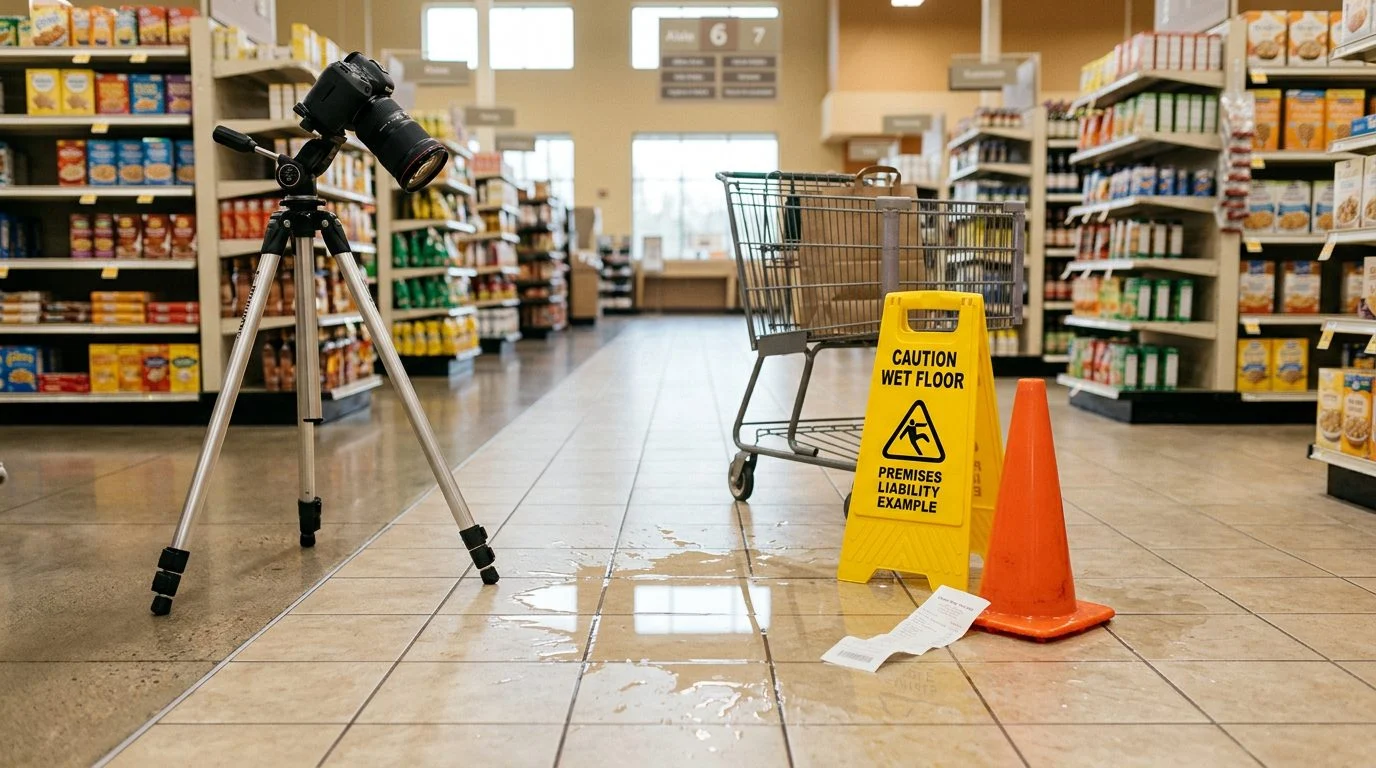
A slip and fall happens when a person loses footing on a slick surface, such as a spill, standing water, or ice, while lawfully on the property. The surface is the hazard. The person’s footing is what gives way.
A shopper slips on a spill in a grocery aisle that sat long enough that staff should have noticed and cleaned it. A customer falls on a freshly mopped floor where no wet-floor warning was placed. A visitor slips on ice or standing water at a store or restaurant entrance that was not treated or blocked off.
Injuries in these cases often include wrist or hip fractures, back injuries, and head injuries from hitting the floor. They may require emergency care, imaging, and follow-up treatment. The federal Occupational Safety and Health Administration publishes walking-working surfaces guidance that covers slip, trip and fall hazards under federal workplace standards.
Trip and Fall Examples: Uneven or Damaged Surfaces
A trip and fall happens when an uneven, damaged, or blocked surface catches a person’s foot. The difference from a slip is the surface itself. It is broken or in the way, rather than slick.
A pedestrian trips over a cracked, raised section of pavement in a shopping center parking lot that stayed unrepaired for a long time. A guest catches a foot on torn carpet, a loose floor transition strip, or a damaged entry mat. A visitor trips over an extension cord stretched across an office walkway.
These cases often involve broken bones, dislocations, or head injuries. Photos of the condition matter. So do records showing when the hazard was reported, repaired, or first noticed. Timing often becomes a central question, so write down what you know about when the problem started.
Unsafe Conditions in Apartments, Rentals, and Commercial Buildings
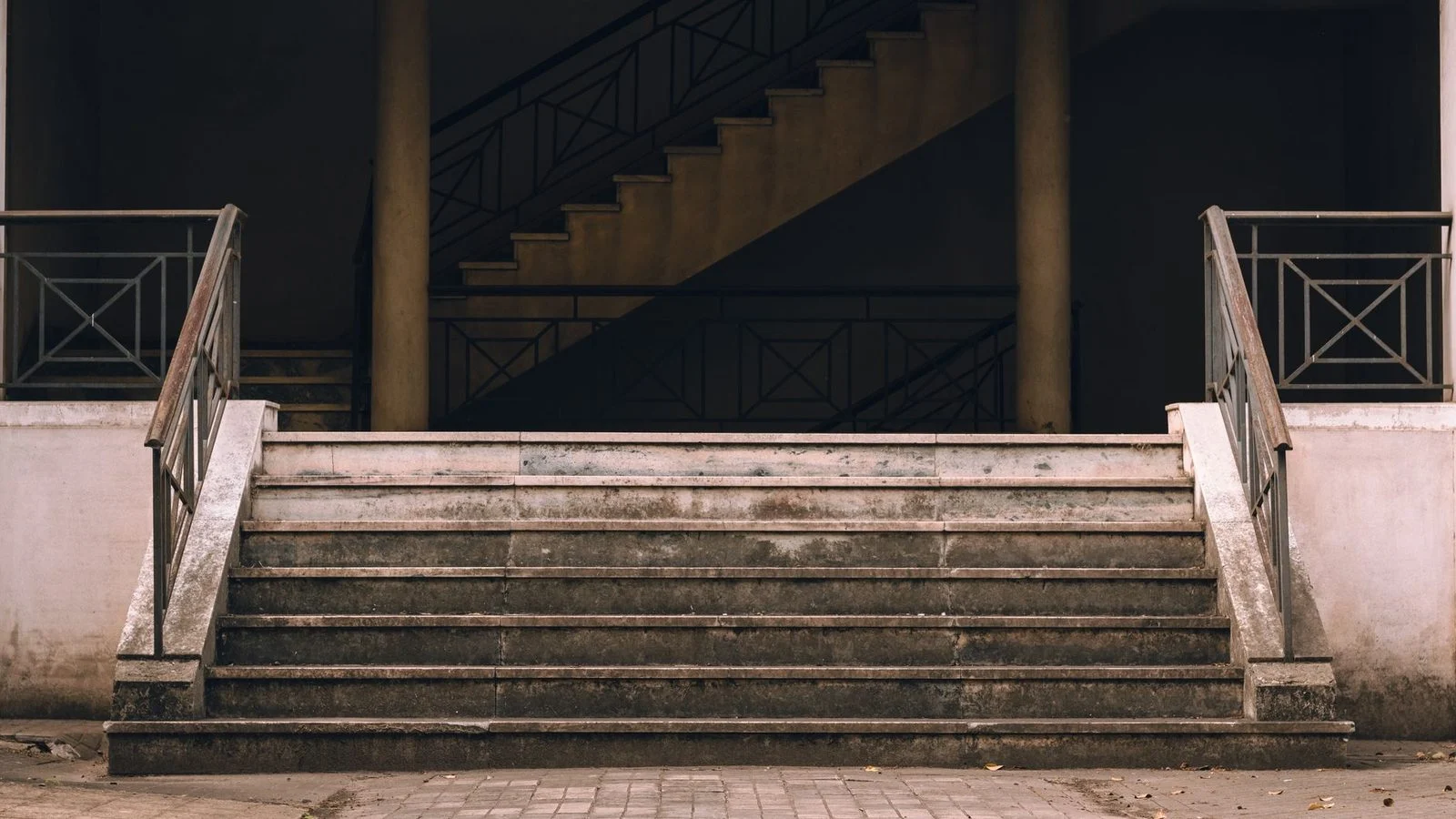
A rental or building condition becomes a premises example when a loose, broken, or rotted part of the property causes a fall or collapse. A tenant or visitor might fall on a stairway with a loose handrail, missing treads, or poor lighting in an apartment complex. A guest might be hurt when a balcony railing or deck board gives way after the owner was told about the damage. A person might fall through a rotted porch or unsafe step at a rental home.
Who controlled the property matters. Under Georgia law, a landlord who has fully parted with possession and the right of possession is not responsible to third persons for a tenant’s negligence. The statute says the landlord remains responsible for damages from defective construction or from failure to keep the premises in repair (O.C.G.A. § 44-7-14). Serious injuries from these conditions can include spinal injuries and fractures.
Falling Objects and Structural Failures
A falling object or structural failure is a premises example when something on the property gives way and strikes a visitor. Merchandise falls from overloaded or improperly anchored shelving in a retail store. A ceiling tile, light fixture, or piece of trim drops in a restaurant or office lobby. A collapsed canopy, awning, or handrail at a commercial entrance strikes a visitor.
These examples can involve traumatic brain injury or spinal injuries. Records of prior complaints, inspections, and maintenance logs often show what the owner knew. Building standards can also matter.
For readers dealing with a spinal injury, the Model Systems Knowledge Translation Center publishes Spinal Cord Injury Factsheets on life after injury.
Serious Injuries on Large Commercial and Public-Facing Sites
Large properties create examples where an unmarked or hidden hazard causes a serious injury. A customer steps into an unmarked drop-off or uneven curb in a large parking lot with poor lighting. A visitor is hurt by an open pit or obstacle left on the property without a warning.
Animals can also create premises claims. Under O.C.G.A. § 51-2-7, a person who owns or keeps a vicious or dangerous animal may be liable if careless management or letting the animal go at liberty causes injury to a person who did not provoke it.
Large sites raise practical questions. Who owns, maintains, and insures the property? The answers often shape who the responsible parties are. Gathering that information early can help, and a lawyer can review it with you.
Not sure what your next step is?
Talk it through with our team — the first consultation is free, confidential, and carries no obligation.
What Makes These Examples Stronger or Harder to Pursue
The strength of a premises claim usually depends on proof of the hazard, what the owner knew, and how serious the injury was. Clear photos, incident reports, and witness names collected soon after the event help. Medical records also matter. Emergency visits, imaging, surgery, rehabilitation, and physician notes show how serious the injury was.
In a civil action to recover damages for injury or death to a person, Georgia limits medical expense damages to the reasonable value of medically necessary care. The trier of fact decides that amount (O.C.G.A. § 51-12-1.1). Georgia law distinguishes two kinds of damages. Special damages are those which actually flow from a tortious act, and they must be proved in order to be recovered (O.C.G.A. § 51-12-2).
Fault can be shared. If the injured person is partly at fault, the award is reduced by that percentage. A person who is 50 percent or more responsible recovers nothing (O.C.G.A. § 51-12-33). Each situation turns on its own facts, and the same type of hazard can lead to very different results from one property to the next.
Frequently asked questions
What is a premises liability example?
It is an injury caused by an unsafe condition on property that someone else owns, controls, or occupies. Common examples include slip and falls and trip and falls.
Is a landlord automatically responsible for a tenant’s injury?
Not automatically. Georgia law limits a landlord’s liability for a tenant’s negligence, but keeps it for defective construction and failure to make repairs.
If You Are Researching for Someone You Love
If someone you love was hurt on another person’s property, the first step is to preserve the facts. Keep the incident report, hospital discharge papers, and photos of the location. Write down the names of any witnesses while memories are fresh.
Insurance calls, recorded statements, and bills can feel overwhelming while someone is still recovering. You don’t have to sort them out alone. Many questions about what to say, what to sign, and what to keep can wait until you understand your options.
Our team at Ugwonali Law Group, with Adanna Ugwonali as the responsible lawyer, offers a free, confidential first consultation with no obligation to continue. Intake staff can speak with you in English or Spanish. Reach out to our intake team at 3400 Peachtree Road NE, Atlanta, Georgia, or request a free case evaluation to talk through what happened.
What Our Firm Offers Clients With Premises Injuries
Free Case Review
Tell us what happened and we will explain how the review process works. Your first consultation is free, confidential, and carries no obligation to continue.
English or Spanish
Our intake team can sign you on the first call in English or Spanish, so you can describe your situation in the language you are most comfortable using.
Focus on Serious Injuries
We focus on people with real medical needs, including fractures, hospital care, traumatic brain and spinal injuries, and wrongful death.
Plain-Language Guidance
We help you understand the legal and medical steps ahead, so you can make informed decisions at your own pace.
Serving Atlanta and Georgia
We represent clients in metro Atlanta, including Fulton, Clayton, Cobb, and Rockdale counties, and across Georgia from our office at 3400 Peachtree Road NE, Atlanta.
A Helpful Tip After a Fall
If you can, write down where and how the fall happened, take photographs of the area while it is still in the same condition, and keep every medical bill and visit summary. Clear records make it easier to review your situation later.
Common Premises Liability Examples
Wet or Slippery Floors
A fall on a freshly mopped floor, a spill that was not cleaned up, or a wet entryway without warning signs can lead to fractures, head injuries, and extended treatment.
Trip Hazards and Uneven Surfaces
Cracked sidewalks, torn carpeting, raised pavement, and debris in walkways are frequent causes of serious trip and fall injuries.
Broken Stairs and Handrails
Loose steps, missing handrails, and poorly lit staircases in apartment buildings, offices, and retail spaces can cause falls with lasting spinal or leg injuries.
Parking Lot and Walkway Conditions
Potholes, unrepaired curbs, and icy or poorly maintained paths on commercial property can lead to falls that require hospital care.
Unsafe Property Conditions
Collapsing shelving, defective railings on balconies, and other hazards left unaddressed on property can result in catastrophic injuries and, in some cases, wrongful death.
Talk With Ugwonali Law Group About Your Injury
Related practice areas
- Premises Liability in Atlanta
- Premises Liability in Fulton County
- What Is the Hardest Injury to Prove? Georgia Guide